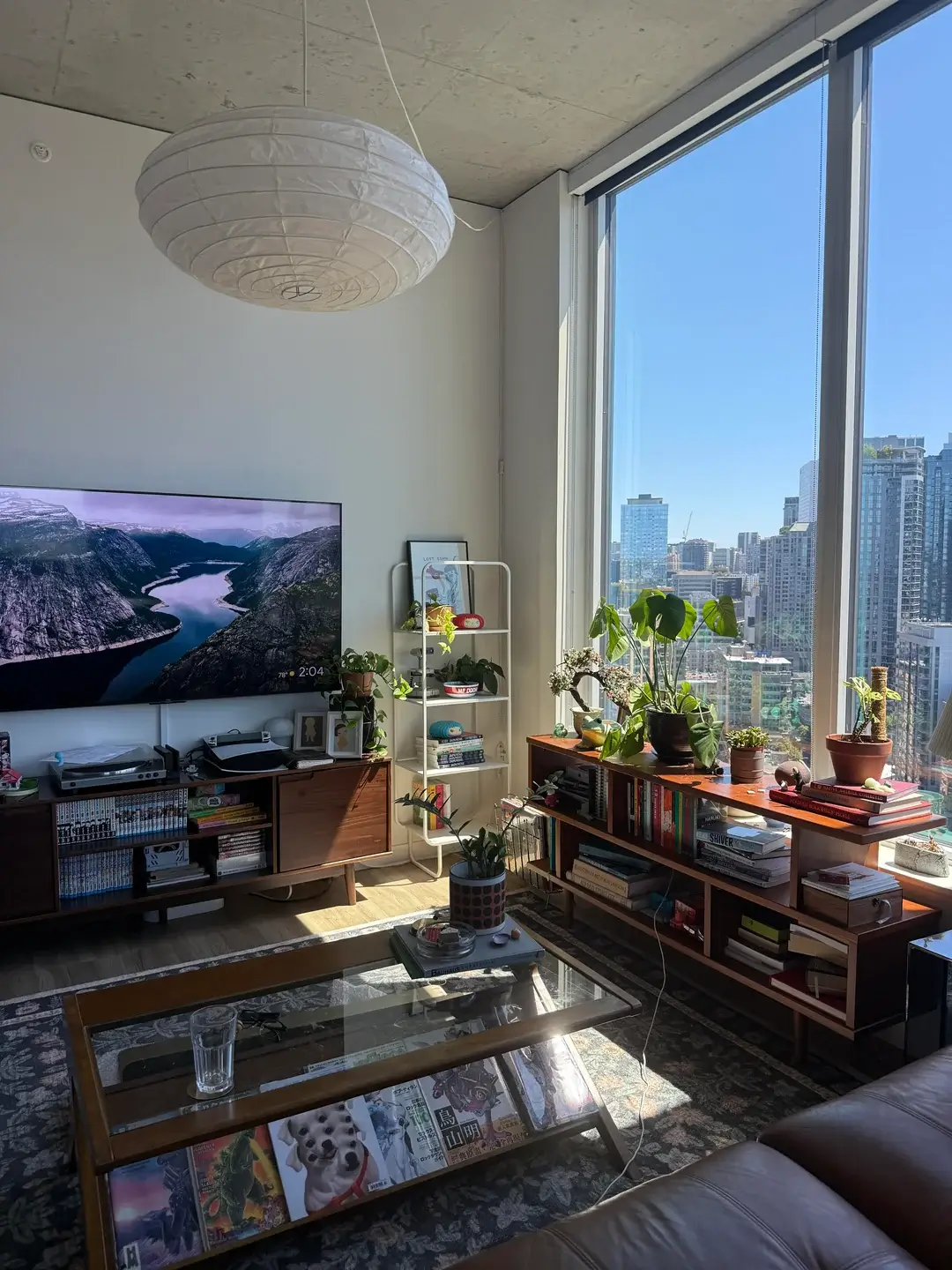
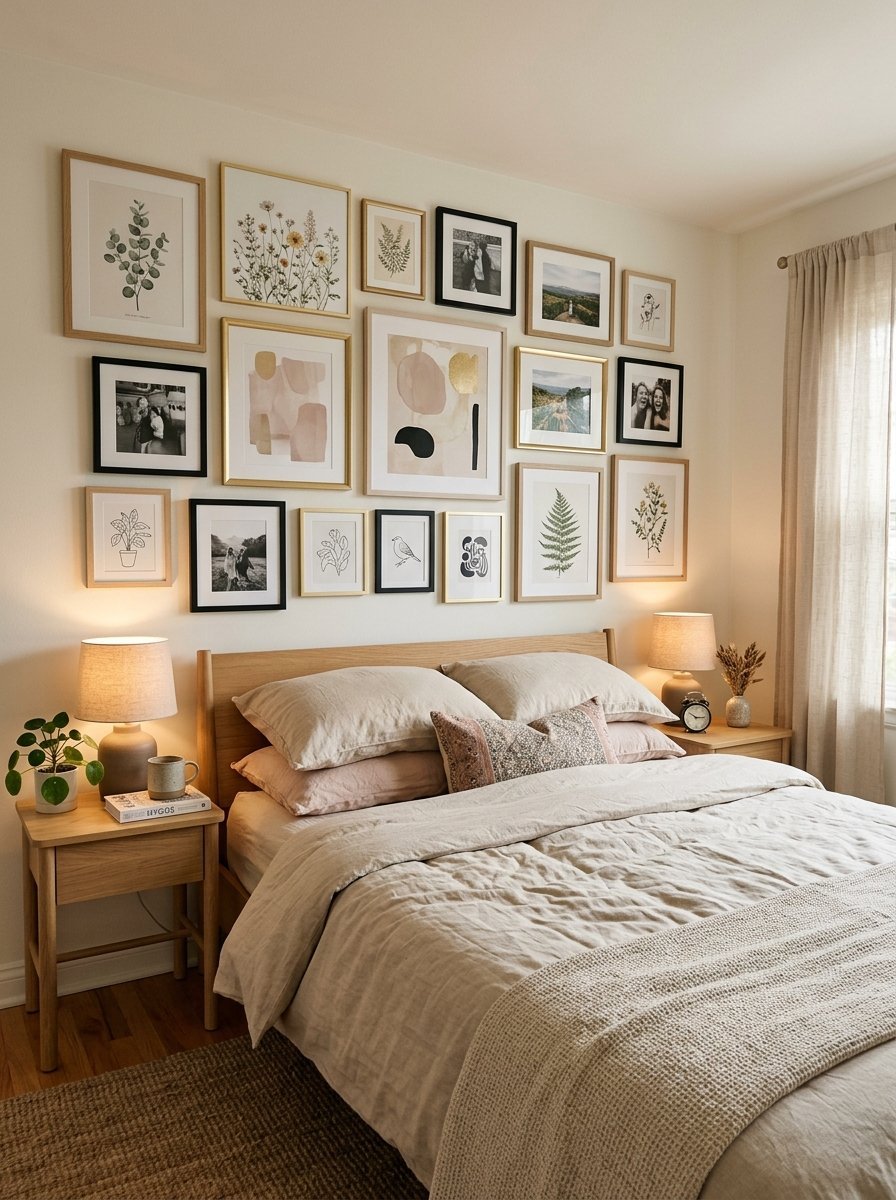
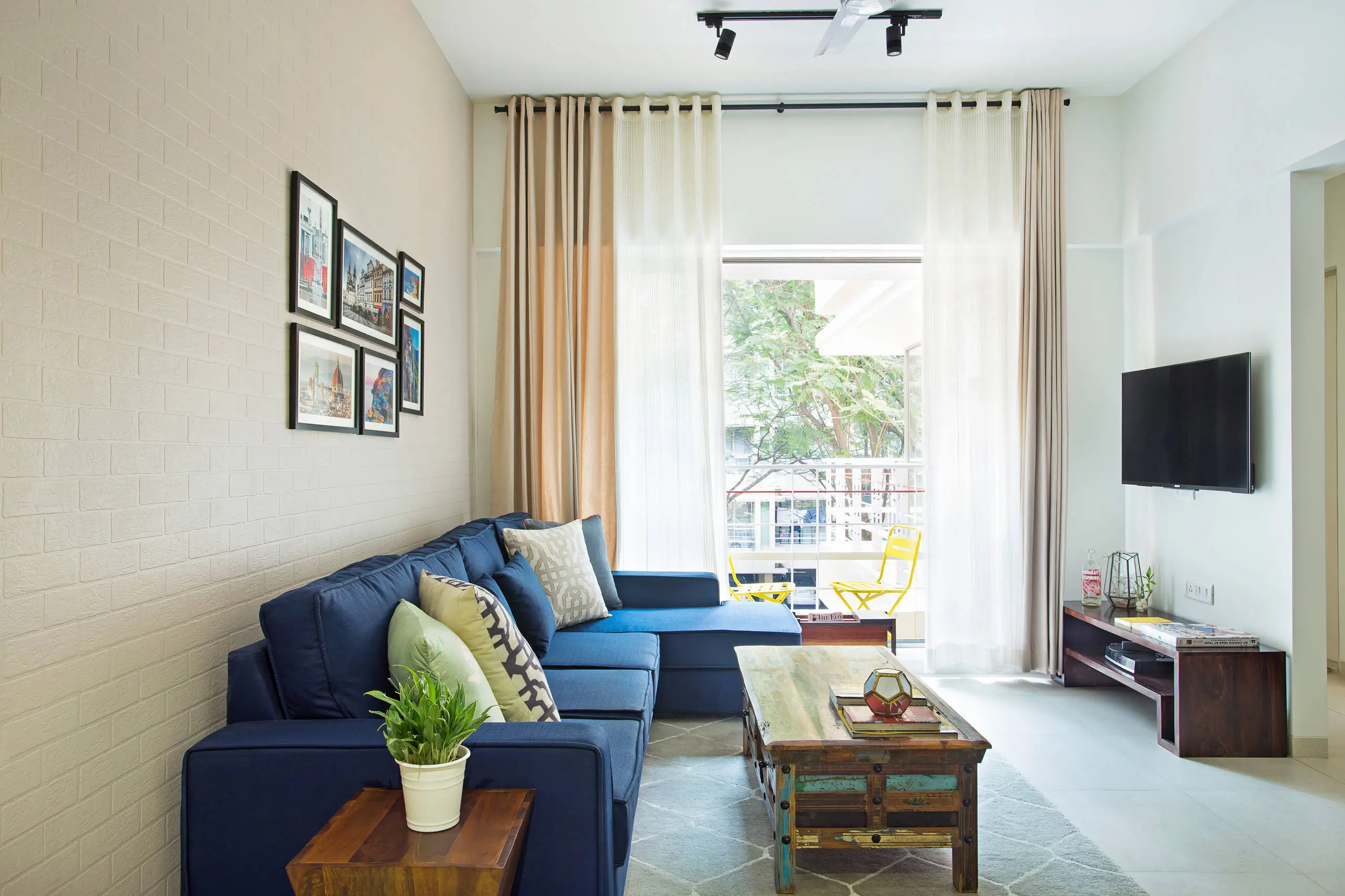
A blank wall can make a room feel unfinished. But filling it with random frames can create the same problem. The secret is to build a display that feels collected, personal, and connected to the room around it. These gallery wall ideas show how to combine family photos, art, travel memories, kids’ art, thrifted finds, and creative objects without making the wall feel chaotic. From a hallway to a staircase, there is an approach for almost every home.

1. Start With a Strong Centerpiece

One large picture can give the entire arrangement a visual anchor. Place a striking piece of art, a wedding photo, or a favorite family photo near the center, then build smaller frames around it. Architectural Digest recommends using a strong central piece when creating a symmetrical arrangement because it gives the eye a clear starting point.
2. Create an Eclectic Mix of Art

If matching frames feel too formal, try an eclectic arrangement. Mix paintings, sketches, photographs, vintage-inspired prints, and small decorative objects. The key is to connect the pieces through color, subject, or frame finish. This gives the collection personality while keeping the overall look intentional. Designers often recommend mixing genres, sizes, and mediums for more depth.
3. Build a Family Photo Wall

Some of the most meaningful displays come from ordinary memories. Combine wedding photos, travel pictures, childhood moments, and candid family photos in coordinated frames. Keep the images in a similar color tone if you want a calmer appearance. Black-and-white photographs also create a timeless look that works especially well in hallways and family rooms.
4. Use a Clean Grid Layout

A grid works beautifully when you prefer order. Choose frames with the same size and finish, then align them carefully in rows and columns. Black-and-white photos work especially well here, but colorful art can also look striking. Better Homes & Gardens notes that identical frames and structured layouts can create a subtle, graphic effect.
5. Turn the Hallway Into a Memory Lane

A hallway often gets overlooked because it is mainly a passage between rooms. Use that long wall to tell a visual story. Arrange family photos, travel pictures, wedding memories, and small artwork along the length of the space. Keep the outer edges fairly balanced so the display follows the shape of the hallway instead of looking like a random cluster.
6. Try a Staircase Arrangement

The wall beside stairs naturally creates a diagonal line, so your artwork does not need to form a perfect rectangle. Follow the angle of the staircase with different-sized frames. Begin with the larger pieces near the center and fill the surrounding areas with smaller artwork. This approach can make an awkward staircase wall feel purposeful.
7. Make a Colorful Art Collection

A neutral room can handle a burst of color. Choose artwork that shares two or three colors with the furniture, rug, curtains, or accessories. You can use colorful paintings, graphic prints, children’s artwork, or travel posters. The result feels energetic without looking disconnected from the rest of the room.
8. Add Shelves Instead of Only Frames

A gallery display does not have to stay flat against the wall. Add narrow shelves and lean framed art against them. Place a small plant, ceramic object, book, or personal souvenir between the pictures. This creates layers and makes the display easy to change whenever your style evolves.
9. Create a Bohemian Display

For a relaxed bohemian room, combine woven textures with artwork. Add macramé, small baskets, botanical drawings, handmade pieces, and natural wood frames. Keep the colors earthy with cream, tan, terracotta, olive, and warm brown. The mix should feel collected over time rather than purchased as one matching set.
10. Give Kids’ Art a Special Place

Children’s drawings become much more meaningful when you display them properly. Choose several favorite pieces and place them in simple frames. Mix different sizes while keeping the frame color consistent. This turns everyday kids’ art into a colorful family collection and gives children a reason to feel proud of their creativity.
11. Use Thrifted Frames for Character

Thrifted frames can give a display history and charm. Look for different shapes, carved details, aged wood, brass finishes, or painted frames. Do not worry if every frame matches. Instead, repeat one color or finish across several pieces to create a visual connection.
12. Make the TV Part of the Composition

A television does not always have to dominate the wall. Surround it with carefully arranged artwork so it becomes part of the overall composition. Keep the frames visually balanced around the screen and avoid placing fragile pieces too close to heat or cables. This works especially well in modern living rooms.
13. Try a Small Entryway Display

A small entryway does not need a huge collection. Three to five carefully selected pictures can make the entrance feel finished. Combine a small mirror, family photo, artwork, and one meaningful object above a narrow console. The arrangement should leave enough breathing room around the furniture.
14. Add Coastal Artwork for a Relaxed Feel

Coastal style works beautifully with soft gallery displays. Use ocean photography, shells, boats, beach sketches, pale blue artwork, and natural wood frames. Keep the palette light with white, sand, soft blue, and muted green. This creates a calm wall without making the room feel overly themed.
15. Make It a DIY Collection That Can Grow

You do not need to buy everything at once. Start with a few pieces you genuinely love, then add to the collection slowly. A DIY approach also lets you reuse old frames, print personal photos, create simple art, or add meaningful travel souvenirs. Before making holes, arrange everything on the floor or use painter’s tape to map the layout. Architectural Digest recommends this planning step because it helps you judge spacing and balance before committing to the wall.
How to Arrange Gallery Wall Ideas Without Guesswork

Before hanging anything, measure the wall and consider the furniture underneath it. A useful general guideline from Architectural Digest places the center of artwork around 57 inches from the floor, while artwork above furniture usually needs a smaller gap between the furniture and frame. The exact height should still suit the room, furniture scale, and people who use the space. For spacing, aim for consistency rather than perfection. Architectural Digest cites roughly 3 inches for small pieces and about 4–5 inches for standard-sized frames, while Better Homes & Gardens recommends roughly 3–6 inches as a useful range.
Final Thoughts on Gallery Wall Ideas

The best gallery wall ideas do more than fill empty space. They tell a story about the people, places, colors, and objects that matter to you. A hallway can become a family timeline. A staircase can become an art display. A living room can mix modern prints with thrifted treasures. The important part is to create a collection that feels connected to your home and your life. Start with one piece you love. Build around it. Step back often. If the arrangement feels balanced and the artwork means something to you, you are already on the right track.


2 Pingbacks