
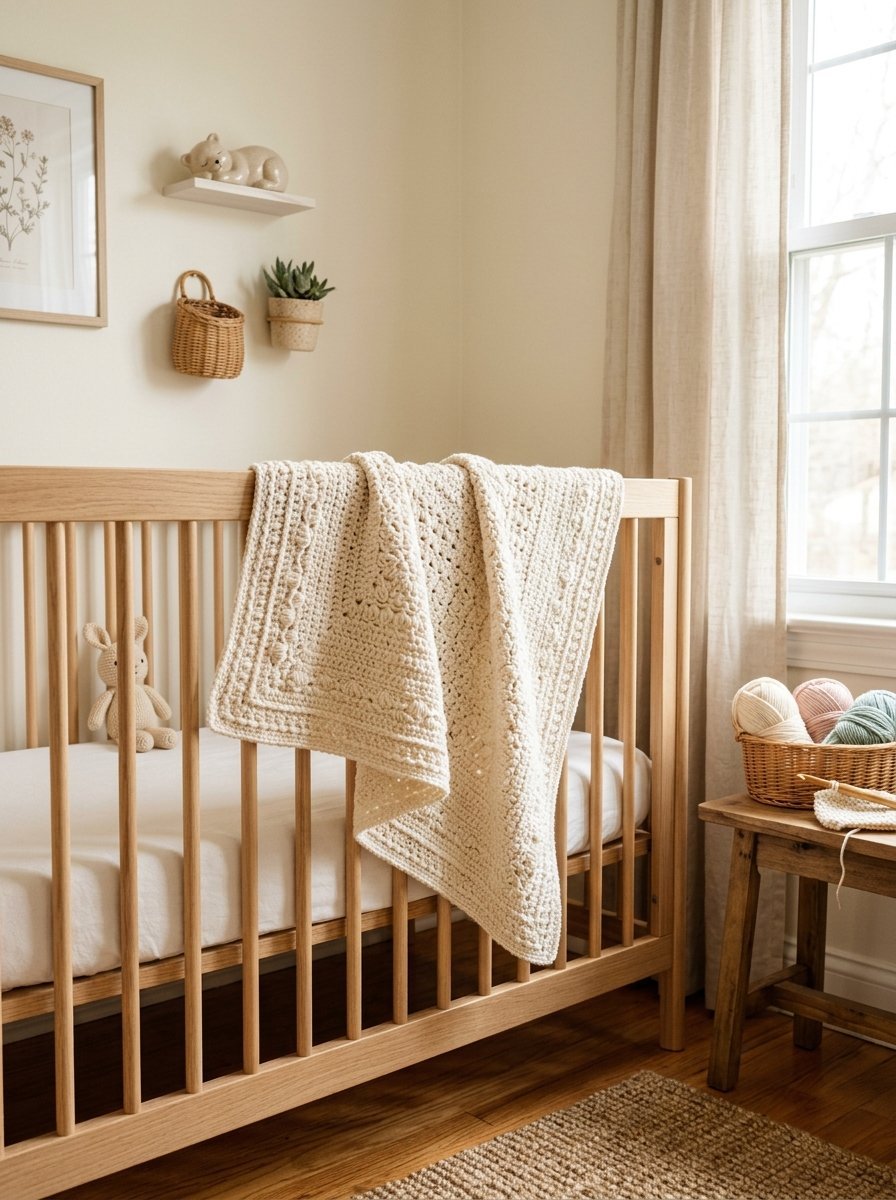
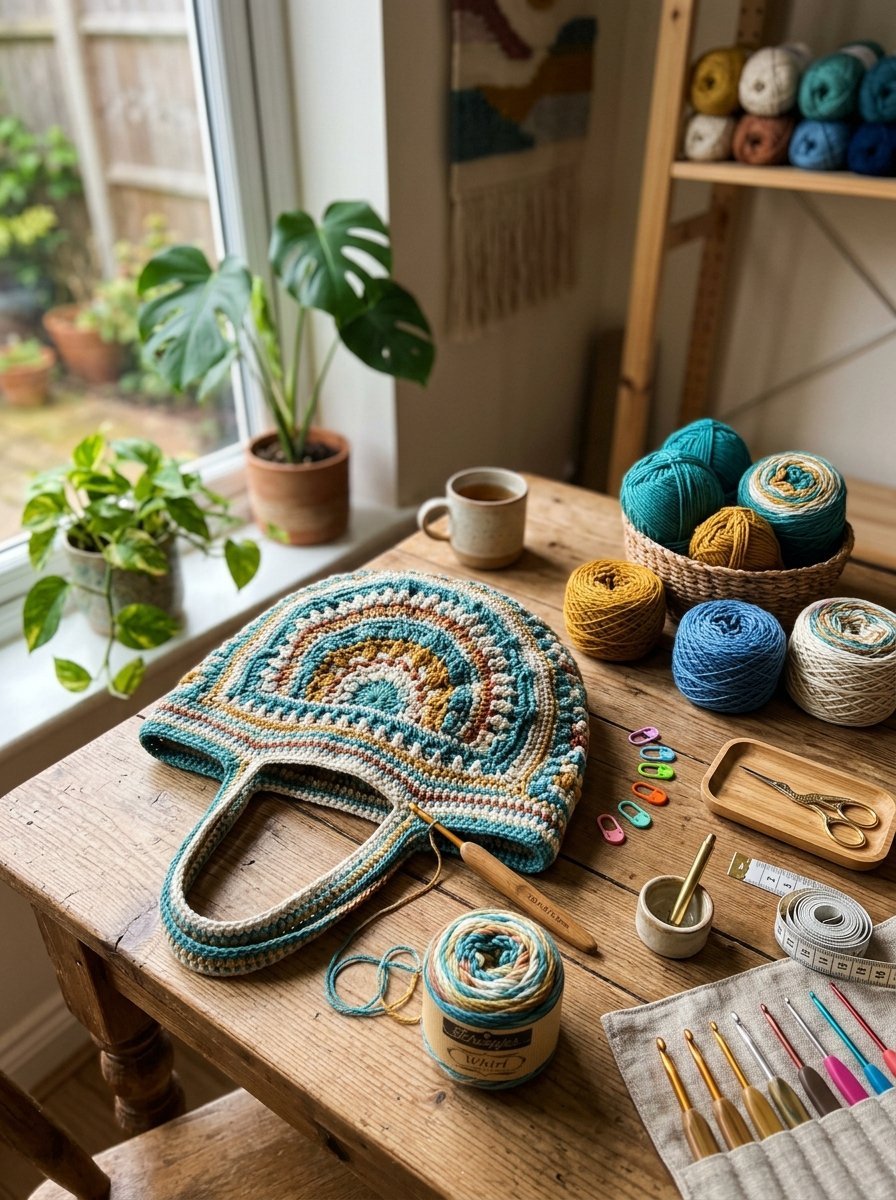
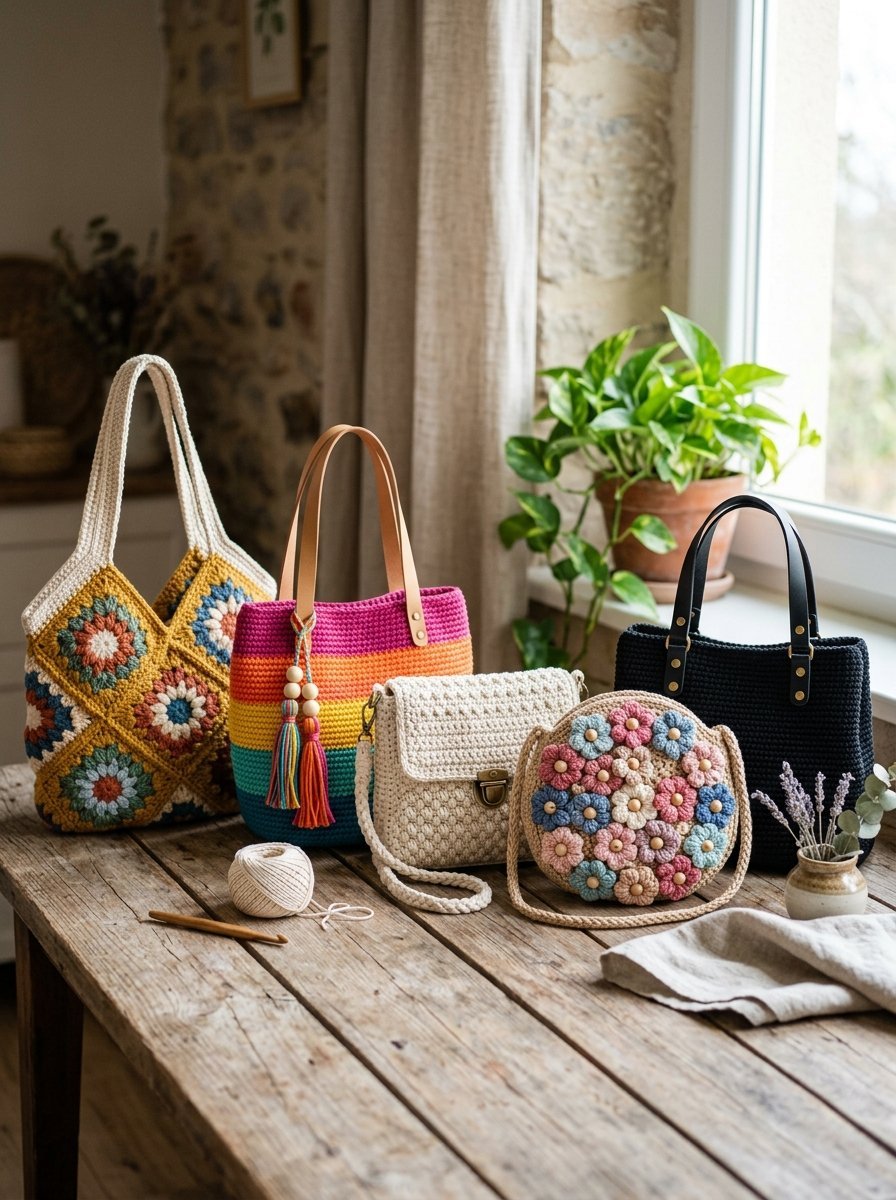
I still remember how satisfying it felt to finish a small crochet square and realize that it could become part of something much bigger. A few rounds of yarn can turn into a cozy blanket, a useful bag, or a cardigan that feels completely personal. That is what makes crochet squares so enjoyable. You can start with a simple design, learn at your own pace, and then change the colors, shapes, and details as your confidence grows. In this guide, I have gathered ideas that work for beginners but still give experienced crocheters plenty of room to experiment. My tip is to make one test square before starting a large project. It helps you check your tension, yarn choice, and finished size before you commit to many squares.
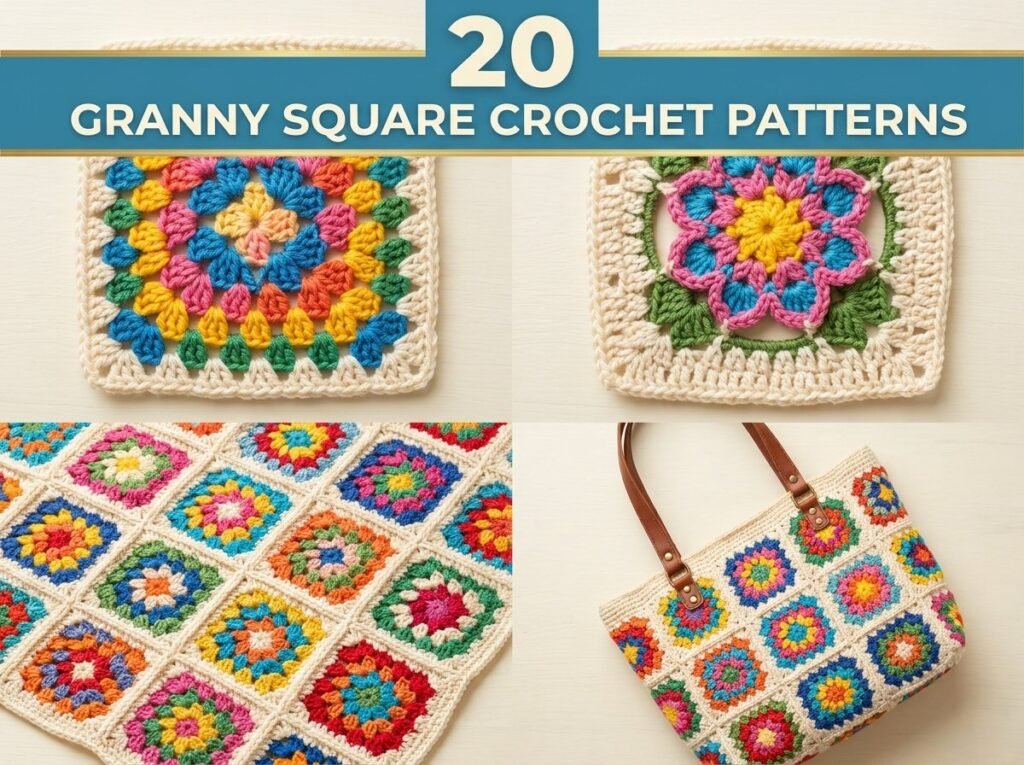
1. Classic Granny Square for a First Project
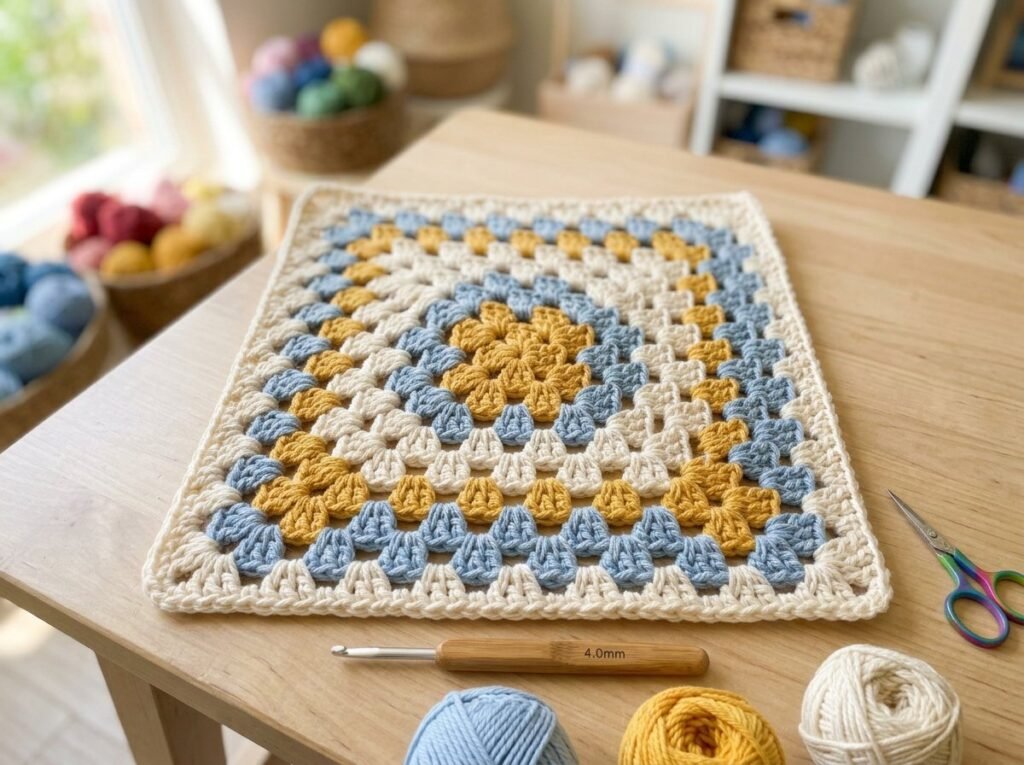
The classic square remains one of the easiest places to begin because its structure repeats from round to round. You can practice chain stitches, double crochet groups, corner spaces, and joining without dealing with a complicated shape. I like using two or three colors for a first project because the color changes make each round easier to see. If you prefer a calmer look, choose a single color and focus only on your tension. Keep your stitches relaxed rather than pulling the yarn tightly. A square that lies flat usually gives you a better starting point for blankets and other larger projects.
2. Easy Beginner Square With Simple Rounds

A beginner does not need a complicated chart to make a beautiful square. Start with a small design that uses familiar stitches and a clear repeating rhythm. Work slowly through each round and count your corner spaces before moving forward. This small habit can prevent uneven edges later. I suggest using light colored yarn while learning because it makes individual stitches easier to see. Once the movement feels natural, you can try darker shades and more decorative combinations. Simple projects often teach the most because you can focus on accuracy instead of trying to manage too many new techniques at once.
3. Flower Center Granny Square

A flower center adds a cheerful detail without changing the basic idea of building outward from the middle. Choose a bright center color, then surround it with green, cream, pink, or another shade that makes the flower stand out. These squares work especially well when you want a handmade blanket with a garden feel. Keep the flower center consistent across your squares if you want a polished finished piece. For a more playful look, change the flower colors from square to square. My practical tip is to make three test flowers first so you can compare the colors under natural daylight.
4. Solid Color Square for a Modern Look

A solid color square proves that crochet does not need many colors to look interesting. Use one shade throughout the entire piece and let the texture create the visual detail. Cream, sage green, dusty blue, warm beige, and soft brown can create a modern home look. You can also choose a bold shade when you want the finished blanket or accessory to feel more playful. I prefer this approach when the project will sit in a room that already has several colors. It creates a calmer appearance and lets the shape of each square do the talking.
5. Granny Square Blanket With Coordinated Colors
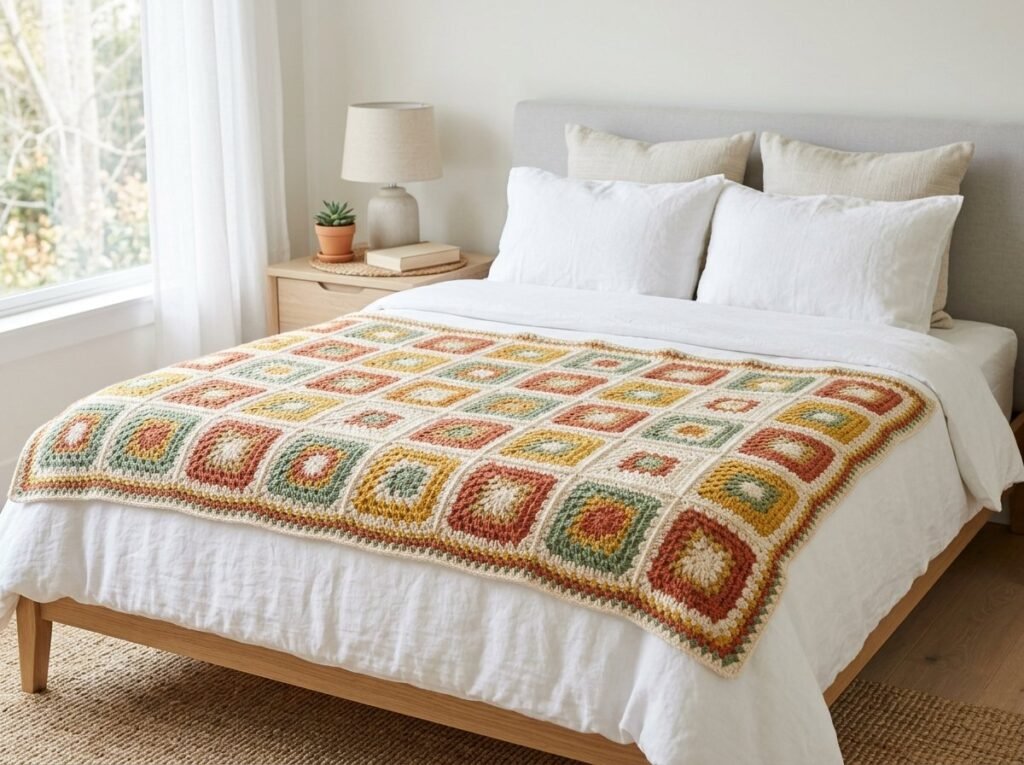
A blanket gives you a chance to combine many small squares into one larger design. The easiest way to keep the result balanced is to choose a small color palette before you begin. Pick three to five shades that work together and repeat them across the project. You can arrange the squares randomly or create a planned pattern. Before joining everything, place the squares on the floor or bed and take a photo. That simple step lets you move colors around before sewing or crocheting the pieces together. It can save a lot of time and help you spot areas that look too heavy in one color.
6. Simple Granny Square Crochet Bag

Small crochet squares can become a practical bag with very little extra decoration. Make matching squares, join them into a front and back panel, then add a sturdy base and handles. Cotton yarn can work well when you want a firm structure and a clear stitch pattern. Think about how you will use the bag before choosing the square size. Smaller squares can create more detail, while larger squares give the bag a cleaner appearance. I recommend testing the strap length before finishing it because a comfortable handle can make the difference between a decorative bag and one you actually use every week.
7. Mosaic Inspired Granny Square

Mosaic designs can make a simple square look much more detailed. The key comes from placing contrasting colors in a planned arrangement so the eye notices shapes and lines. You do not need ten colors to create this effect. Two or three strong shades can create enough contrast. Before crocheting a full set, make one sample and photograph it from a distance. A design that looks clear up close may look completely different when several squares sit together. That quick test helps you choose colors that remain visible when you join the finished pieces.
8. Crochet Diagram and Chart Based Square
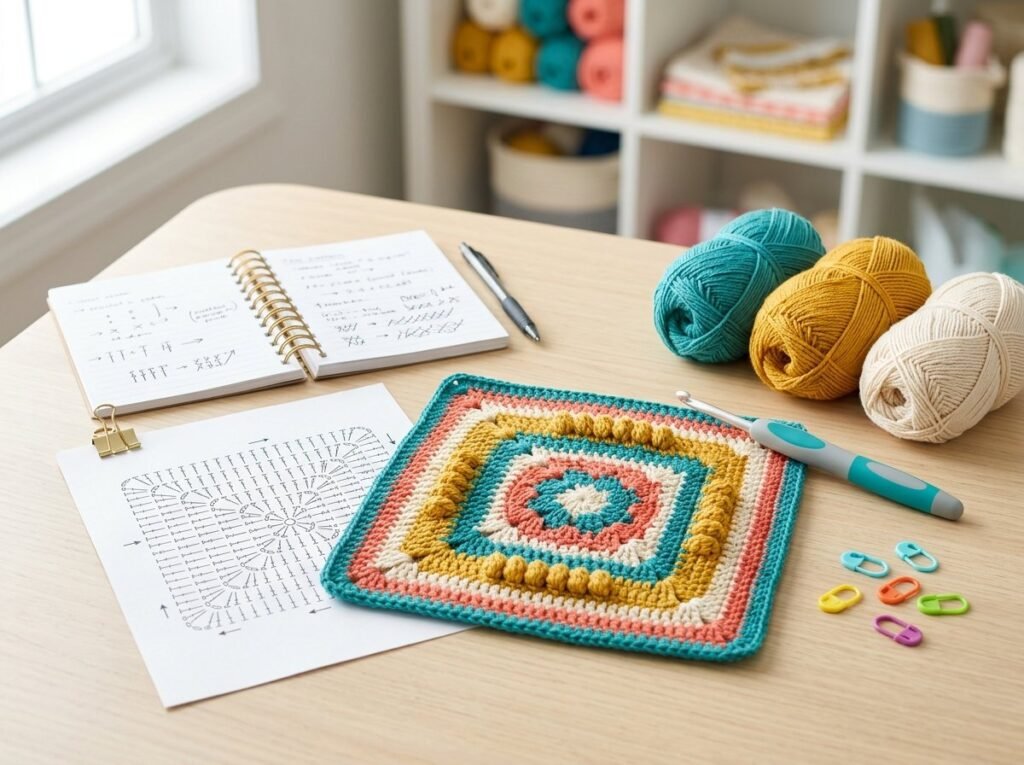
Some crocheters understand visual diagrams faster than written instructions. A crochet chart can show where stitches and spaces belong, which makes the round easier to follow once you learn the symbols. If you are new to charts, start with a small square and compare the diagram with written instructions. This helps connect each symbol with the actual stitch. The Craft Yarn Council provides standardized crochet terminology and chart information that can help beginners become more comfortable with pattern language. Its official website is https://craftyarncouncil.com. Lion Brand also publishes beginner crochet guidance at https://www.lionbrand.com. Save a printed chart beside your project and mark each completed round with a pencil. That small tracking method can prevent accidental skipped rounds.
9. Modern Neutral Granny Squares
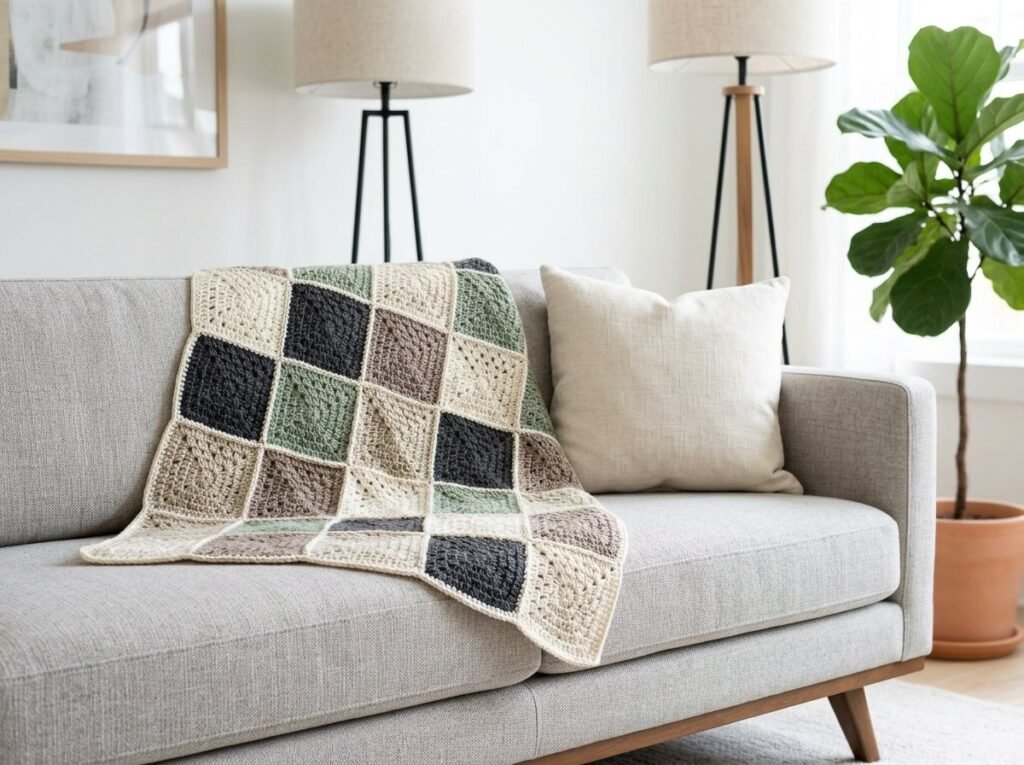
Modern crochet often uses quieter colors and clean arrangements. Try cream, oatmeal, charcoal, taupe, muted green, or soft clay shades instead of bright rainbow combinations. The result can fit naturally into a contemporary bedroom or living room. This approach works especially well for blankets, cushion covers, and storage baskets. I like choosing one main neutral and adding only one accent color because the finished project feels intentional without looking too busy. Keep the square size consistent as well. Small differences can become noticeable when you join many pieces together.
10. Christmas Granny Square Design

Christmas themed squares can bring seasonal color into handmade projects without requiring a complicated shape. Use deep green, red, cream, and small touches of gold or white. You can create simple stars, trees, snow inspired centers, or traditional geometric arrangements. These squares work for blankets, table runners, stockings, and decorative cushions. If you want something reusable each year, choose durable yarn and keep the colors balanced rather than relying only on bright red and green. Store finished pieces in a clean dry container after the holiday season so they remain ready for the next winter.
11. Star Granny Square for a Bold Detail
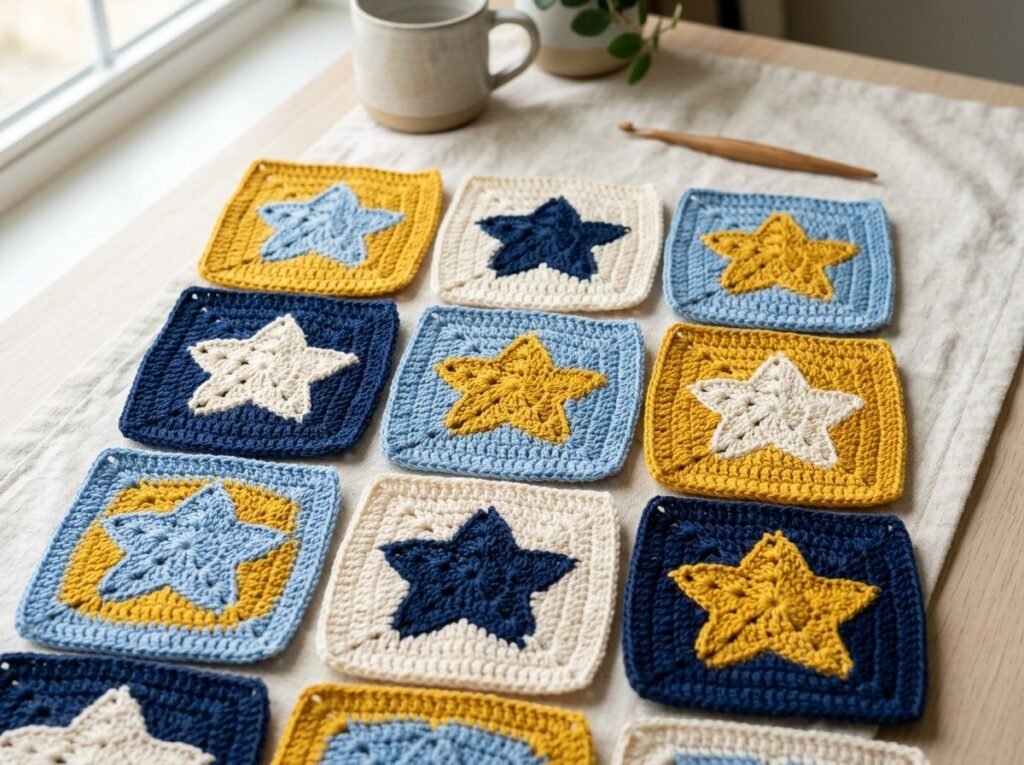
A star center gives a square a strong focal point. It can look playful in bright colors or more sophisticated in neutral shades. This design works well for blankets, pillows, bags, and seasonal decorations. When choosing colors, make the star contrast clearly with the surrounding rounds. Otherwise, the shape may disappear into the background. I would make one sample using your final colors before producing a full collection. The sample will show whether the star remains visible from across the room, which matters when you plan a large blanket or wall hanging.
12. Bear Motif Square for a Playful Project
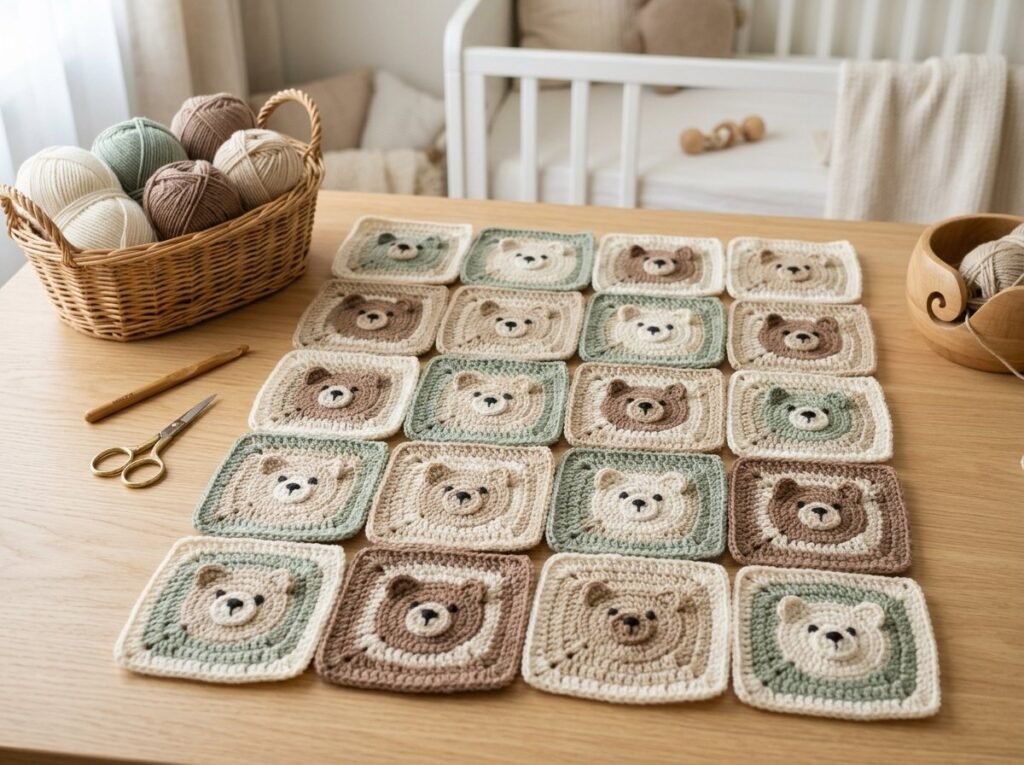
A bear motif can make a crochet square feel warm and playful. It works especially well for baby blankets, children’s cushions, nursery accessories, and gifts. Keep the face simple so the motif remains clear when you repeat it across several squares. Soft brown, cream, beige, and muted green can create a gentle palette. If you are making a baby project, choose yarn that feels soft and comfortable and follow the care instructions for that fiber. A useful tip is to place the bear motif in alternating squares rather than using it everywhere. This gives the finished project more visual breathing room.
13. Gothic Granny Square With Dark Colors
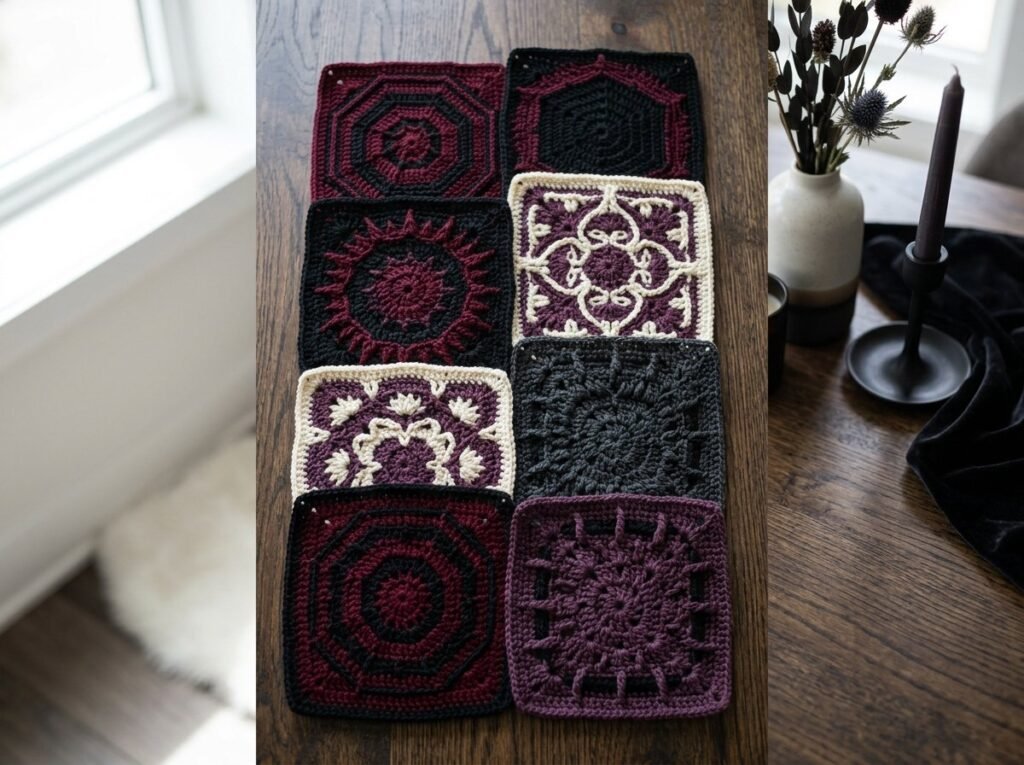
Gothic crochet does not have to look heavy or complicated. Black, deep burgundy, charcoal, dark purple, and cream can create a dramatic square while keeping the structure simple. Try geometric centers, sharp color changes, stars, or flower shapes with darker outer rounds. This style can work beautifully for blankets, bags, cardigans, and home accents. The most important detail is contrast. If every shade has a similar depth, the pattern may disappear. Pair a very dark shade with cream or another lighter color when you want the motif to stand out clearly.
14. Free Easy Patterns for Daily Practice

Free patterns can help beginners learn without investing in a large project immediately. Look for patterns that clearly explain abbreviations, stitch counts, yarn weight, hook size, and finishing steps. A good free tutorial should give you enough information to repeat the design confidently. When choosing a granny square crochet pattern, I would also check the stitch abbreviations and finished measurements before starting. Do not choose a pattern only because the finished photo looks beautiful. Read the instructions first and check whether the required stitches match your current skill level. I suggest saving a few patterns in separate folders based on difficulty. That makes it easier to find the right project when you want something quick and manageable.
15. Crochet Cardigan Made From Squares

A cardigan can turn individual squares into wearable art. Before making a large number of pieces, measure the intended garment and compare the square size with the measurements. A few centimeters of difference can change the fit after joining. Use a consistent tension throughout the squares so the panels line up properly. You can choose a classic color palette or create a modern mix of neutrals and one accent shade. I recommend joining a few squares first and checking the shape before finishing the whole collection. That small fitting test can save hours of rework.
16. Sweater With a Patchwork Effect

A crochet sweater made from squares can have a beautiful patchwork appearance. The trick is to plan the color placement before joining the pieces. Lay all the squares on a large flat surface and photograph the arrangement. Then try moving similar colors apart so the design feels balanced. You can use classic shades for a timeless sweater or brighter colors for a modern statement. Check the measurements carefully because crochet fabric can behave differently from woven fabric. Make a small gauge sample before beginning the full garment so you have a better idea of how your yarn and tension will behave.
17. Unique Mixed Motif Collection
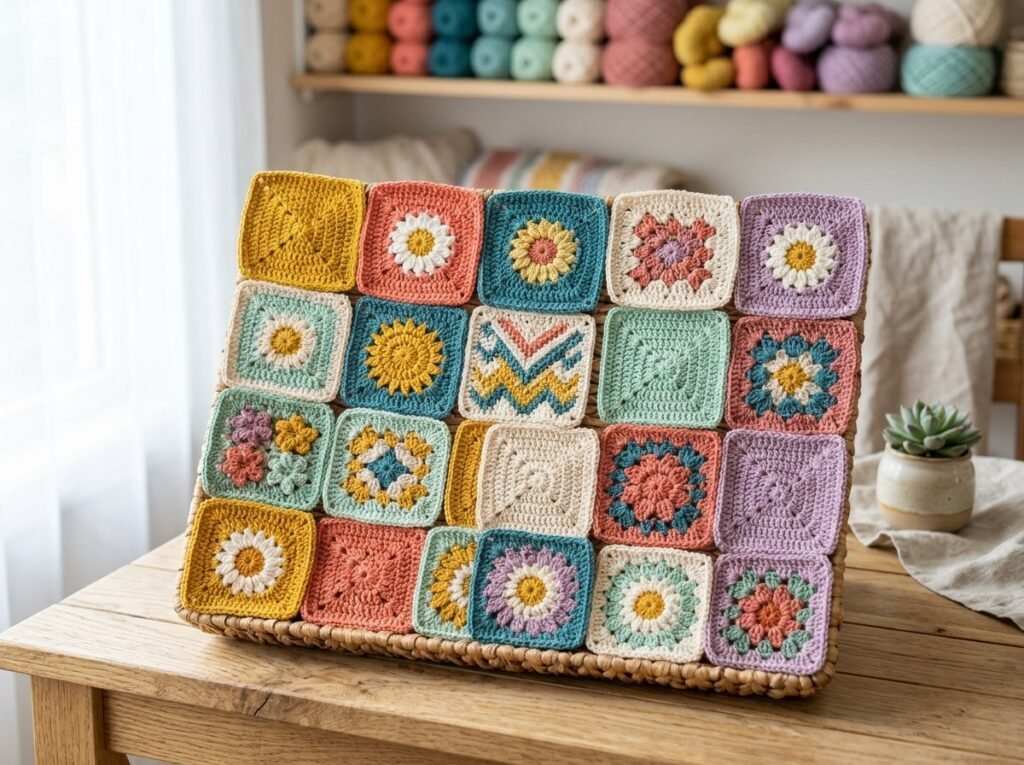
Mixing several motifs can make a blanket or accessory feel completely original. You might combine flowers, stars, geometric shapes, and solid squares while keeping one color family across the whole project. The trick is to repeat at least one color throughout the collection. That repeated shade acts like a visual thread and helps different motifs feel connected. I would avoid adding a new motif every few squares. Choose three or four designs and repeat them in a planned rhythm. This creates variety without making the finished piece look random.
18. Classic Square With a Modern Color Palette

You do not need a new stitch to make an old favorite feel fresh. Keep the classic square construction and change the palette. Try dusty rose with cream, olive with beige, navy with warm white, or terracotta with soft blue. These combinations can make a familiar design feel completely different. Color placement also matters. A dark center with lighter outer rounds creates one effect, while a light center surrounded by dark rounds creates another. Make a small color sample before starting a large project. It is much easier to change a palette on one square than on fifty.
19. SVG Inspired Crochet Chart Planning

An SVG file can be useful when you want a clean digital version of a crochet diagram or motif plan. It can help you view lines and symbols clearly at different sizes, especially when you are planning a geometric design. However, a digital chart still needs to match the actual crochet instructions. Check the stitch symbols, round order, and corner placement before treating the diagram as a final guide. For beginners, pair the visual chart with written instructions whenever possible. The combination can make complex designs easier to understand because you can see the structure while reading the stitch details.
20. Build Your Own Granny Square Collection

Once you understand several basic designs, create a personal collection instead of following only one pattern. Keep samples of your favorite flower, solid, star, mosaic, and classic squares in a small folder or project box. Write down the yarn type, hook size, number of rounds, and finished measurements for each sample. These notes become valuable when you return to the design months later. You can then combine your favorite motifs into a blanket, bag, cardigan, or sweater. In my experience, this kind of sample library makes future projects much easier because you already know which colors, stitches, and square sizes work well together.
Final Thoughts on Granny Square Crochet Pattern
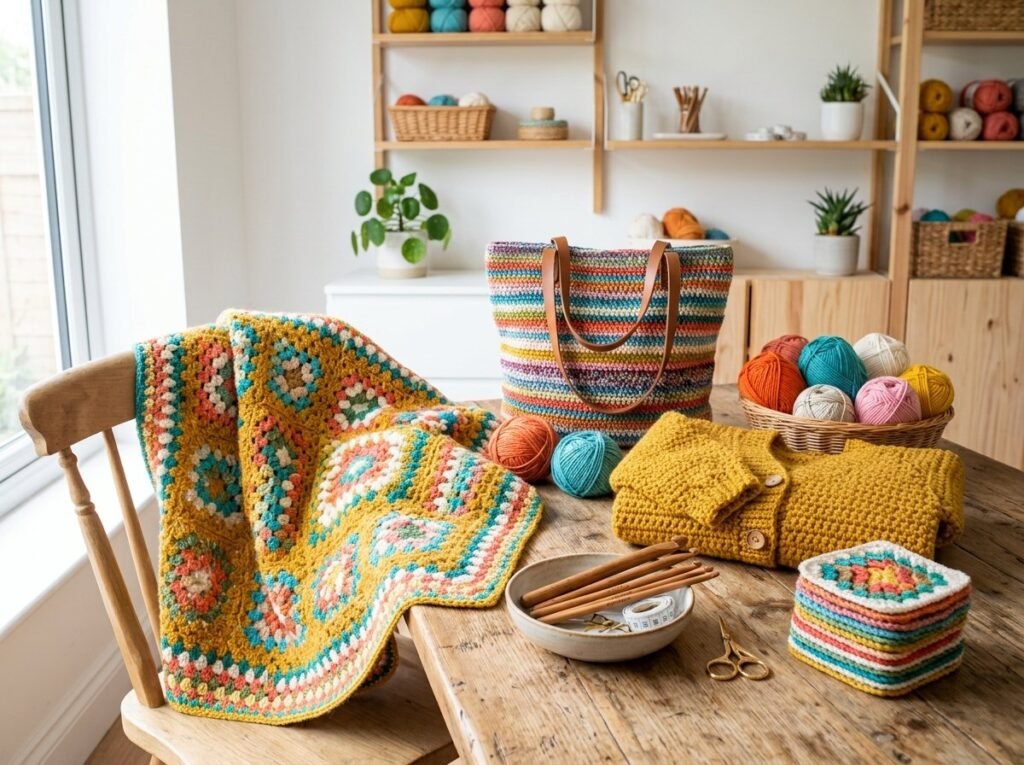
Crochet squares give you a simple way to learn, experiment, and create useful handmade pieces. A well chosen granny square crochet pattern can take you from a first practice square to a much larger handmade project. Start with a classic or beginner design, then explore flowers, stars, mosaic layouts, single color styles, and modern color combinations as your skills grow. Before beginning a large blanket or garment, make a sample and check its size, tension, and colors. Most importantly, choose projects that make you want to pick up the hook again. The right design should feel enjoyable to make, not like a race to finish.


5 Pingbacks