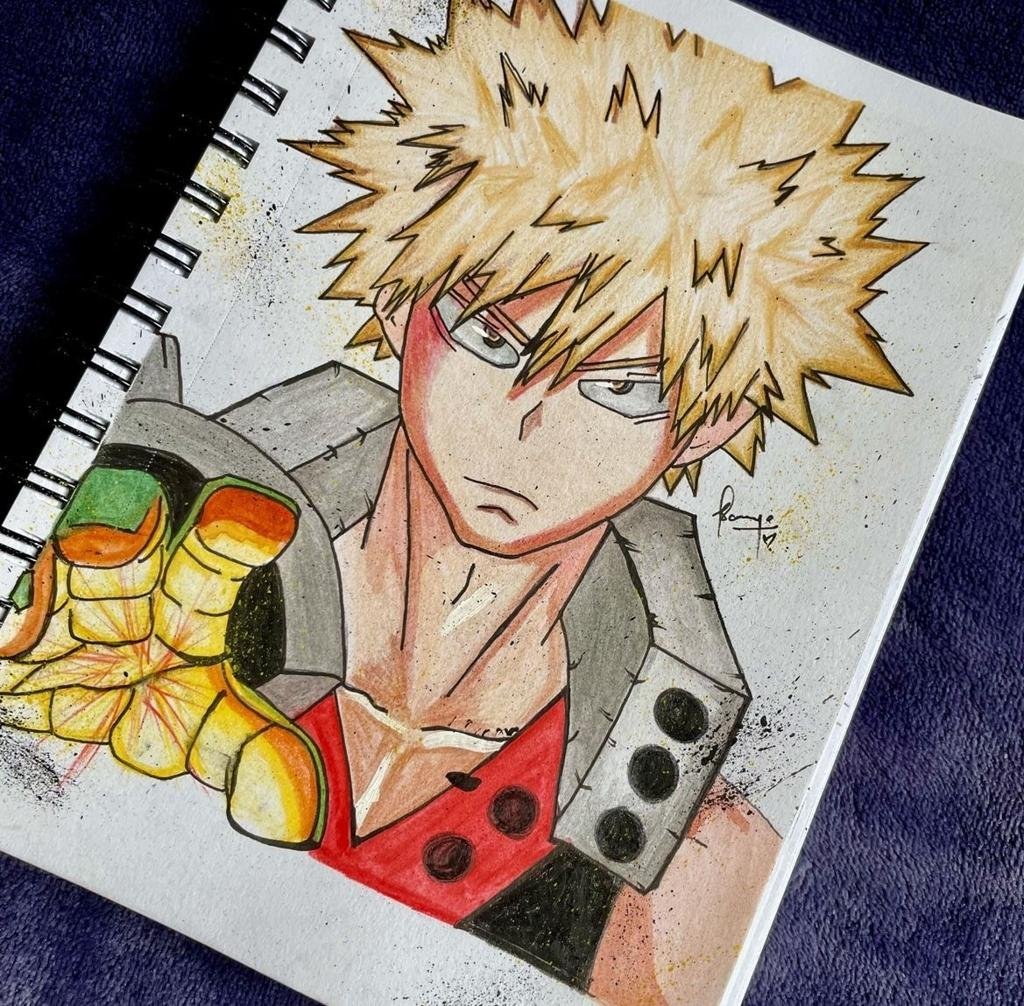


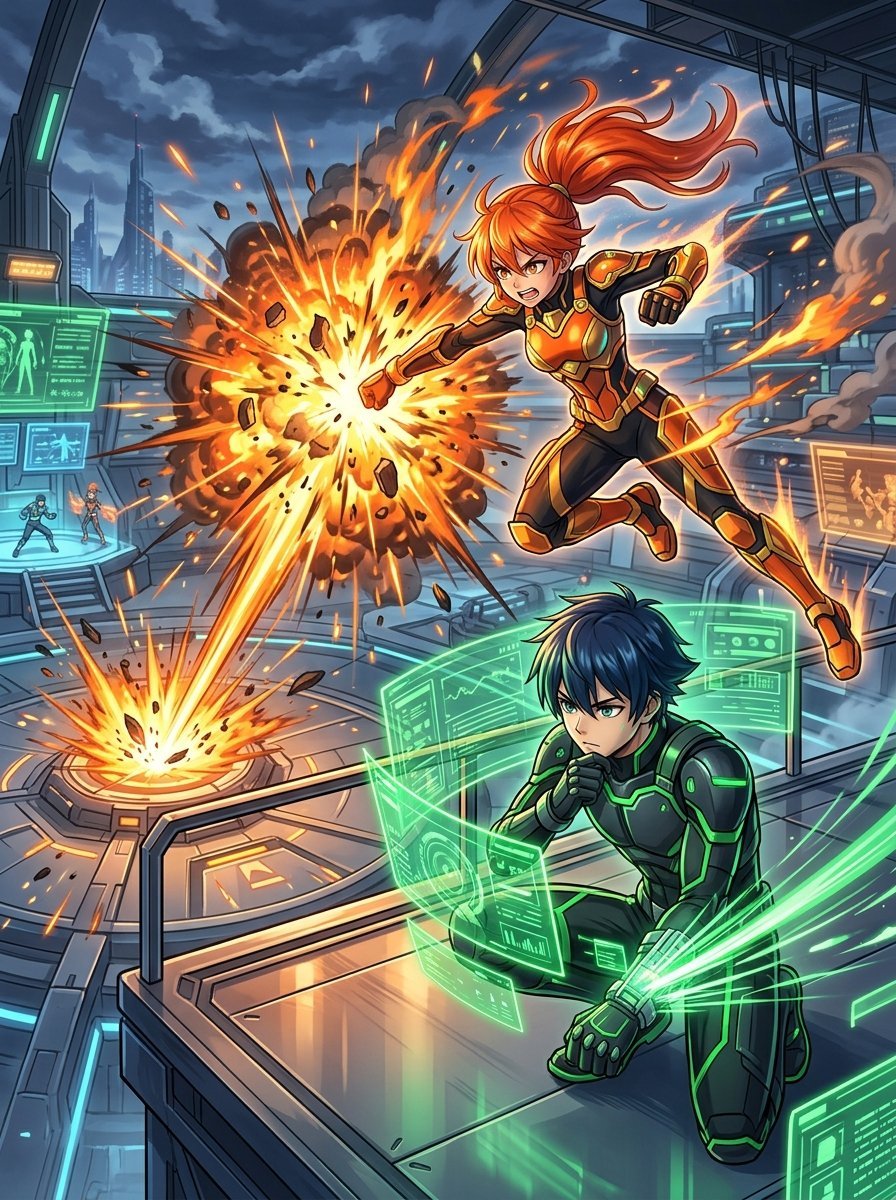
Some anime characters are instantly recognizable, and Katsuki Bakugo is one of them. His spiky blond hair, sharp eyes, explosive personality, and powerful hero costume give artists plenty of details to explore. That makes Bakugo fanart a fun subject for both beginners and experienced artists. You can approach him in many different ways. A simple pencil portrait can focus on his facial features, while a dynamic digital illustration can show his Explosion Quirk in action. Chibi art, realistic portraits, fantasy concepts, wallpapers, and character studies can all give the same character a completely different feeling.
The official My Hero Academia character profile identifies Bakugo as Izuku Midoriya’s childhood friend and rival and lists Explosion as his Quirk. His strong visual identity makes him especially useful for artists who want to practice expressions, anatomy, movement, costume details, and special effects. Below are 15 creative ideas that can help you explore different approaches without making every drawing look alike.
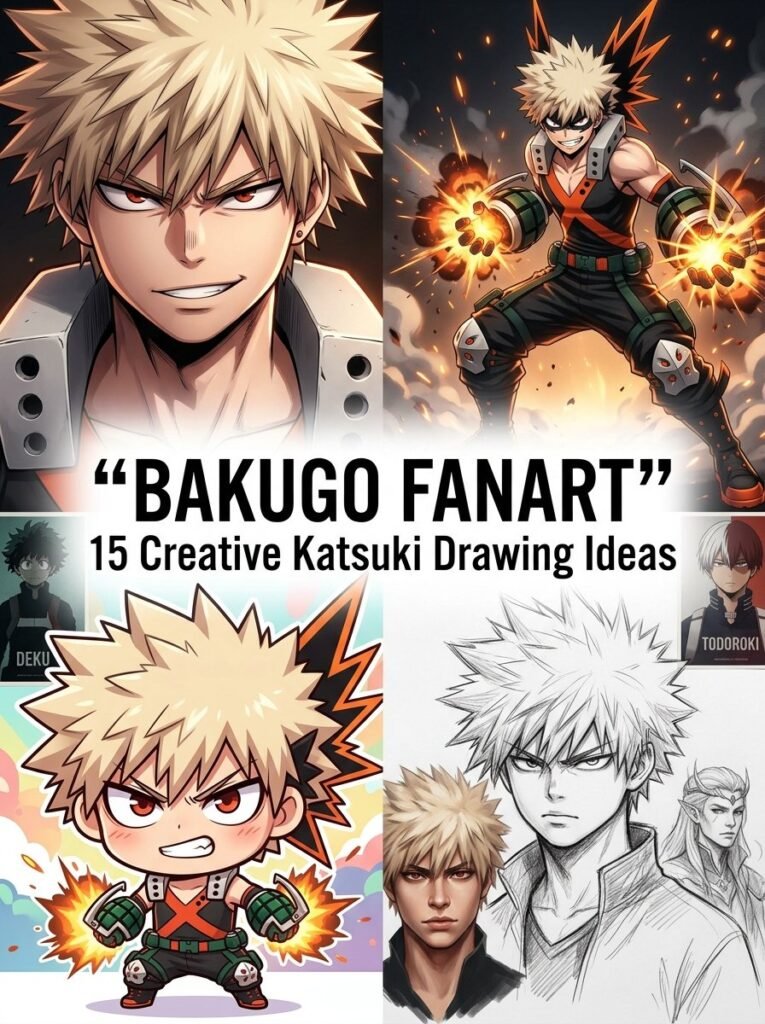
1. Classic Katsuki Bakugo Portrait
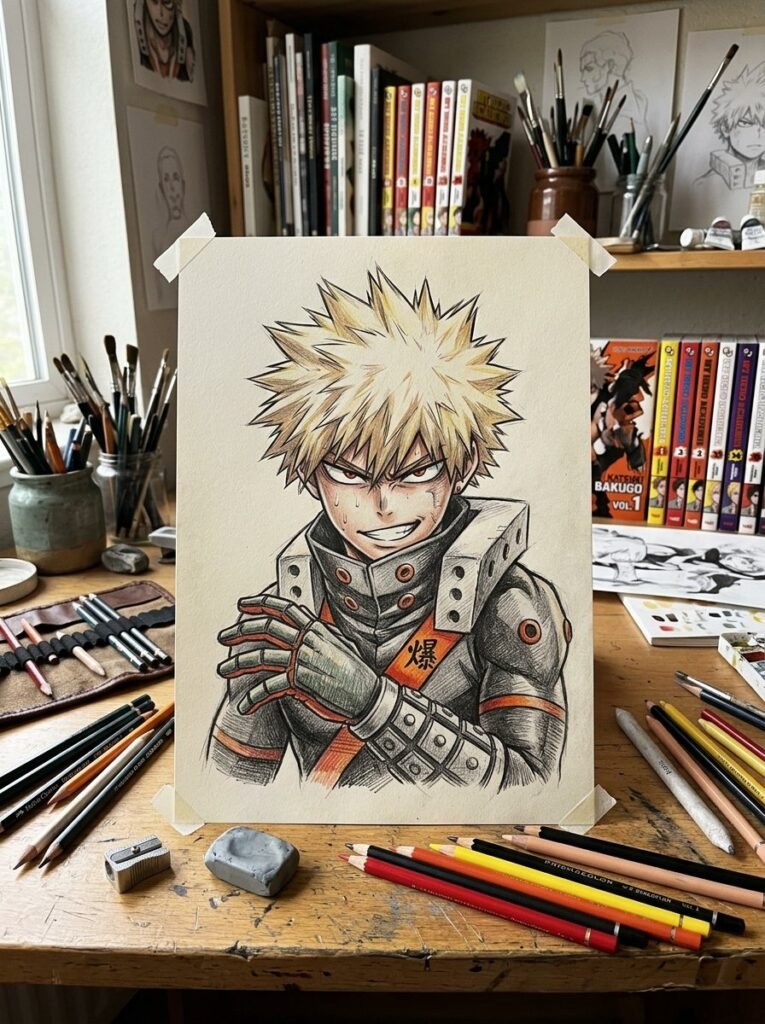
Start with the face if you want a straightforward character study. Focus on Bakugo’s spiky hair, sharp eyes, eyebrows, jawline, and expressive mouth. A close-up composition gives you enough space to study proportions without worrying about the entire body. Keep the background simple so the face remains the main focus. This classic approach is also a useful starting point for anyone creating Bakugo fanart for the first time.
2. Cute Chibi Bakugo
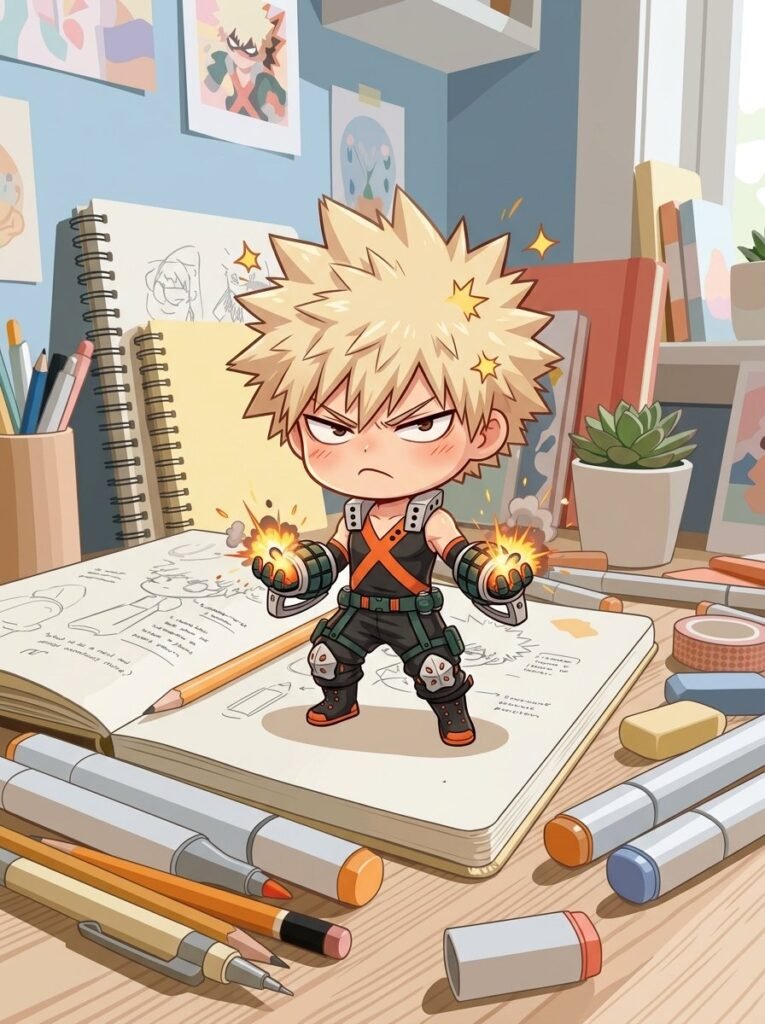
A chibi version gives Bakugo a completely different personality. Make the head larger, body smaller, and costume details simpler while keeping his recognizable hairstyle and expression. Tiny explosions around his hands can add personality without making the drawing complicated. Chibi artwork is especially useful for stickers, profile pictures, notebook designs, and small digital illustrations.
3. Dynamic Bakugo Action Pose

Action poses can make your artwork feel energetic before you even add color. Start with a simple body framework and establish the movement first. Tilt the torso, bend one knee, and extend an arm toward the viewer to create depth. Once the pose works, add costume details and explosion effects. This approach is excellent for artists who want to practice anatomy, perspective, and movement.
4. Black and White Bakugo Sketch
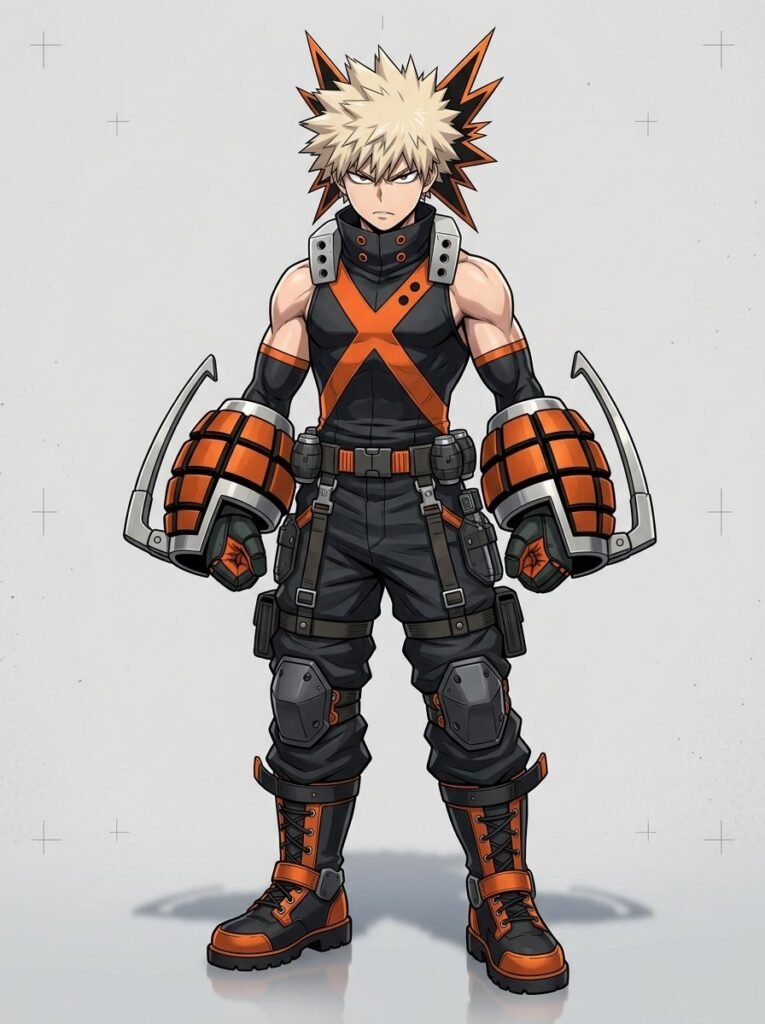
You do not need color to create powerful character art. Try drawing Bakugo entirely with graphite, charcoal, or black ink. Concentrate on line weight, shadows, highlights, and facial expression. Darker areas around the hair and costume can create contrast, while lighter areas guide attention toward the face. A monochrome sketch is also a useful exercise because it lets you focus on structure without worrying about color combinations.
5. Full-Body Bakugo Drawing
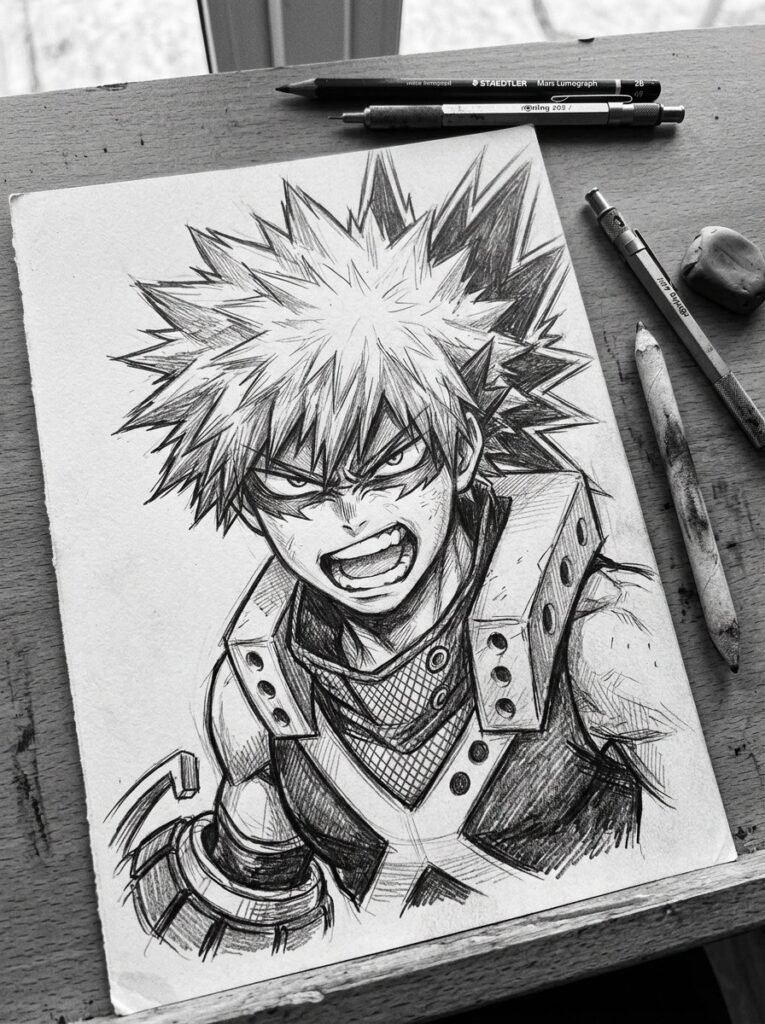
A full-body drawing gives you more room to study anatomy and costume design. Begin with the head, spine, shoulders, hips, knees, and feet before adding clothing. Check the proportions before spending time on small details. Start with a relaxed standing pose and later experiment with jumping, walking, or combat positions. This method helps you understand how the costume follows the body instead of treating it as a separate object.
6. Bakugo Timeskip Concept
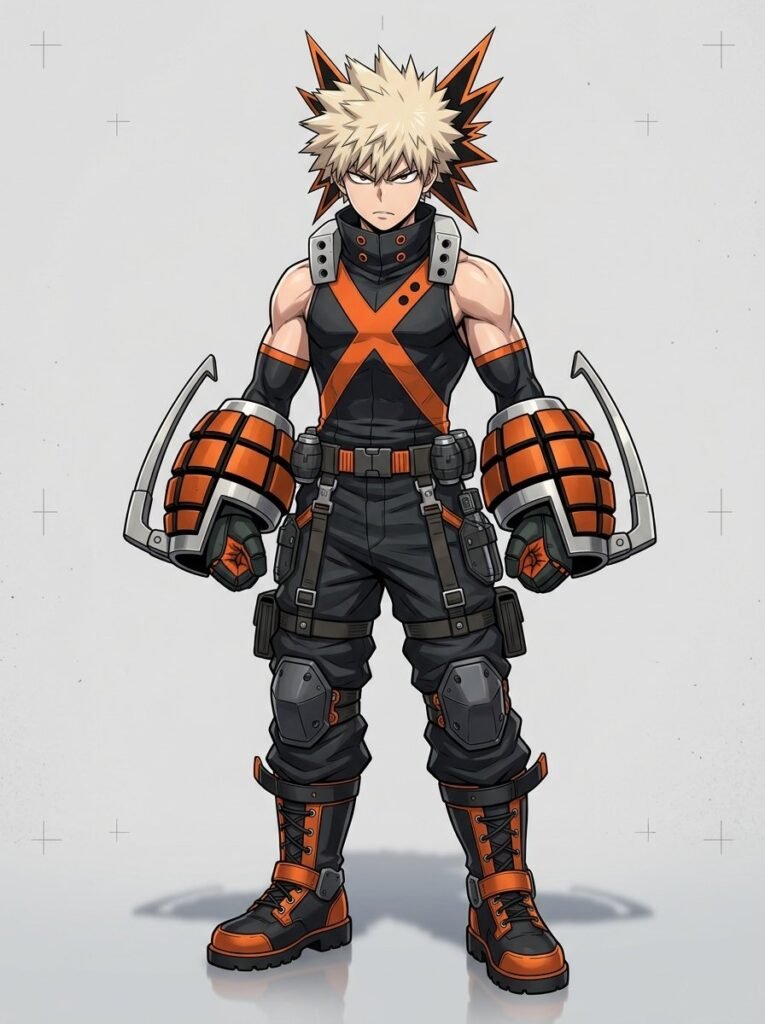
A timeskip concept gives you an opportunity to explore how Bakugo might look in a more mature professional setting. The official character profile describes him as working as a professional hero years after graduating from U.A. Use that setting as inspiration for a more developed costume, environment, and posture. A city rooftop, sunset, or professional hero workspace can make the illustration feel cinematic.
7. Bakugo and Deku Artwork
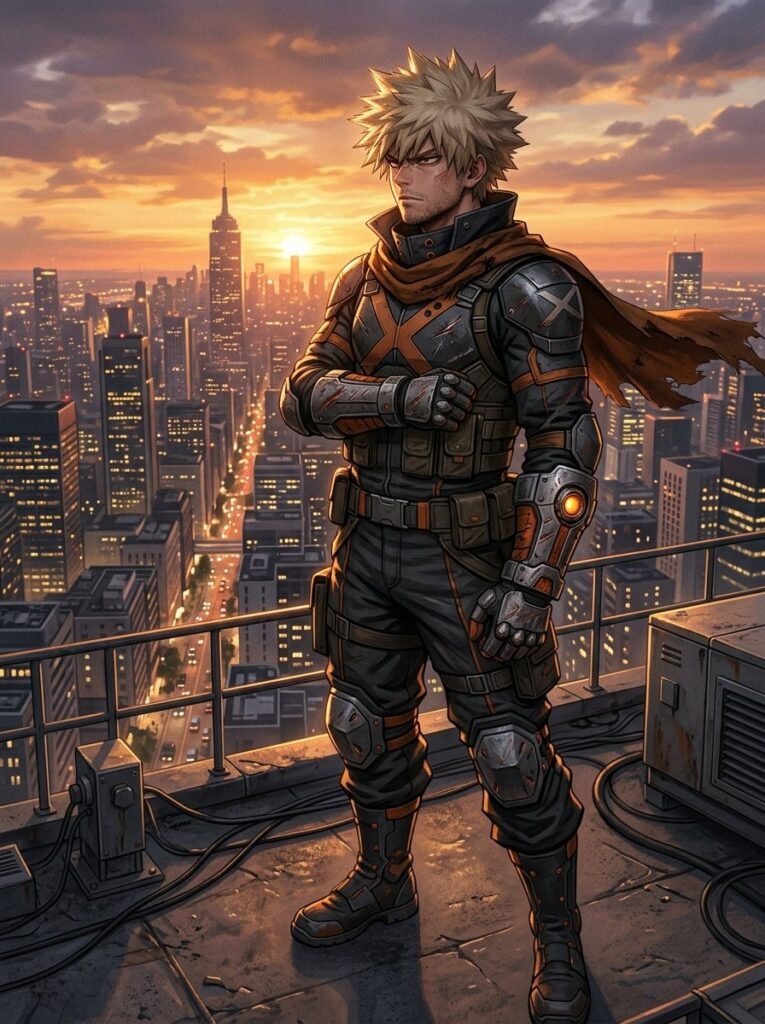
Bakugo and Deku create a natural two-character composition because their personalities and visual designs contrast strongly. The official character profile describes Bakugo as Deku’s childhood friend and rival. Try placing them back-to-back, facing each other, or standing together after training. Keep their silhouettes distinct so both characters remain easy to recognize. Different lighting colors can also separate the two sides of the composition.
8. Aesthetic Bakugo PFP

A profile picture needs a simple composition because the final image may appear very small. Crop the character around the face and shoulders and make the eyes and hair easy to recognize. Keep the background minimal with a few sparks or abstract shapes. Dark gray, black, orange, and muted red can create a strong visual combination without distracting from the character.
9. Realistic Bakugo Portrait
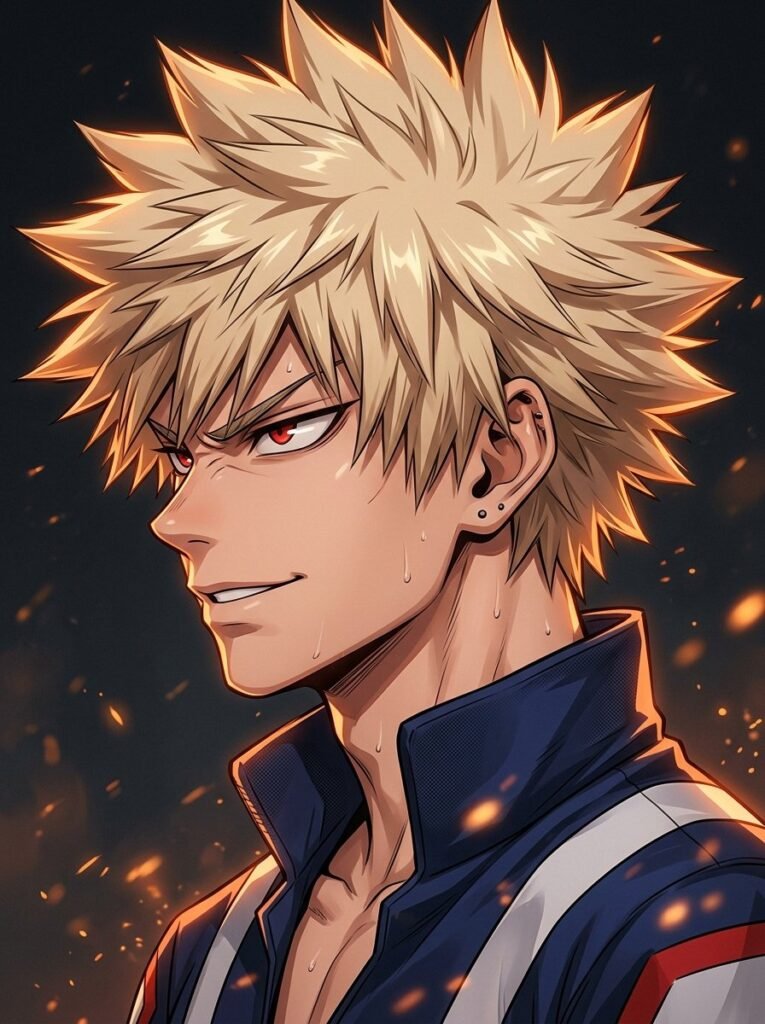
A realistic interpretation allows you to study the character through a different artistic style. Instead of copying every anime line, focus on the basic forms underneath the face. Study the jaw, cheekbones, eyes, nose, and hair volume. Keep the recognizable features while introducing more natural lighting, shadows, and hair texture. The result can feel realistic without losing the character’s identity.
10. Bakugo With Explosion Effects
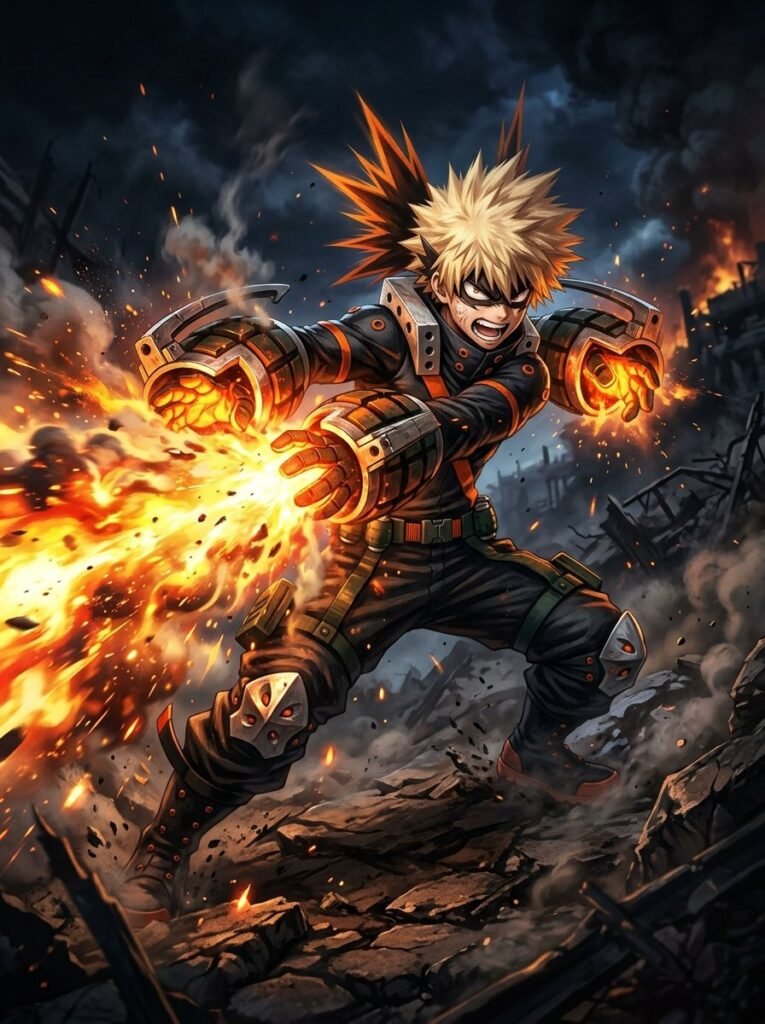
Explosion effects are one of the most recognizable visual elements associated with Bakugo. Draw the character first and build the effects around his hands afterward. Avoid making every explosion perfectly circular. Use irregular edges, sparks, smoke, glowing highlights, and scattered particles to create a more natural effect. Keep enough of the face and body visible so the special effect supports the artwork instead of covering the character.
11. Soft and Emotional Bakugo
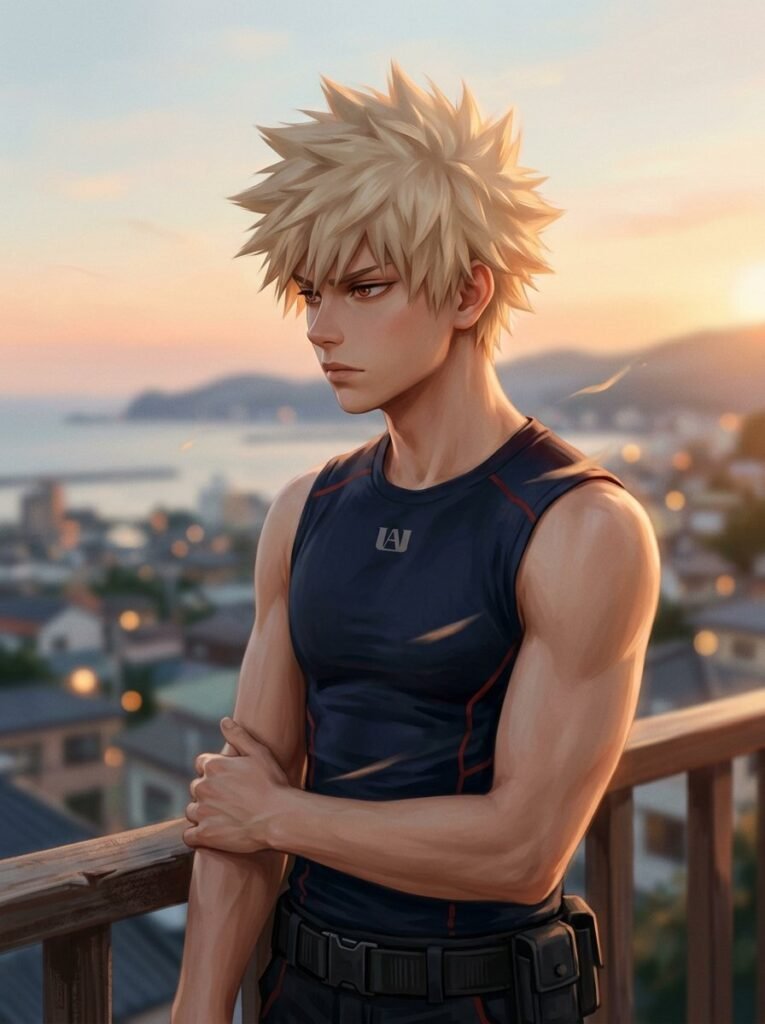
Bakugo does not always have to be shown shouting or fighting. Try a quieter expression such as thoughtful, tired, surprised, or focused. Softer lighting can completely change the mood. A sunset background or muted color palette can make the artwork feel calm and reflective. This is a good exercise for artists who want to practice subtle facial expressions rather than only dramatic ones.
12. Bakugo Muscle and Anatomy Study

Strong anatomy can make action artwork much more natural. Start with the major body shapes rather than individual muscles. Study the shoulders, chest, arms, waist, hips, and legs before adding the costume. Practice a neutral pose first, then repeat the study with a twisting or action position. The goal is to understand how the body moves so your finished character drawings feel balanced and believable.
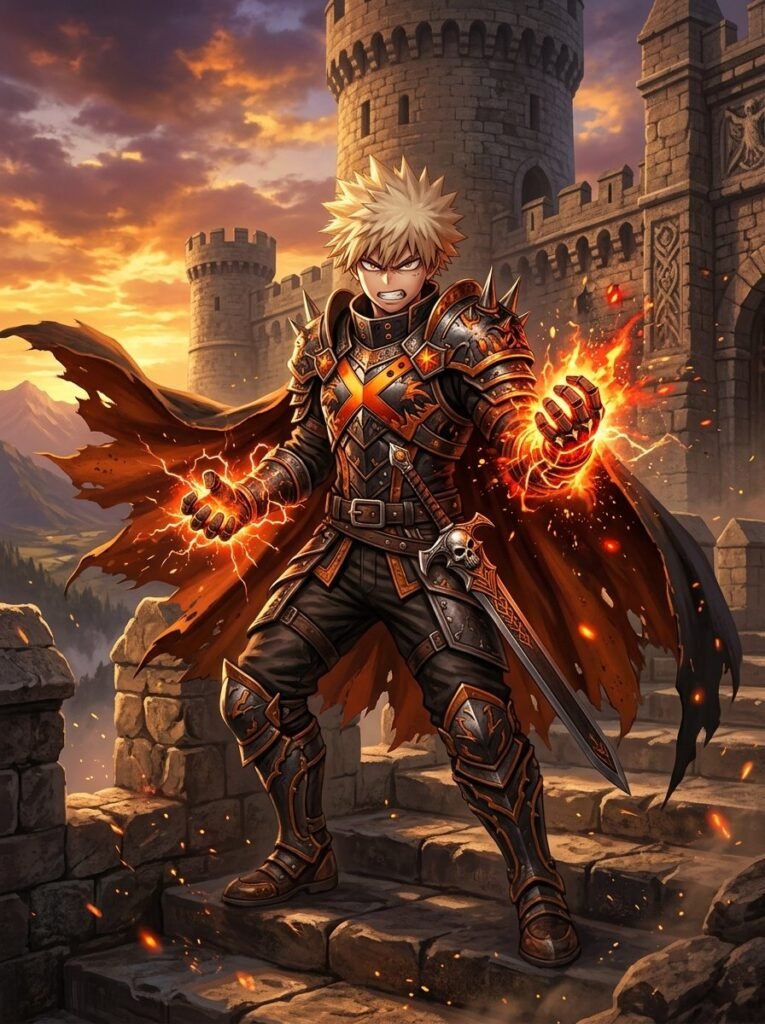
13. Fantasy Bakugo Concept Art
.
Take Bakugo outside his usual hero setting and imagine him as a fantasy warrior, fire mage, royal guard, or adventurer. You can redesign the costume with armor, a cloak, fantasy accessories, or magical effects. Keep a few recognizable features, such as his hairstyle and energetic personality, so the character remains identifiable. This idea gives you more freedom to experiment with costume design, world-building, lighting, and backgrounds.
14. Bakugo and Todoroki Artwork
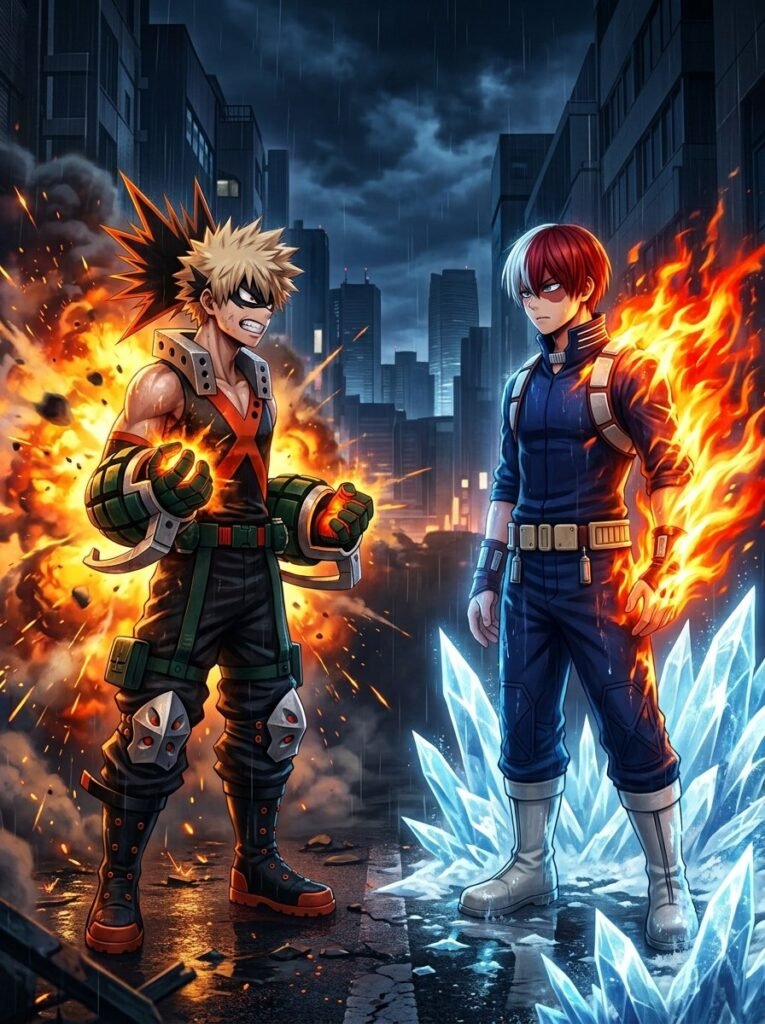
Bakugo and Todoroki offer a strong visual contrast for a two-character illustration. The official My Hero Academia character material identifies Todoroki as a Class 1-A character and associates him with Half-Cold Half-Hot. You can build the composition around contrasting warm and cool effects. Place Bakugo’s explosive energy on one side and Todoroki’s ice and fire effects on the other, allowing the visual elements to meet near the center.
15. Bakugo MHA Wallpaper
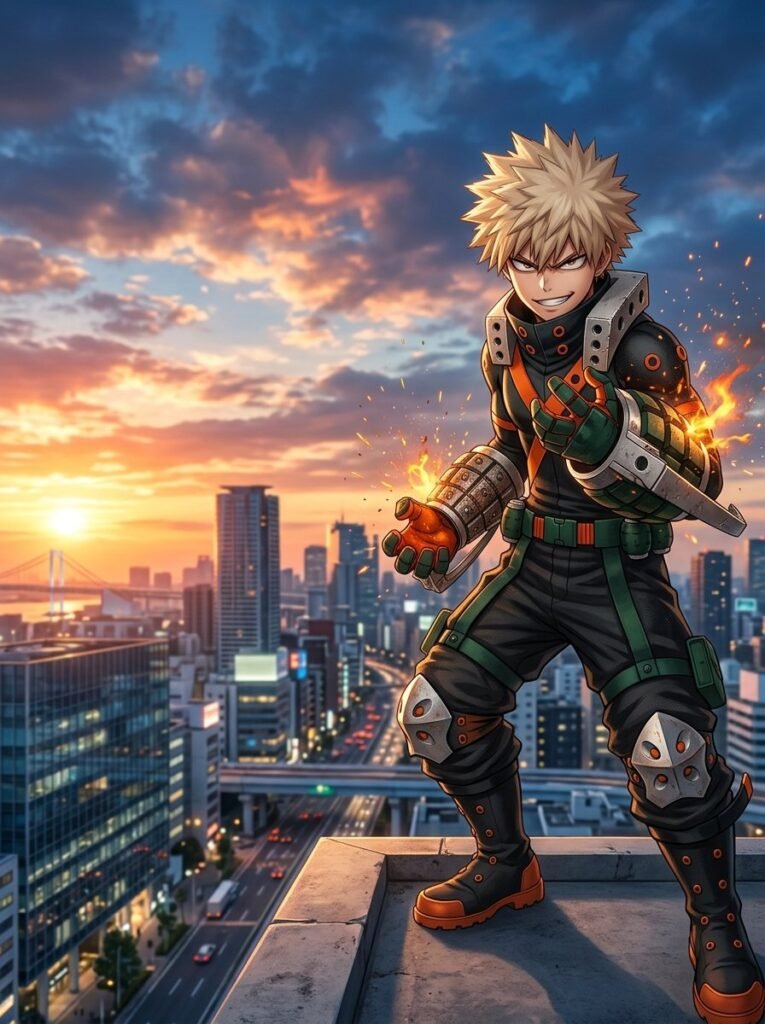
A wallpaper needs a different composition from a normal character portrait because phone icons can cover parts of the artwork. Place Bakugo slightly to one side and leave clean space around the opposite area. A city background, sunset, smoke, or subtle explosion particles can add atmosphere without making the screen too busy. Keep the strongest details around the face and hands so they remain visible when the wallpaper is cropped.
Final Thoughts
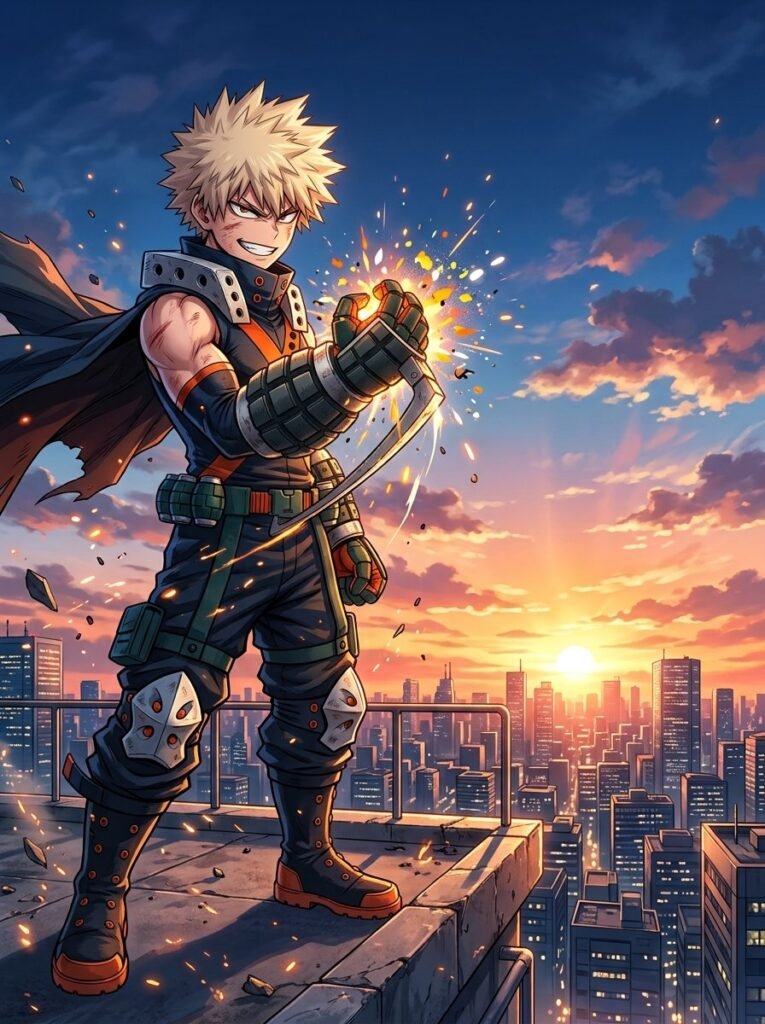
Creating Bakugo fanart does not have to mean drawing the same intense portrait every time. His recognizable design gives you plenty of opportunities to explore different artistic approaches. Start with a classic portrait if you are learning facial proportions. Try chibi artwork for simplified shapes, monochrome sketches for shading, and full-body studies for anatomy. When you feel more confident, move into dynamic poses, explosion effects, fantasy concepts, and multi-character compositions. The most important thing is to choose a style that matches the skill you want to practice. A simple drawing can teach just as much as a detailed illustration when you focus on one specific skill.


1 Pingback