
There is something special about the wall behind a bed. It is often the first thing you notice when you enter a bedroom, yet it can easily become the most forgotten part of the room. A blank wall can make even a beautiful bedroom feel unfinished. The good news is that you do not need a major renovation. A few carefully chosen pieces can completely change the mood. Interior designers often use artwork, mirrors, shelves, textiles, and gallery walls to give a bedroom personality while keeping it comfortable. Architectural Digest also recommends thinking about scale, placement, and the overall color palette when choosing wall pieces. These bedroom wall decor ideas range from simple DIY projects to polished gallery displays. Some work in a small apartment, while others suit a larger guest or primary bedroom.
1. Create a Soft Gallery Wall
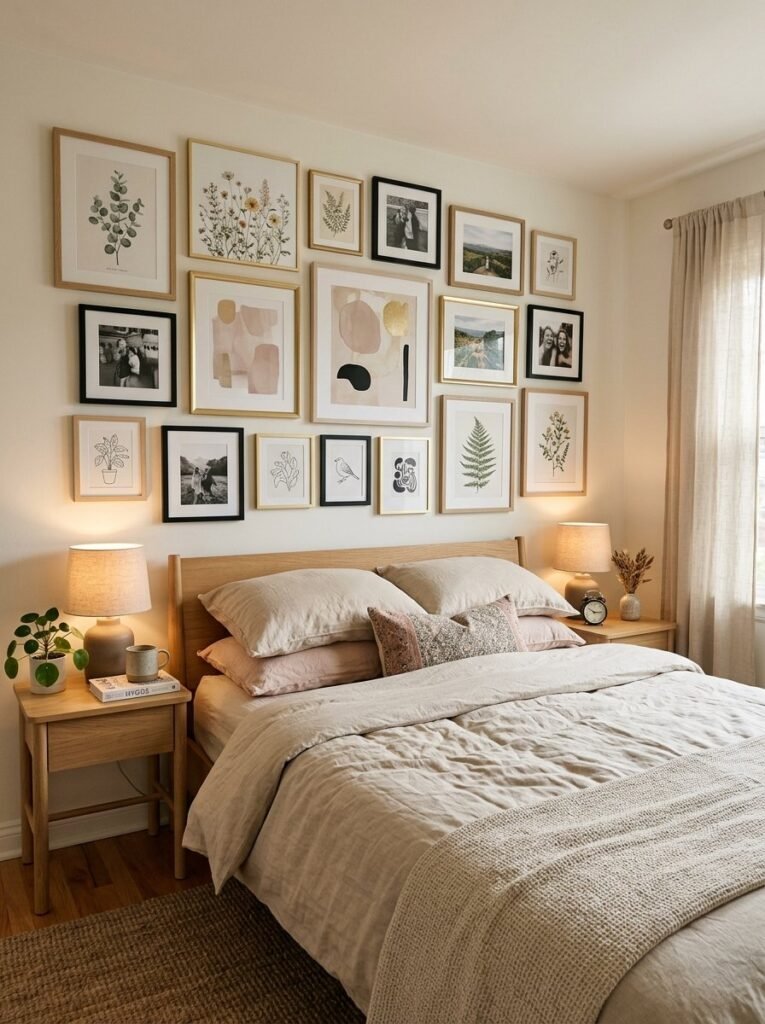
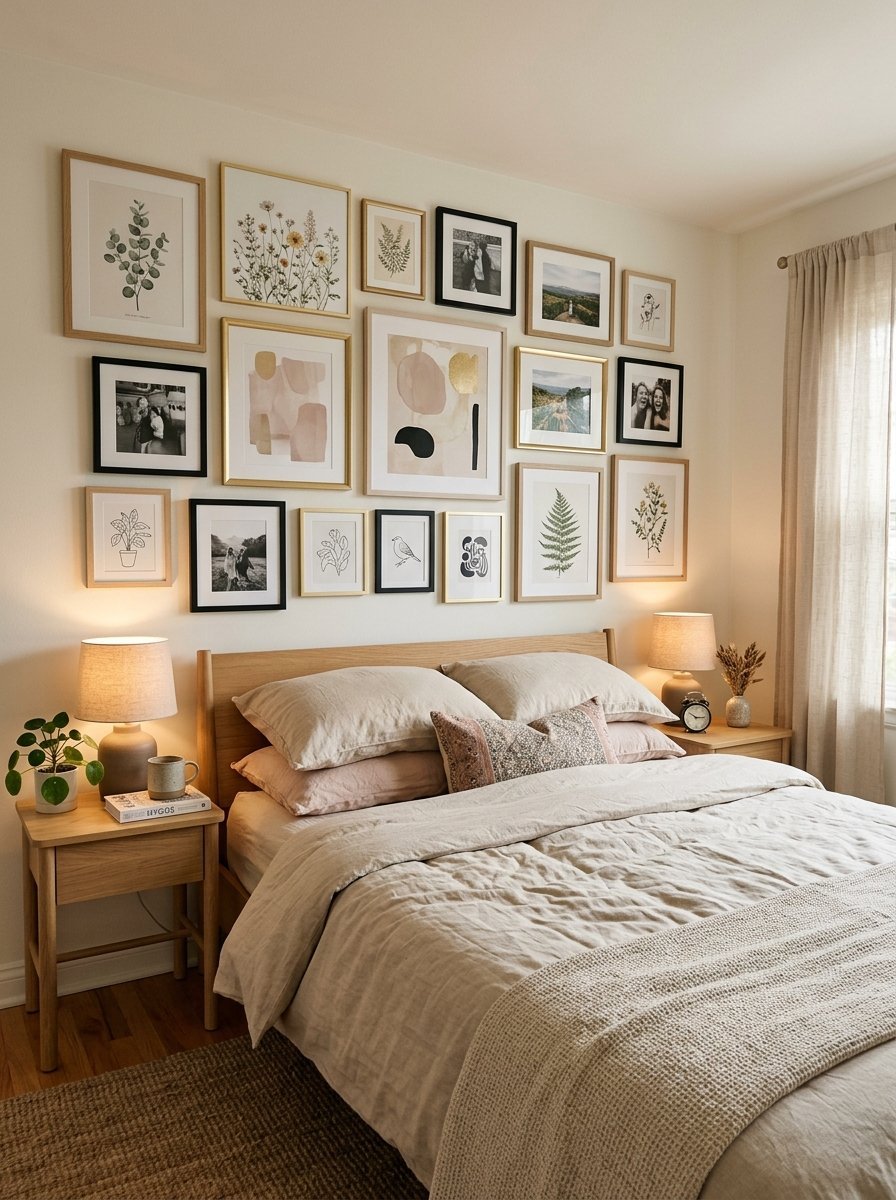
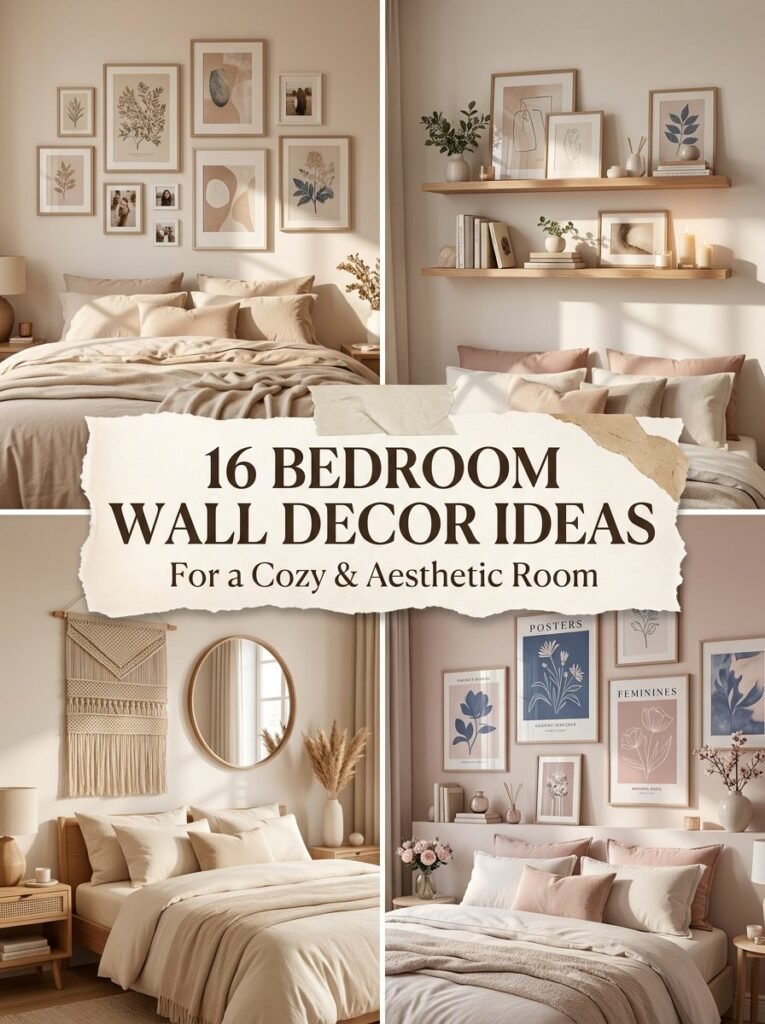
A gallery wall is one of the easiest ways to turn an empty wall into a personal collection. Start with three to seven pieces instead of buying everything at once. Mix framed photos, small paintings, line drawings, and prints. Keep one color thread running through the collection so the arrangement feels connected rather than random. For an aesthetic look, try cream, beige, dusty pink, soft blue, or muted brown frames. Architectural Digest recommends gallery walls as a way to reflect personal style and suggests considering scale and placement around focal areas such as the bed.
2. Try Simple Ideas Above the Bed

The wall directly above the headboard naturally attracts attention, so it makes a strong focal point. Instead of filling the entire wall, choose one central piece and allow some empty space around it. A wide landscape print, oversized canvas, woven wall hanging, or large framed photograph can create balance. Architectural Digest highlights the area above the bed as a natural place for art, shelves, mirrors, textiles, and other focal elements. Keep the artwork related to the bed’s width. A tiny picture can disappear above a large headboard, while an oversized piece can overwhelm a narrow bed.
3. Make a DIY Canvas Painting
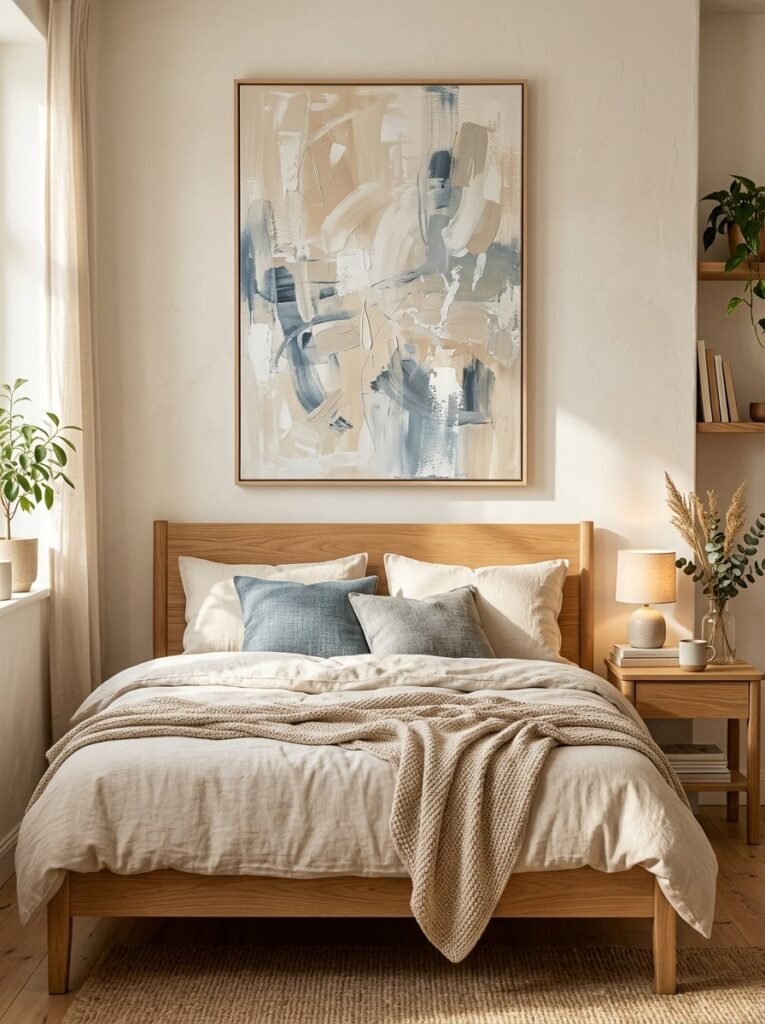
You do not have to be an artist to create wall art. Choose a canvas and paint a simple abstract design using two or three colors already found in your room. Try curved lines, soft blocks, arches, flowers, or loose brushstrokes. Painting ideas on canvas work particularly well when you want your room to feel personal rather than store-bought. For a calming result, use neutral, blue, cream, or dusty pink shades. For something bolder, introduce one dark accent.
4. Add Floating Shelves

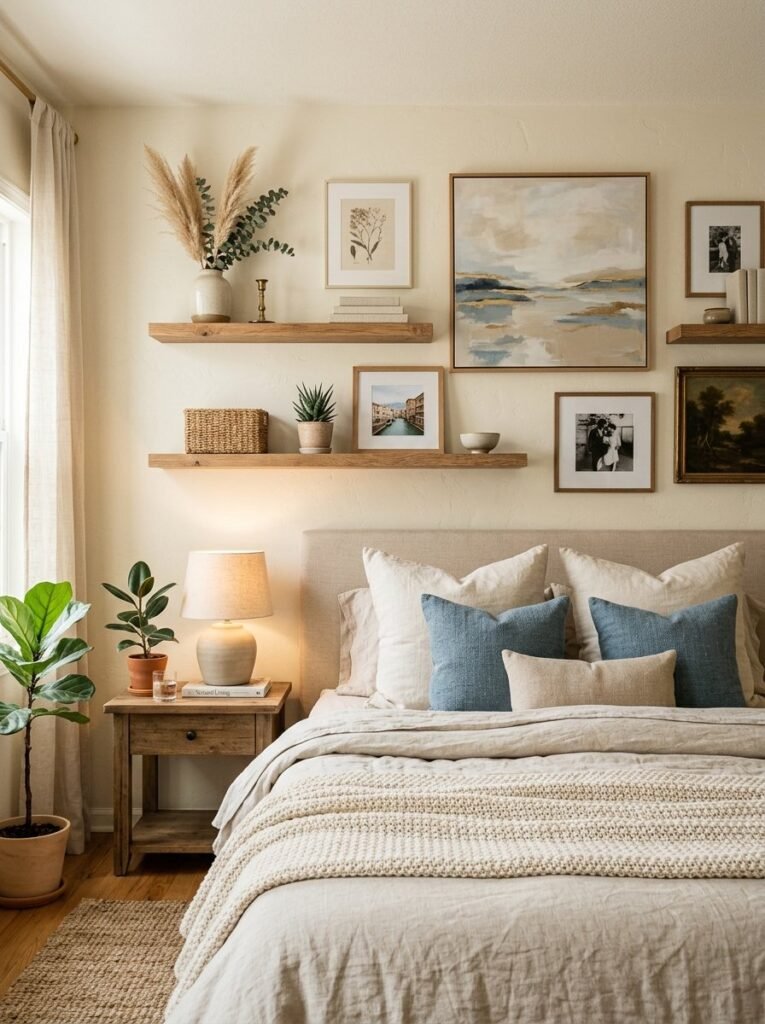
Floating shelves combine decoration with useful storage. They work especially well in smaller rooms where floor space matters. Place one long shelf above a dresser or two smaller shelves beside the bed. Style them with books, framed art, small plants, ceramics, candles, and personal objects. Architectural Digest notes that floating shelves can add storage and personality without creating the heavy visual effect of bulky furniture. The trick is not to overcrowd them. Leave some open space so the arrangement can breathe.
5. Choose a Cozy Textile Wall Hanging
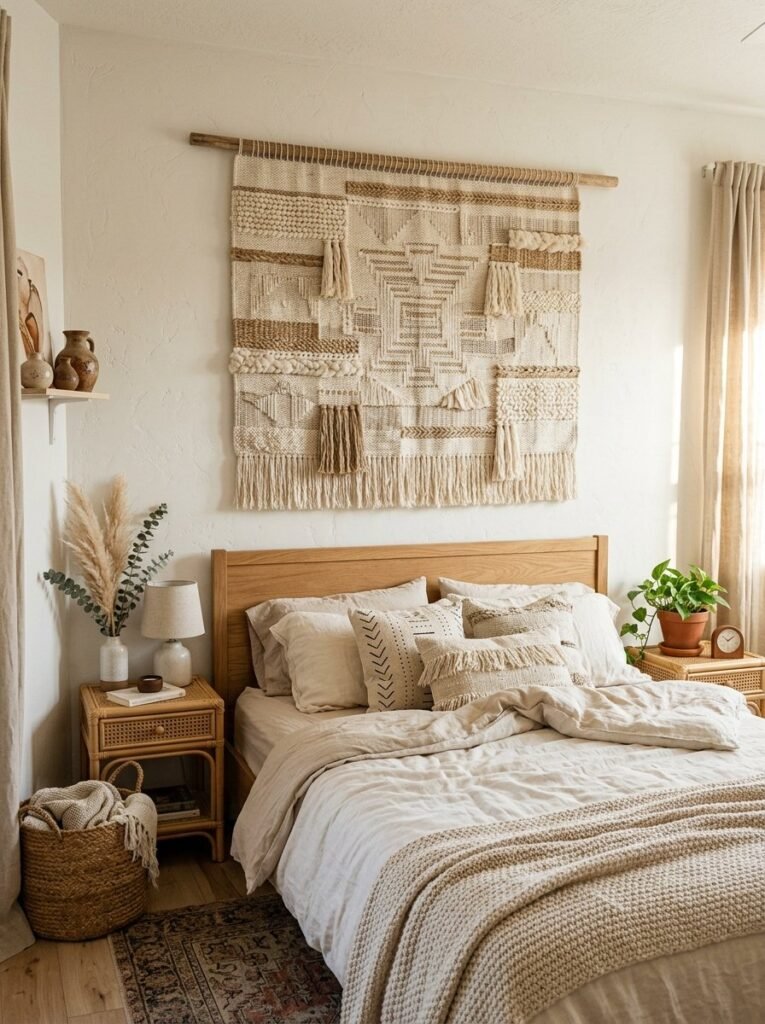
A woven tapestry can soften a bedroom because it introduces texture without adding another hard surface. Choose a large neutral textile for a cozy bedroom, or pick a patterned piece if the rest of the room feels simple. Macramé, woven cotton, embroidered fabric, and handmade textile art all work. This option also gives a room a relaxed, slightly bohemian feeling without requiring a complicated makeover.
6. Use a Large Mirror for Light
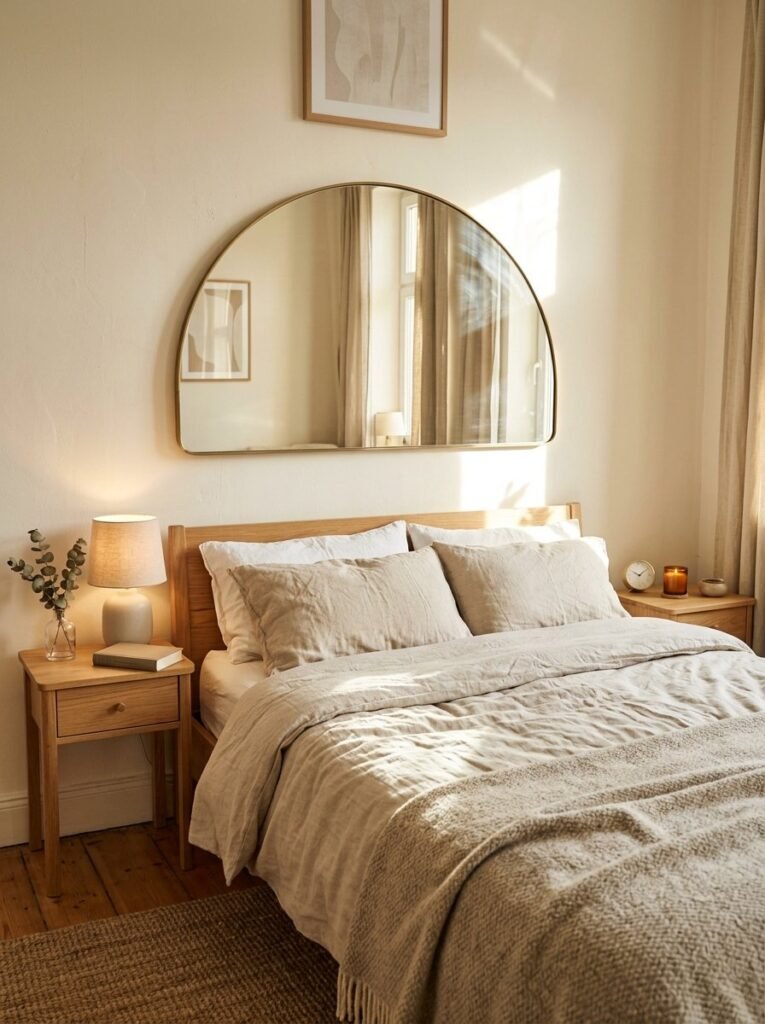
A mirror can decorate the wall while helping a small room feel brighter and more open. Try a wide horizontal mirror above the headboard or two matching mirrors over the nightstands. For an apartment bedroom, this can be especially useful because the reflective surface helps bounce available light around the space. Choose a frame that matches your furniture. Wood creates warmth, while black or brass creates a more defined look. Architectural Digest also highlights mirrors as a way to reflect light and add height and symmetry.
7. Build a Neutral Picture Ledge
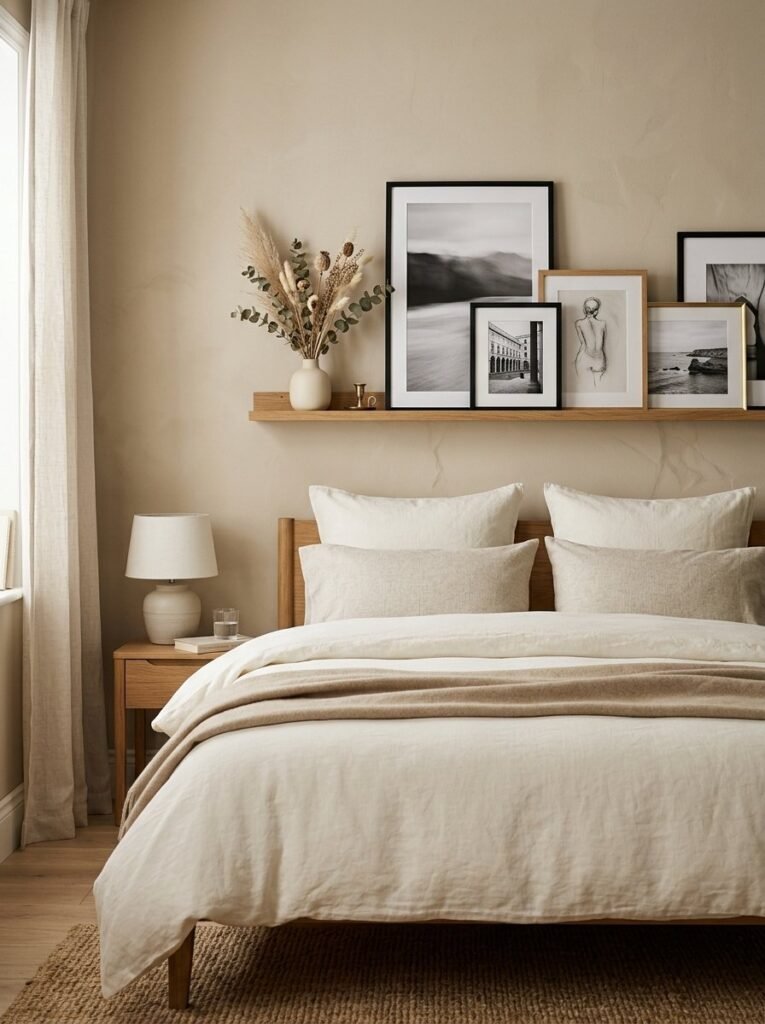
A picture ledge gives you the freedom to change your artwork without rebuilding the whole wall. Layer framed prints, photographs, small canvases, and one or two decorative objects along the ledge. Keep the largest piece toward the back and smaller pieces slightly forward. This approach suits neutral bedrooms especially well. Use cream, tan, white, charcoal, and muted brown to create a calm visual story. Architectural Digest has also highlighted ledges as a practical way to display art while making it easier to switch pieces later.
8. Bring in Coastal Inspiration

If you love relaxed rooms, try a coastal wall. Think soft blue, sandy beige, white, woven textures, and artwork inspired by the sea. You could hang ocean photography, a simple sailboat print, woven baskets, or abstract artwork in blue and cream. Keep the palette restrained. Too many nautical objects can make the room feel themed rather than naturally inspired.
9. Use Pink for a Soft Feminine Look
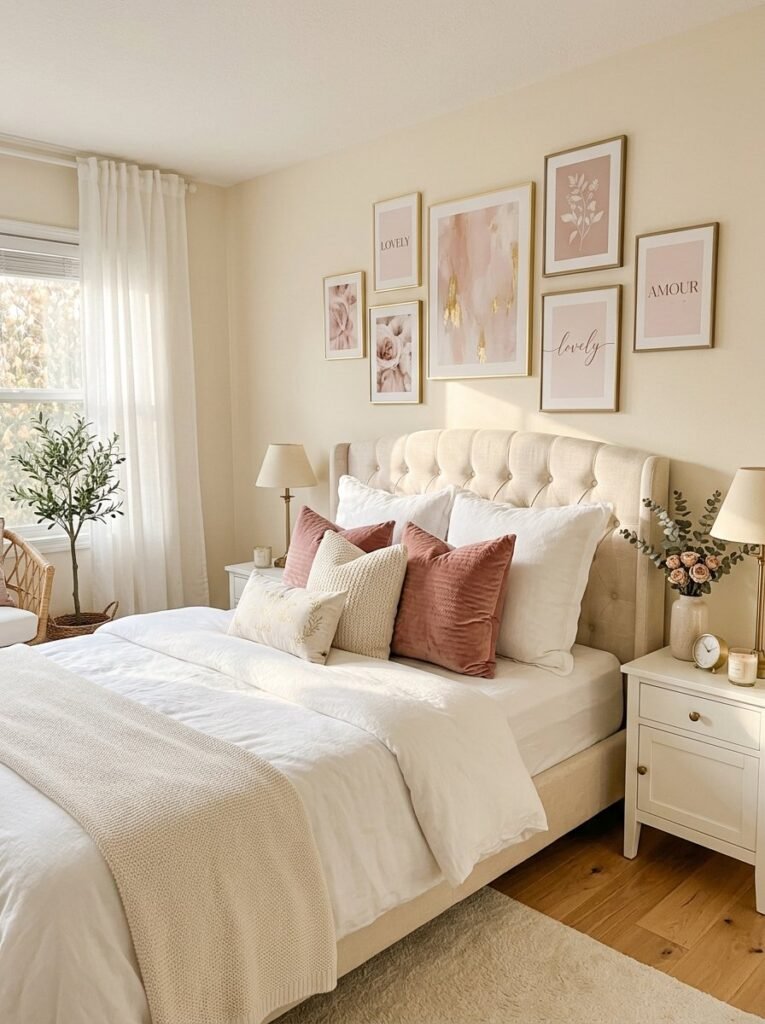
Pink does not have to mean bright or overly sweet. Dusty rose, blush, muted coral, and pale pink can create a sophisticated bedroom. Create a small arrangement of pink artwork above the bed, then repeat the same shade through pillows or a throw blanket. This gives the room a clear color connection. If you want pink wall art without changing the whole room, start with prints rather than painting the wall.
10. Try a Minimalist Above-Bed Arrangement
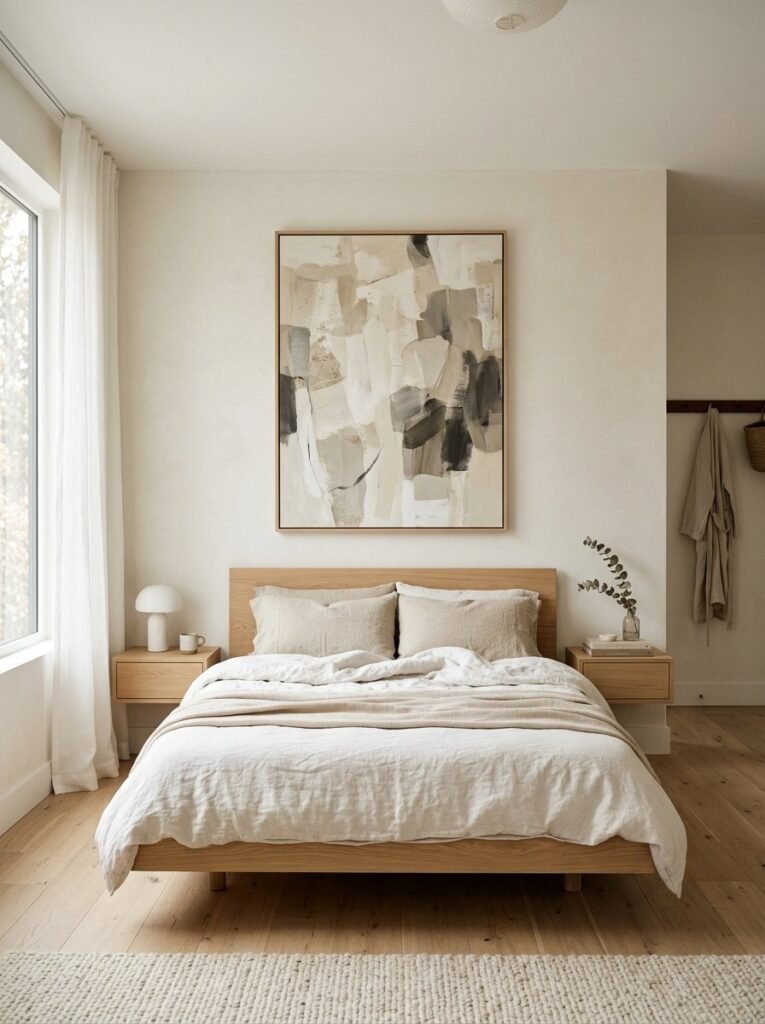
Sometimes less really does more. Choose one large piece of art, a simple pair of prints, or three small matching frames. This approach works beautifully for ideas above bed aesthetic minimalist rooms because the wall remains calm and uncluttered. Use plenty of negative space. A clean composition can make even an inexpensive print feel intentional. Architectural Digest notes that minimalist bedrooms can gain interest from carefully selected shapes, textures, symmetry, and restrained color rather than large amounts of decoration.
11. Make a Moody Accent Wall
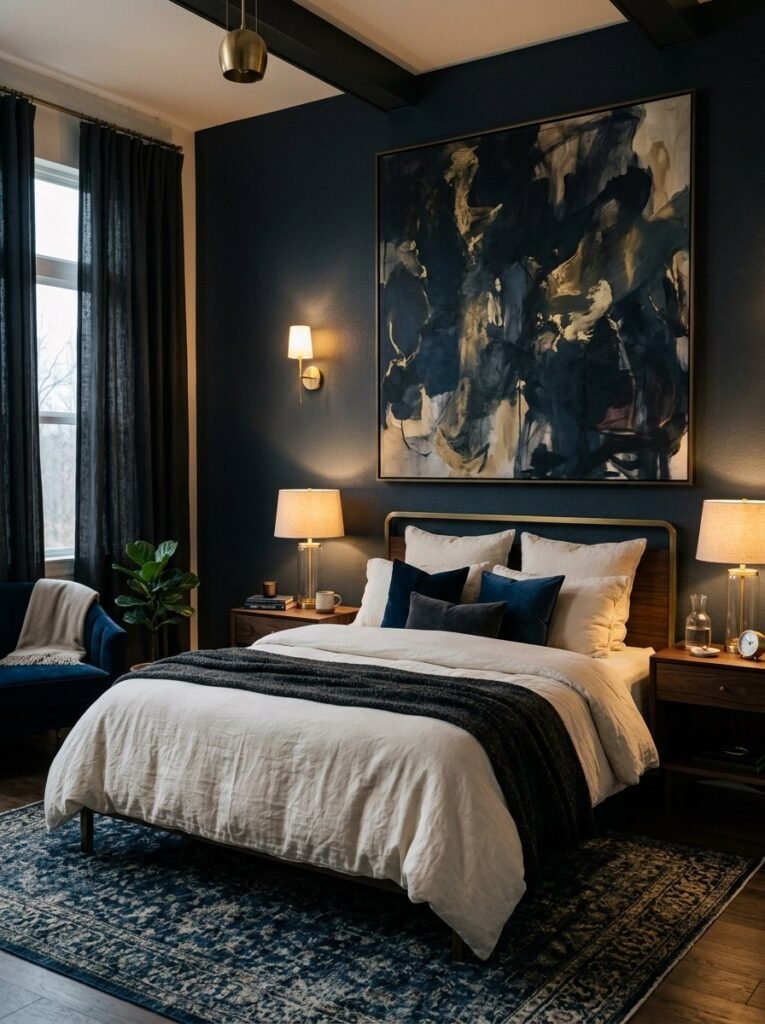
If your bedroom feels too bright or plain, consider a deeper wall color. Charcoal, forest green, navy, chocolate brown, or deep blue can create a moody atmosphere. Keep the furniture and bedding lighter to prevent the room from feeling too heavy. Add warm lamps and natural textures to balance the darker background. Architectural Digest has featured bold bedroom accent walls using color, art, wallpaper, and texture as ways to create a stronger focal point.
12. Display Handmade Baskets
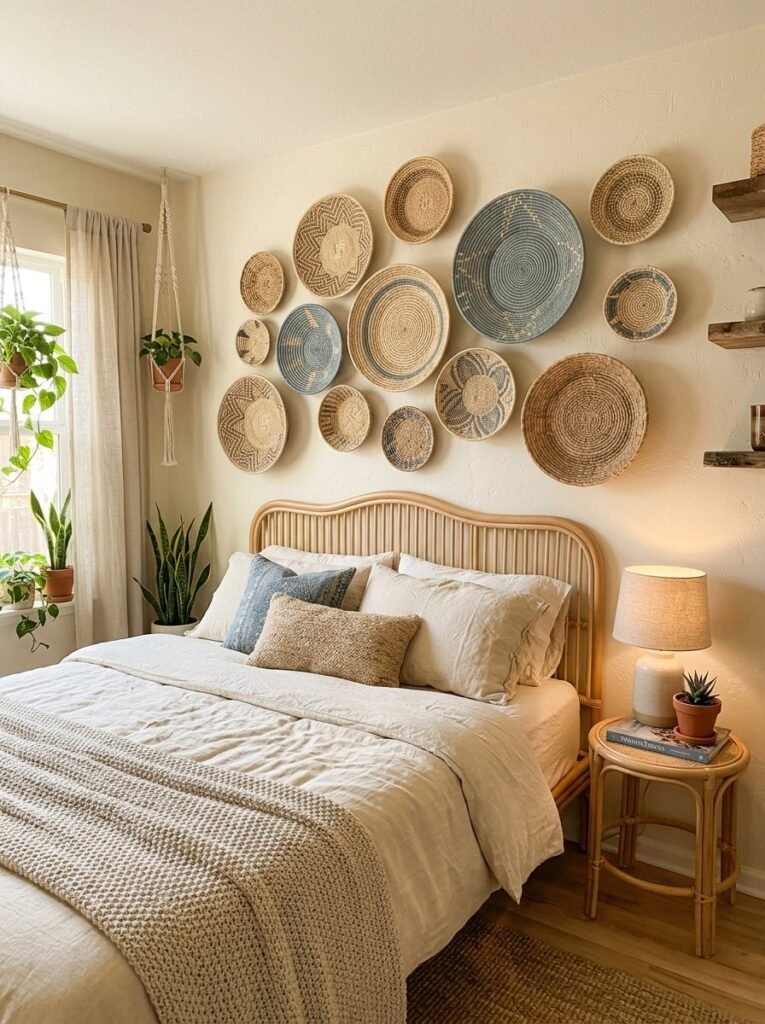
Woven baskets can add texture and personality to a blank wall. Arrange three or five baskets in different sizes rather than placing them in a perfect straight line. This is a great option for ideas handmade because the materials bring warmth and a crafted feeling into the bedroom. Use natural tan baskets for neutral rooms. For a more colorful space, choose baskets with blue, pink, or patterned details.
13. Add Western-Inspired Artwork

For a bedroom with a rustic personality, try Western artwork. Think desert landscapes, horses, vintage-style ranch photography, leather details, and warm earthy colors. Avoid filling the room with too many themed objects. One large Western landscape with a few smaller prints can tell the story more naturally. Use wood frames and warm beige bedding to connect the artwork with the rest of the room.
14. Create a Blue and White Art Wall
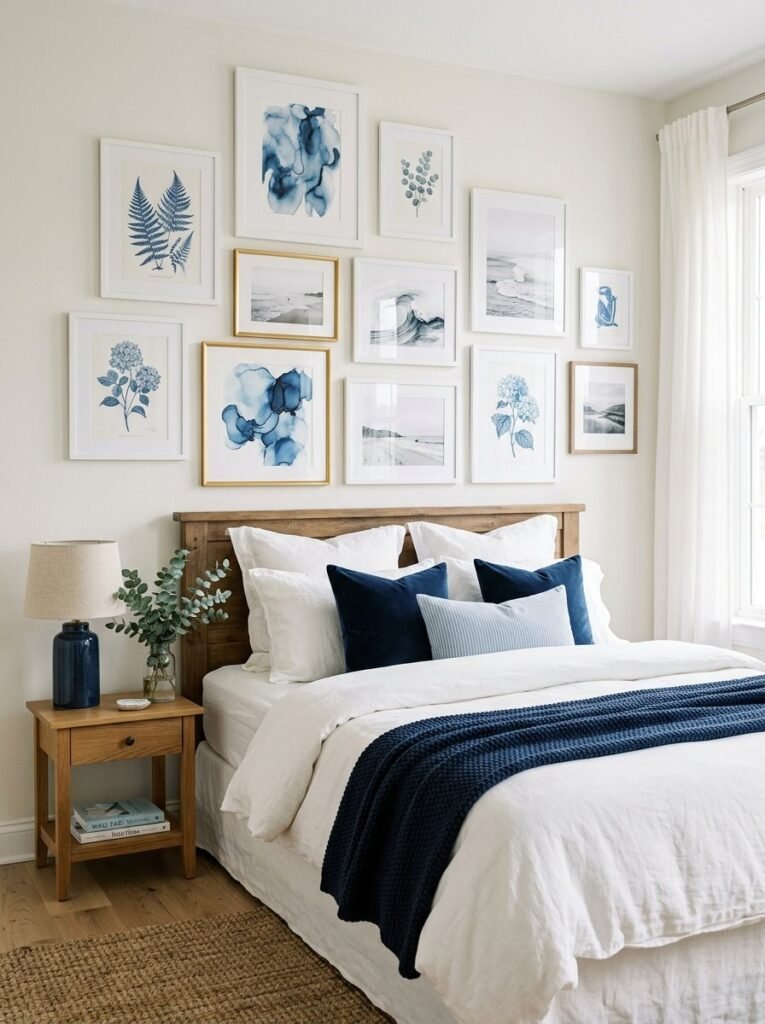
Blue and white make an easy combination for bedroom walls. They feel fresh while still working with many furniture styles. Mix blue abstract prints, botanical illustrations, small photographs, and one larger artwork. Keep the frames consistent if you want the arrangement to feel more organized. A limited color palette also helps different artwork styles feel like one collection.
15. Hang Matching Art Beside the Bed
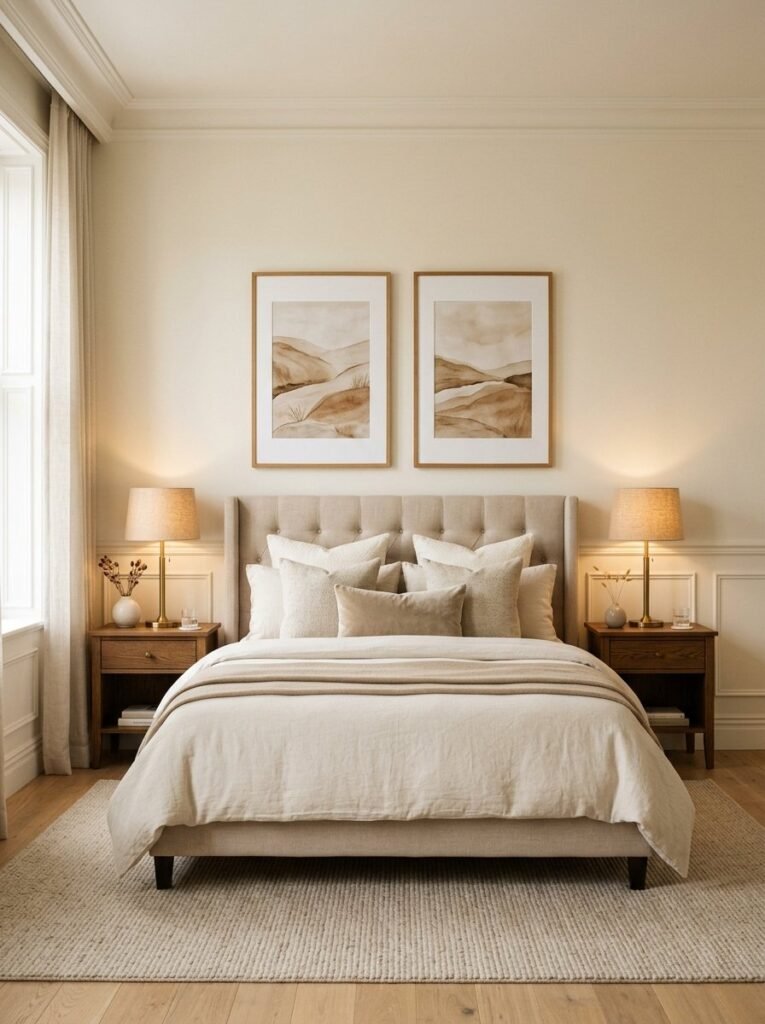
Symmetry can make a bedroom feel calm and organized. Instead of putting everything above the bed, place matching vertical artwork above each nightstand. Choose similar frames and artwork with related colors. The pieces do not need to be completely identical. Architectural Digest highlights symmetry as an effective bedroom design tool, particularly when artwork and furniture share a visual relationship. This approach works especially well when the headboard already makes a strong statement.
16. Mix Art, Shelves and Personal Objects

The most interesting walls often tell a story. Instead of choosing one type of decoration, combine framed art with a narrow shelf, small plant, photograph, ceramic object, or handmade piece. This gives your room a lived-in feeling. It also makes it easier to include objects that actually mean something to you. For a chic result, choose one main color and repeat it across the artwork and accessories. Better Homes & Gardens also recommends intentional color, scale, and arrangement when creating a gallery wall rather than simply filling every empty space.
How to Make Your Wall Decor Feel Connected
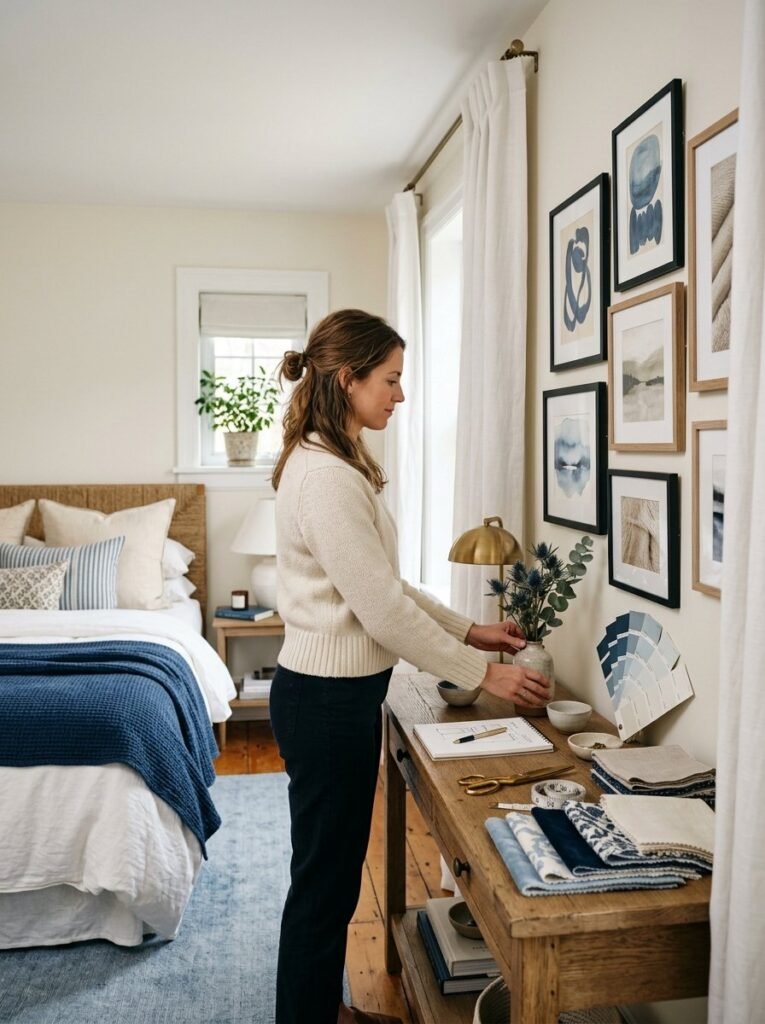
Before hanging anything, step back and look at the whole room. Your wall should not feel like a separate project. It should connect with the bed, rug, curtains, lighting, and other furniture. Start with one dominant color. Then choose one or two supporting colors. For example, a neutral bedroom might use cream as the base, blue as the accent, and natural wood as the supporting element. Scale matters too. A large bed usually needs artwork with enough visual weight to balance it. In a small bedroom, several small pieces can work, but a single oversized artwork can also create a strong focal point without adding clutter.
Final Thoughts
Good bedroom wall decor does more than cover an empty wall. It gives the room a story. You can create that story with family photographs, handmade art, floating shelves, baskets, mirrors, coastal prints, soft pink artwork, dark accent colors, or one beautiful painting. The best choice depends on your room and your personality. Start small if you are unsure. Choose one wall, find one piece you truly like, and build around it. When the colors, scale, textures, and personal details work together, even a simple bedroom can feel finished and inviting. The goal is not to copy someone else’s room exactly. Take the inspo, keep the ideas that fit your space, and create a wall that feels like yours.

