


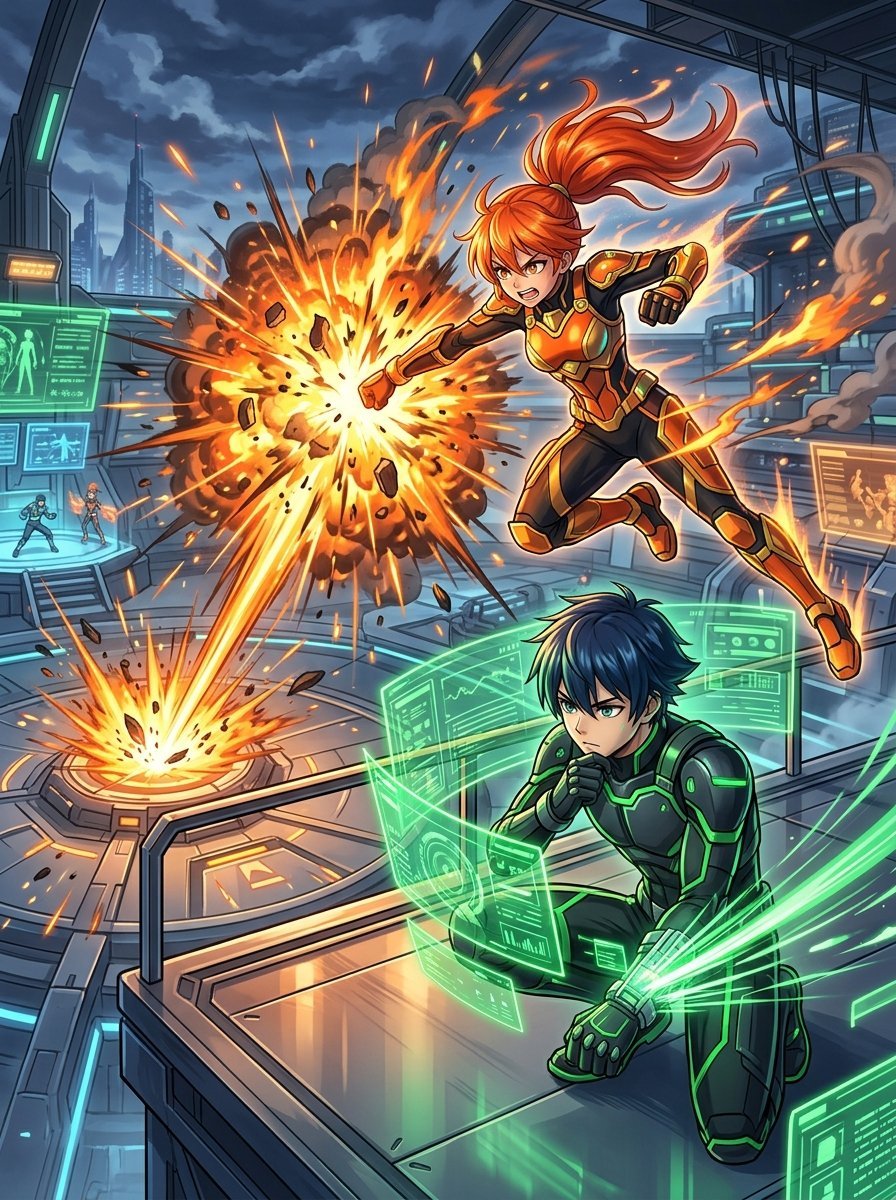
A blank page can feel intimidating, but the right idea can make your pencil move instantly. From easy pencil drawings and flowers to anime characters, animals, people, landscapes, and Y2K art, there is something for every skill level. Whether you are a beginner or simply looking for fresh inspiration, these sketch ideas will help you start drawing with confidence and enjoy the process.

1. Start With Simple Sketch Ideas

A blank page can feel intimidating. You have a pencil in your hand, but suddenly nothing comes to mind. That happens to almost every artist, especially when you are still learning. The easiest way to begin is with something simple. Try drawing a cup sitting on your desk. Sketch a leaf from a nearby plant. Draw your headphones, a pair of glasses, or your favorite mug. These everyday objects are excellent easy subjects because you can study them directly. Simple shapes also help. Start with circles, squares, cylinders, and curved lines. Then combine them to create more interesting drawings. These sketch ideas are not about creating perfect artwork on the first try. They are about training your eyes to notice shape, size, proportion, and shadow. Give yourself ten minutes. Draw without worrying about mistakes. Your first sketch may look rough, and that is completely fine.The next one will teach you something new.
2. Easy Pencil Drawings for Beginners
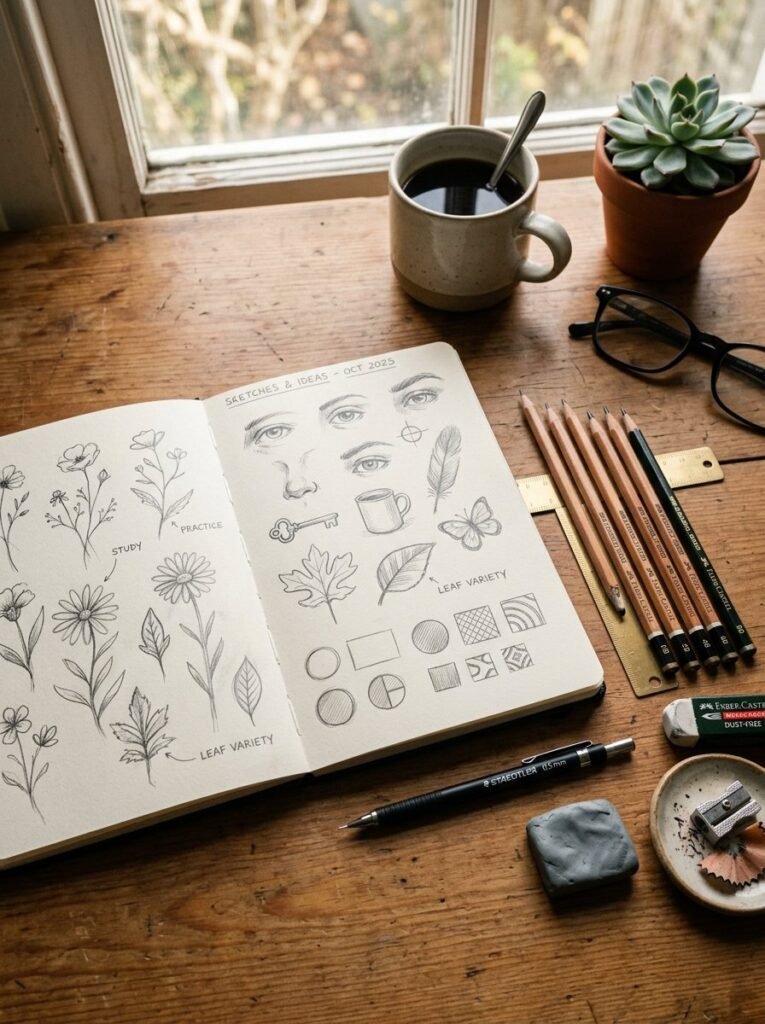
If you are a beginner, choose subjects with clear shapes. A fruit, flower, simple bottle, shoe, or house can teach you more than a complicated portrait. You can focus on outlines first and add shading later. Keep your pencil pressure light when creating the first lines. This makes it easier to correct mistakes. Then slowly build darker areas. Look at where the light comes from and notice which parts of the object appear darker. These drawing exercises can improve your control without making practice feel like homework. Try one object each day. On Monday, draw an apple. On Tuesday, draw a flower. Later in the week, try a shoe or small plant. Small daily practice can make a big difference.
3. Aesthetic Sketch Ideas for Your Journal
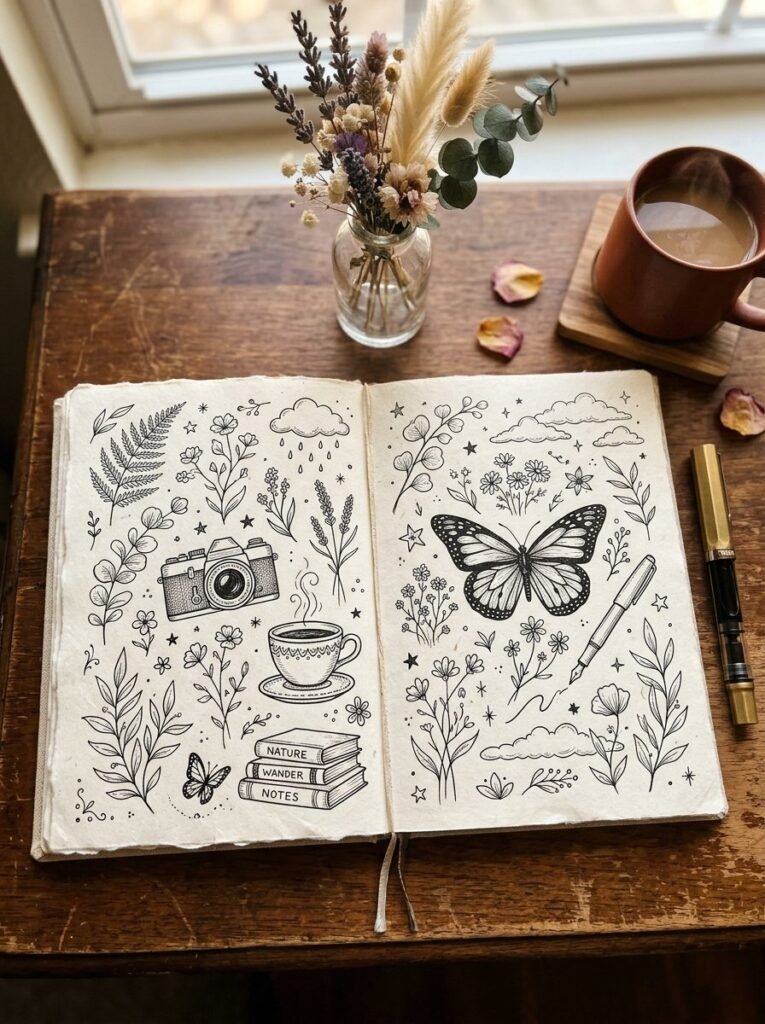
A sketchbook can become more than a place to practice. It can become a visual diary. For an aesthetic page, combine small drawings instead of creating one large picture. Add flowers, stars, clouds, tiny books, candles, coffee cups, ribbons, or leaves. You can use a black pen for clean outlines and a pencil for soft shadows. Try keeping one visual theme on each page. A nature page might include leaves, mushrooms, flowers, and butterflies. A cozy page could feature books, mugs, blankets, candles, and small windows. These simple compositions are great for journaling because you can finish several drawings quickly. They also give beginners a chance to experiment with spacing and composition without worrying about creating one perfect illustration.
4. Anime Drawing Ideas
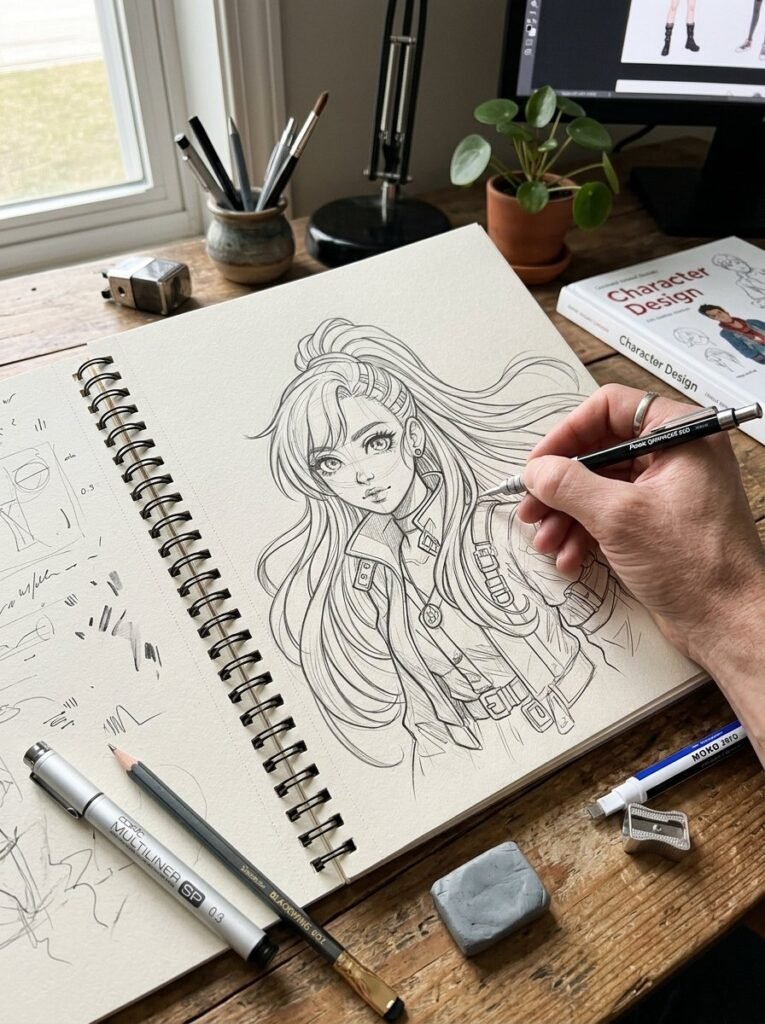
Anime can make drawing practice feel exciting. Start with the face. Lightly draw a circle and add basic guide lines for the eyes, nose, and mouth. Once the proportions feel right, add the hairstyle and clothing. Do not worry about complicated backgrounds at first. Focus on one feature at a time. Practice different hair shapes. Try short hair, long hair, curly hair, ponytails, or dramatic anime styles. Then experiment with expressions. A small change in the eyebrows or mouth can make a character look happy, surprised, nervous, or serious. Anime is also a useful way to study people because it teaches you about facial expressions, poses, clothing, and character design.
5. Flower Sketches That Stay Simple
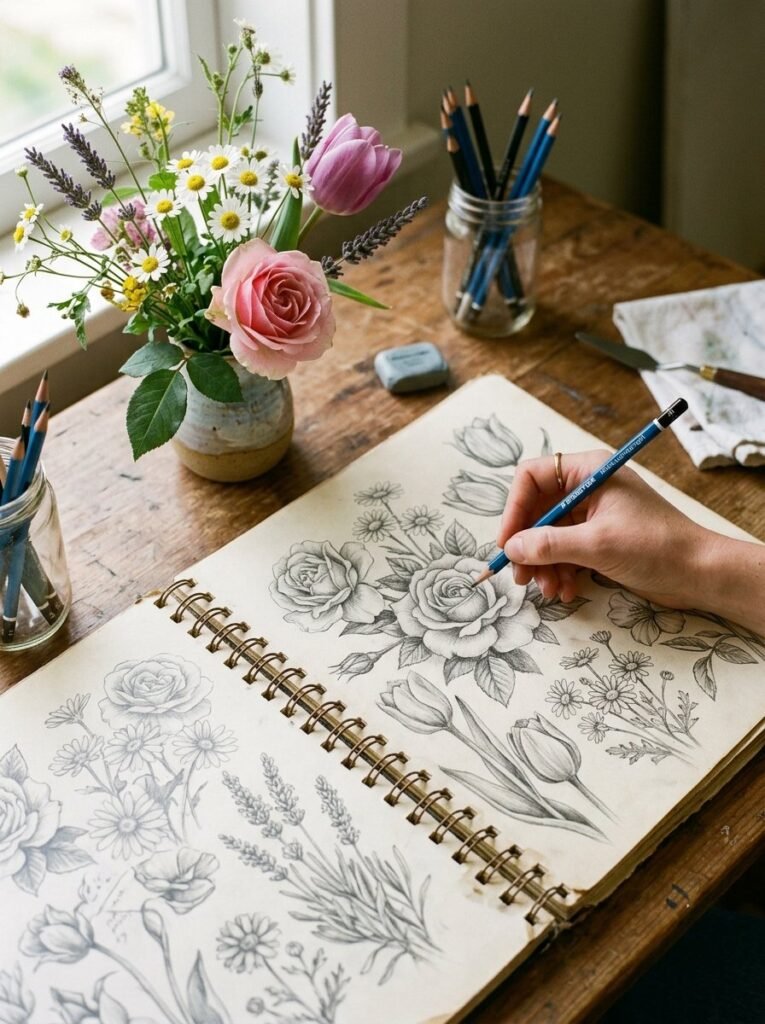
Flowers are one of the best subjects when you want something beautiful without making the drawing too complicated. Start with the center of the flower. Then build the petals around it. A daisy gives you simple repeated shapes. A rose gives you a chance to practice curved lines and overlapping petals. Lavender can teach you how to create rhythm with small repeated forms. Use light pencil strokes first. Add darker lines only where petals overlap or where shadows appear. You can also turn flower drawings into borders for journals, cards, or artwork. For a more realistic result, place a real flower beside your sketchbook and study it closely. Notice its shape instead of drawing what you think a flower should look like.
6. Random Things to Draw When You Are Bored
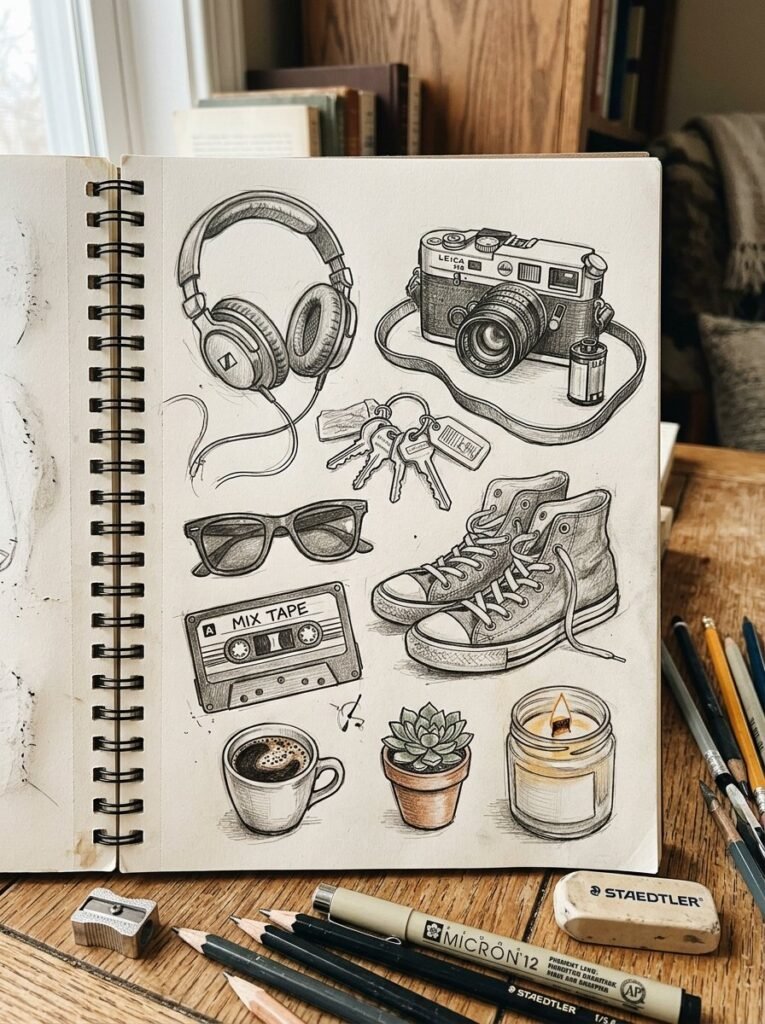
Sometimes you want to draw but do not want to plan anything. That is where random subjects become useful. Look around your room and choose the first five objects you notice. Sketch your keys. Draw your shoes. Try your desk lamp. Draw a bottle from an unusual angle. You can even put ten objects on small pieces of paper, mix them in a cup, and choose one without looking. This turns practice into a game. These quick exercises are useful because you never know what shape will appear next. They can also help you discover subjects you enjoy drawing. The goal is not perfection. It is movement.
7. Cool Y2K Drawing Ideas

The Y2K style gives your artwork a playful, nostalgic mood. Think flip phones, butterflies, cherries, stars, hearts, headphones, sunglasses, sparkles, and futuristic shapes. You can combine several tiny objects into one page. Use bold outlines and small decorative details to make the page feel energetic. For cool Y2K artwork, try mixing old technology with fashion. A tiny flip phone beside a butterfly or a pair of futuristic sunglasses can create an interesting composition. You can also experiment with metallic-looking highlights using colored pencils or gel pens. Keep the main shapes simple. The small details will create the personality.
8. Animal Sketch Ideas for Beginners
Animals are another great subject because they combine simple shapes with personality. Start with a cat or dog. Look for the basic head shape first. Then add the ears, eyes, nose, and body. Once you feel comfortable, try birds, rabbits, foxes, horses, or wild animals. Do not begin by drawing every strand of fur. Start with the large shapes and shadows. Then add only the details that matter. These animals can also become characters. Give a cat a tiny hat or place a rabbit inside a simple garden scene. That lets you move from observation into creative art.
9. Realistic People and Fashion Sketches

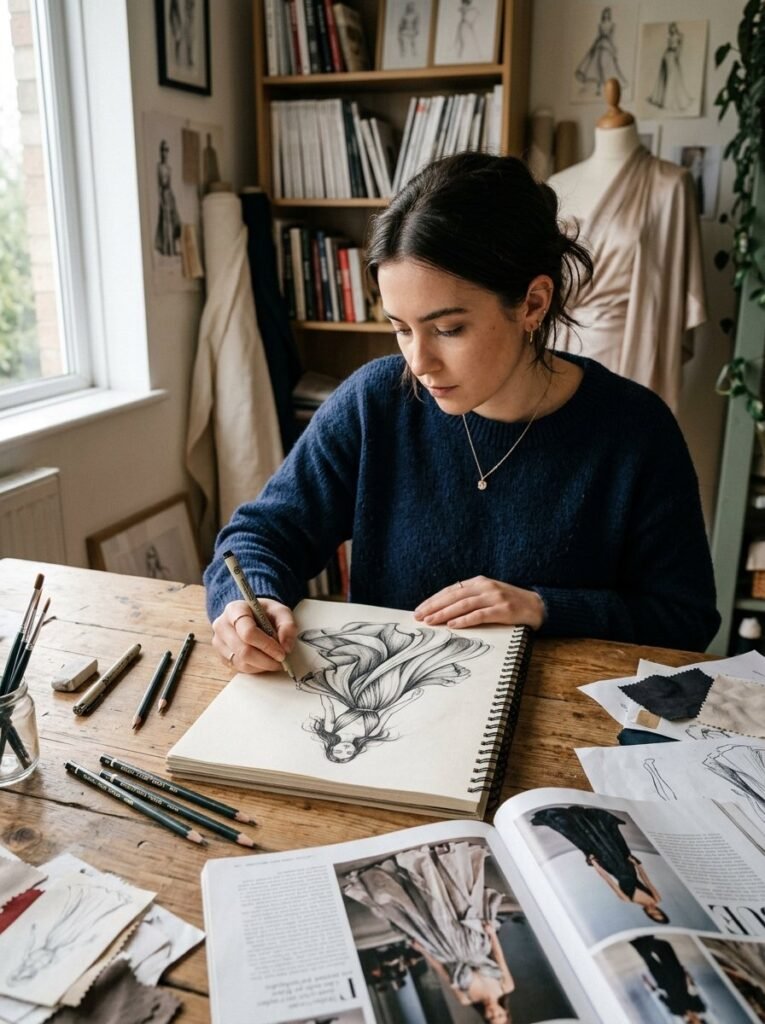
Drawing people can feel difficult because the human body has many proportions to understand. Start with simple poses. Draw a stick figure to establish the movement. Then build the body around it. Keep the first lines light. Fashion sketches offer another fun approach. You can focus on the outfit instead of making the face highly detailed. Try a flowing dress, oversized jacket, casual streetwear, or formal outfit. For women, practice different hairstyles and poses. You can also study clothing folds, sleeves, collars, and shoes. Do not try to master the whole body in one drawing. Practice one part at a time.
10. Landscape Sketch Ideas

Landscape drawing gives you a chance to slow down. Start with a simple horizon line. Add mountains, trees, buildings, or clouds one layer at a time. A good beginner landscape does not need dozens of details. A few strong shapes can create depth. Try drawing a mountain behind a lake. Add a small cabin in the foreground. Then use darker pencil marks for nearby objects and lighter marks for distant ones. This creates the feeling of distance without complicated techniques. Landscape drawings also give you endless subjects. You can draw forests, beaches, city streets, countryside roads, or quiet gardens.
11. Vintage and Unique Sketch Inspiration

If modern subjects feel boring, look backward. Old cameras, pocket watches, perfume bottles, vintage cars, telephones, keys, clocks, and old buildings can create beautiful artwork. A vintage theme also works well when you combine several objects on one page. Use soft graphite shading to create an aged appearance. You can also try sepia-toned pencils if you want a warmer look. For unique drawings, choose objects with unusual shapes. An old typewriter or antique lamp may give you more interesting lines than an ordinary modern object. Your surroundings hold more inspiration than you might expect.
12. Quick Sketch Practice for Busy Days

You do not need an entire afternoon to practice. Set a timer for five or ten minutes. Choose one subject and draw continuously until the timer ends. Do not erase every mistake. Keep moving. These quick sessions teach you to observe faster and make decisions with confidence. Try three five-minute drawings instead of one thirty-minute drawing. You may discover that the shorter sessions feel less stressful. A simple routine is easier to maintain than an ambitious plan that you never follow. Keep your sketchbook somewhere visible. When you have a few spare minutes, pick it up and draw.
13. Build Your Own Sketch Routine

The easiest way to improve is to draw regularly. You do not need to create a masterpiece every day. Give yourself small goals. On one day, practice flowers. The next day, draw an animal. Then try a face, a landscape, or an object from your room.
Keep your old pages. They show your progress better than memory ever can. After a few months, compare your first drawings with your recent ones. You may notice stronger lines, better proportions, improved shading, and more confidence. That progress comes from practice, not from waiting for inspiration.
Final Thoughts
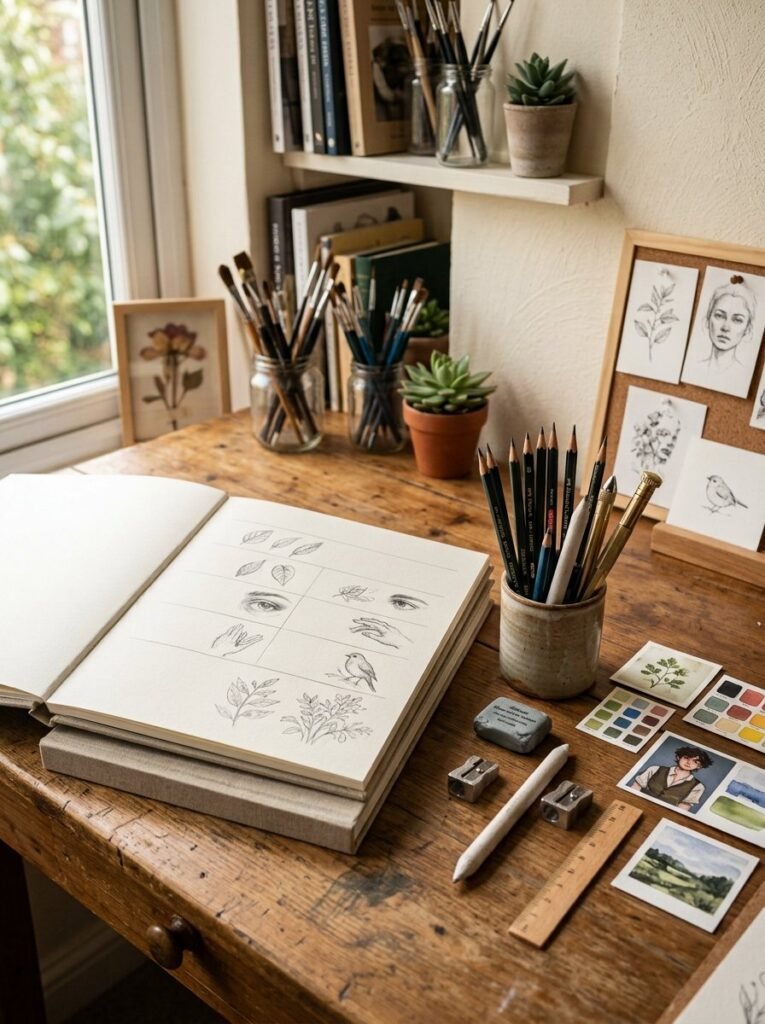
The best sketch ideas are the ones that make you want to pick up your pencil again. You can start with a flower. Draw your favorite animal. Try an anime face. Sketch a landscape outside your window. Create a Y2K-inspired journal page. Or simply draw the cup sitting beside you.
There is no perfect starting point. Choose something you enjoy and keep the first drawing simple. Let the lines look imperfect. Study what went wrong, then try again. Over time, simple practice turns into stronger observation and better control. Your sketchbook does not need to impress anyone. It needs to give you a place to explore. Sometimes the most interesting drawing begins with nothing more than a pencil, a blank page, and ten quiet minutes.


8 Pingbacks