

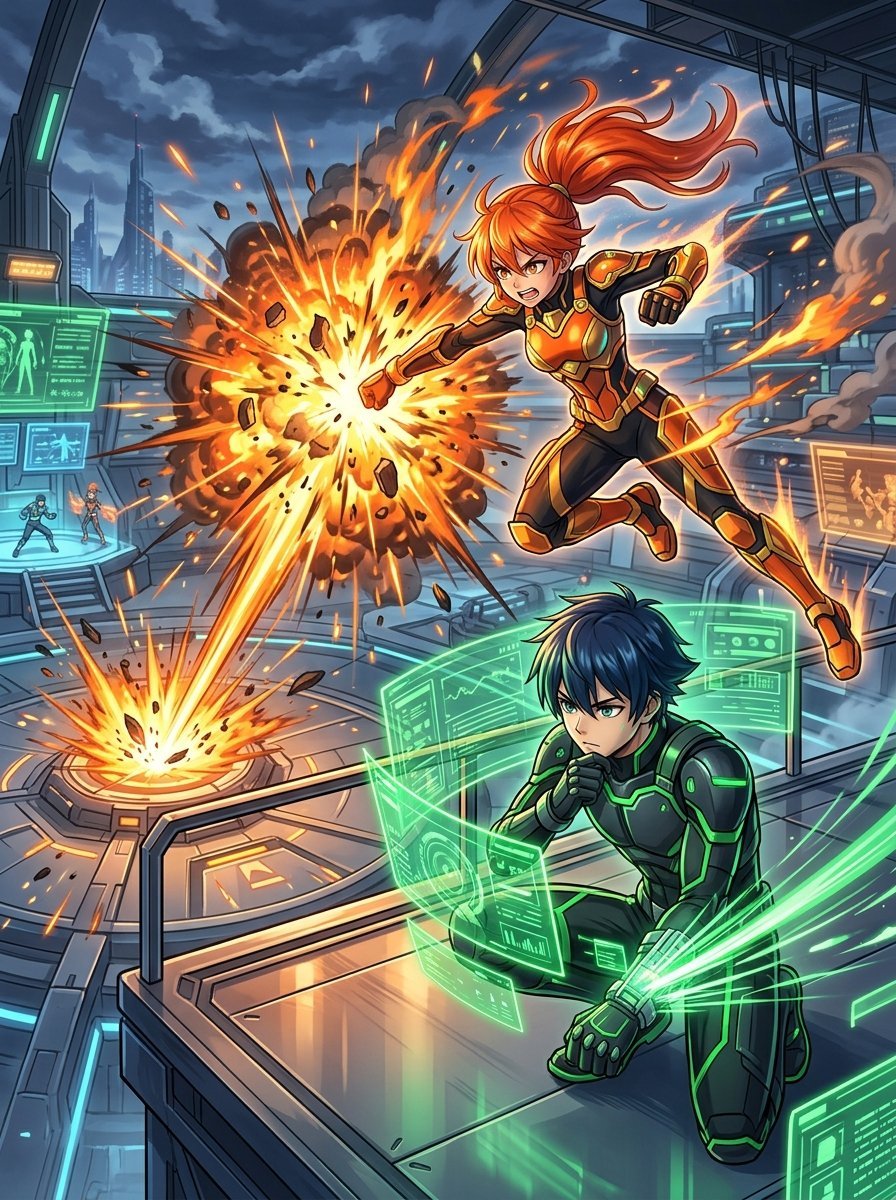
A blank page can feel intimidating. You have a pencil in your hand, a character in your mind, and somehow the first line never looks right. That feeling is normal. Good anime drawing starts with simple shapes, not perfect details. Think of your first sketch as a map. A circle can become a head. A few lines can guide the eyes. Simple shapes can become the body and pose. Professional drawing resources from Clip Studio Paint also recommend building characters from basic structures, studying proportions, and using action lines to create natural poses. You do not need expensive tools. A pencil, eraser, paper, and a few reference images can take you surprisingly far. Anime Art Academy also notes that its core lessons can be practiced with simple paper and pen.

1. Start With a Simple Anime Face
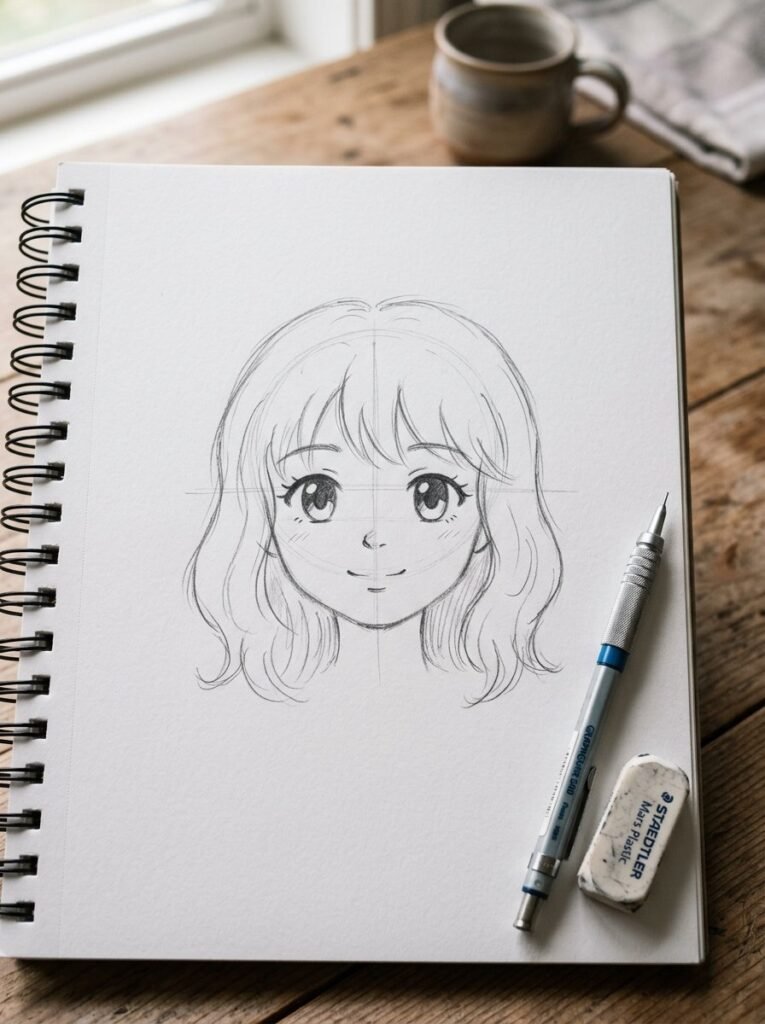
The face is often the easiest place to begin because you can practice several important skills in one small sketch. Start with a light circle. Add a vertical center line and a horizontal guide for the eyes. Then build the jaw underneath. This simple base helps you place the facial features instead of guessing where they should go. Anime Art Academy recommends this construction approach: establish the head and guide lines first, then add the eyes, nose, mouth, angles, and hair.
2. Practice Large Anime Eyes

Eyes can completely change a character’s personality. Try drawing several versions on one page. Make one pair round and cute, another sharp and confident, and another narrow and mysterious. Do not begin with eyelashes and highlights. First focus on the basic eyes shape and placement. Clip Studio’s Art Rocket explains that anime eyes often use exaggerated proportions and that different shapes can create different emotional effects.
3. Try Easy Girl Character Sketches
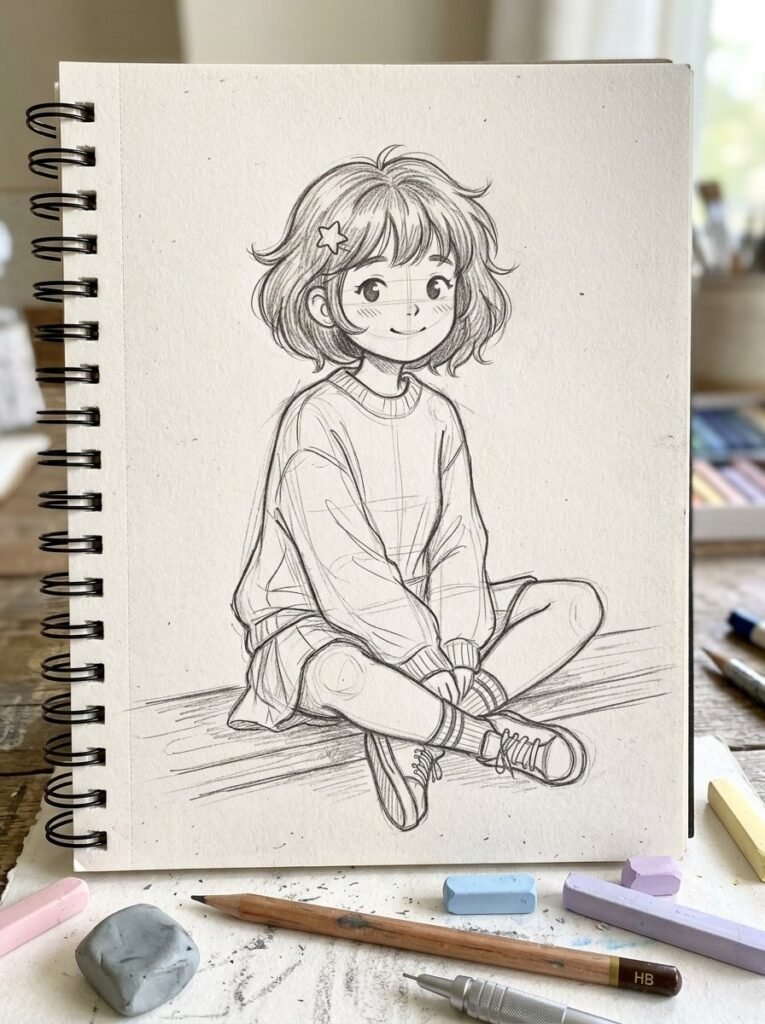
A simple girl character can teach you how to combine the face, hair, neck, shoulders, and clothing. Begin with a light head shape and add the body using basic forms. Keep the hairstyle simple at first. Long straight hair, a short bob, twin tails, or a loose ponytail can each create a different mood. Use soft curves instead of trying to draw every strand individually.
4. Build Characters From Basic Shapes
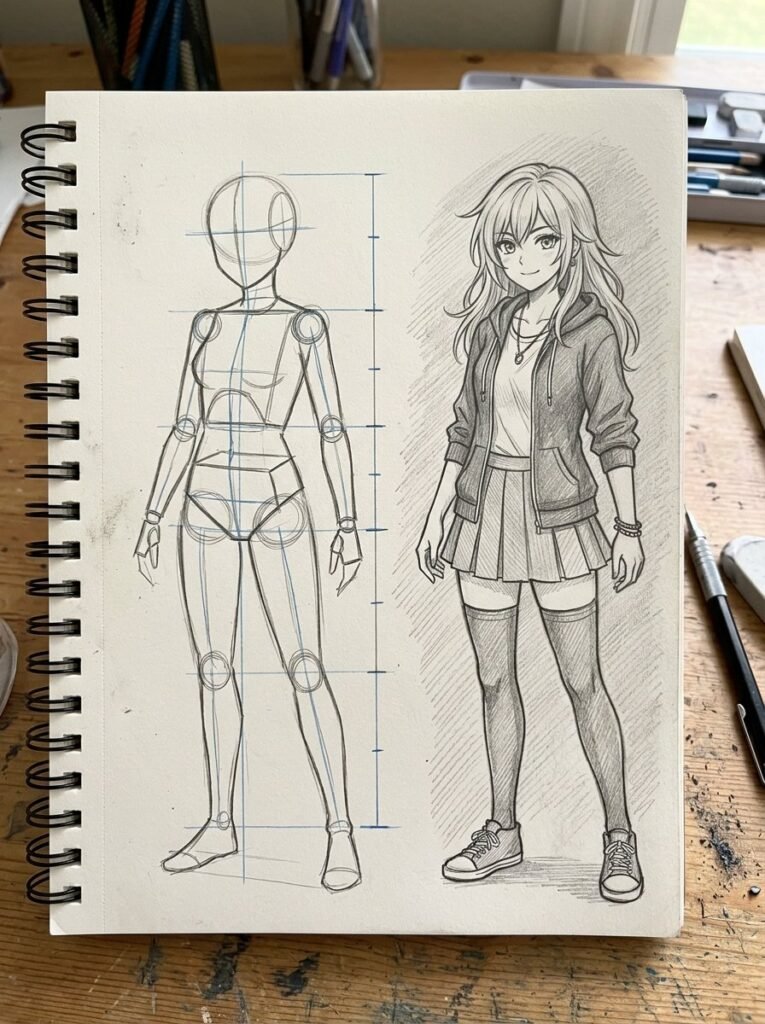
When a full character feels difficult, forget the character for a moment. Think about circles, boxes, cylinders, and simple lines. Use a circle for the head, a box for the chest, cylinders for arms and legs, and simple shapes for the hands and feet. This gives your sketch structure before you add clothing or hair. Clip Studio’s anatomy resources recommend breaking the body into simpler forms to make different poses easier to construct.
5. Draw Step-by-Step Anime Hair
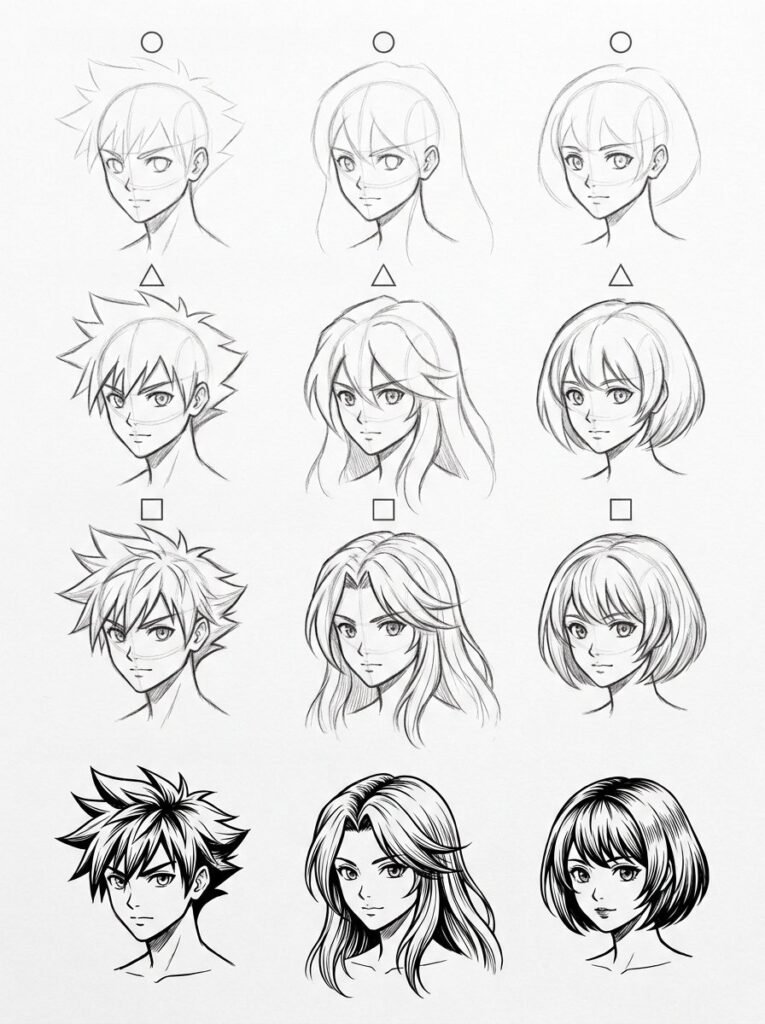
Hair becomes easier when you stop treating it as hundreds of individual lines. First draw the shape of the head. Then imagine where the hair grows from the scalp. Add large locks before adding smaller strands. Try several step by step versions: straight hair, spiky hair, curly hair, short hair, and long flowing hair. Leave some space above the skull so the hairstyle has volume rather than sitting tightly against the head.
6. Create Cute Chibi Characters
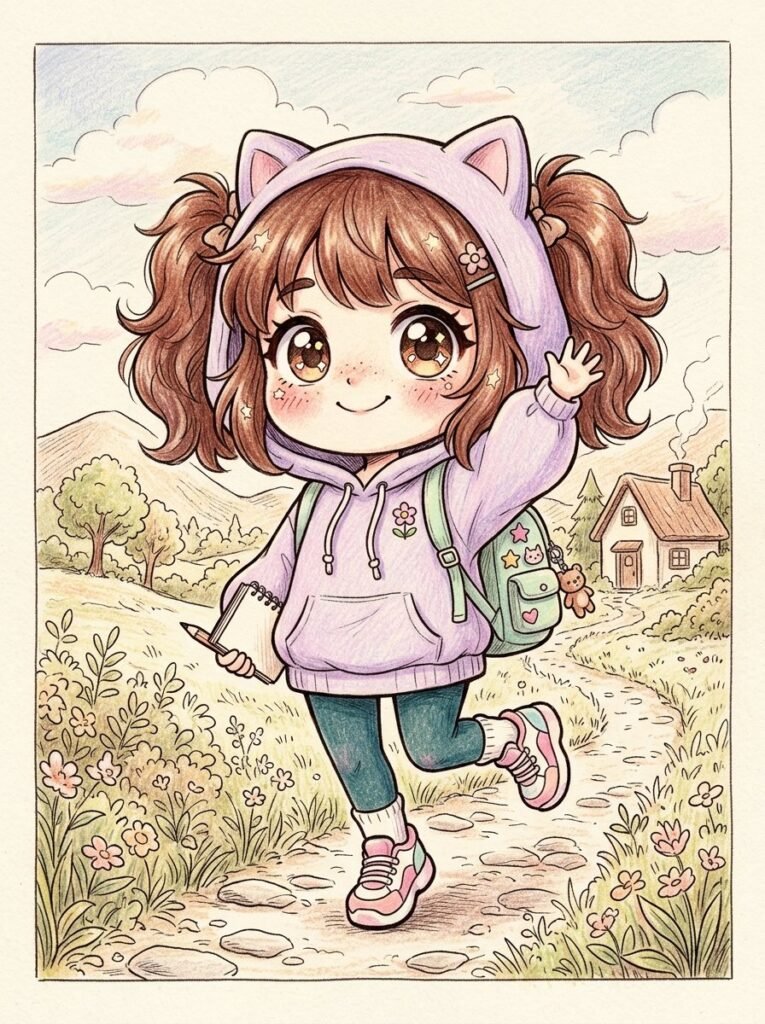
Chibi characters give you permission to exaggerate. Make the head large, the body small, and the hands and feet simple. Use big expressive eyes and a clear silhouette. This style works well when you want cute drawing ideas that do not require detailed anatomy. Try giving your character a tiny backpack, oversized hoodie, animal ears, or a little prop.
7. Practice Male Anime Characters
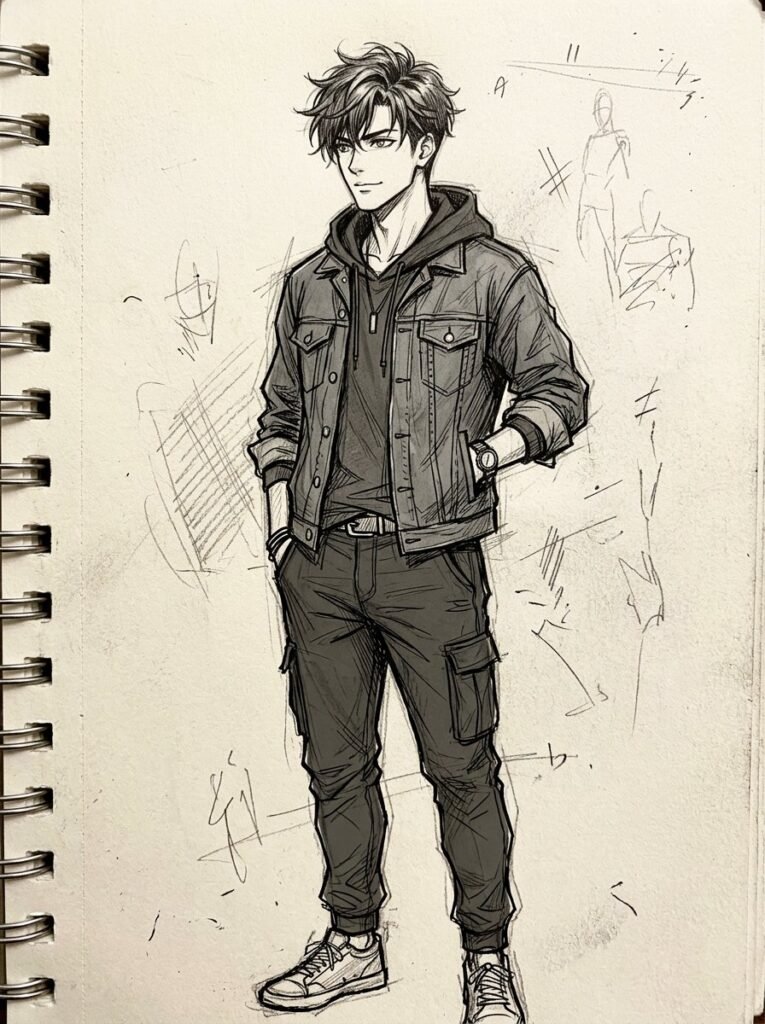
Male characters can feel different from female characters because of changes in jaw shape, shoulders, body proportions, and hairstyle. Start with a simple head and build the body underneath it. Do not rely only on the face to communicate character type. Clothing, posture, shoulders, and movement can add personality too. Clip Studio’s character resources discuss using body proportions and physical differences as tools for character design rather than rigid rules.
8. Draw Dynamic Anime Poses

A character standing straight can look stiff even when the anatomy is correct. Try walking, jumping, running, sitting, stretching, or turning. Start with an action line that shows the main direction of movement. Then build the body around it. Clip Studio’s Art Rocket recommends action lines, balance, rhythm, body construction, and perspective when creating more energetic poses.
9. Try an Aesthetic Pen Sketch

You do not always need color. A black pen can create a clean, stylish result. Start with a light pencil sketch, then trace only the lines you want to keep. Experiment with thick and thin lines. Make the hair darker, leave some facial areas lighter, and add small clothing details. A limited black-and-white palette can make an ordinary character feel like finished manga art.
10. Use Reference Images the Smart Way
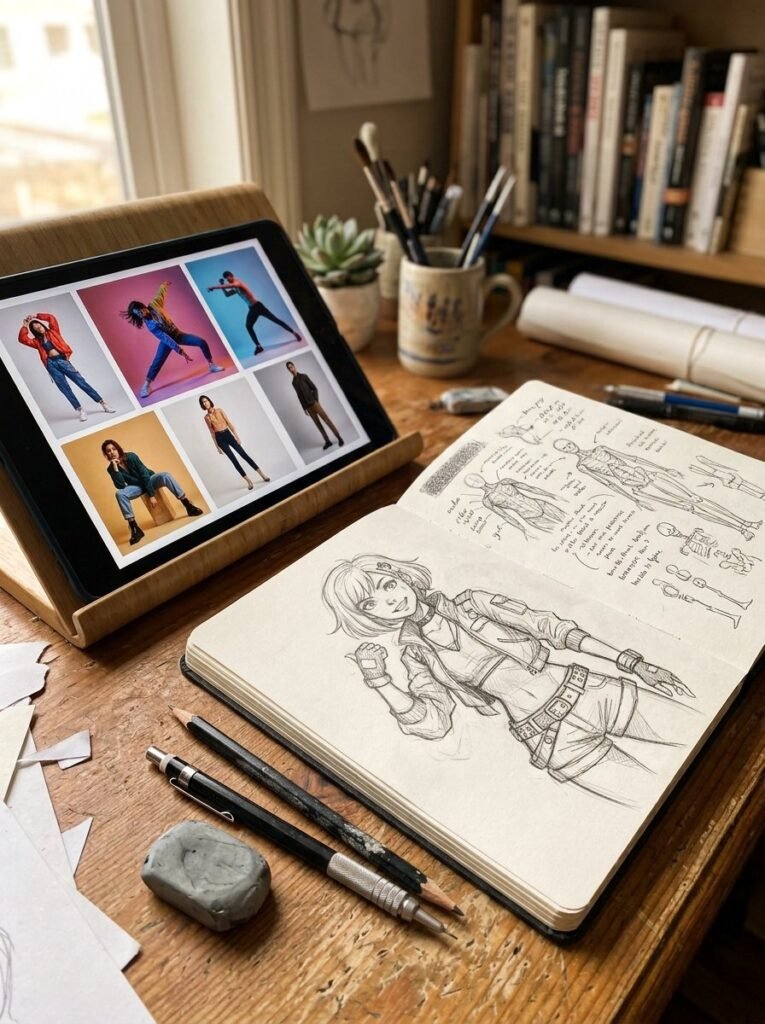
Reference images can save hours of guessing. Study a pose, hairstyle, hand position, clothing fold, or facial angle, then create your own character from what you learned. The goal is not to trace another artist’s finished work. Instead, observe how the body is positioned and why the shapes work. Clip Studio specifically recommends observation and pose references as part of improving character movement and anatomy.
11. Draw a Gojo-Inspired Character Study

If you enjoy popular anime characters, studying their visual traits can be useful. For example, you can practice a character with spiky white hair, a high collar, covered eyes, and a confident pose inspired by the general visual language of modern shonen anime. For your own artwork, change the hairstyle, clothing, face, pose, and accessories instead of simply copying a finished character image. This turns a study into an original character exercise.
12. Make a Naruto-Inspired Ninja Sketch
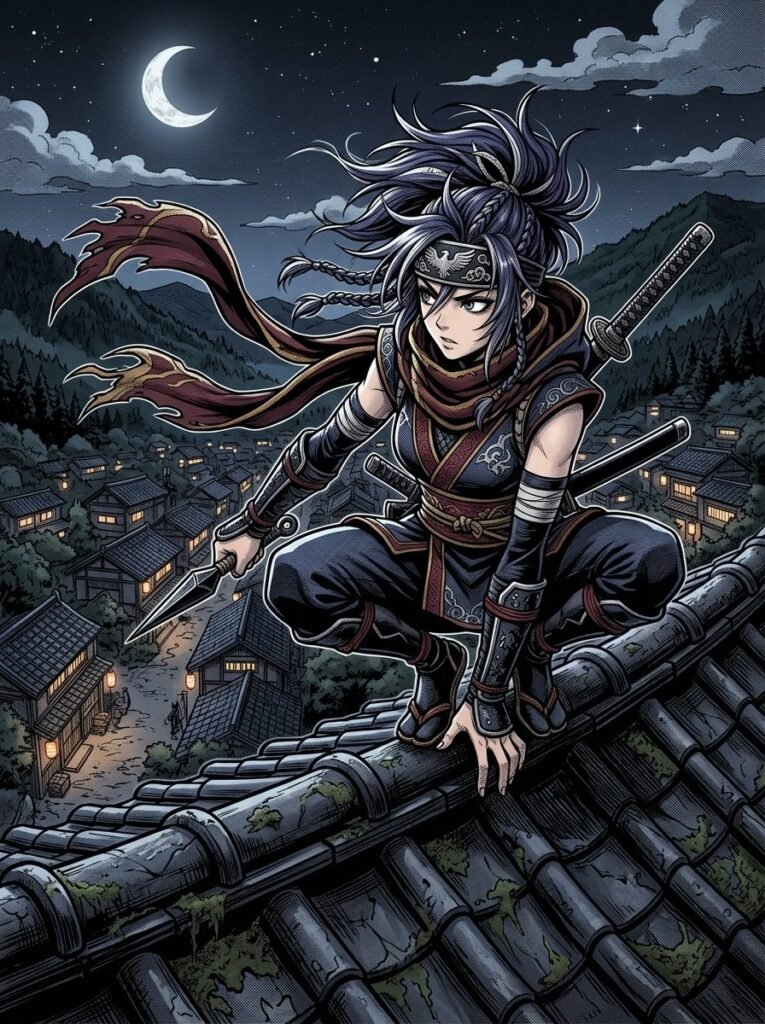
Ninja characters offer excellent practice because they combine movement, clothing, accessories, and expressive poses. Instead of copying an existing character, create your own young ninja with a different hairstyle, outfit, headband design, and personality. Try a crouching pose or a running pose. Add a simple background such as rooftops, trees, or a moonlit village.
13. Create Random Anime Sketches
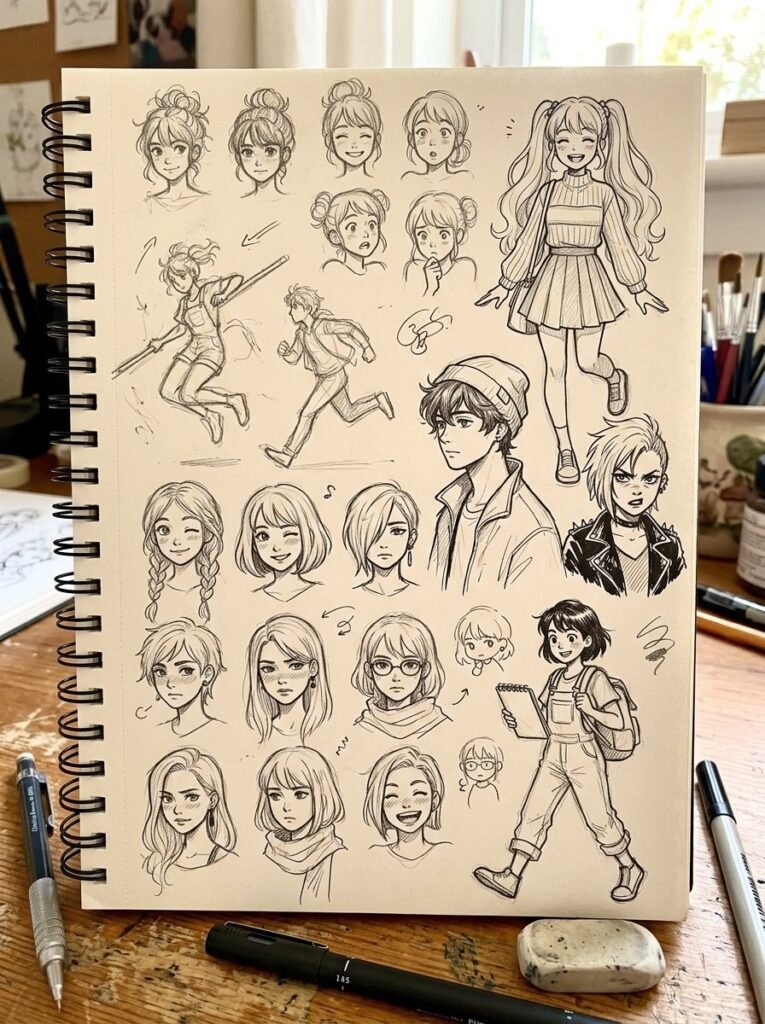
Sometimes the best drawing idea is the one you did not plan. Open your sketchbook and choose three random things: a hairstyle, an emotion, and a pose. For example, draw a sleepy character with messy hair sitting beside a window. Then try a confident character with short hair walking through the rain. Random combinations can help you discover ideas you would not normally choose.
14. Practice Coloring Your Anime Sketches
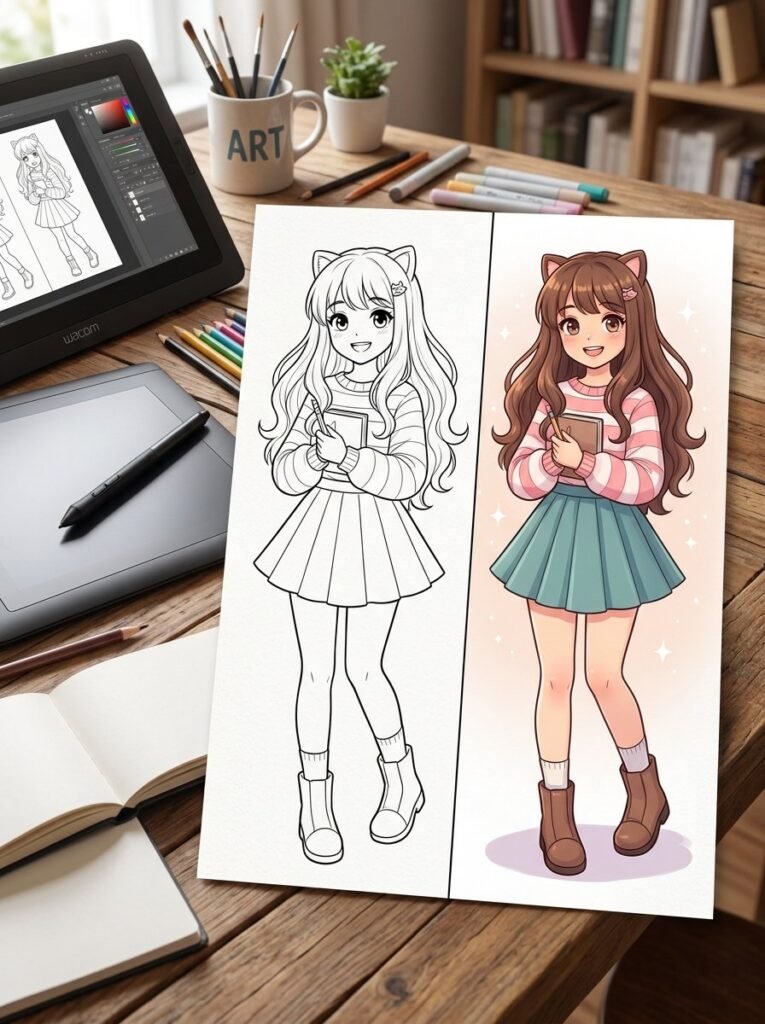
Once your line art feels comfortable, add color. Start with a simple palette of three to five colors rather than trying to shade everything. Choose one main color for the clothing, one skin tone, one hair color, and one accent color. Then add a darker shade under the hair, chin, sleeves, and clothing folds. Clip Studio’s anime-eye tutorial also covers grayscale, highlights, coloring, and expression, showing how value and color can add depth to stylized artwork.
15. Turn Your Sketch Into a Finished Character

The final step is not about adding every possible detail. It is about choosing what matters most. Clean the construction lines, strengthen the important outlines, refine the eyes, adjust the hair, and add a simple background. Look at the character from a distance. Does the pose read clearly? Do the eyes line up? Does the silhouette make sense? If something feels wrong, go back to the structure instead of hiding the problem with more details. That habit can make your next drawing much stronger.
Final Thoughts

The best anime drawing practice is the kind that makes you want to open your sketchbook again tomorrow. Start small. Build the head from simple shapes. Place the eyes carefully. Use references when a pose feels difficult. Then slowly add your own style. You do not need perfect lines on your first attempt. You need practice, observation, and curiosity. One simple sketch can become a character, and one character can become an entire story.


Leave a Reply