A small kitchen can feel crowded before you even start cooking. One appliance sits on the counter. A drawer refuses to close. Pots take over a cabinet, while the things you use every day somehow end up in the wrong place. Good small kitchen organization does not mean buying more containers and filling every empty corner. It starts with using the space you already have in a smarter way. IKEA’s current kitchen guidance also focuses on making better use of walls, cabinet height, drawers, corners, and flexible storage rather than simply adding more stuff.

1. Start Small Kitchen Organization With a Clear Countertop

The countertop is valuable working space, so do not let it become permanent storage. Keep only the appliances and tools you use almost every day. Move occasional items into cabinets, drawers, or a nearby storage cart. A clear countertop instantly makes a tiny kitchen feel easier to use. Try grouping items by task. Keep the coffee maker, mugs, and coffee supplies together. Put cooking oils and frequently used spices near the stove. These simple storage zones reduce searching and make daily cooking smoother. IKEA also recommends freeing work surfaces by finding alternative places for items that normally sit on the counter.
2. Use the Wall for Extra Storage
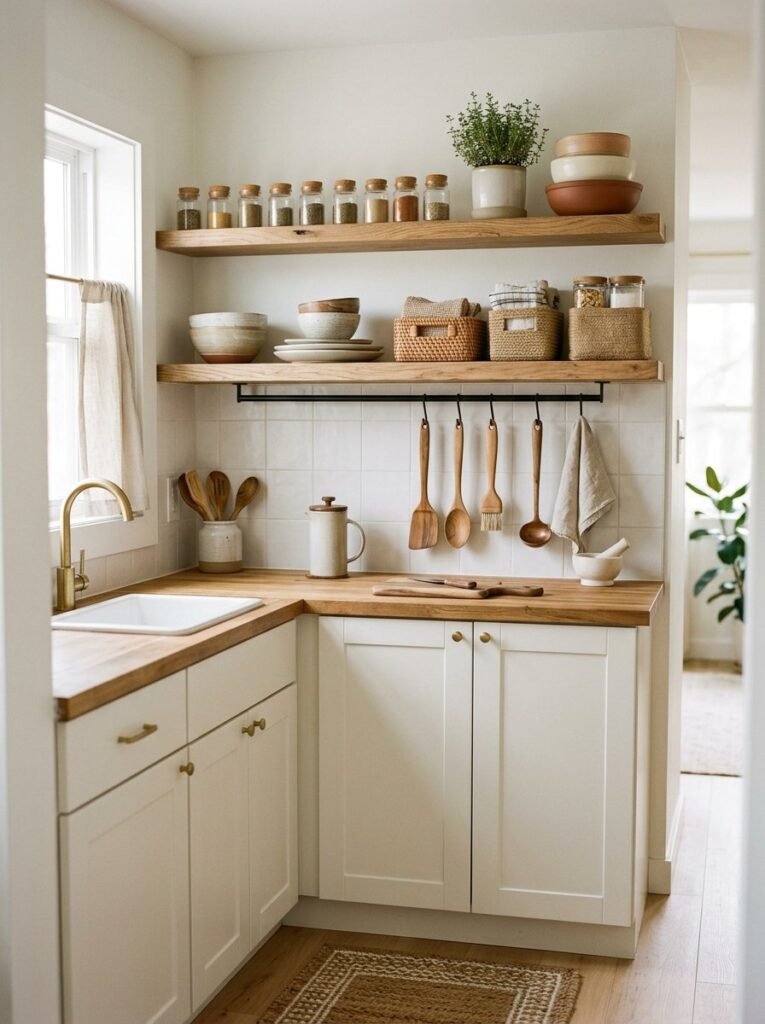
When floor space disappears, look upward. Empty walls can hold shelves, rails, hooks, baskets, and slim organizers without taking valuable walking space. This works especially well in an apartment kitchen where every inch matters. Install a narrow shelf above a prep area for spices and jars. Add hooks underneath for measuring cups or cooking utensils. These space saving ideas keep everyday items close while protecting your countertops from clutter. IKEA specifically highlights shallow shelves and wall rails as useful ways to keep pots, pans, utensils, jars, and containers accessible.
3. Add Shelf Inserts Inside Cabinets
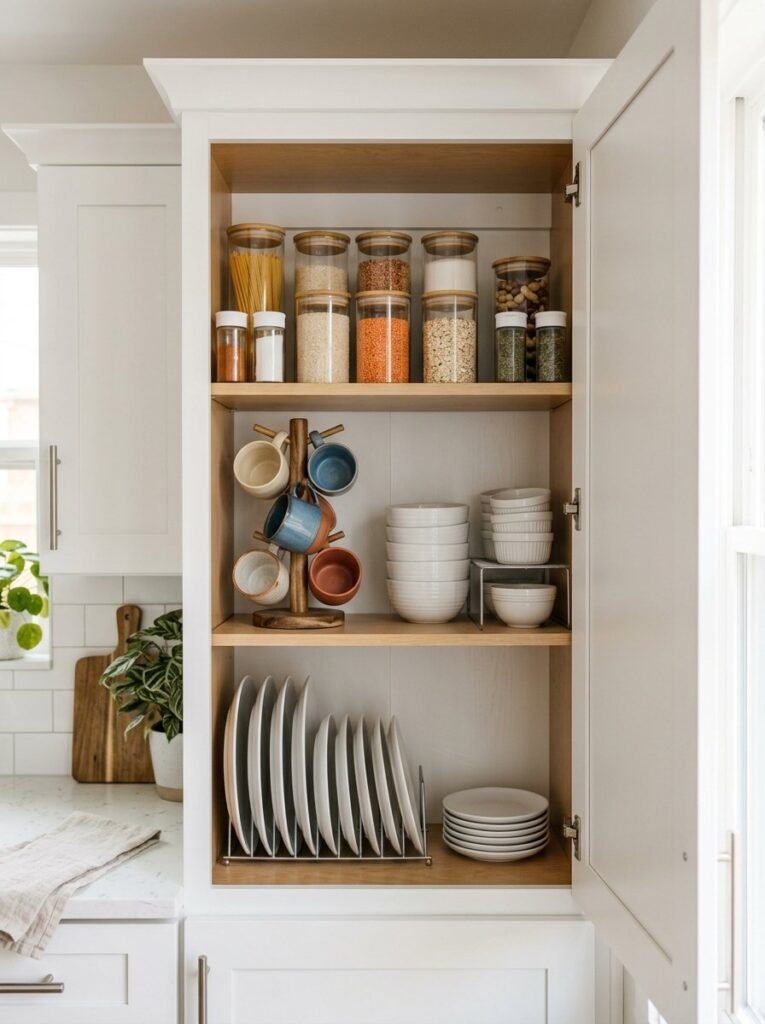
Tall cabinets often contain unused vertical space. Instead of stacking everything into one unstable pile, add shelf inserts to create another level. This simple change can double the usable surface inside a cabinet. Use the upper section for mugs or small bowls and the lower section for plates or everyday dishes. Shelf inserts work particularly well for apartment storage ideas shelves because you can improve an existing cabinet without changing the entire kitchen. IKEA recommends shelf inserts as a practical way to make better use of cabinet height.
4. Turn Cabinet Doors Into Hidden Storage

The inside of a cabinet door often sits completely unused. Add slim racks or hooks there for items that do not need much depth. Think measuring spoons, kitchen towels, wraps, small cutting boards, or cleaning supplies. This is one of the easiest apartment storage ideas cabinet doors because it uses space that already exists. Just check the door clearance first. Make sure the added organizer does not block shelves or prevent the door from closing properly.
5. Create a Dedicated Appliance Zone
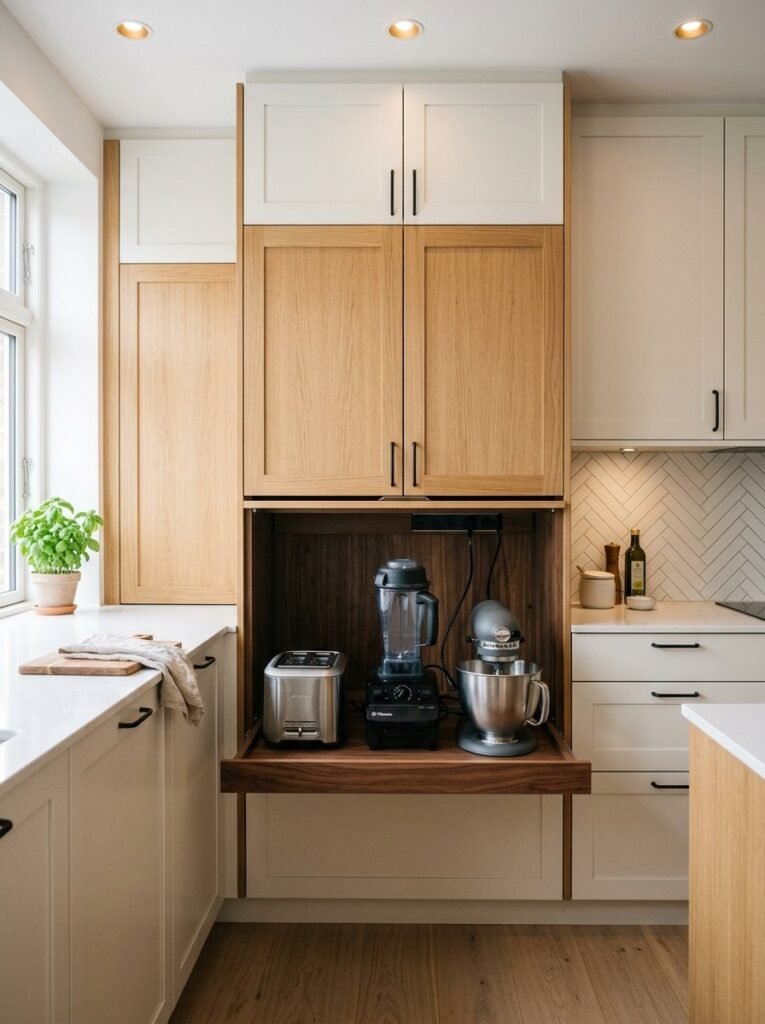
Small appliances can quickly take over a tiny kitchen. Instead of spreading them across several cabinets, create one appliance zone. Store the blender, toaster, mixer, air fryer accessories, and other less-used appliances together. For daily-use appliances, consider a pull-out shelf or appliance garage. IKEA shows how pull-out work surfaces can provide workspace while allowing appliances to stay hidden when they are not needed. This approach makes appliances storage solutions more practical because the appliance remains easy to reach without permanently occupying the counter.
6. Use a Slim Rolling Cart

A narrow rolling cart can turn an awkward gap into useful storage. Choose one that fits between the refrigerator and cabinet or beside a kitchen island. Use the levels for spices, canned foods, baking supplies, or frequently used cooking tools. The best part is flexibility. You can pull the cart toward your prep area when needed and move it back afterward. IKEA also recommends wheeled carts as flexible storage and extra workspace for compact kitchens.
7. Make the Sink Area Work Harder

The space under the sink often becomes a messy collection of cleaning products. Give it separate zones instead. Use small bins for sponges, dishwasher supplies, trash bags, and cleaning products. Because pipes take up valuable room, choose flexible organizers rather than forcing large boxes into the cabinet. IKEA recommends modular containers, multiple storage levels, and keeping only essential items under the sink. This makes everyday cleaning much easier.
8. Use the Space Above the Cabinets
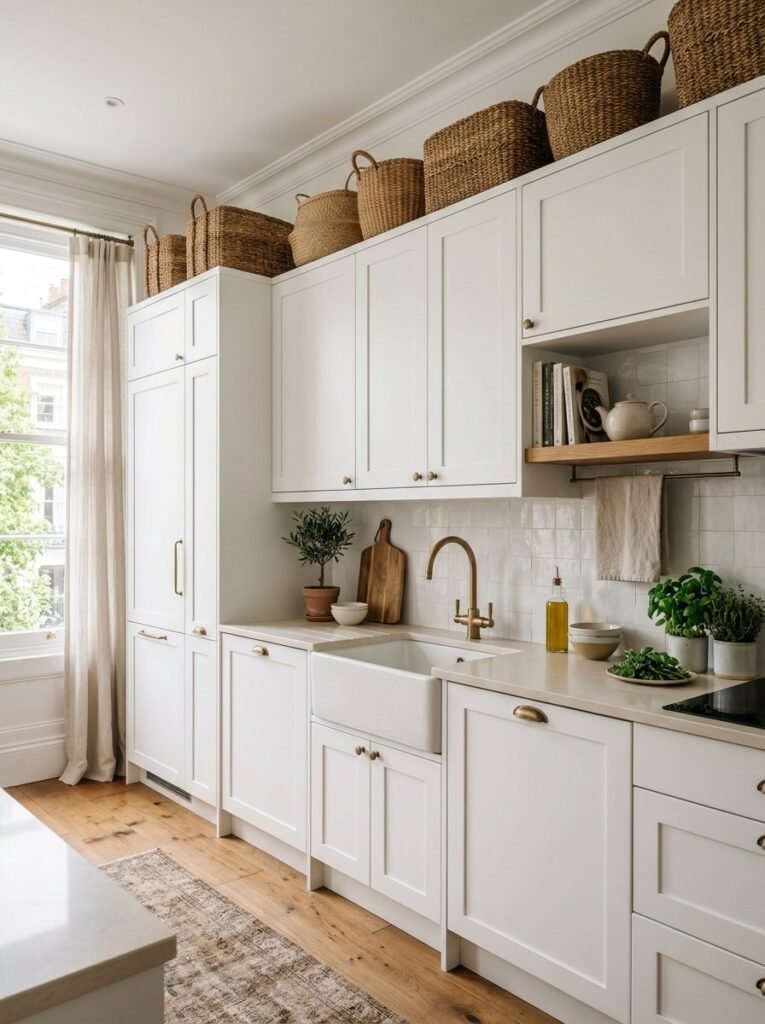
If your cabinets stop below the ceiling, that upper area can become extra storage for items you rarely use. Large serving bowls, seasonal cookware, special baking dishes, and decorative baskets can live there. Do not use this area for things you need every morning. Keep everyday items within easy reach and reserve high storage for occasional use. IKEA also demonstrates how using cabinet height can increase storage in a narrow kitchen without taking more floor space.
9. Try Open Shelves for Everyday Items
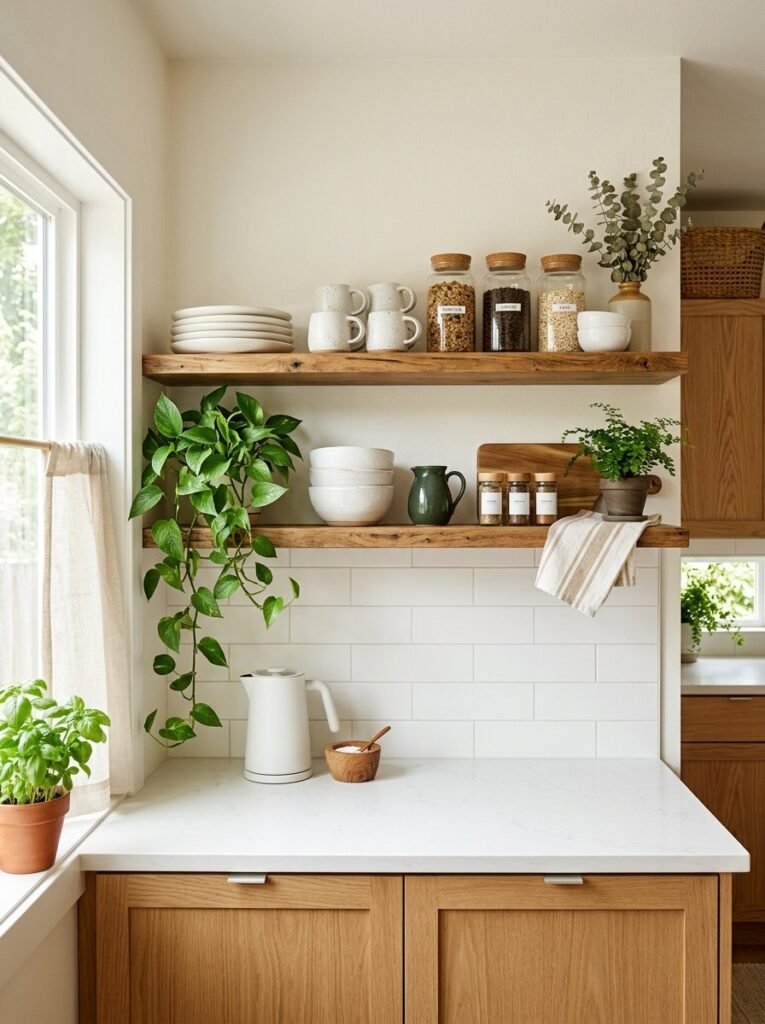
Open shelves can make a tiny kitchen feel lighter because they remove some visual weight from closed cabinets. Use them for plates, mugs, jars, or attractive cookware that you reach for often. The trick is restraint. Do not fill every shelf. Keep similar items together and leave small gaps between groups. IKEA notes that open shelves can improve access to everyday essentials while creating a more open feeling in compact layouts.
10. Use a Pull-Out Workspace
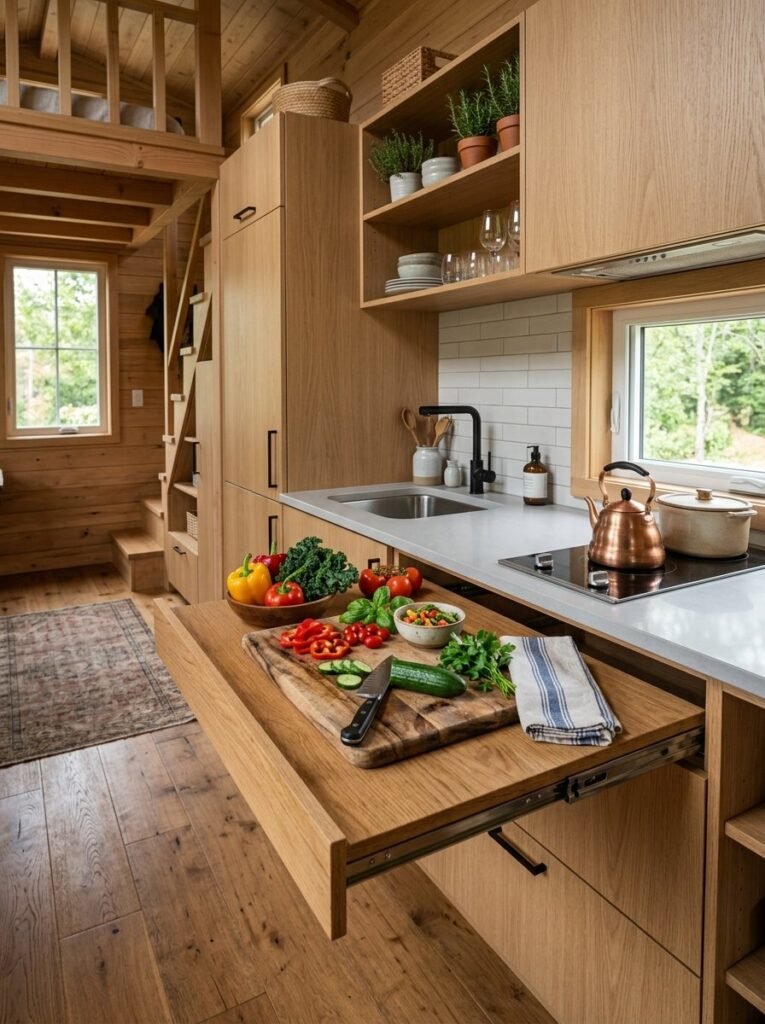
A tiny kitchen may have enough cabinets but still lack enough preparation space. A pull-out work surface can solve that problem without requiring a permanent island. Slide it out when you need to chop vegetables or prepare dough, then push it away when cooking ends. This approach works particularly well for ideas space saving tiny house kitchens and compact apartments. IKEA currently highlights pull-out work surfaces as a way to create temporary workspace while keeping the main counter clear.
11. Organize Drawers by How You Cook
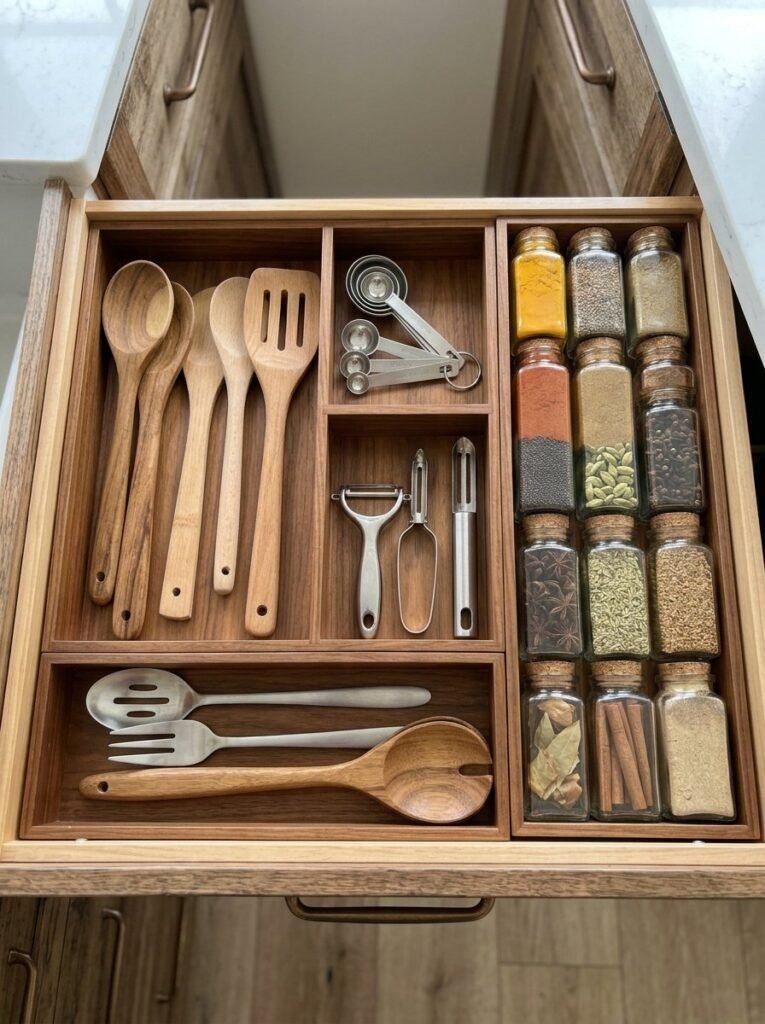
A drawer becomes easier to use when every section has a purpose. Instead of putting utensils wherever they fit, create simple groups. Keep cooking tools together, baking tools together, and serving utensils together. Use drawer dividers for small items such as measuring spoons, peelers, and spatulas. IKEA recommends drawer organizers and dividers to create clear zones for utensils, plates, serving pieces, and other kitchen tools. If you cook Indian food often, create a dedicated spice drawer or container section. Group everyday masalas together and keep less-used spices separately. These ideas indian kitchens can adapt easily to any cooking style because the main goal is to store ingredients according to how you actually use them.
12. Give Every Countertop Item a Job

The final step in effective small kitchen organization is simple: question everything that lives on the counter. Does it help you cook every day? Does it make another task easier? Does it have a better home? Keep useful items visible, but move occasional appliances and decorative objects elsewhere. A cutting board can sit near the sink. A knife rack can stay near the prep area. Coffee supplies can form one small station. When each item has a clear purpose, the kitchen feels calmer without becoming empty. For ideas countertops, think about function first. IKEA also recommends finding new homes for items that occupy work surfaces and using walls, shelves, carts, and hidden storage to create more room for cooking.
How to Keep Your Kitchen Organized
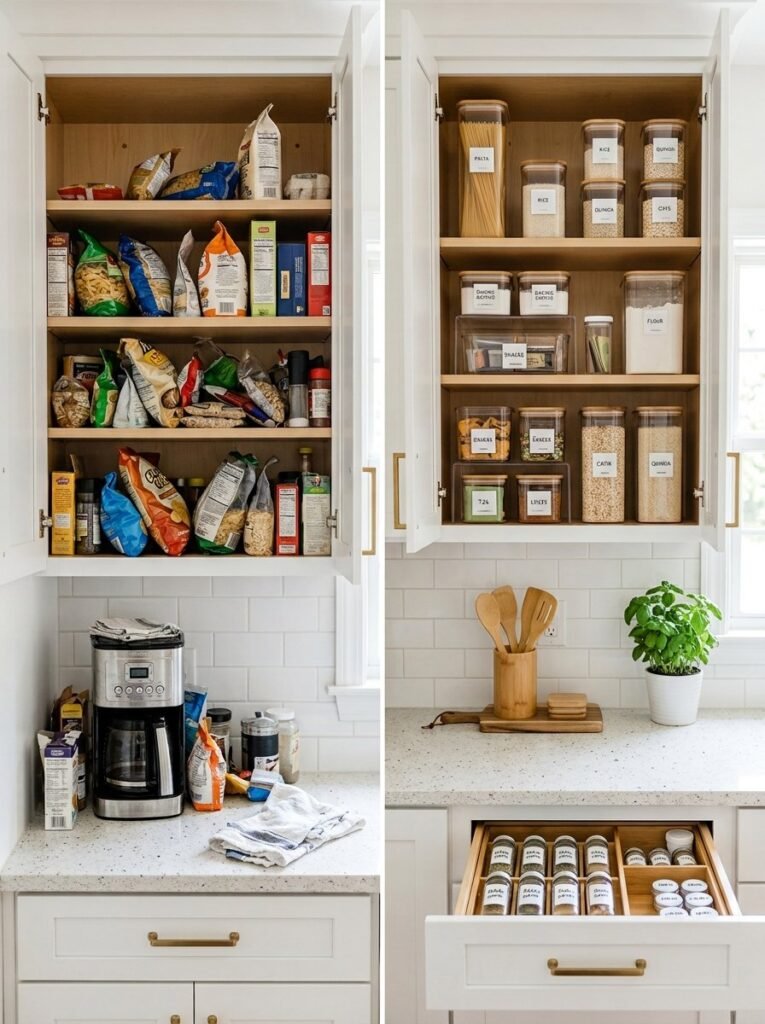
Good organization should make life easier, not create another chore. Start with one cabinet or drawer instead of emptying the entire kitchen. Remove items you never use. Group similar things together. Then place the most frequently used items where you can reach them quickly. A useful system should match your routine. IKEA recommends starting with one area and building habits gradually instead of trying to organize everything at once.
Final Thoughts
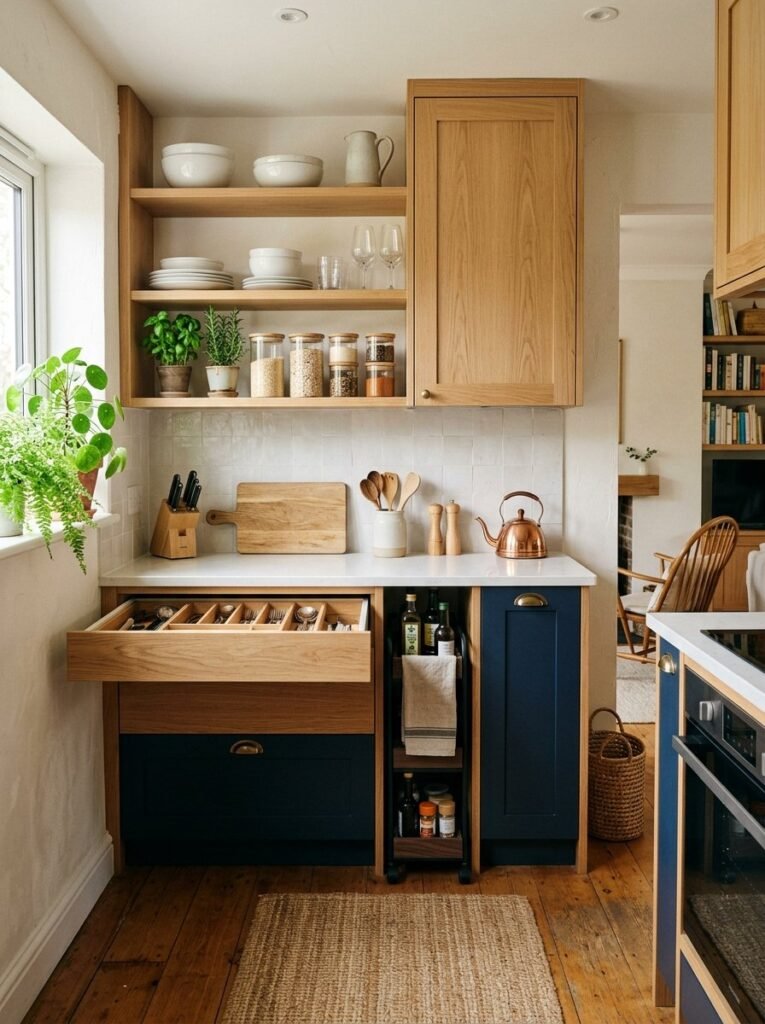
The best small kitchen organization plan does not depend on having a large budget or a large kitchen. It depends on noticing wasted space and giving it a purpose. Walls can hold shelves. Cabinet doors can hold slim racks. Deep cabinets can gain inserts. A narrow gap can become a rolling pantry. Start with the space that causes you the most frustration. Fix that one area first. Then move to the next. Before long, your kitchen can feel easier to cook in, easier to clean, and much less crowded.


Leave a Reply