Good kitchen cabinet organization starts with one simple idea: store things where you use them. Keep cooking tools near the cooktop, everyday dishes close to the dishwasher or prep area, and food items together in a clear zone. IKEA gives similar guidance, noting that grouping items by task can make everyday cooking easier and more efficient. You also do not need an expensive remodel. A few shelf inserts, drawer dividers, bins, pull-outs, or even simple boxes can change how a cabinet works.The best systems are not complicated. They make everyday items easier to see, reach, use, and put away.
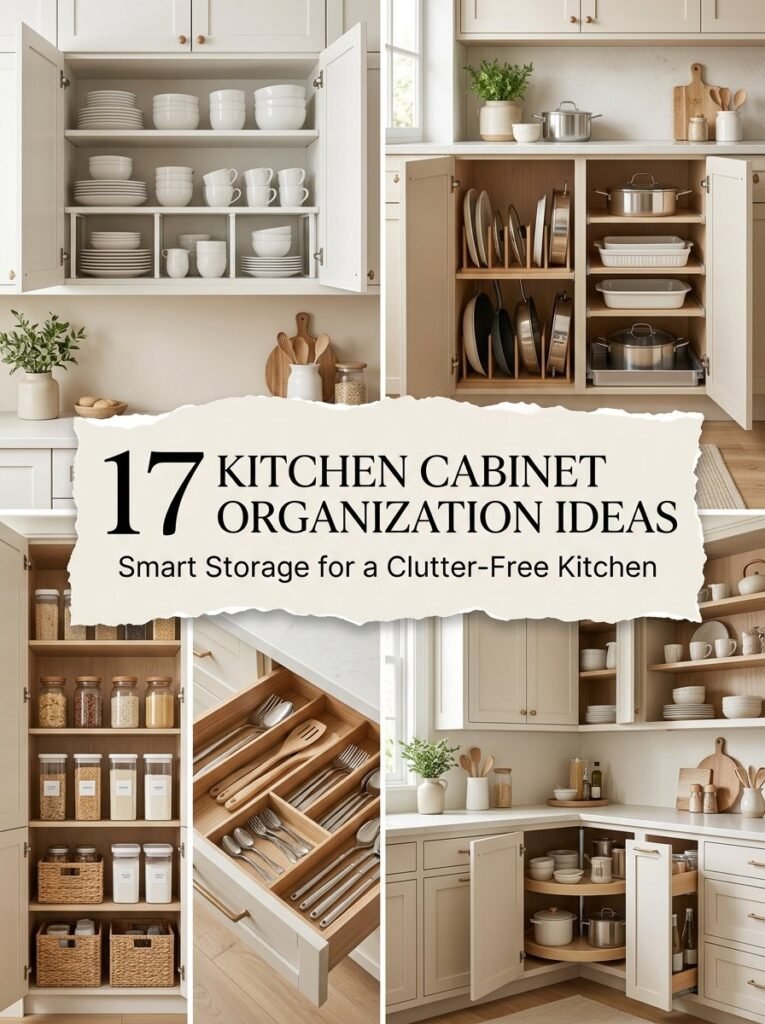
1. Create Zones Before You Organize
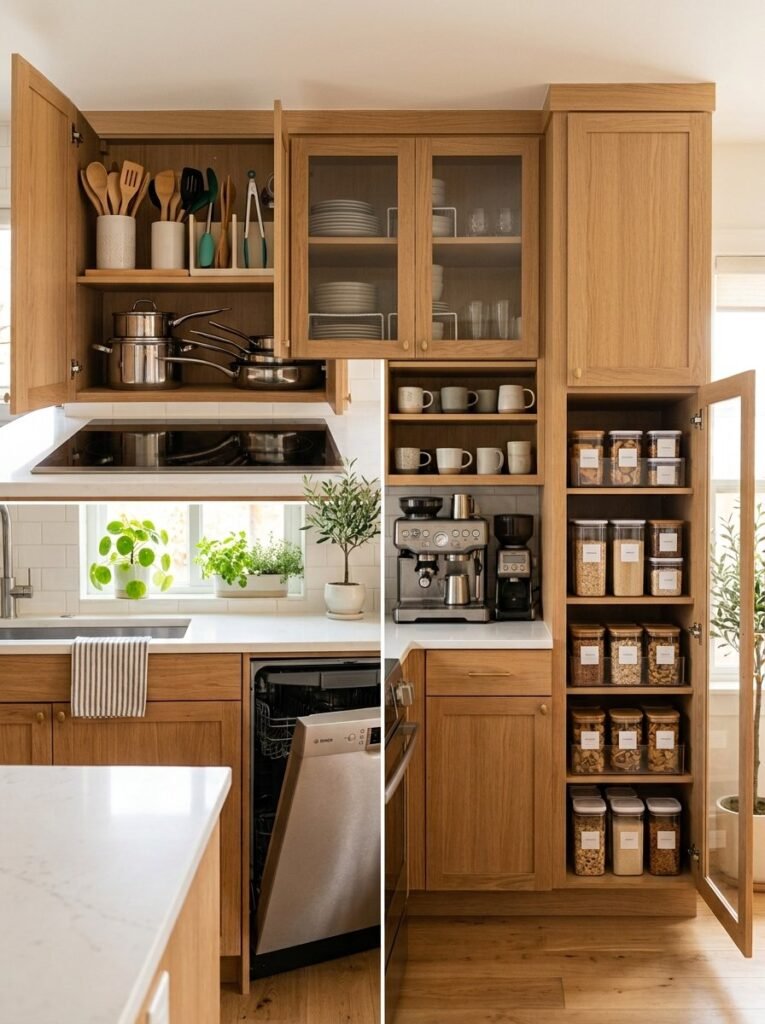
Before buying a single organizer, take everything out and group similar items together. Put pots pans in one group. Keep plates, dishes, and serving pieces together. Gather baking supplies, cleaning products, snacks, spices, and everyday cooking tools separately. Then think about where you use each group. Your cooking zone should hold the tools and ingredients you reach for while cooking. Your coffee zone can keep cups, mugs, coffee, and sweeteners together. A breakfast zone might hold cereal, bowls, and spreads. This zoning approach is more useful than simply making every cabinet look neat. IKEA recommends arranging drawers and storage around cooking tasks and keeping frequently used items near the main work area.
2. Use Shelf Risers for Upper Cabinets
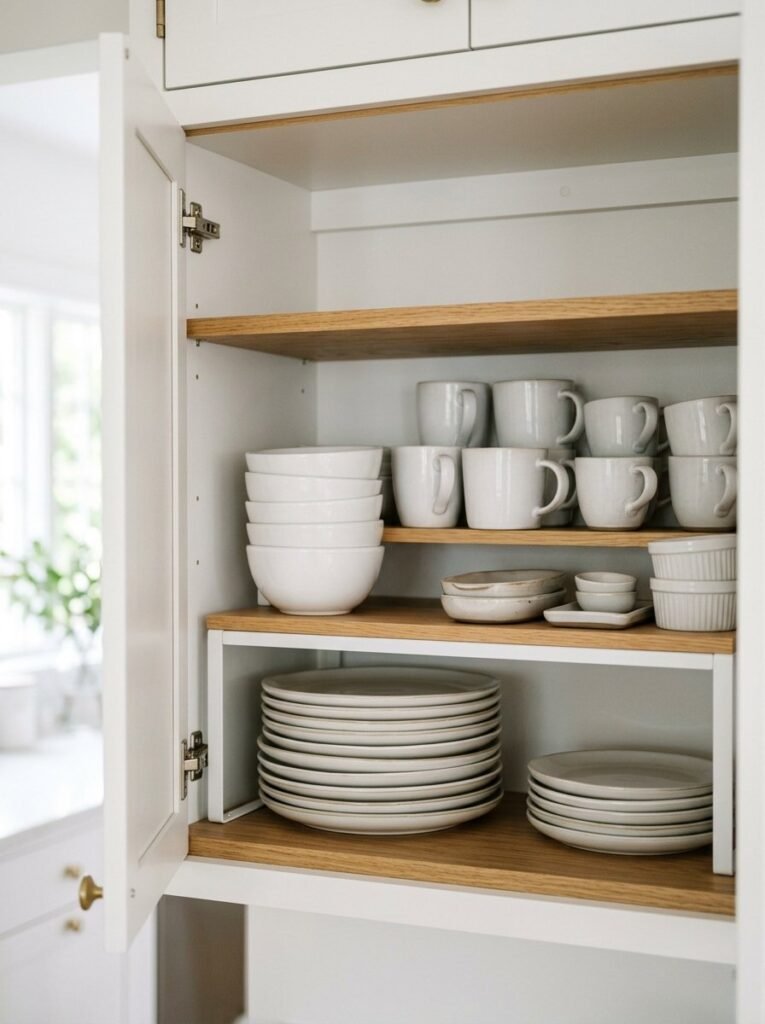
Upper cabinets often contain wasted vertical space. A short stack of plates may use only half the available height, leaving a large empty area above. Shelf risers solve this problem without requiring a renovation. Place one inside an upper cabinet and use the extra level for smaller dishes, bowls, or cups. Choose a riser that fits securely and leaves enough clearance for the cabinet door. IKEA specifically recommends shelf inserts as a way to create extra levels for glasses, bowls, and jars.
3. Give Pots and Pans Their Own Lower Cabinet

Pots and pans become difficult to manage when you stack everything in one deep cupboard. Place your most-used pans at the front. Store larger pots underneath or behind them. Use a vertical rack for lids so they do not slide around between the cookware. Deep lower cabinets work well for heavier items because they are easier to access without putting weight above your head. IKEA notes that base cabinets suit heavier and larger kitchen items such as pots, pans, plates, and bowls.
4. Turn Deep Storage Into Pull-Out Storage

A deep cabinet can hide half of what you own. You reach for one item and forget everything sitting behind it. A pull-out basket or drawer changes that. Instead of reaching into the back, you bring the whole storage area toward you. This works especially well for food containers, bottles, cleaning supplies, and pantry items. Full-extension drawers can also improve visibility because the entire drawer comes forward instead of leaving a dark section hidden at the back. IKEA highlights this as a practical way to make cabinet contents easier to see and reach.
5. Organize Plates and Cups Together
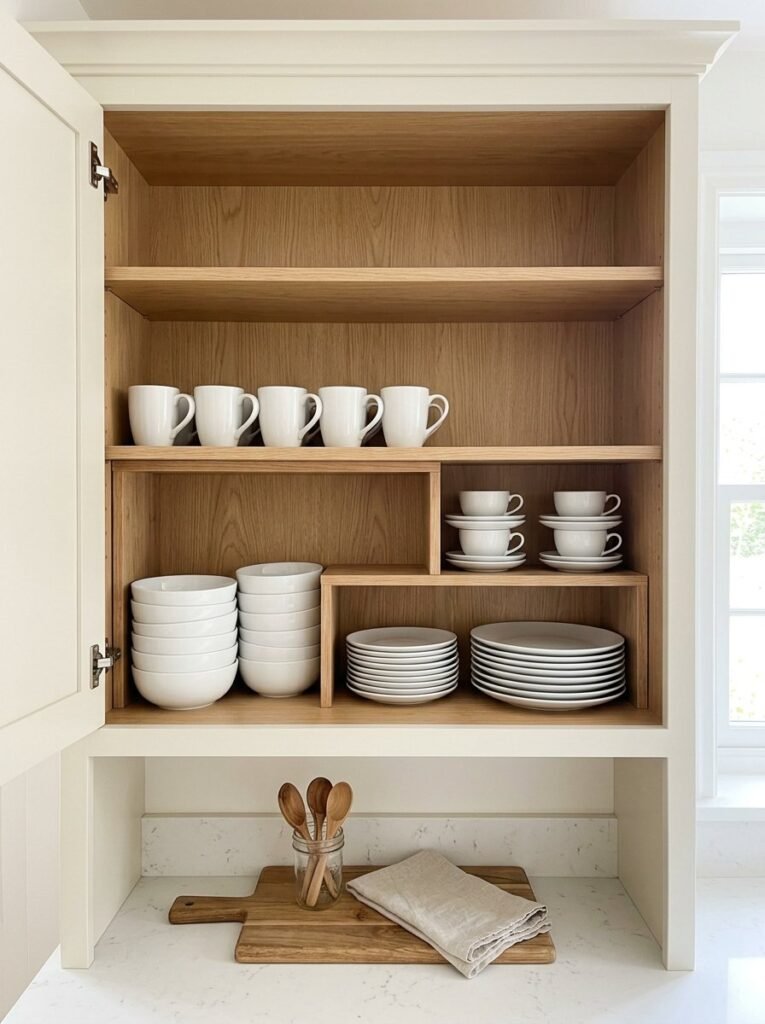
If you use certain plates cups every day, keep them within easy reach instead of placing them in separate parts of the kitchen. Stack everyday plates in one section. Put matching bowls above or beside them. Store daily cups where everyone can reach them safely. For less-used serving dishes, choose a higher cabinet or a separate storage area. The goal is simple: open one door and find what you need without moving five other things.
6. Make Corner Cabinets Work Harder
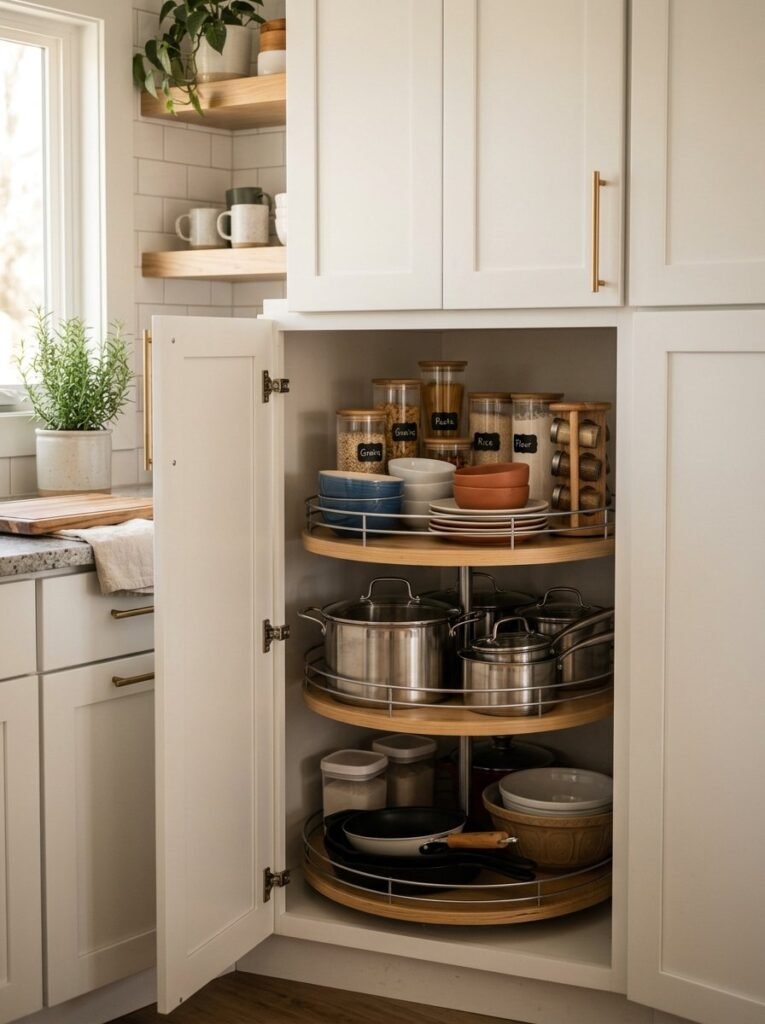
Corner cabinets can feel like storage black holes. The back corner often becomes difficult to reach, so items slowly disappear there. A carousel or pull-out fitting can change that. You can rotate or pull the storage forward instead of reaching blindly into the corner. This is especially useful for cookware, serving bowls, appliances, and other bulky items. Both IKEA and Lowe’s recommend specialized solutions such as carousels and pull-outs for difficult corner storage.
7. Use a Narrow Cabinet for Spices
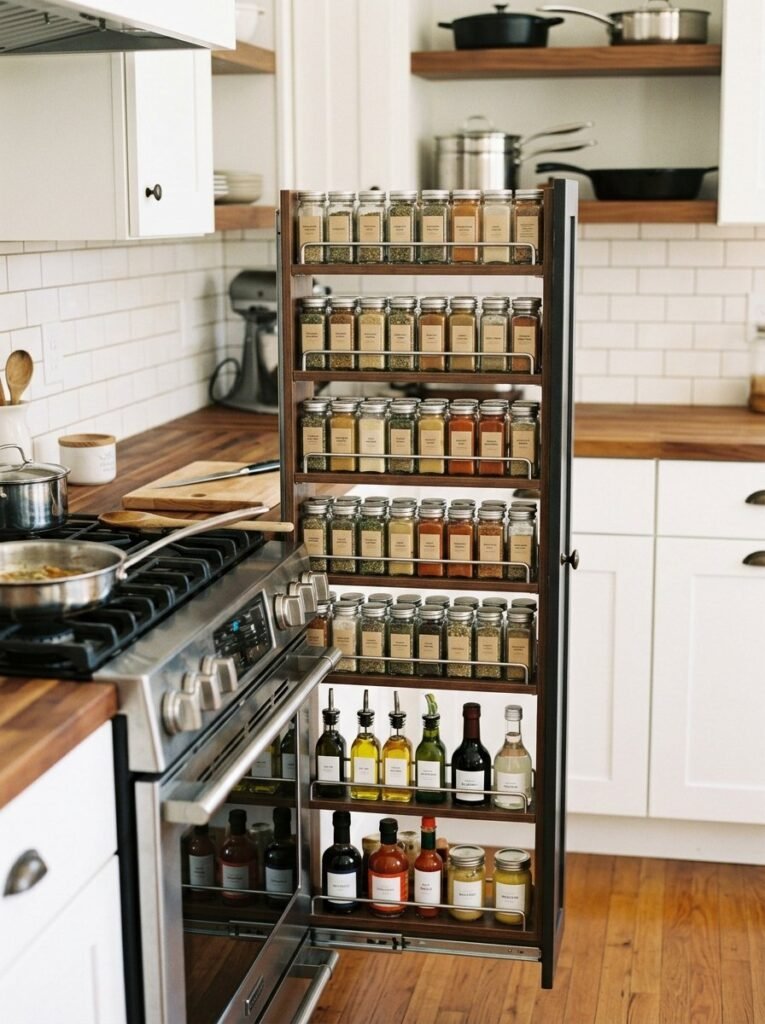
A narrow cabinet does not have to become useless. A slim pull-out shelf can turn it into a dedicated spice zone. Arrange jars by type or frequency. Keep everyday spices near the cooktop and less-used seasonings farther back. A narrow vertical space can also hold oils, sauces, small bottles, or baking ingredients.
8. Add Dividers to Storage Drawers
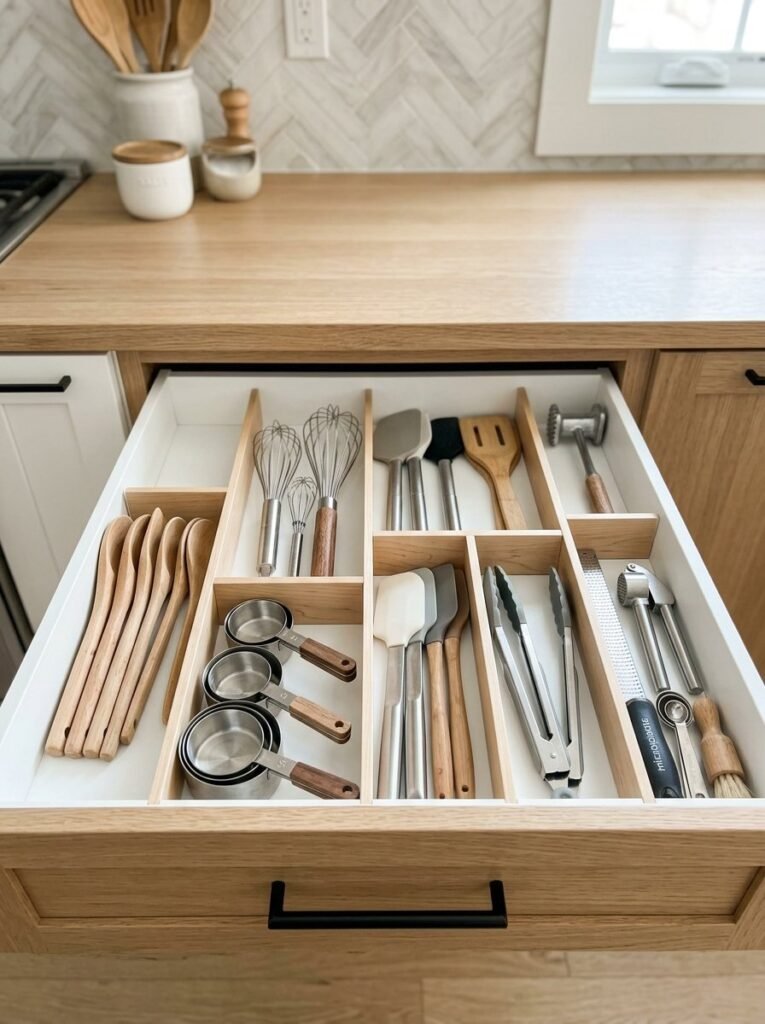
A large drawer can become messy very quickly. Spoons mix with spatulas. Measuring cups disappear under cooking tools. Use adjustable dividers to create dedicated sections. Create one area for cutlery, another for cooking utensils, and another for measuring tools. IKEA’s current drawer organizers include adjustable dividers, utensil trays, knife organizers, and plate holders for this purpose. This simple change makes a drawer easier to use because every item has a clear home.
9. Create a Pantry Cabinet for Food

If your cabinets hold food, group it instead of spreading it across the kitchen. Create separate areas for breakfast foods, snacks, baking ingredients, canned food, pasta, and grains. Clear containers can help you see what remains, while baskets work well for small packages. Keep heavier food items lower and everyday snacks within easy reach. A pantry does not need to be huge. Even one tall cabinet can create a useful food-storage zone.
10. Use the Inside of Cabinet Doors
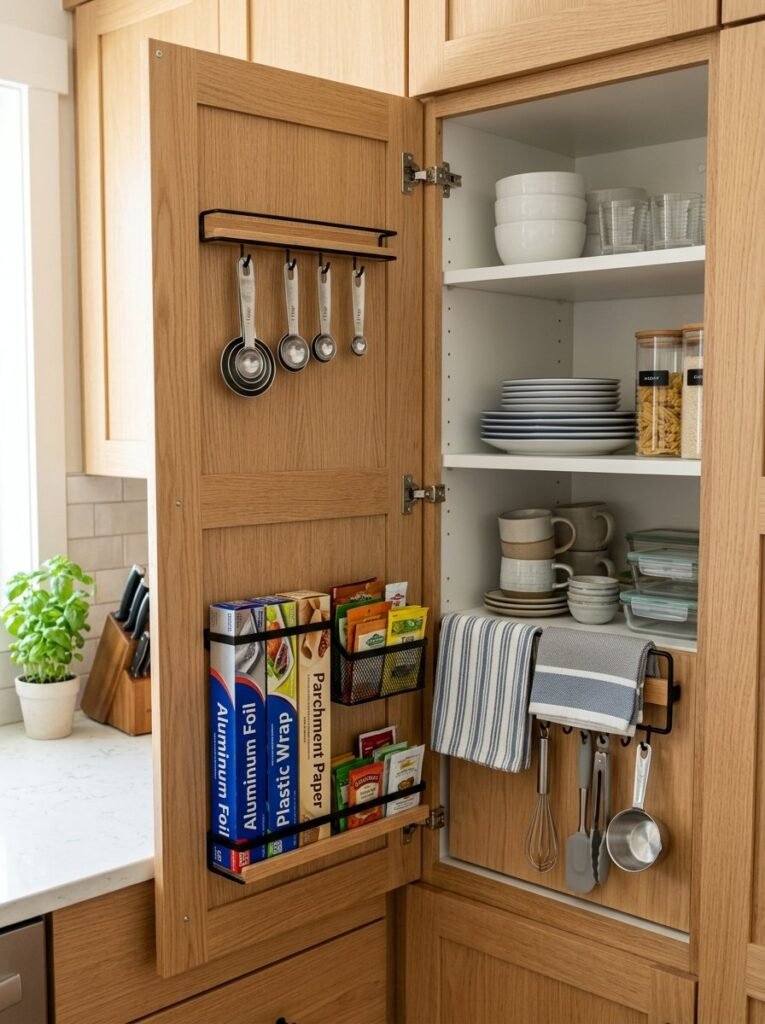
The inside of a cabinet door gives you extra storage without taking away much shelf space. Add slim racks or small bins for measuring spoons, wraps, cleaning cloths, spice packets, or small kitchen tools. This idea works particularly well in a small space, where every unused surface matters. Keep the door organizer light enough that the hinges can handle it comfortably.
11. Use Upper Cabinets for Less-Used Items
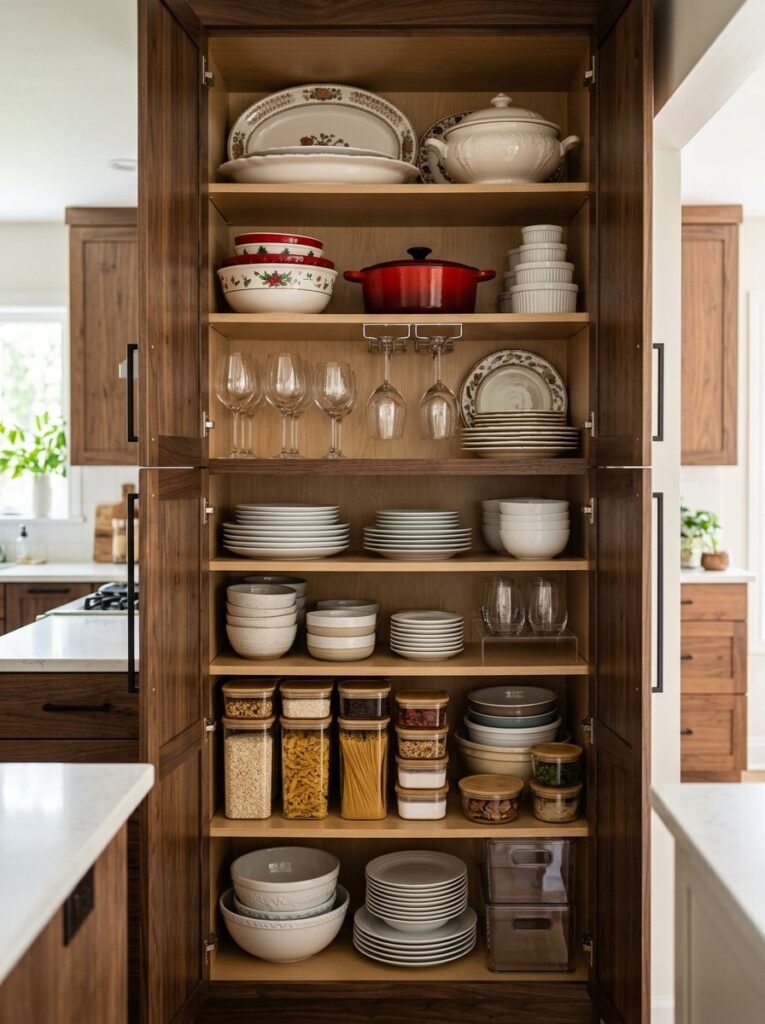
The upper shelves should not hold the items you reach for every morning. Move seasonal serving dishes, special baking equipment, holiday plates, and rarely used appliances higher up. Keep everyday objects at comfortable heights. This small change can make the kitchen feel easier to use, especially when several people share the space. Lowe’s also recommends organizing storage according to accessibility and keeping frequently used items within easy reach.
12. Add a Drawer for Plates
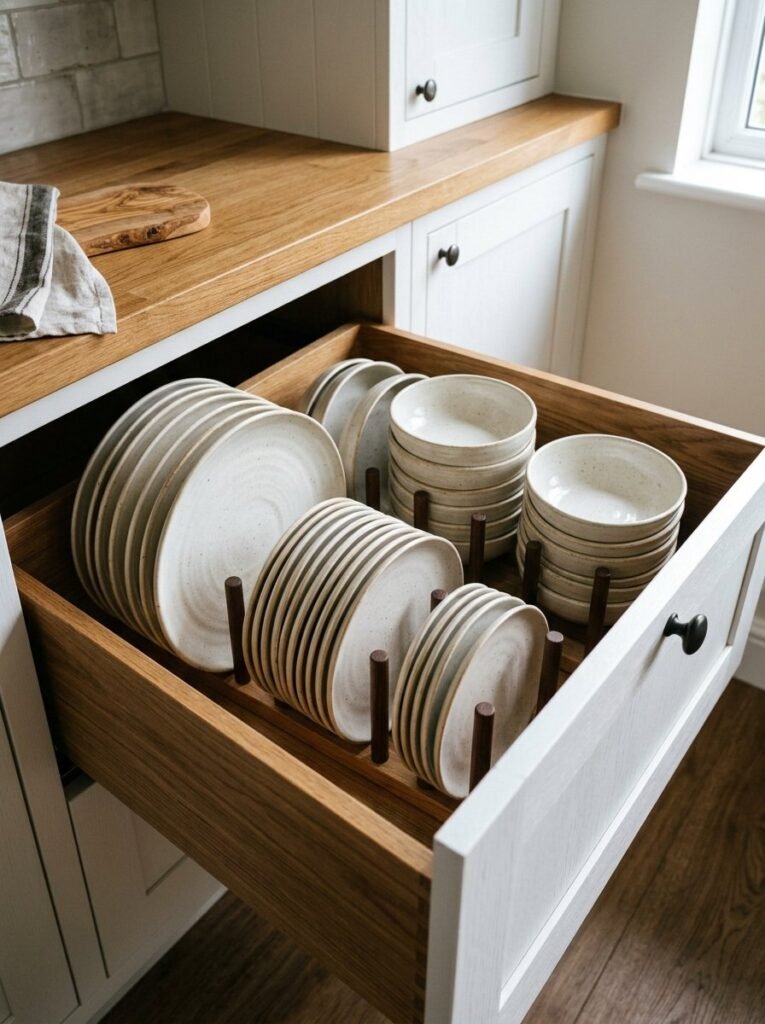
Deep drawers can work surprisingly well for plates. Instead of lifting a heavy stack from a high shelf, you can pull the drawer toward you and see the entire collection. Use dividers or plate holders if needed. IKEA currently offers adjustable plate holders designed for different plate sizes. This can also help keep dishes separated by size, from everyday dinner plates to smaller side plates.
13. Create a DIY Dollar Tree Storage System
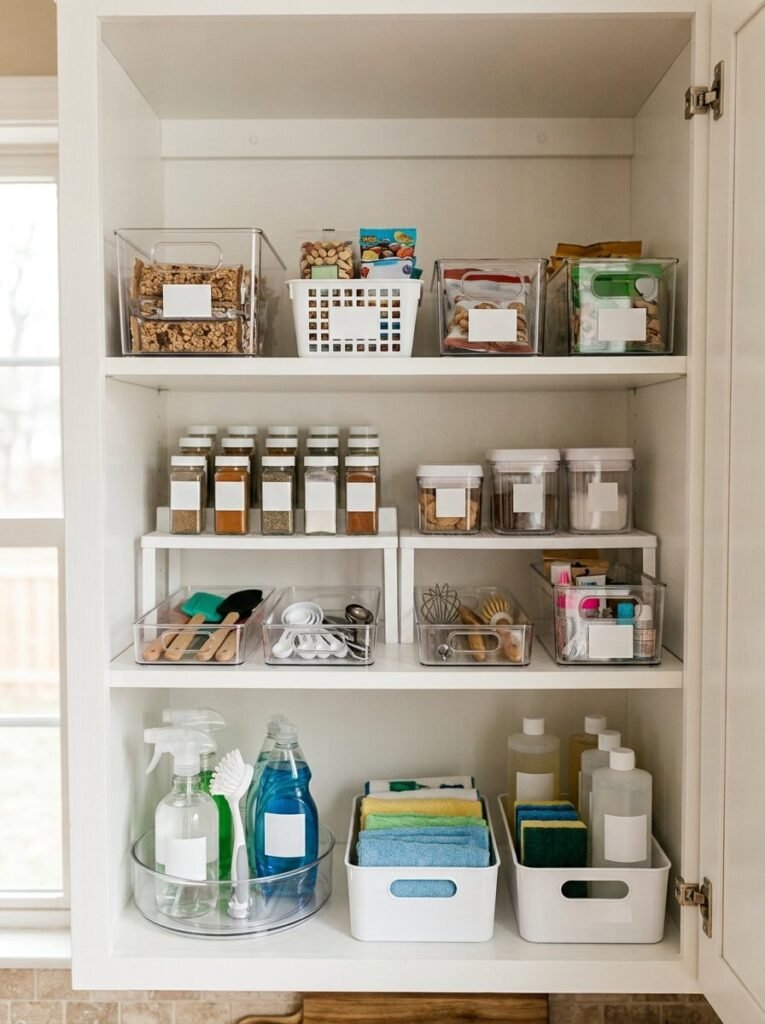
You do not need expensive organizers for every cabinet. A few affordable bins, baskets, small containers, shelf risers, or plastic trays can create useful zones. A Dollar Tree-style budget approach works especially well for small items that tend to spread across shelves. Measure first. Then choose containers that fit the space. The goal is not to fill the cabinet with organizers. The goal is to make each item easier to find.
14. Organize the Lower Corner
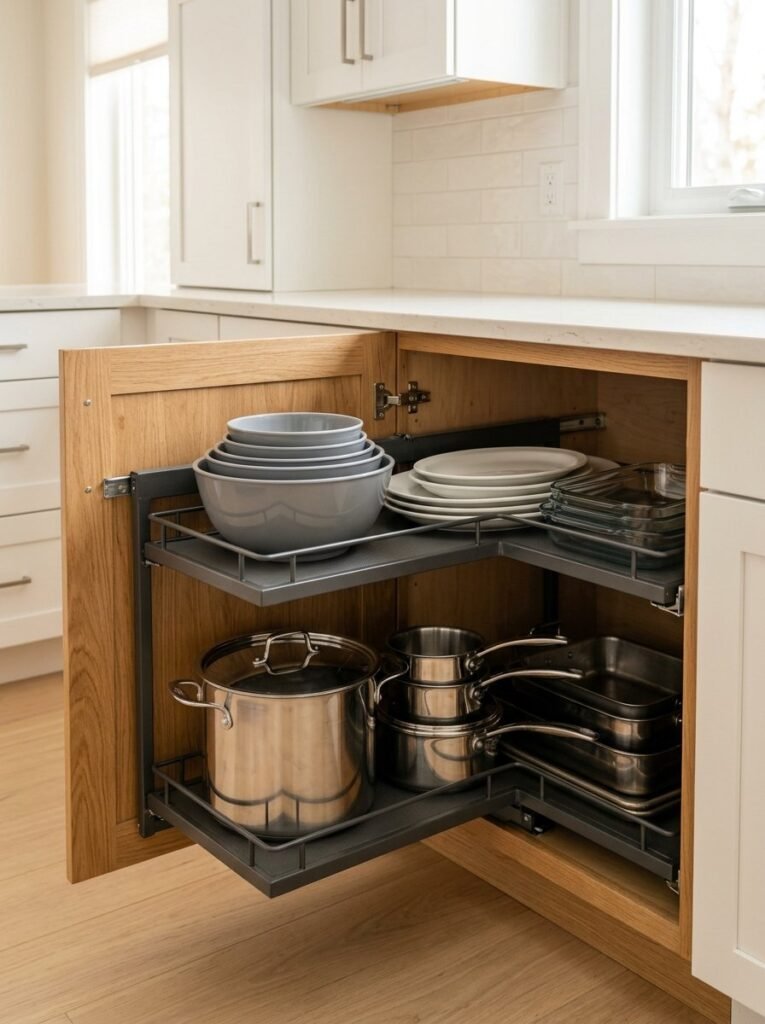
The lower corner can become one of the most difficult parts of a kitchen. Use it for larger items that you do not need every few minutes. A rotating organizer, pull-out shelves, or deep storage baskets can make the area easier to reach. Avoid filling the entire corner with small objects. Larger grouped items are easier to remove and return. IKEA specifically recommends pull-out fittings or carousels for corner base cabinets to improve access to deep storage.
15. Make a Tall Cabinet a Full Storage Wall

A tall cabinet gives you vertical storage from near the floor toward the ceiling. Use lower shelves for heavy food and appliances. Keep middle shelves for everyday items. Place seasonal or rarely used objects higher up. If you are designing a new kitchen, think about cabinet height before choosing decorative features. IKEA notes that combining different cabinet heights and widths can help work around architectural challenges and maximize available storage.
16. Try Open Shelving for Everyday Pieces

If your kitchen has a beautiful collection of bowls, mugs, or serving dishes, consider open shelving for the items you use often. The trick is to avoid displaying everything. Keep the shelf focused on useful pieces with a consistent color or material. This creates a more aesthetic appearance while making everyday dishes easy to grab. Open storage also works well when a kitchen feels visually heavy from too many closed cabinets.
17. Build a Layout That Matches How You Cook
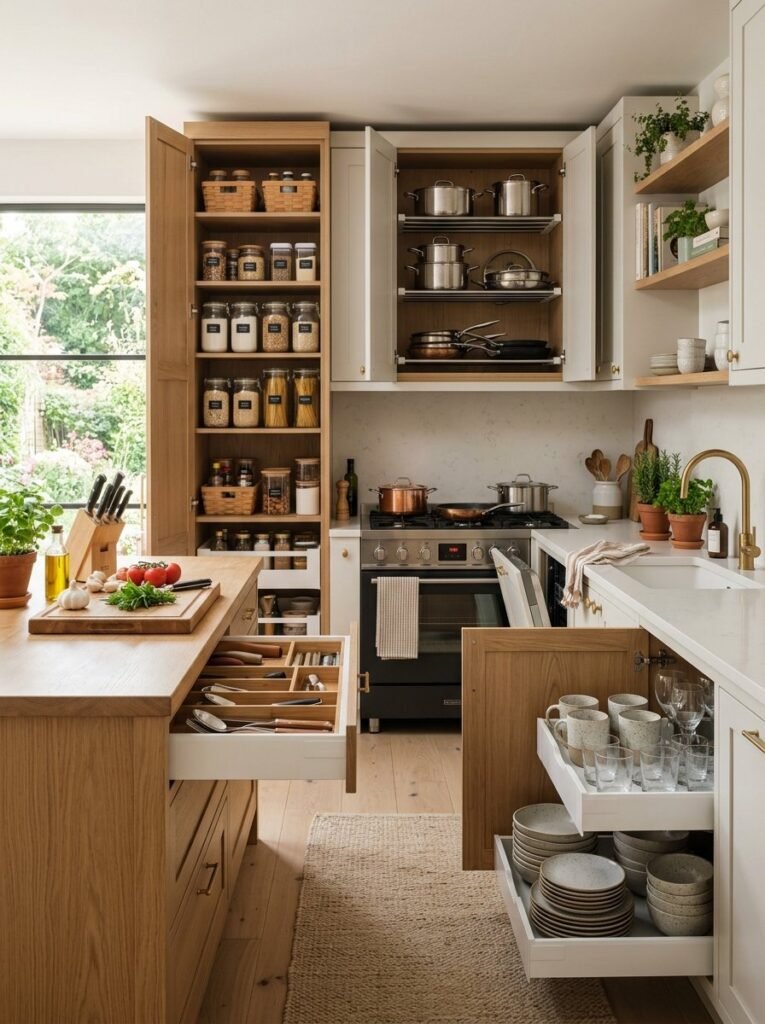
The final step is bigger than any organizer. Look at the entire kitchen layout. Where do you prepare food? Where do you cook? Where do you wash dishes? Where do you store food? Keep the items for each task close together. For example, store cutting boards and knives near your prep area. Keep pots, pans, and cooking utensils near the cooktop. Place plates and cups near the dishwasher or main serving area. This is the heart of good kitchen cabinet organization. The cabinet should support your routine instead of forcing you to walk around the kitchen for every small task. IKEA’s guidance emphasizes placing items close to where they are used, while Lowe’s recommends organizing upper, lower, and corner storage around accessibility and everyday cooking needs.
Final Thoughts
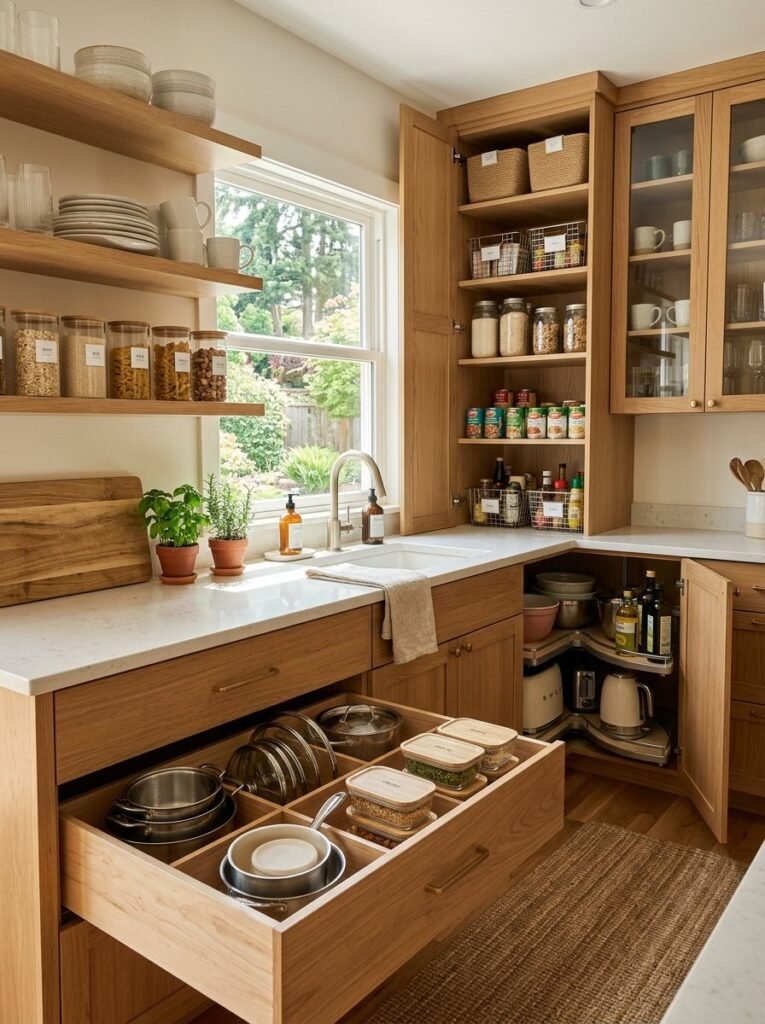
Good kitchen cabinet organization is not about making every shelf look perfect. It is about making your kitchen easier to live in. Start with the cabinets that cause the most frustration. Give pots and pans a clear home. Separate plates and cups. Use shelf risers in upper cabinets. Add dividers to drawers. Turn difficult corners into pull-out storage. Create food zones inside pantry cabinets. If your kitchen is small, focus on vertical space, narrow storage, cabinet-door storage, and multi-use organizers. If your kitchen is large, focus on zones so the extra space does not become extra clutter. You can even combine affordable DIY solutions with more permanent storage systems. IKEA’s current kitchen guidance highlights drawers, shelf inserts, corner pull-outs, plate holders, organizers, and pantry solutions as ways to make cabinet space more accessible. The best setup is the one that makes you think less about storage. You open a door, find what you need, use it, and put it back. That is when an organized kitchen truly starts working for you.


3 Pingbacks