
A small closet can become frustrating very quickly. One morning, you open the door looking for a shirt and suddenly see piles of clothes, mismatched hangers, shoes on the floor, and bags squeezed into every corner. The good news is that you do not always need a bigger closet. You need a better system. The right small closet organization ideas can turn an overcrowded space into a neat, useful area where everything has a place. Whether you live in a small apartment, share a bedroom with someone, or simply own lots of clothes, smart storage can make your daily routine much easier.
Why Small Closet Organization Matters
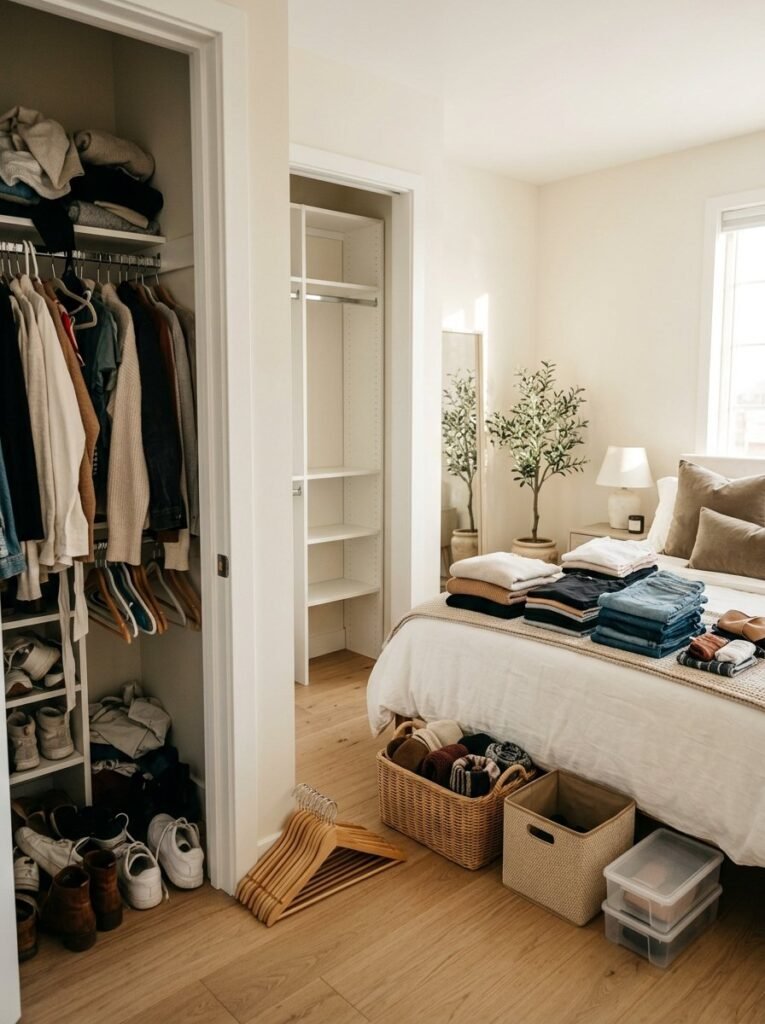
When your closet has no clear system, even a few extra clothes can make it feel full. Start by taking everything out and placing similar items together. Put shirts in one group, pants in another, dresses together, and seasonal clothing in a separate pile. This simple step helps you see what you actually own. You may discover clothes you forgot about or pieces you no longer wear. Good organization starts with knowing what deserves valuable space. Once you remove items you no longer need, you can create room for practical bedroom clothing storage, better shelves, baskets, drawers, and hanging solutions.
1. Use Double Hanging Rods

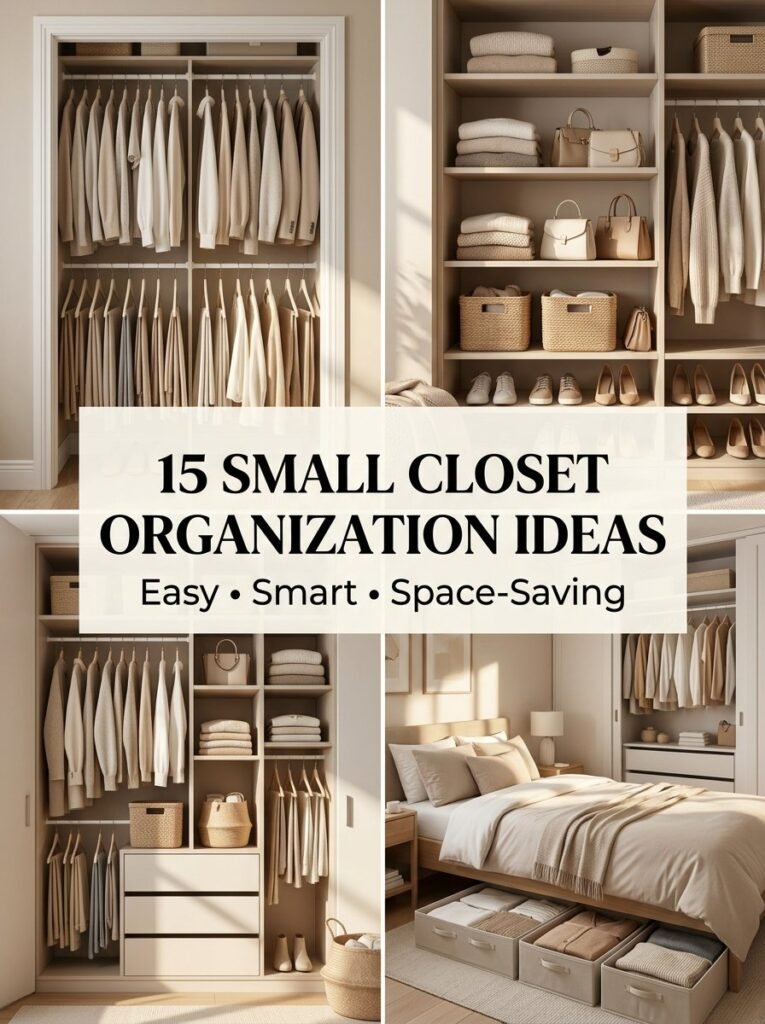
One of the easiest ways to create more hanging space is to add a second rod below the existing one. This works especially well for shirts, blouses, skirts, and shorter jackets. The upper rod can hold longer tops while the lower section handles shorter pieces. You do not need to rebuild the entire closet. A removable tension rod can provide extra space without permanent changes, making this a useful option for renters. This simple setup can almost double your hanging area while keeping clothes easy to see and reach.
2. Add Bedroom Clothing Storage Shelves
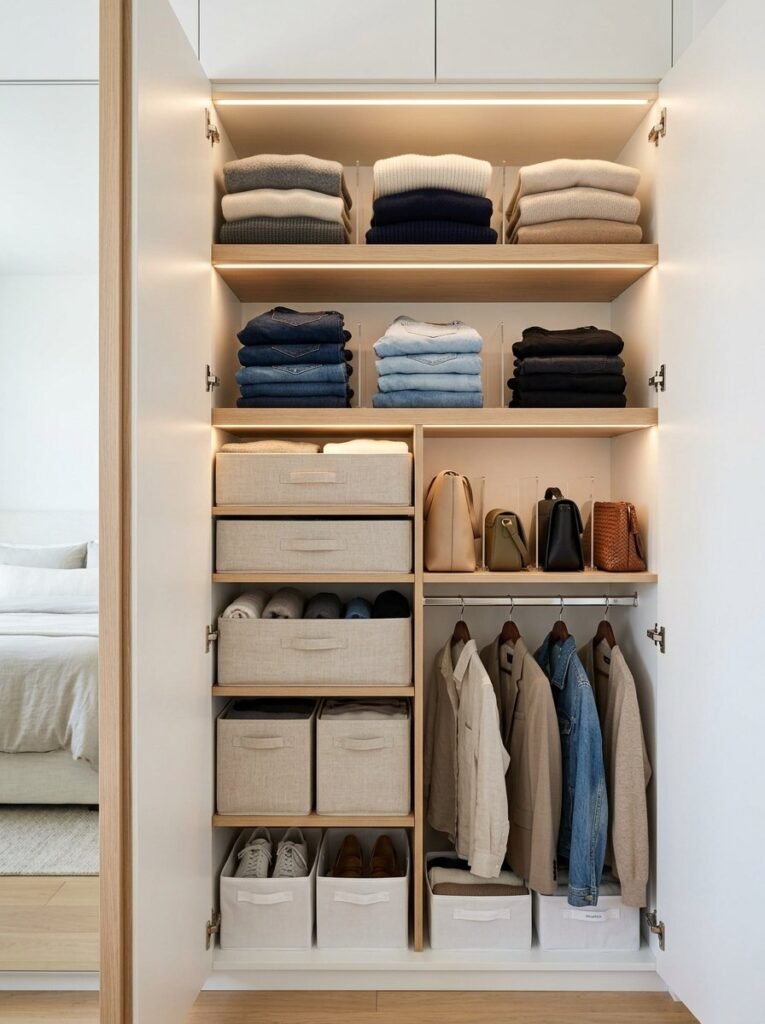
Shelves can transform unused vertical space into useful storage. If your closet has empty wall height above the hanging clothes, add sturdy shelves for sweaters, handbags, folded jeans, and seasonal items. Keep everyday clothing at eye level and place less-used items higher up. You can also use shelf dividers to stop folded stacks from falling over. For renters or anyone looking for a simple DIY project, freestanding shelf units can offer flexibility without requiring major construction.
3. Use Storage Baskets
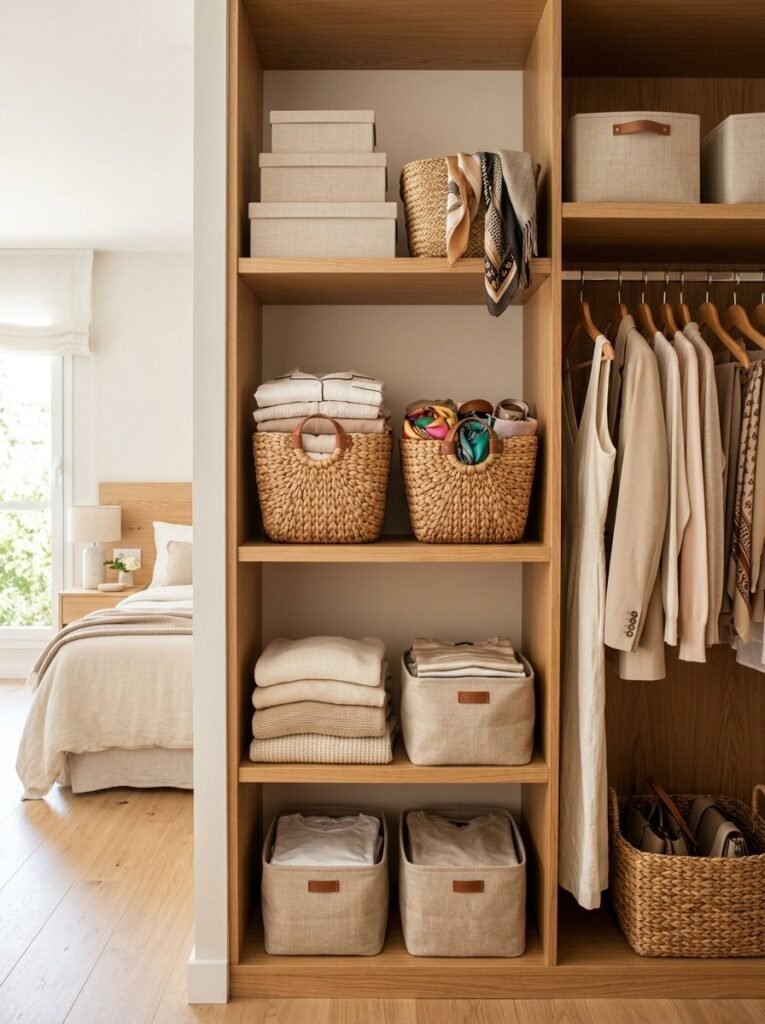
Baskets are excellent when you want storage that looks attractive as well as practical. Place them on shelves or inside the lower part of your closet to hold scarves, belts, accessories, pajamas, or seasonal items. Matching baskets create a cleaner visual appearance, while different sizes can help handle different categories. Bedroom clothing storage baskets also hide small items that might otherwise make the closet look messy. Choose fabric, woven, or structured baskets based on your bedroom style and how often you need to access the contents.
4. Install Drawer Organizers
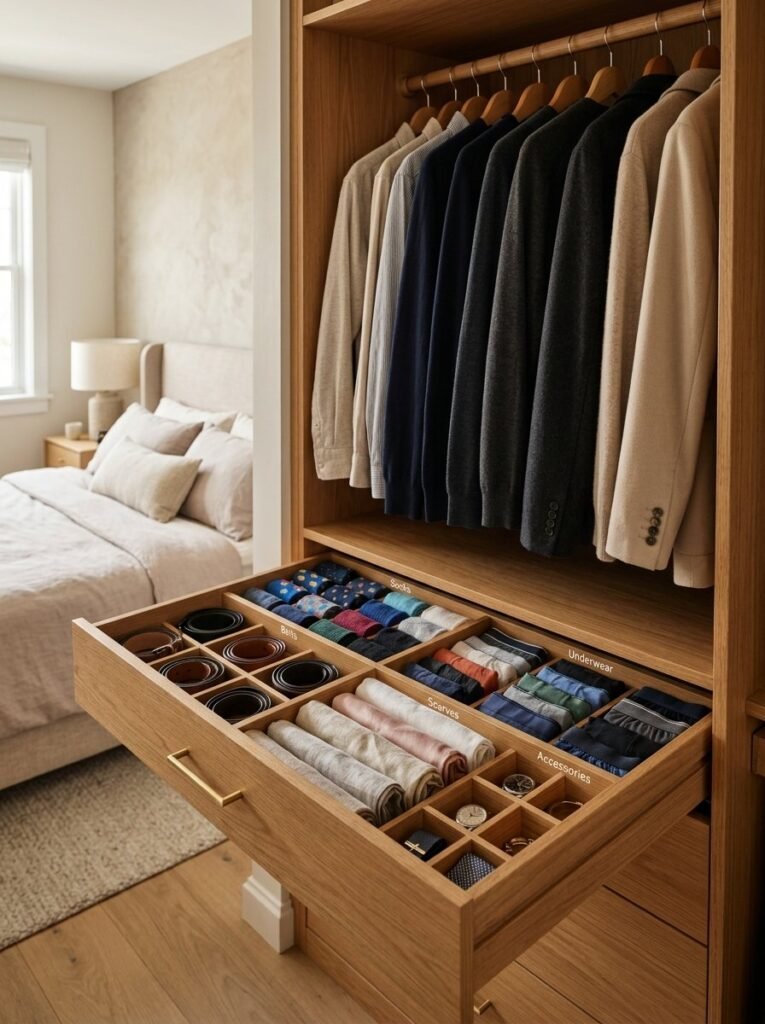
Drawers often become messy because small clothing items get mixed together. Add dividers or small organizer boxes to separate socks, underwear, belts, workout clothes, and accessories. If your closet does not have built-in drawers, a narrow drawer unit can fit beneath hanging clothes. This gives you another layer of bedroom clothing storage drawers without using valuable hanging space. Keep frequently used items in the top drawers and less-used pieces lower down. The goal is simple: open the drawer and find what you need immediately.
5. Make the Most of Closet Doors
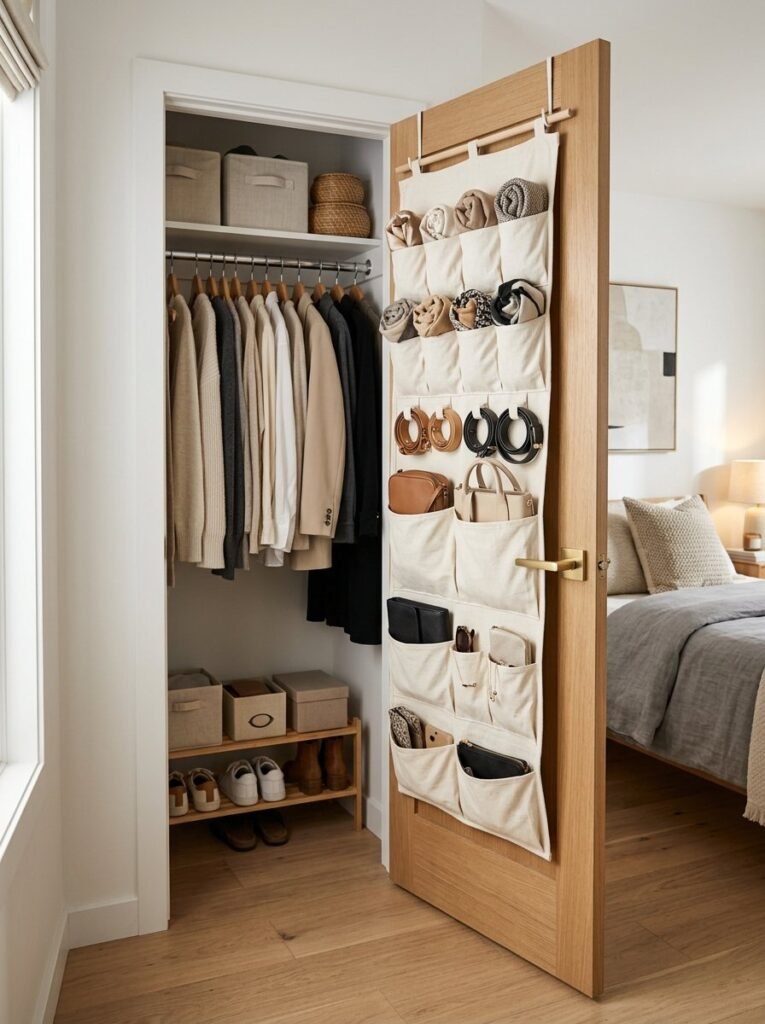
The back of a closet door is often wasted space. Add an over-the-door organizer with pockets or hooks for accessories, scarves, handbags, caps, and small items. You can also install slim hooks for belts or lightweight bags. This approach works especially well in a narrow closet because it uses space that does not compete with your clothes. Make sure the organizer does not make the door too heavy or prevent it from closing properly.
6. Try Under-Shelf Storage
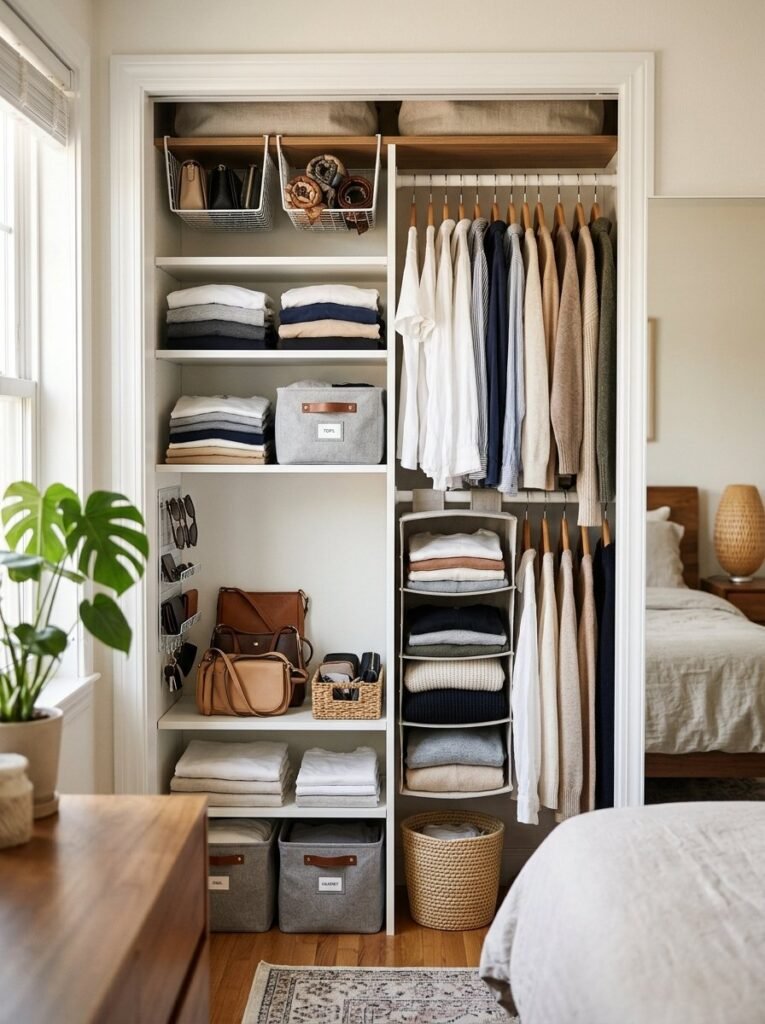
If you already have shelves but still need more room, look underneath them. Slide-in baskets and hanging shelf organizers can turn the empty area beneath a shelf into useful space. This is ideal for smaller clothing pieces, folded T-shirts, handbags, or accessories. The system works because it uses vertical gaps that often remain unused. It is a small change, but in a tight closet, every inch matters. Combine under-shelf organizers with baskets and dividers to create a more efficient storage system.
7. Choose an Open Wardrobe

An open wardrobe can work surprisingly well when a traditional closet feels too cramped. Instead of hiding everything behind doors, use a simple clothing rack with shelves or drawers underneath. Keep only your most-used clothing visible and place seasonal pieces in bins elsewhere. Matching hangers and a consistent color arrangement can make an open wardrobe look intentional rather than messy. This option also works well in bedrooms where you need flexible clothing storage without building a large closet.
8. Use Under-Bed Storage
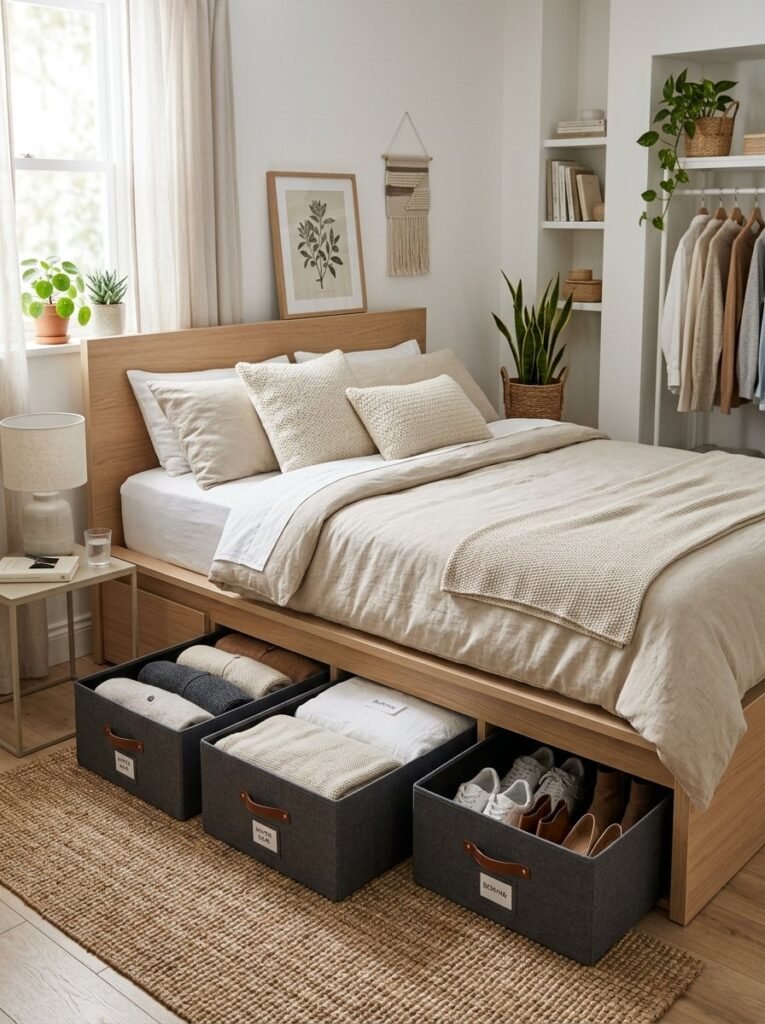
When closet space runs out, look below the bed. The area underneath can hold seasonal clothes, extra bedding, shoes, luggage, or special-occasion outfits. Use flat storage boxes with lids so dust does not become a problem. Transparent containers can make it easier to identify the contents, while fabric bins create a softer appearance. Under-bed storage is especially helpful for people with lots of clothes because it moves rarely used pieces away from the everyday closet.
9. Use Slim Matching Hangers

Bulky hangers can consume surprising amounts of closet space. Replace them with slim matching hangers that allow clothes to sit closer together. Keep similar clothing together and arrange pieces by type or color. Matching hangers also create a cleaner visual appearance, which makes a small closet feel less crowded. This simple upgrade works particularly well when your closet contains many shirts, dresses, jackets, or other hanging pieces.
10. Create a Two-Person Closet System
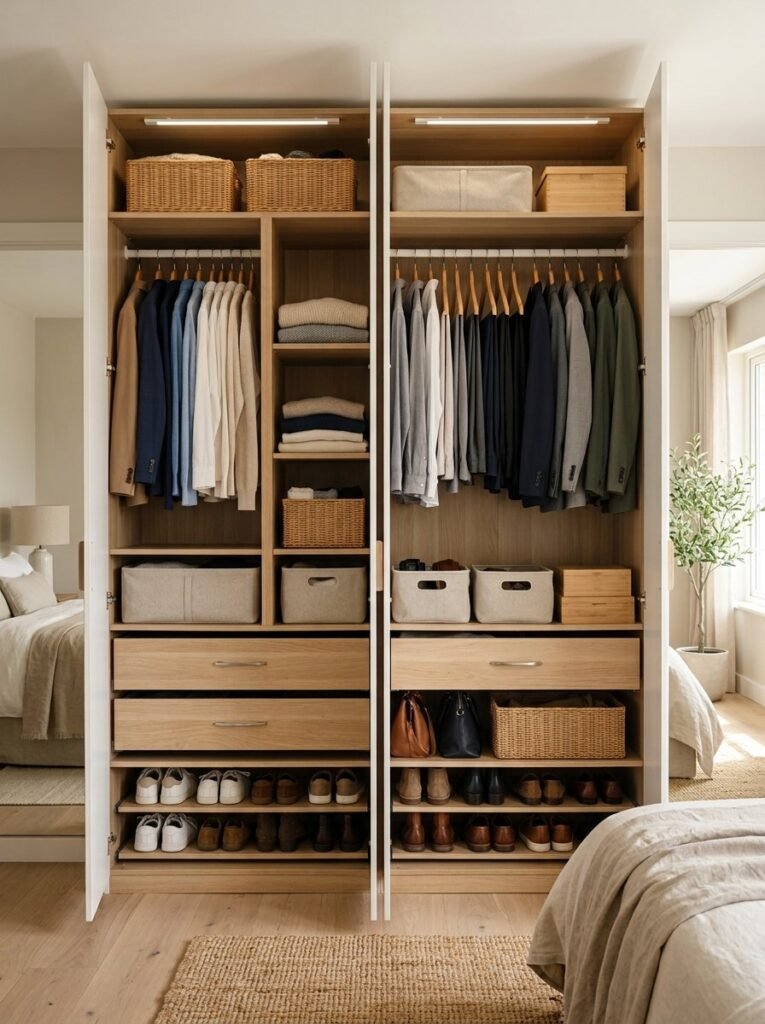
Sharing one closet between 2 people requires clear boundaries. Give each person a defined section instead of mixing everything together. One side can hold one person’s hanging clothes while the other side belongs to the second person. Shared shelves can hold folded items, but use separate baskets or bins for personal accessories. If one person owns more clothes, adjust the space based on actual needs rather than forcing an equal number of shelves. A clear system prevents daily searching and keeps the closet easier to maintain.
11. Add Bedroom Clothing Storage Bins
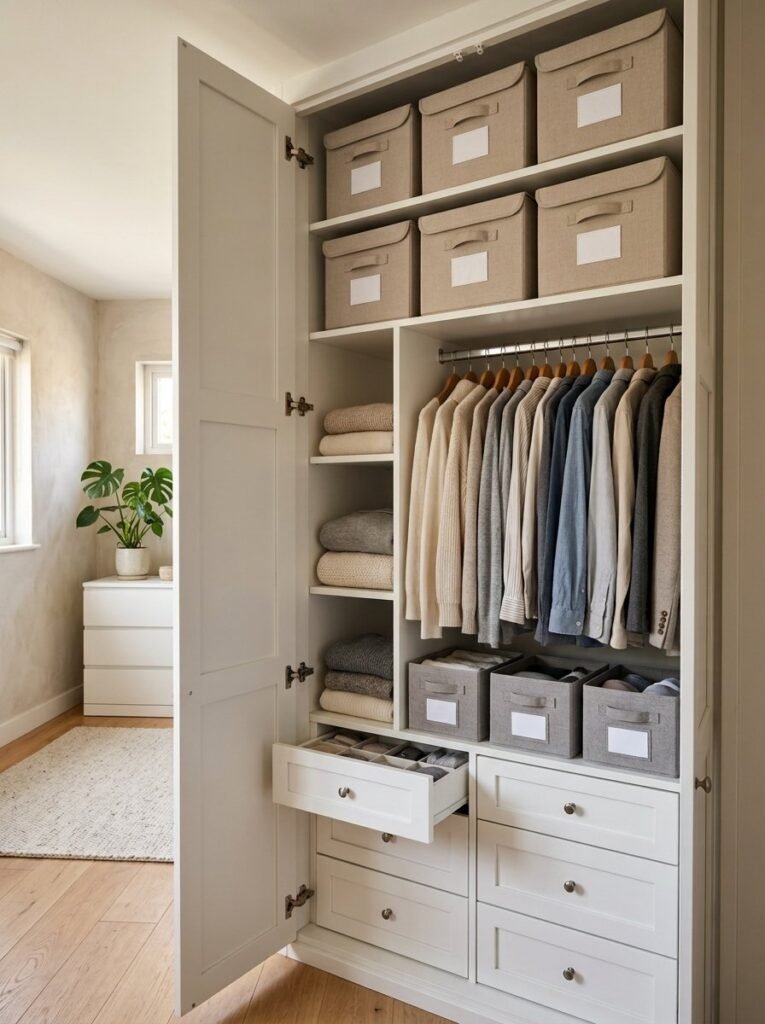
Storage bins are useful for clothing that you do not need every day. Winter coats, holiday outfits, swimwear, and extra bedding can move into labeled bins and stay on higher shelves or under the bed. Choose stackable containers when possible so you can use vertical space efficiently. For a small closet, bedroom clothing storage bins should have a clear purpose. Avoid creating random “everything” bins because they simply hide clutter instead of solving it.
12. Use IKEA-Style Modular Storage
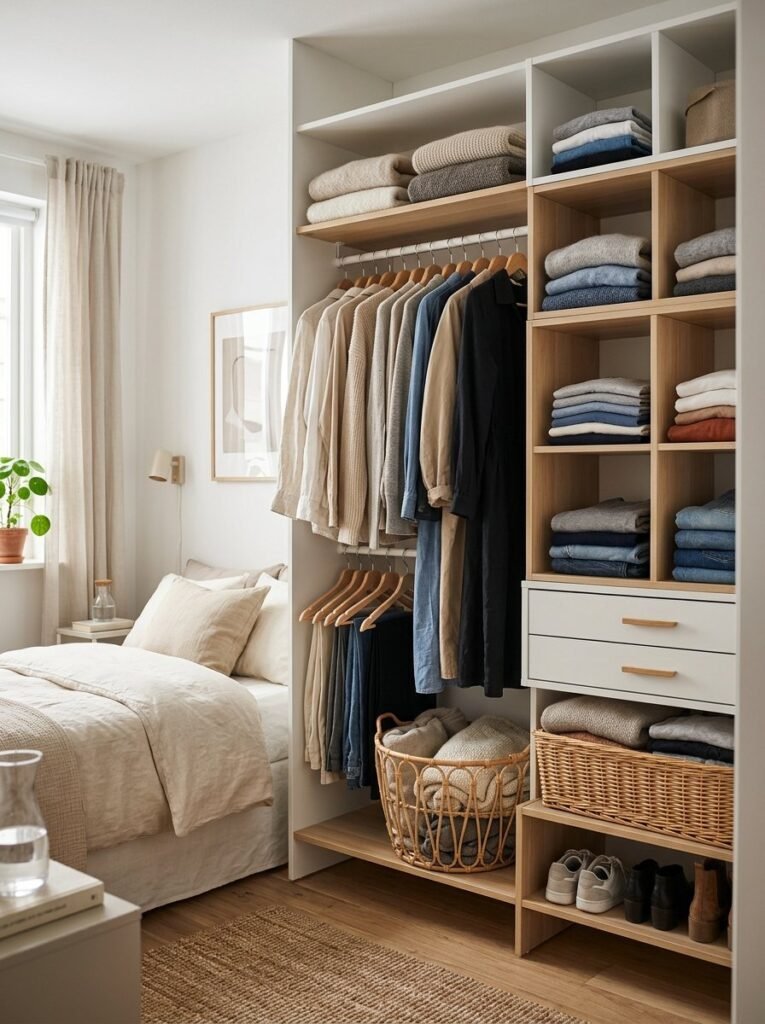
Modular furniture gives you flexibility when your closet needs change. IKEA-style cube units, narrow drawer systems, shelving, and wardrobe inserts can help you build a setup around your available wall space. The key is to measure before buying anything. Check the height, width, depth, door clearance, and walking space around the unit. A modular system can work particularly well in an apartment because you can adjust or move pieces later instead of committing to one permanent design.
13. Build a Walk-In Feel in a Small Space

You do not need a huge room to create a walk in wardrobe feeling. Use vertical shelves, coordinated hangers, narrow storage furniture, and a full-length mirror to make the area feel more functional. Keep the floor clear whenever possible because open floor space makes a small room feel larger. A consistent color palette also reduces visual clutter. If you have a narrow bedroom corner, a combination of open shelving and a compact clothing rail can create a mini dressing area without taking over the room.
14. Try DIY Wall Storage

A DIY wall-storage project can turn an empty wall into useful clothing space. Install sturdy hooks for bags and hats, a narrow rail for frequently worn clothing, or floating shelves for folded pieces. Keep heavier items on properly secured hardware and avoid overcrowding the wall. This approach works particularly well when your closet has reached its limit but your bedroom still has unused vertical space. A simple wall system can provide extra storage without adding a bulky wardrobe.
15. Create a Seasonal Rotation System
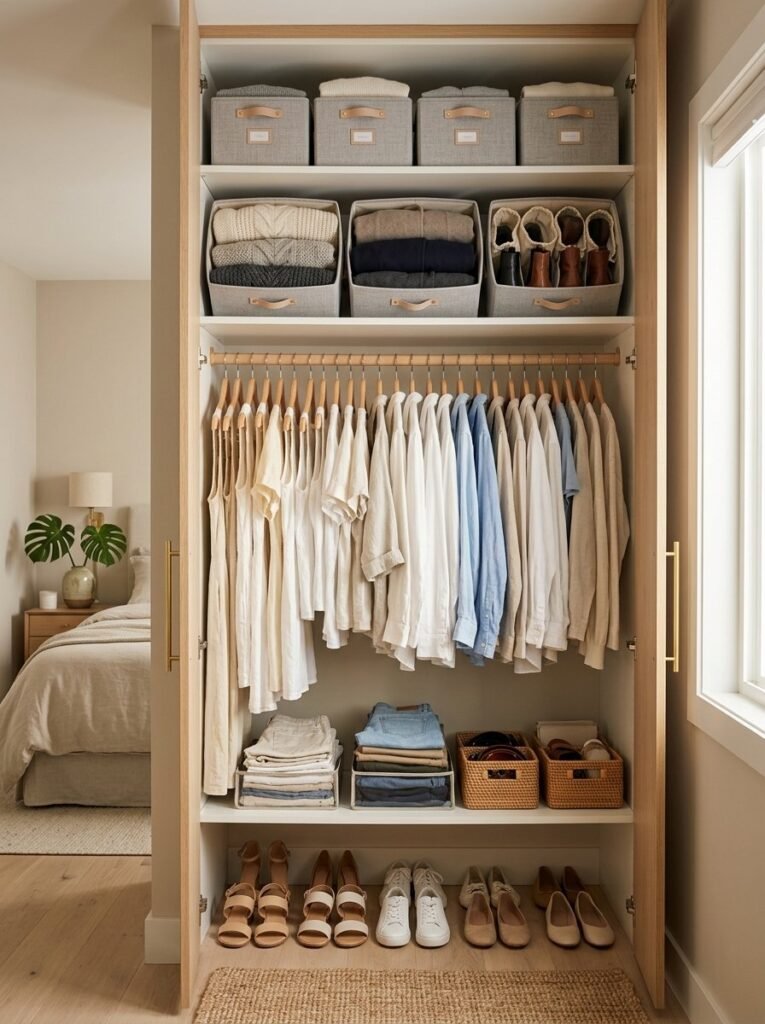
One of the super practical ways to control closet clutter is to rotate clothing by season. Keep summer dresses, lightweight shirts, and shorts easy to reach during warm months. Move winter coats, thick sweaters, and heavy boots into upper shelves or storage bins when the weather changes. When the new season arrives, switch them back. This system prevents every piece of clothing from competing for daily space. It also gives you a natural opportunity to review what you actually wore during the previous season and remove pieces you no longer need.
Final Thoughts
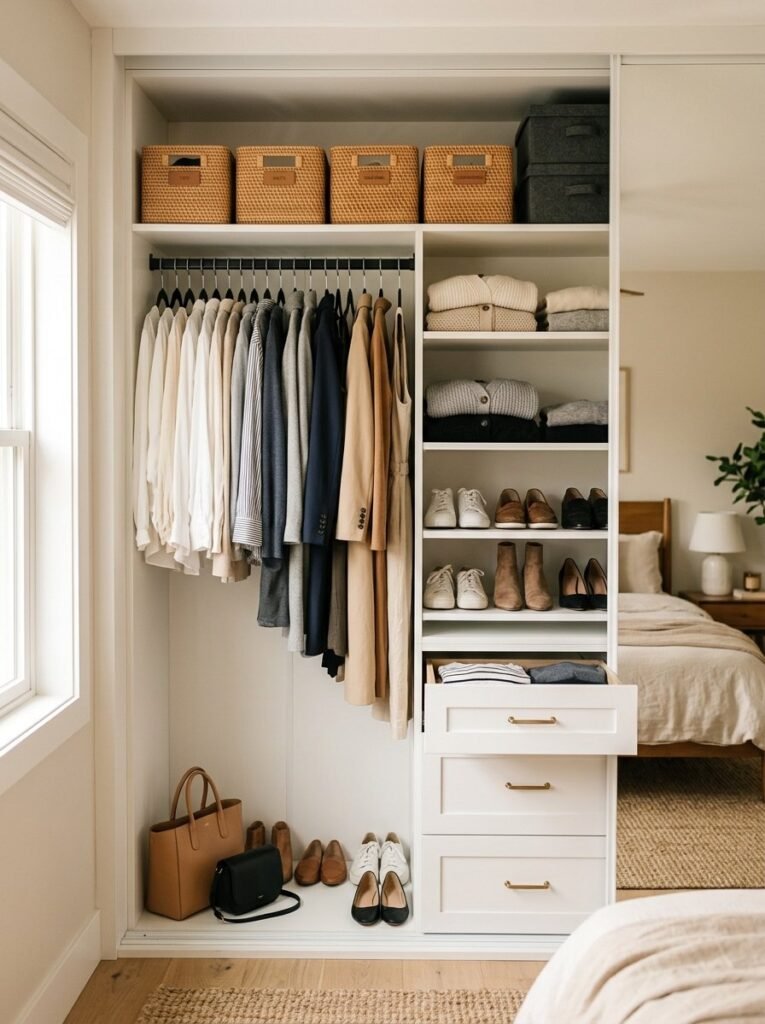
The best small closet organization ideas do not depend on having expensive furniture or a huge bedroom. They depend on using the space you already have with purpose. Double hanging rods can increase hanging capacity, shelves can use vertical space, baskets can control small items, and under-bed bins can handle seasonal clothing. If you have a bedroom clothing storage closet that constantly feels full, start with one area instead of trying to fix everything in a single afternoon. Remove what you no longer use, group similar items, measure your available space, and choose storage that matches your daily habits. A well-organized closet should make life easier, not create another chore.


1 Pingback