

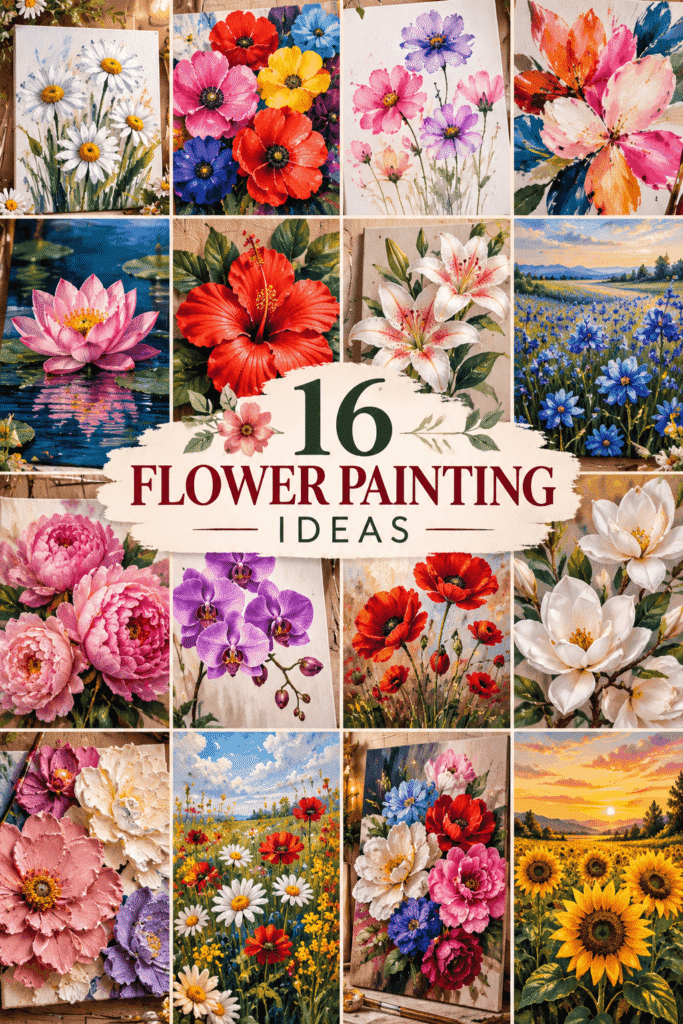
There is something calming about painting a flower. You place one brushstroke on the canvas, add another, and slowly a simple shape begins to look alive. You do not need years of art training to enjoy the process. A few colors, a brush, and a little patience can take you surprisingly far. That is why flower painting works for beginners and experienced artists alike. You can start with an easy daisy, experiment with watercolor petals, or build a large acrylic canvas filled with bold flowers. The ideas below cover different styles, colors, flowers, and skill levels so you can find a project that feels right for you.
1. Easy Daisy Flower Painting
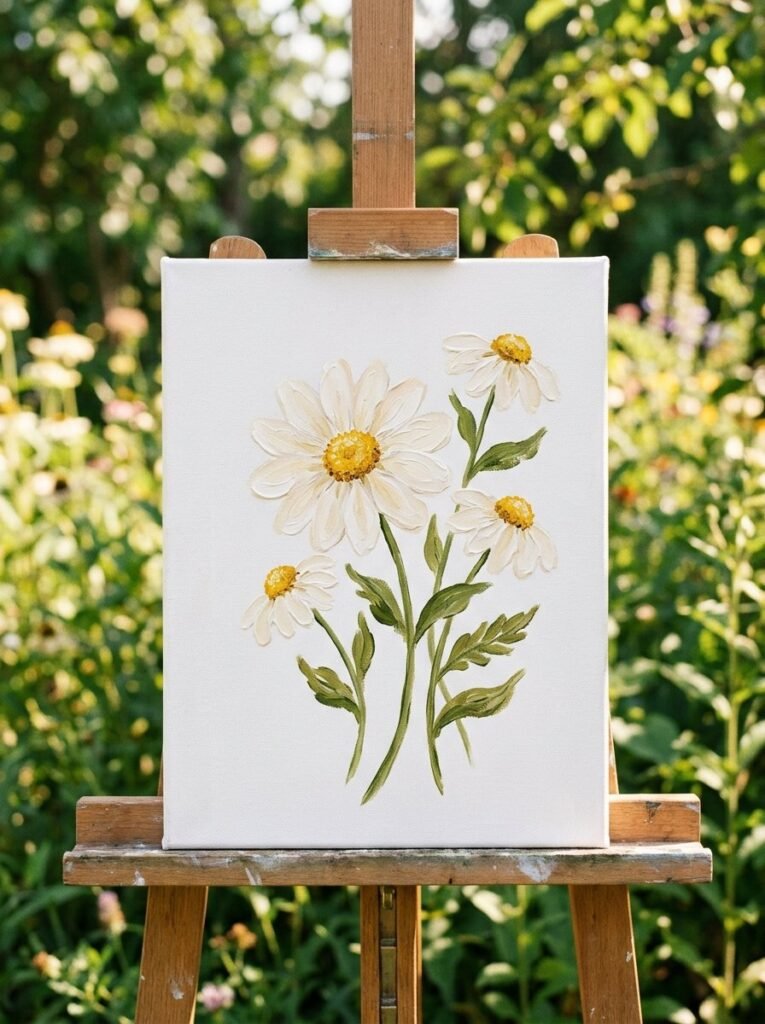
A daisy makes a wonderful first project because its structure feels familiar. Start with a yellow center, then add simple white petals around it. Do not worry about making every petal identical. Small differences make the painting feel handmade. Use a thin brush for the stems and a slightly wider brush for the petals. This easy project works with acrylic paint, watercolor, or even gouache. If you want a softer look, place several daisies against a pale blue or cream background.
2. Colorful Acrylic Flower Canvas
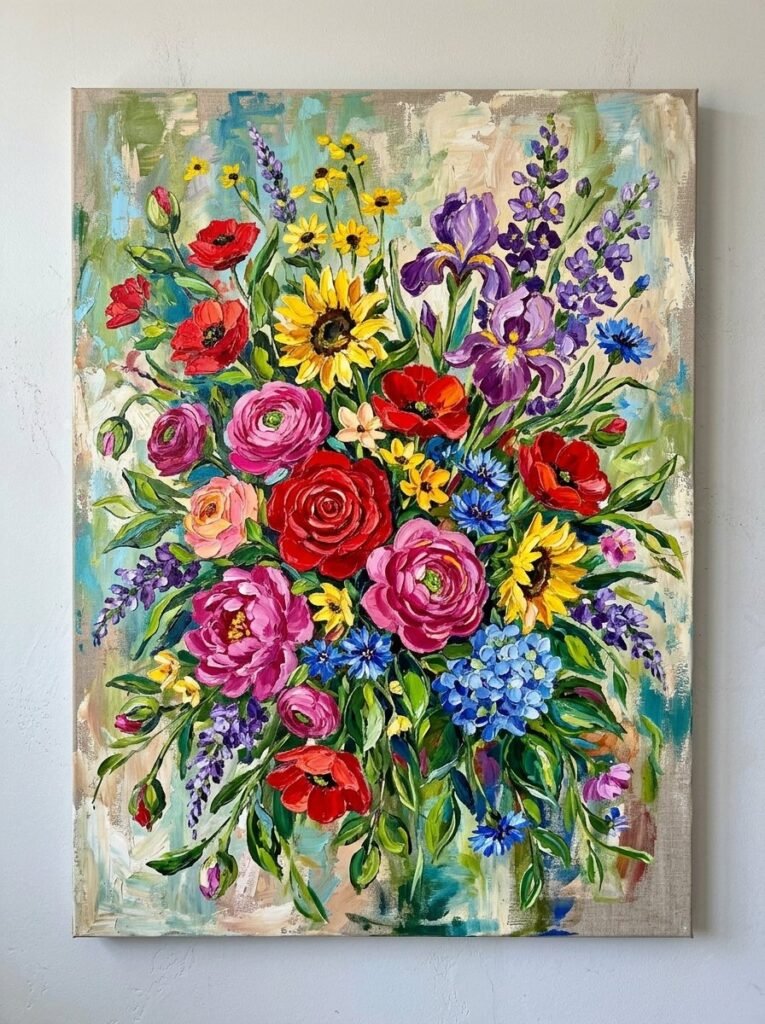
Acrylic paint gives you plenty of room to experiment. It dries relatively quickly, so you can build layers without waiting too long between colors. Start with broad background shapes, then add larger flowers before finishing with smaller details. Try combining pink, yellow, purple, and red flowers against a neutral background. A large canvas can turn this type of artwork into a strong statement piece for a living room, bedroom, or creative workspace.
3. Simple Watercolor Flowers
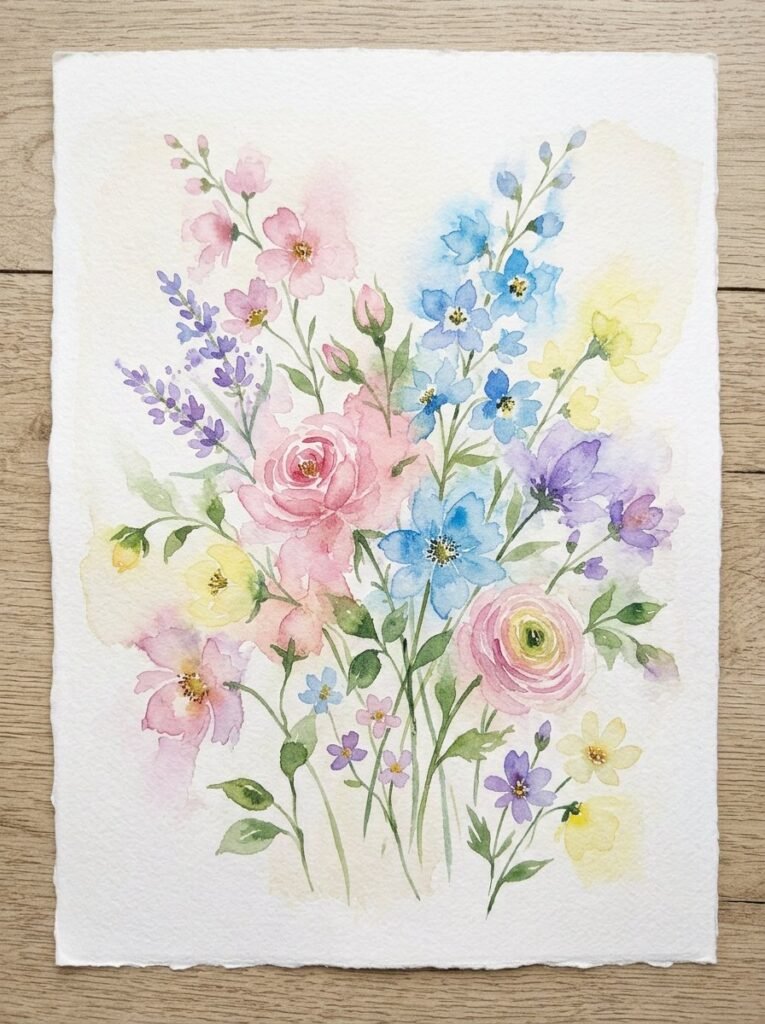
Watercolor rewards a lighter touch. Instead of covering the paper with thick paint, let water help create transparent layers. Paint the petals with a pale wash first. Add stronger color near the center and allow the edges to remain soft. A watercolor approach works especially well for loose flowers where you want movement rather than exact botanical detail. You can use watercolour techniques in the same way; the spelling simply varies by region.
4. Abstract Flower Painting
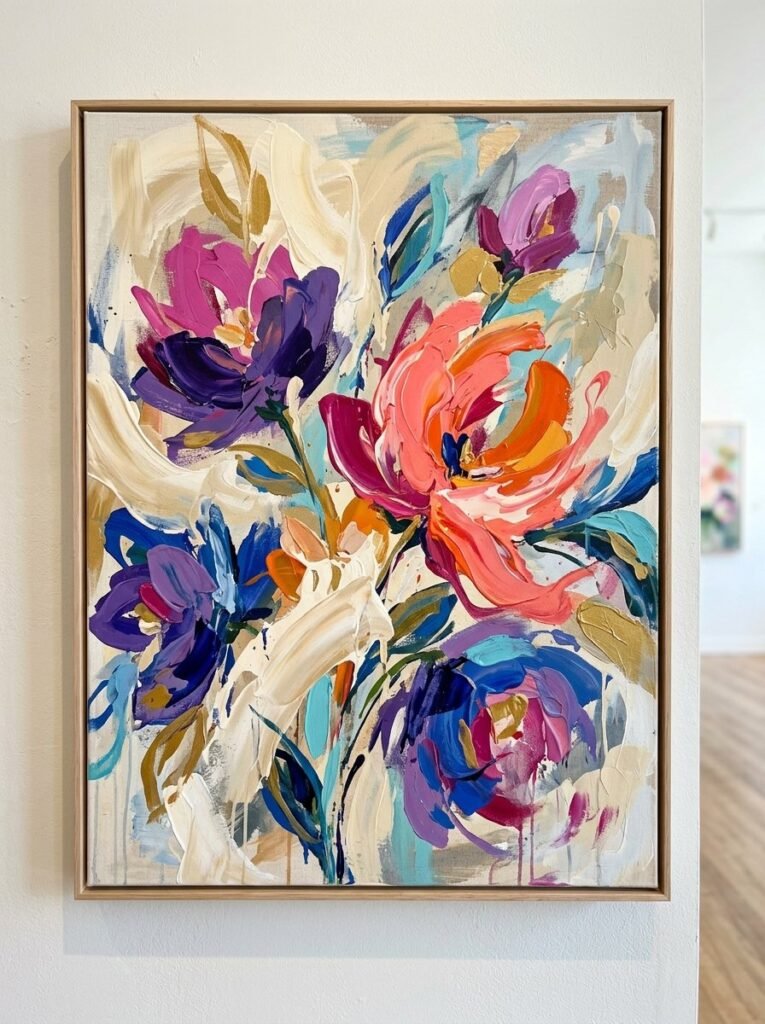
You do not have to paint a flower exactly as it looks in nature. An abstract approach lets you simplify the petals, exaggerate colors, and focus on shape. Start with a few large circular forms. Add loose petals around them and use contrasting colors for leaves and stems. Let some brushstrokes remain visible. The goal is to suggest a flower rather than copy every detail.
5. Lotus Flower on Canvas
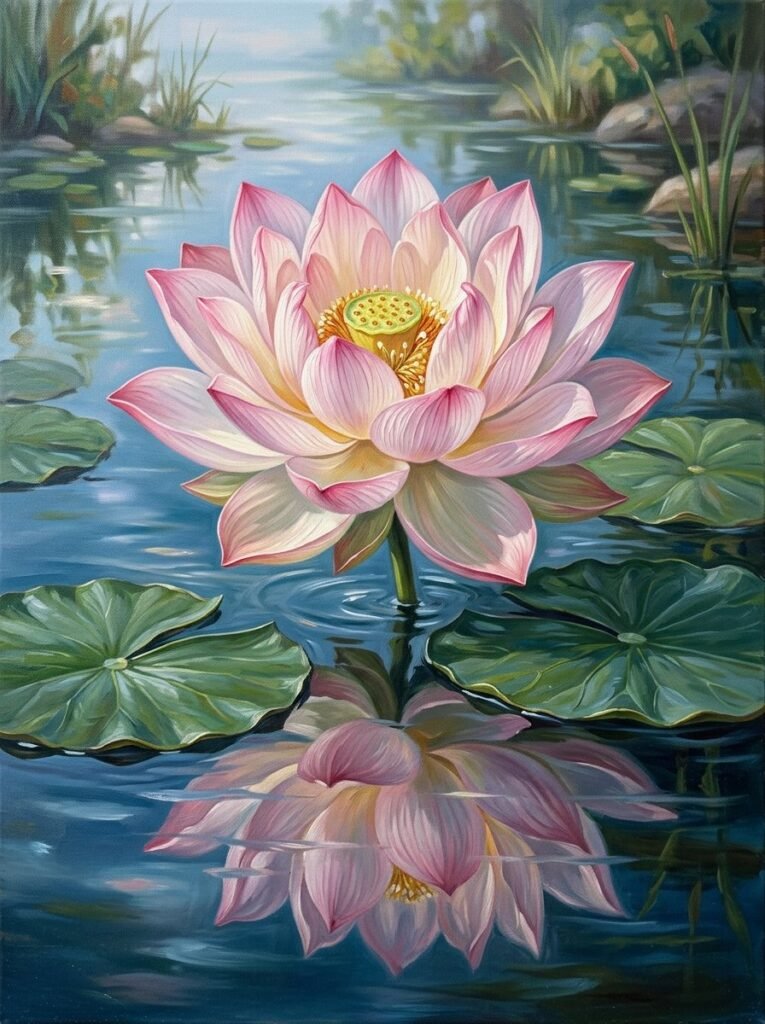
The lotus has a naturally balanced shape, which makes it a rewarding subject. Begin with the center and work outward, placing longer petals around the main shape. Try pink and white petals against deep blue water. Keep the background quiet so the flower remains the focal point. A single lotus can create a peaceful piece, while several blooms can produce a wider composition.
6. Hibiscus in Bold Colors

A hibiscus gives you large petals and strong color. That makes it ideal when you want your artwork to feel energetic. Use deep red around the outer petals and lighter pink toward the center. Add darker shadows where the petals overlap. A few strong green leaves can frame the flower without competing with it.
7. Lily Flower Painting
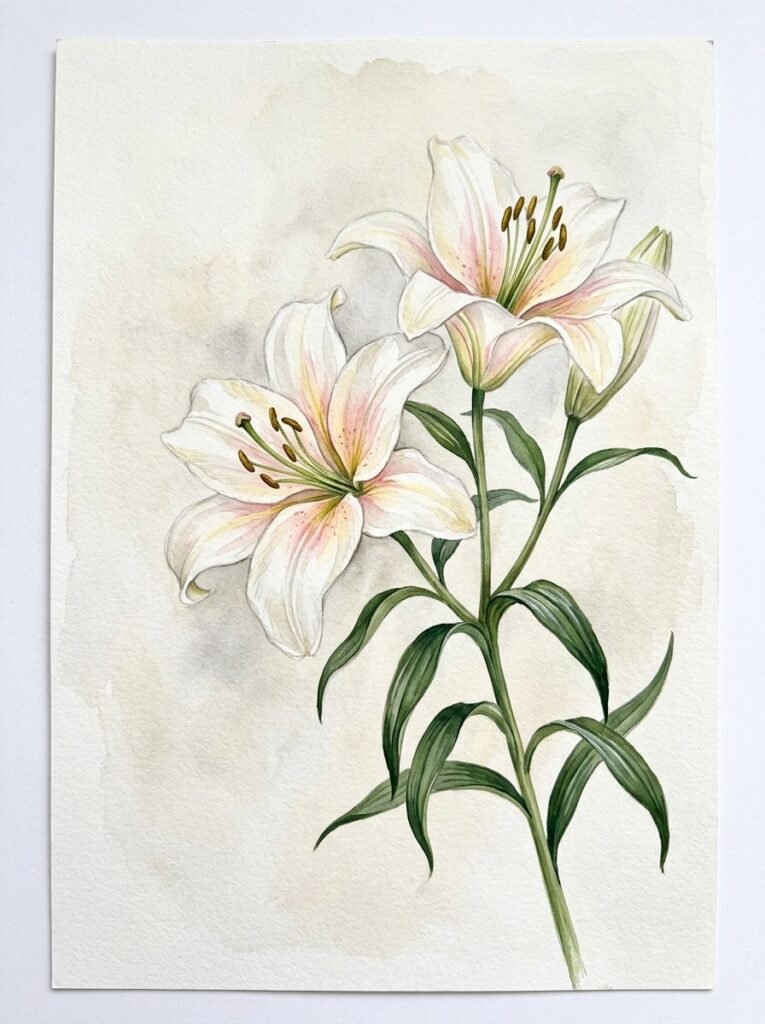
Lilies give you an opportunity to practice curved shapes. Their petals open outward, creating a flowing composition. Start with the outer petals and gradually build the inner ones. Use white paint mixed with a small amount of another color for gentle shadows. Add tiny darker marks near the center to give the petals more character. A lily looks beautiful on both a small board and a medium canvas.
8. Blue Flower Field

Instead of painting one flower, create an entire field of blooms. Begin with broad green shapes for the ground. Add larger flowers in the foreground and smaller marks as they move toward the horizon. Use different shades of blue and purple to create depth. You do not need to paint every flower separately. Small brush marks can suggest dozens of distant blooms while keeping the process manageable.
9. Pink Peony-Style Blooms
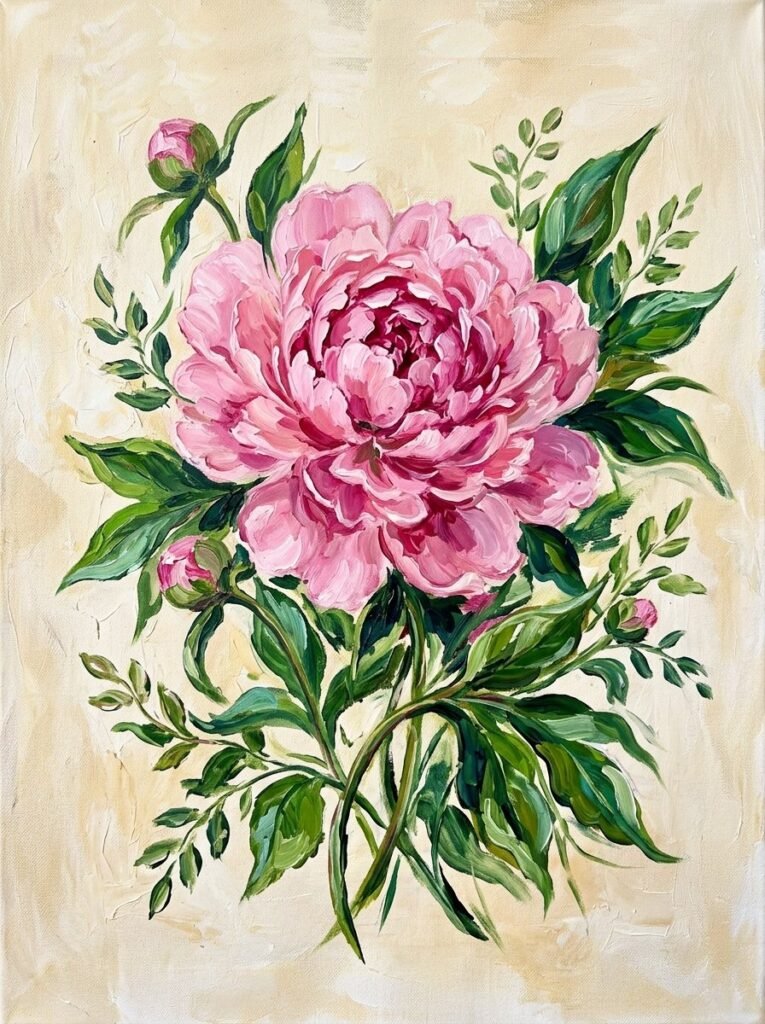
Layered petals can look difficult, but you can build them one section at a time. Start with a darker center and gradually add lighter curved shapes around it. Use several shades of pink rather than one flat color. Keep the outer petals lighter and the center deeper. This creates depth without requiring complicated shading.
10. Purple Orchid Artwork
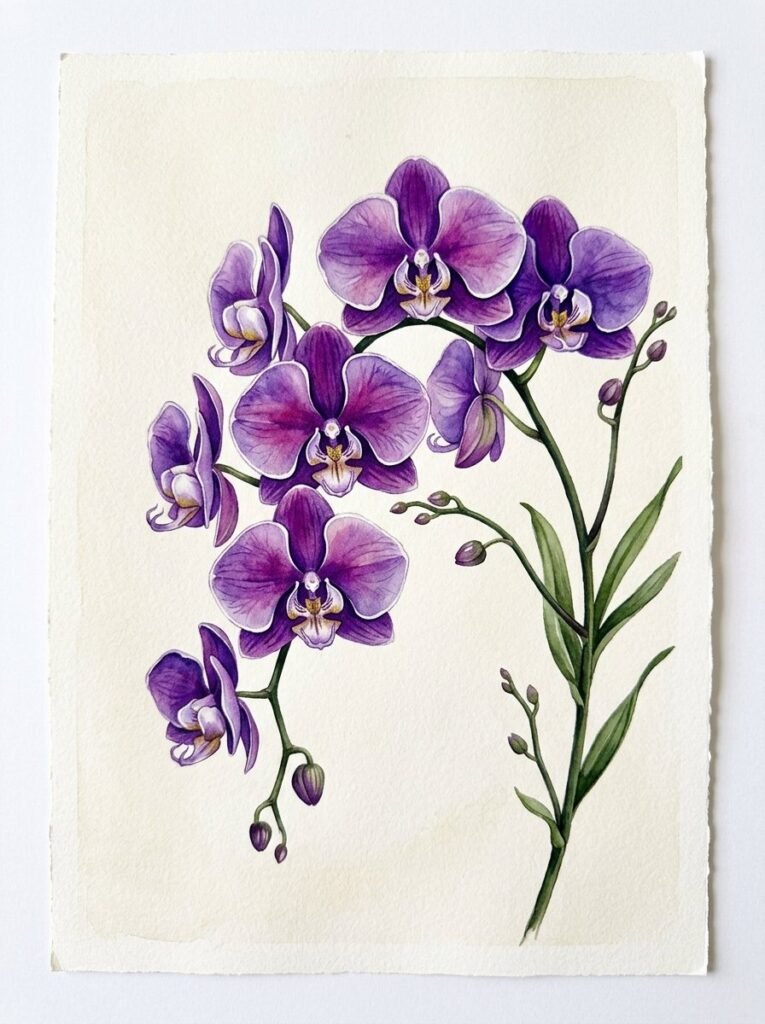
Orchids offer an elegant shape with relatively few major forms. Focus on the five-petal structure and the small center detail. Mix purple with white to create different values. Keep the stems thin and slightly curved. A simple background will help the delicate flowers stand out.
11. Red Poppy Painting
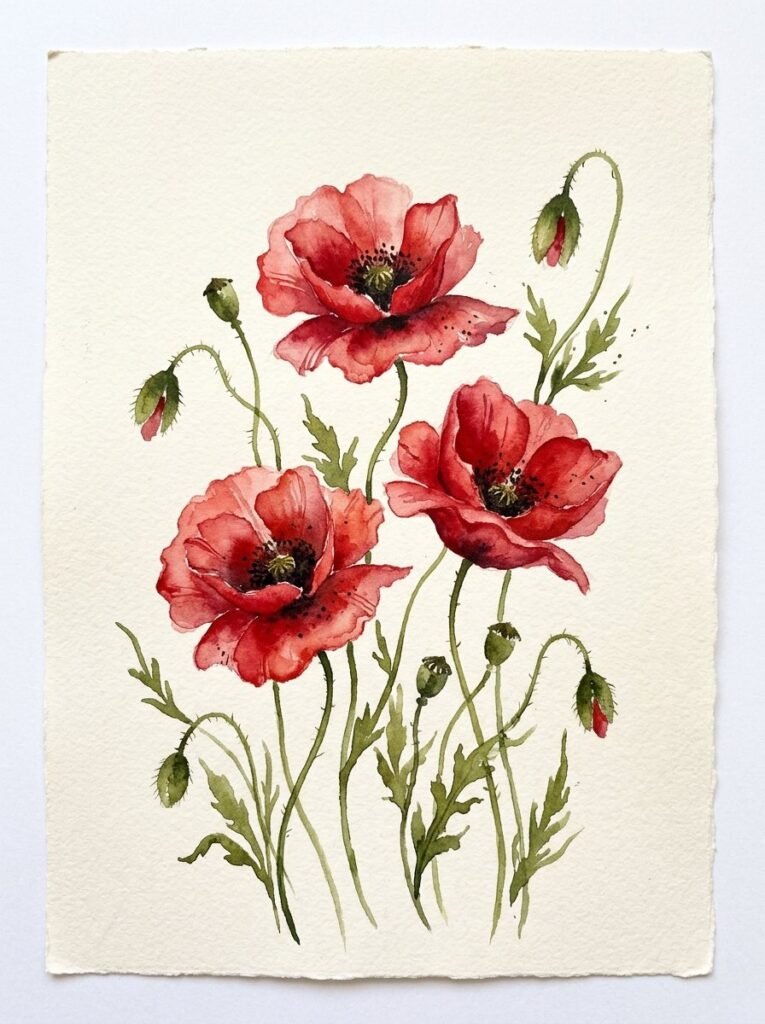
Poppies are ideal when you want a painting with movement. Their thin petals can look slightly uneven and still feel natural. Use red as your main color and add a darker center for contrast. Keep the stems loose and slightly curved. Several poppies leaning in different directions can create a lively arrangement without making the canvas crowded.
12. White Magnolia Branch

Magnolia flowers work beautifully in a branch composition. Instead of filling the entire surface, let the branch move diagonally across the artwork. Use warm cream and pale pink in the shadows instead of pure gray. This keeps the white petals soft and natural. Add a few dark branches to create contrast.
13. 3D Textured Flower Art
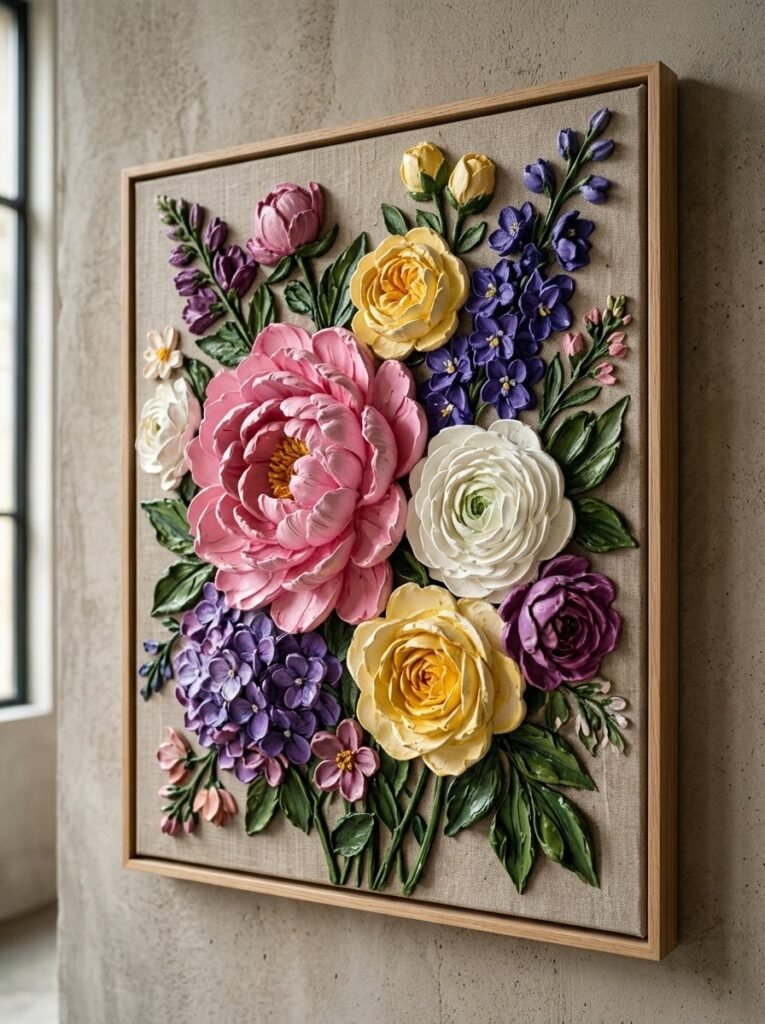
If you want the flowers to appear almost sculpted, experiment with raised texture. Use thick acrylic paint or a suitable modeling medium to build the petals. A palette knife can create strong edges and visible texture. Let the surface remain imperfect. The raised areas catch light differently, giving the finished artwork a 3D appearance.
14. Daisy and Poppy Garden
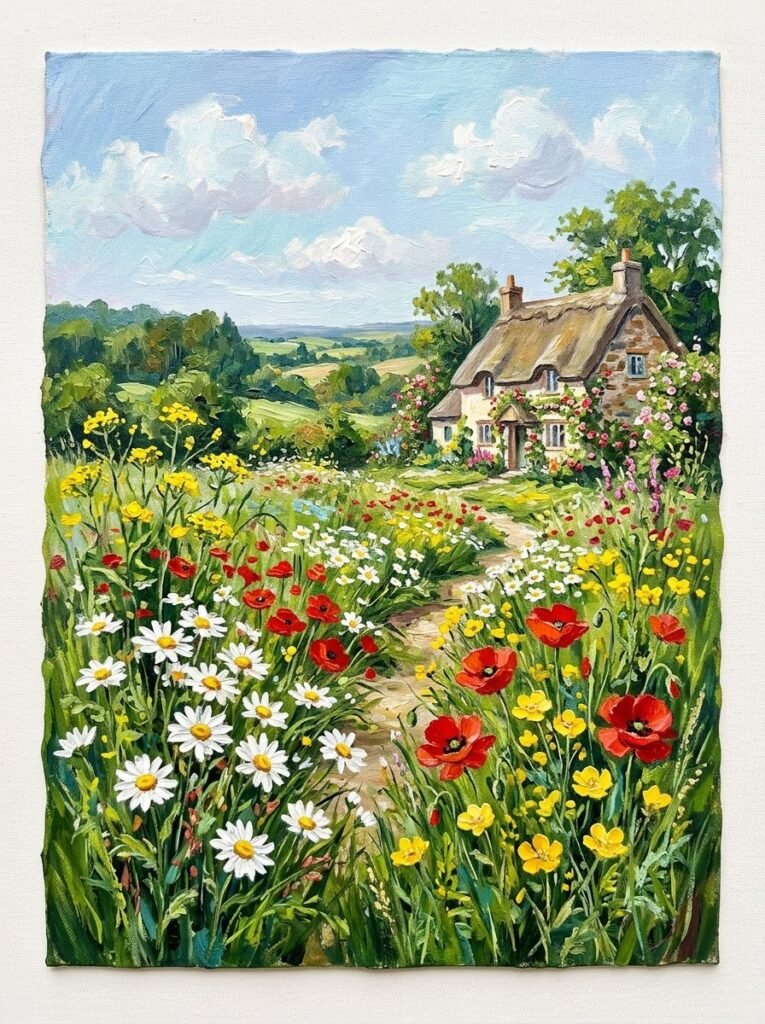
Mixing different flowers can make a scene feel more natural. Place tall poppies behind smaller daisies, then add tiny yellow flowers between them. This flower painting idea works well for artists who want to practice composition rather than one isolated subject. Keep the foreground more detailed and simplify the distant flowers to create depth.
15. Large Floral Canvas Statement Piece

When you feel ready to combine several techniques, move to a large statement canvas. Start with a loose background and map out the major flowers before adding details. Use different flower sizes to create a clear visual hierarchy. Place one or two dominant blooms near the center, then surround them with smaller flowers and leaves. A balanced mix of large shapes and smaller details can make the final artwork feel full without looking messy.
16. Sunflower Field Flower Painting
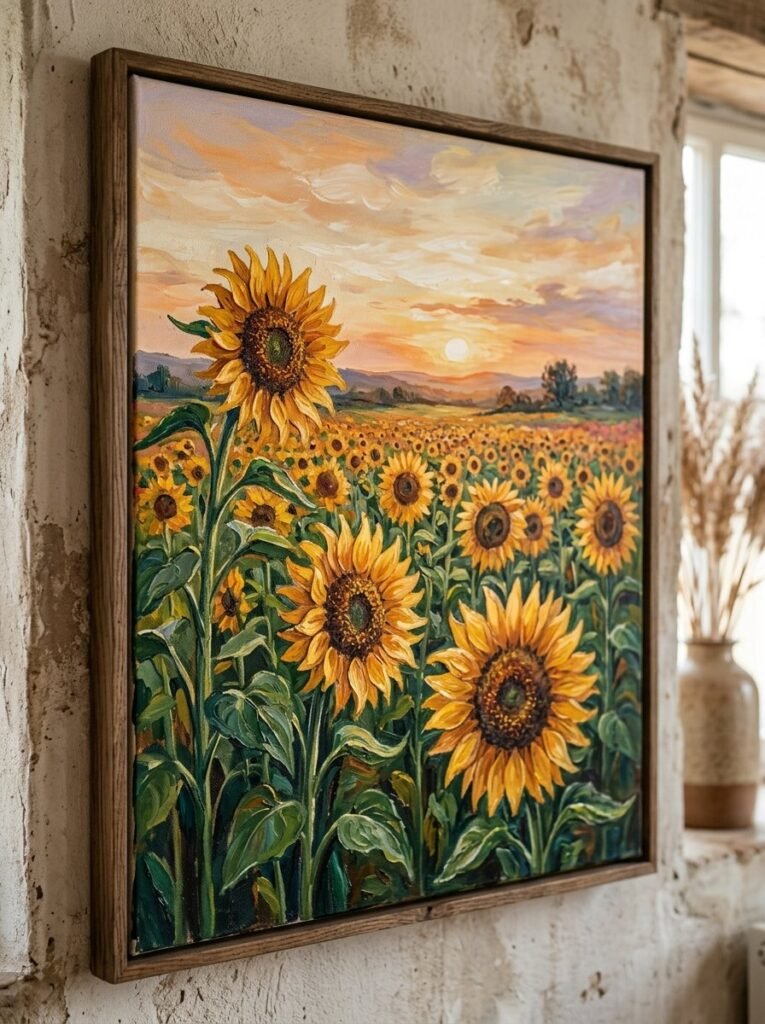
A sunflower field gives you a chance to practice both flowers and landscape in one artwork. Start with a soft sky, then add the distant field using smaller brush marks. Place two or three larger sunflowers in the foreground with detailed petals and dark centers. Use yellow, green, and warm orange tones to create a cheerful scene. This idea works especially well on a large canvas because the repeated flowers naturally guide the viewer’s eye toward the horizon.
Final Thoughts
You do not need perfect drawing skills to make beautiful floral art. Start with the flowers you naturally enjoy. Keep the first project simple, learn how your medium behaves, and allow the brushwork to show some personality. Whether you choose an easy daisy, a colorful acrylic canvas, a delicate watercolor lotus, or a bold abstract arrangement, each painting gives you another chance to understand color, shape, texture, and light. The most enjoyable flower painting projects are often the ones where you stop worrying about perfection and simply start painting.

