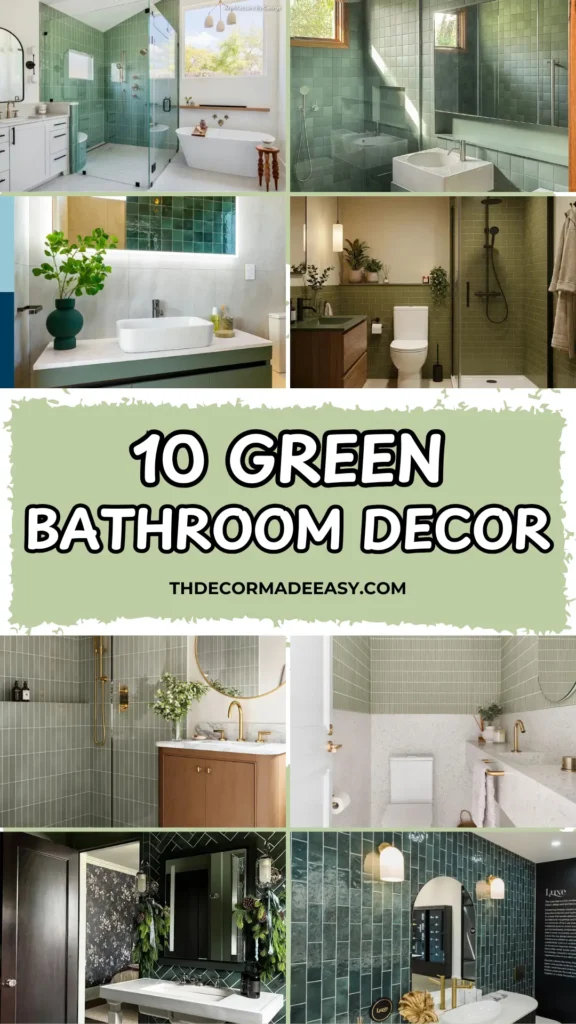
10 Real-Life Green Tile Bathrooms That Prove This Color Works in Every Space

Let me be real with you. I used to think green bathrooms were what happened when someone’s Pinterest board got a little too ambitious. Then I actually saw some done right, and now I’m the person aggressively texting photos to friends saying “WE NEED TO TALK ABOUT THIS TILE.”
Green has this magical ability to transform a bathroom from “place where I rush through my morning routine” into “spa-like retreat where I pretend I’m a fancy person.” And honestly? It works in basically every shade, every style, and every size space.
I’ve pulled together ten real bathroom designs from actual homes (not those suspiciously perfect showroom setups) to show you exactly how far this color can stretch. We’re talking everything from barely-there sage to almost-black forest, from glossy drama queen to matte earth mother.
Whether you’re planning a full gut renovation or just looking for one small change that’ll make a big impact, something here will click for you. I guarantee it.
Deep Forest Green Vertical Tiles with Brass Fixtures
Some bathrooms politely ask for your attention. This one basically grabs you by the shoulders and says “LOOK AT ME.”
Floor-to-ceiling deep forest green glazed tiles run vertically across the entire vanity wall here. The result? Pure jewel-toned luxury that honestly looks like it belongs in a boutique hotel. The tiles have this slightly irregular glaze where no two look exactly alike, which gives the whole thing a handcrafted vibe that flat, uniform tiles just can’t touch.
A round arch mirror sits centered on the wall with two brass dome pendant sconces flanking it. Below, a floating dark vanity with a white vessel sink and brass faucet keeps the contrast game strong.
Here’s the secret sauce: the vertical tile orientation. Running tiles upright instead of in that standard horizontal brick pattern draws your eye upward and makes the ceiling feel taller than it actually is. Sneaky and effective.
The deep forest green also does this cool thing where it looks completely different depending on the lighting. Cool and mysterious under artificial light, warmer and richer when natural daylight hits it. That dynamic quality keeps the room from ever feeling boring or static.
Want to recreate this look? Here’s your game plan:
- Start with a handmade or zellige-style tile with natural glaze variation
- Pair it exclusively with brushed or polished brass hardware (chrome will fight with the green’s warmth)
- Keep your floor and ceiling neutral so the tile wall carries all the visual weight
- Commit to ONE statement wall because more is genuinely less here
Sage Green Stacked Tiles with Timber Vanity and Marble
This bathroom caught me off guard because it somehow manages to feel both fresh and timeless at the same time. That’s harder to pull off than it sounds, trust me.
The shower enclosure and adjacent vanity wall feature soft sage green stacked tiles set in a vertical running bond pattern. The color sits right at that perfect intersection of green and grey, which is why it looks so harmonious against the warm honey-toned timber vanity.
A white Carrara marble countertop bridges the two tones beautifully. Brass fixtures run through the entire space as a cohesive thread: rain shower head, handheld wand, round mirror frame, and faucet set. A small potted white-flowering branch on the countertop adds just the right amount of organic softness.
The genius here is restraint through repetition. Every single material choice reinforces the same palette: cool sage, warm timber, white marble, aged brass. Nothing is competing for attention or throwing off the vibe.
The hexagonal white floor tiles introduce subtle pattern without disrupting the calm. The wicker pendant light adds texture without adding another color to manage.
Pro tip: Commit to your material palette BEFORE ordering a single tile. The sage-timber-marble combination works precisely because everything got selected together. Also, notice how the built-in shower niche uses the same sage green tile? That makes the whole shower feel intentional rather than assembled.
Soft Sage Rib Tiles Above Terrazzo in a Compact Powder Room
Here’s proof that green tile bathroom ideas work just as well in a tiny powder room as they do in a full primary suite. Size really doesn’t matter here (insert joke here).
Slim, ribbed sage green tiles cover the upper half of this compact space from wall to wall, including the ceiling. Yeah, you read that right. The ceiling. This creates an enveloping tent-like effect that sounds like it should be claustrophobic but actually feels cozy and intentional.
The lower half transitions into white terrazzo-effect panels that continue down to the floor, visually grounding the whole room. A floating white terrazzo vanity counter with a recessed basin runs along one wall, topped with a brass gooseneck faucet.
The clever move here? Tiling the ceiling in that same ribbed sage green. It sounds like way too much, but it reads as cocooning rather than overwhelming because the tile tone is so understated. The crisp white terrazzo below acts as the visual reset your brain needs.
This two-material split also solves a real practical problem. Tiling floor to ceiling in a powder room would cost a fortune and add serious weight to your walls. This approach gives you the visual drama at a fraction of the price.
For small bathroom warriors: Apply bold green tile only to upper walls and ceiling. This draws the eye up and creates height rather than enclosure. Keep your hardware finishes consistent (everything here is brass) and your tiny space will feel designed rather than cramped.
Also Read: Stop Picking Random Tiles: 15 Real-Life Bathroom Designs That Actually Work
All-Green Square Tile Immersion for Nature Lovers
Okay, this is the one that makes some people nervous. I get it. But hear me out because it genuinely works.
Every single surface of this bathroom, walls, shower enclosure, even the floating vanity cabinet, gets covered in the same medium sage green square tiles. The only contrast comes from darker green marble floor tiles that introduce veining and depth without bringing in a whole new color family.
Two narrow wooden-framed windows bring in filtered natural light, and the greenery visible through the glass blurs the line between inside and outside. Brushed stainless fixtures keep the hardware quietly present rather than fighting for attention.
Why this full immersion approach actually succeeds: the tile color is soft enough to read as neutral when it fills an entire room. A deep emerald or forest green tiled on every surface would feel like a cave. This muted sage has enough grey in it to breathe.
Important reality check: The natural light from those windows is absolutely essential. This design depends on daylight to prevent the room from reading as dim or heavy.
Before attempting this approach:
- Visit a tile supplier and bring home LARGE samples
- Live with them for several days in different lighting conditions
- Check how the color looks in morning light, afternoon light, and evening light
- If it holds up across all three, you’ve found your winner
A tile that looks perfect in the store can shift dramatically once it covers four walls. Don’t learn this lesson the expensive way.
Mint Green Vertical Tiles in a Mixed-Metal Bathroom
Architecture by George put together something genuinely interesting here. This bathroom mixes metals, styles, and functions without feeling confused or chaotic.
The walk-in shower features bright mint green glazed tiles in a vertical stacked pattern, sealed off with black-framed glass panels. Outside the shower, a freestanding white soaking tub sits beneath a large window with views of mature trees. A white shaker-style vanity with black hardware pulls and a brass faucet occupies the opposite wall, topped with an arch-framed mirror and black sconce wall lights.
A turned-wood side table beside the tub and three pendant lights overhead add warmth and character without overwhelming the space.
What stands out most: how deliberately the mint green stays contained. It lives entirely within the shower enclosure, so it functions as a color feature rather than a room-wide commitment. The rest of the bathroom stays white, cream, and wood. Neutral and calm.
The black frame hardware bridges the gap between the mint tiles and the rest of the fixtures without forcing a perfect color match.
This is a smart strategy for anyone who wants bold green without going all in. Confine the green to your shower surround only. It becomes the focal point the moment anyone enters the room, and you get the drama without the risk.
Also, see how this space mixes brass and brushed nickel? That proves the metal-matching “rule” is way softer than some designers suggest. The key is keeping the overall feeling cohesive rather than matching every single finish exactly.
Soft Green Tiles with Patterned Cement Floors and an Arched Shower Entry
This room leans into personality in a way that feels refreshing rather than trying too hard.
The shower enclosure sits within an arched doorway outlined in mint green tile trim. This detail immediately signals thoughtful, character-driven design. The walls above the white tile wainscoting get painted in warm sage green.
The floor is where the real statement lives. Bold patterned cement tiles in green, white, red, and gold create a repeating floral-geometric motif covering the entire floor and continuing into the shower base. A white vanity cabinet with chrome hardware and a built-in bench with a patterned fabric cushion round everything out.
I’ll be honest: I was skeptical about this floor at first glance. Patterned tile this busy can easily become the thing that makes a bathroom feel dated rather than characterful. But the sage green walls and white fixtures give the floor enough breathing room, and the arch detail in the shower entry echoes the playfulness without amplifying it past the point of no return.
Should you consider patterned cement tiles? They’re worth exploring if you want your green bathroom to feel handcrafted and individual. They do require sealing and more maintenance than glazed ceramic, but the visual payoff is considerable.
The golden rule here: If you choose a bold floor pattern, keep your walls simple. A room can hold one statement well. It struggles with two.
Also Read: 12 Pink Bedroom Decor Ideas for When You Want “Serene Sanctuary,” Not “Dollhouse”
Forest Green Subway Tiles with a Two-Tone Band and Brass Hardware
This bathroom gets the balance between old and new exactly right. It feels classic without feeling dated, modern without feeling cold.
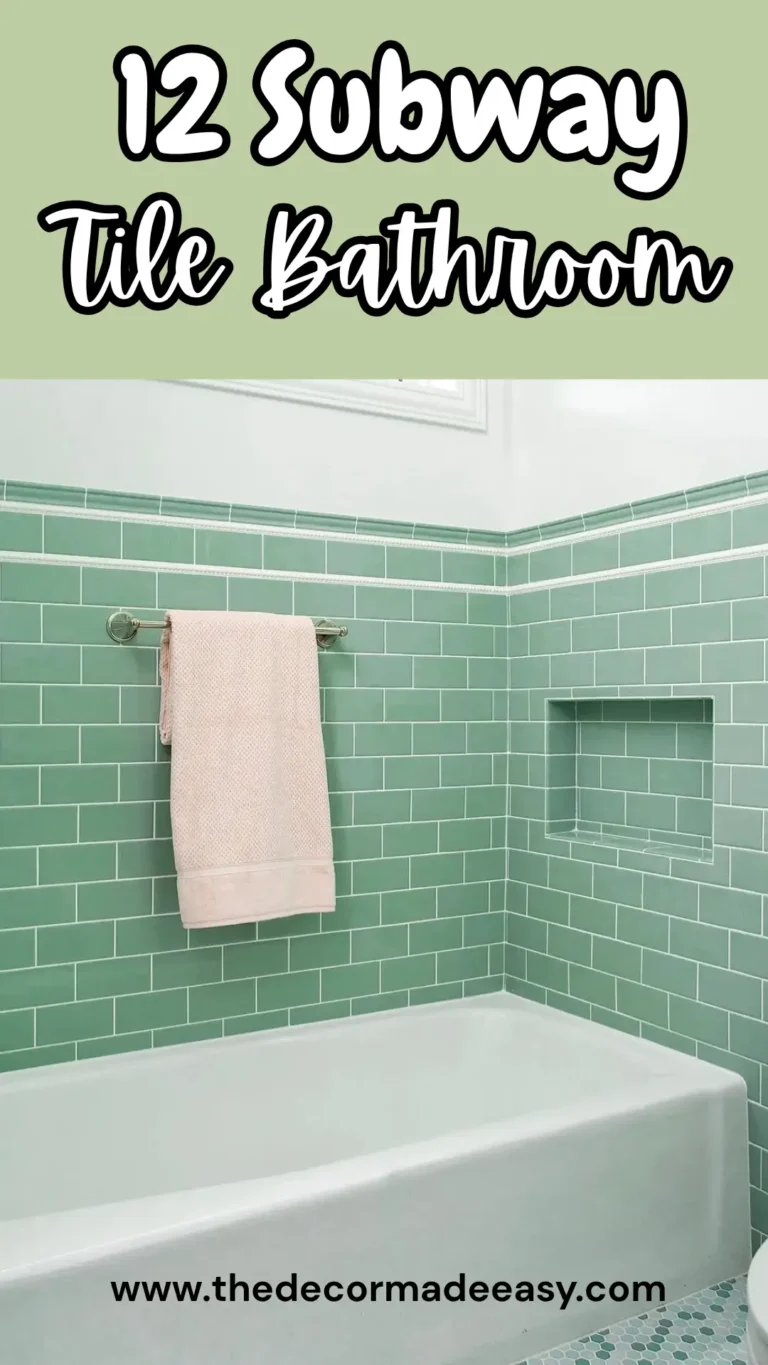
Deep forest green subway tiles cover the lower three-quarters of the walls in a simple stacked brick pattern. A narrow horizontal band of lighter sage green tile runs across the wall at roughly shoulder height, acting as a visual break before the cream-painted plaster begins above.
A dark walnut vanity with brass knob hardware supports a thick white Carrara marble countertop and an undermount rectangular sink. A rectangular brass-framed mirror with softly rounded corners sits centered above, flanked by two globe sconce lights on brass fittings.
The detail that elevates this from standard to special: that two-tone tile band. Most people tile a wainscot in a single color and call it done. Adding a contrasting border tile at the top of the field creates a defined edge that reads almost like chair rail molding. It gives the tile panel a sense of completion without needing any actual architectural trim.
Planning a half-wall tile installation? Think carefully about:
- Where exactly you end the tile
- How you terminate it (pencil-edge trim, contrasting accent band, or bullnose cap)
- How each option reads differently in a finished space
The darker green below with the lighter sage accent band creates a subtle tonal shift that most visitors will feel before they can name it. That’s the good stuff.
Deep Teal Green Square Tiles as a Mirror Backsplash Accent
Sometimes the most effective green tile bathroom idea is also the smallest one. This proves you don’t need to tile an entire room to make an impact.
In this contemporary bathroom, large-format grey limestone-effect panels cover most of the walls and floor, keeping the backdrop quiet and neutral. The drama comes from a single rectangle of deep teal green square tiles positioned directly behind the vanity mirror.
Two chrome globe pendant lights hang beside the mirror, and their warm filament bulbs reflect in the glossy teal tile surface. A floating olive green vanity cabinet with a white vessel sink and matte chrome faucet anchors the design. A sculptural dark green ceramic vase with a branch plant adds an organic finishing touch.
This accent tile approach is perfect for anyone who loves the green look but hesitates about committing to a full wall. The teal green tile serves as the visual anchor for the entire vanity zone. You see it through the mirror, which effectively doubles its visual presence. Yet the actual tile area used is relatively small.
Notice the green layering happening here: deep teal tile, olive green vanity, and dark green ceramic vase. They all sit in the same color family but at different saturations and undertones. Rather than clashing, they create depth.
Designers call this technique tonal layering, and it’s far more sophisticated than matching every green element to a single shade. Give yourself permission to use multiple greens. It works.
Olive Green Subway Tiles with Black Hardware in an Earthy Bathroom
This bathroom feels like a long exhale. Which, IMO, is exactly what a bathroom should feel like.
Olive green subway tiles cover the shower enclosure and lower section of the walls in a traditional horizontal brick pattern. The grout is white, which keeps the tiles from feeling heavy despite their earthy depth.
Matte black hardware runs through the space: shower frame, taps, towel rails, and pendant light fittings. This creates a clear and confident contrast against the warm olive tone. A floating walnut-finish vanity with a dark green integrated countertop and basin carries the earthy palette through to the sink zone. Potted plants line a narrow wall shelf, and a woven jute rug on the floor completes the naturalistic scene.
Here’s what struck me: the matte black hardware actually warms the olive green rather than cooling it. This seems counterintuitive since black typically crisps up and modernizes a space. But against olive specifically, it reads as grounding rather than harsh. Chrome or brushed nickel would pull the olive toward grey. Matte black keeps it firmly in organic territory.
This combination of olive green tile, walnut wood, and matte black is one of the most searched green tile bathroom ideas right now. And I totally see why. It photographs beautifully, and more importantly, it genuinely feels good to be inside.
If you choose this palette, keep styling simple:
- Plants (obviously)
- Natural-fiber textiles
- Unscented candles
Anything too polished or decorative will undercut the quiet earthiness you’re building.
Also Read: I Tried These 5 DIY Projects for a “High-End” Bedroom, and They’re Actually Easy
Deep Hunter Green Herringbone Tiles in a Victorian-Inspired Powder Room
This last one is not for the faint-hearted. And I mean that as a genuine compliment.
Nearly black hunter green tiles in an elongated rectangular format cover both walls from floor to ceiling in a bold diagonal herringbone pattern. The wall color above the tile continues in matching deep forest green, which means the tile seems to dissolve into the painted surface rather than stop abruptly.
A classic white pedestal sink on chrome legs stands center stage, paired with an antique-style chrome cross-handle faucet. Vintage-style silver candle sconces bracket a wide rectangular mirror. The floor features an entirely different pattern: black and white geometric cement tile. Through the open doorway, dark floral botanical wallpaper is visible in the adjacent room.
The pattern layering here should be overwhelming. Herringbone on the walls, geometric on the floor, botanical florals through the door. But it’s not chaotic at all. The reason is color discipline. Every pattern operates within the same dark, moody color family. The hunter green, near-black, and charcoal all share enough tonal value that the patterns coexist peacefully.
This approach works best in a powder room or half-bath where impact matters more than practicality. Smaller spaces can handle much higher pattern and color intensity than full bathrooms, precisely because you’re never in them long enough to feel fatigued.
If you want green tile bathroom ideas that lean dramatic rather than serene, this is your reference point. Choose your tile pattern confidently, match your wall color to it, and let the floor provide the contrast.
Quick Reference: Choosing the Right Green for Your Bathroom
Before you commit to a tile, it helps to understand how each shade behaves in a finished space:
Forest/Hunter Green
- Best for: Feature wall, full shower
- Pairs with: Brass, dark wood, black
- Difficulty: Medium
Sage/Muted Green
- Best for: Full room, half wall
- Pairs with: Timber, marble, warm neutrals
- Difficulty: Easy (great starting point!)
Olive Green
- Best for: Shower surround, wainscot
- Pairs with: Matte black, walnut, natural fibers
- Difficulty: Easy
Mint/Bright Green
- Best for: Shower enclosure feature
- Pairs with: Black frames, white, brushed nickel
- Difficulty: Medium
Deep Teal
- Best for: Accent backsplash, single wall
- Pairs with: Limestone, chrome, olive accessories
- Difficulty: Easy
Near-Black Green
- Best for: Dramatic full coverage
- Pairs with: White fixtures, chrome, geometric floors
- Difficulty: Advanced (not for beginners)
Building the Green Tile Bathroom You Actually Want
Looking across all ten of these examples, a few consistent truths keep showing up.
Green works in bathrooms because it carries both warmth and coolness in the same hue. It can feel like a forest canopy or a polished jewel depending on the shade and surface finish you choose. That versatility is genuinely rare in the color world.
The tile pattern matters as much as the color itself. The herringbone in that Victorian powder room and the vertical stack in the forest green bathroom tell completely different stories using green as their common language. Don’t sleep on pattern decisions.
Hardware is the supporting character that can make or break everything. Brass softens and warms every shade of green. Matte black grounds and earths it. Chrome can work, but it requires a crisper, more modern context to avoid feeling mismatched.
These ten examples represent a genuine range of commitment levels:
- You can introduce green through a single accent tile behind a mirror
- You can cover one shower wall
- You can go floor-to-ceiling on every surface
The aesthetic reward scales with the risk you’re willing to take. But even the most conservative approach from this list would transform a standard bathroom into something worth noticing.
Here’s my final hot take: Green was never the risky choice. White was just the default. And defaults are boring.
So which green is calling your name? Start small if you need to. Order those samples. Live with them for a week. But whatever you do, stop pretending your bathroom has to be beige. It doesn’t. It really, really doesn’t.