A messy closet can make a simple morning feel harder than it should. You open the door, see piles of clothes, and still feel like you have nothing to wear. The good news is that you do not need a huge closet or an expensive makeover to change that. With the right layout, useful storage, and a little planning, even a tiny closet can feel easier to use. These closet organization ideas focus on real homes and real problems. You will find solutions for a small space, walk-in closet, bedroom, dorm, hallway, linen area, and even a budget-friendly rental.
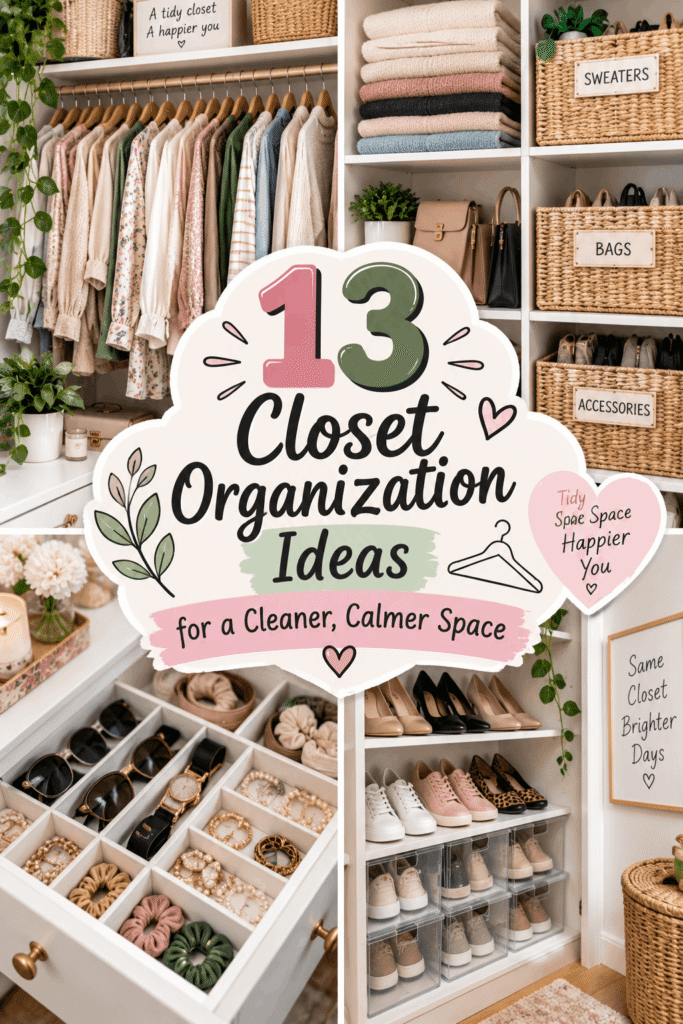
1. Start With a Full Closet Reset
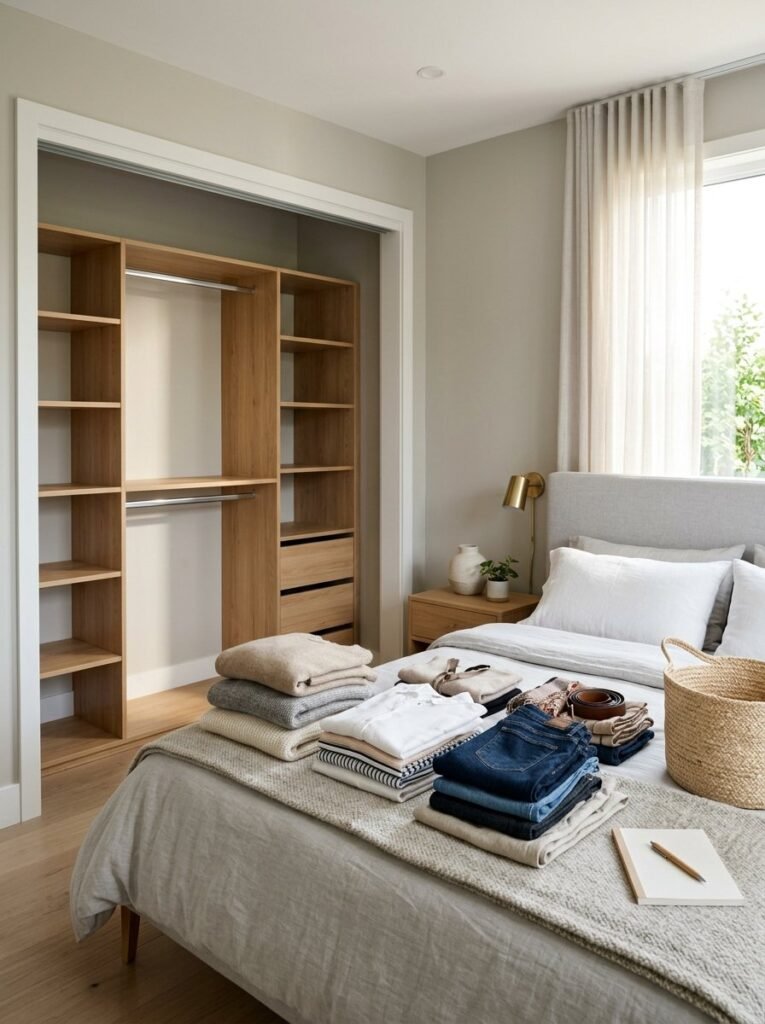
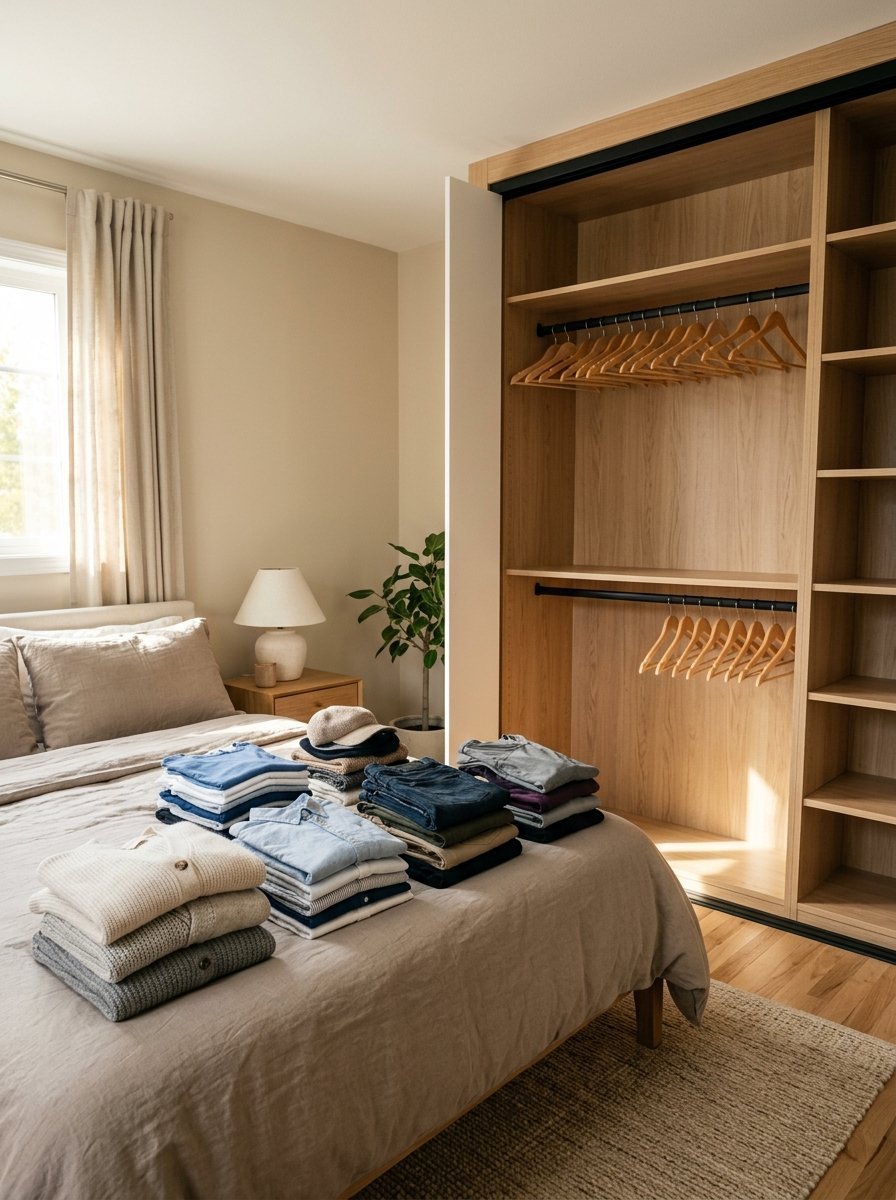
Before buying baskets or storage boxes, start with what you already own. Take everything out of the closet. Place clothes, shoes, bags, accessories, and seasonal items where you can see them clearly. The process may look messy at first, but it gives you a fresh starting point. Create four groups: keep, donate, repair, and move somewhere else. Ask yourself a simple question: “Would I choose this item today? ”If the answer is no, consider letting it go. This makes your storage space work harder for the things you actually use. A minimalist closet does not mean owning almost nothing. It means keeping useful items easy to find. Once you finish this step, you will have a much clearer idea of what your closet needs.
2. Use Vertical Space in a Small Closet

When floor space disappears, look upward. Vertical storage can transform a small space because it uses areas that often remain empty. Add a second hanging rod for shirts and shorter clothing. Use the upper shelf for seasonal pieces, handbags, or boxes. Slim hangers can also make a noticeable difference. Bulky hangers take up more room and can quickly make a closet feel crowded. For a small walk or narrow closet, consider hanging organizers that use the vertical area behind the door. They can hold scarves, belts, small bags, or accessories without taking valuable shelf space. Do not forget the floor. A low shoe rack or stackable bins can turn the bottom section into useful storage. The goal is simple. Use height, width, and depth instead of relying on one crowded hanging rod.
3. Create Zones Inside a Walk-In Closet
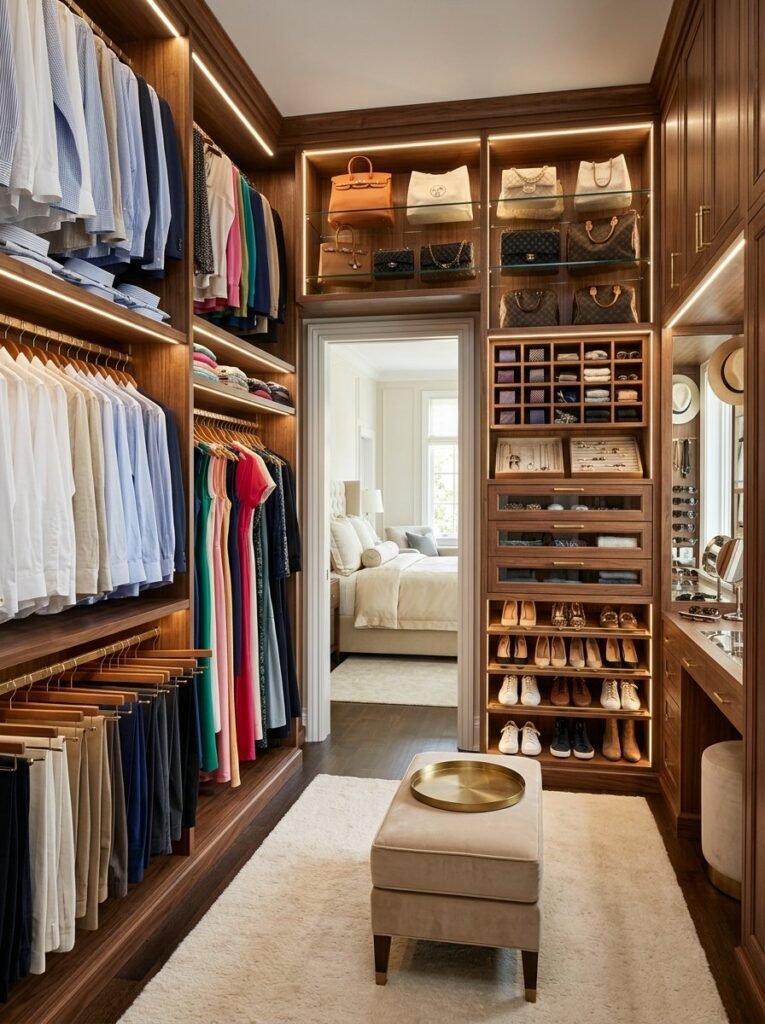
A walk in closet can offer plenty of room, but more space does not automatically mean better organization. Create a separate zone for each category. Keep everyday clothes close to the main entrance. Place shoes together. Give handbags their own shelf. Store special occasion clothing in a less-used section. A master closet may also benefit from dividing space by person. Each person gets a dedicated hanging area, shelf, and drawer section. You can organize clothing by type first and then by color. For example, keep shirts together, trousers together, and jackets together. Within each group, move from light to dark colors. This makes your wardrobe easier to scan. It also prevents one common problem: buying another item simply because you forgot you already had something similar hidden at the back.
4. Make a Linen Closet Work Harder
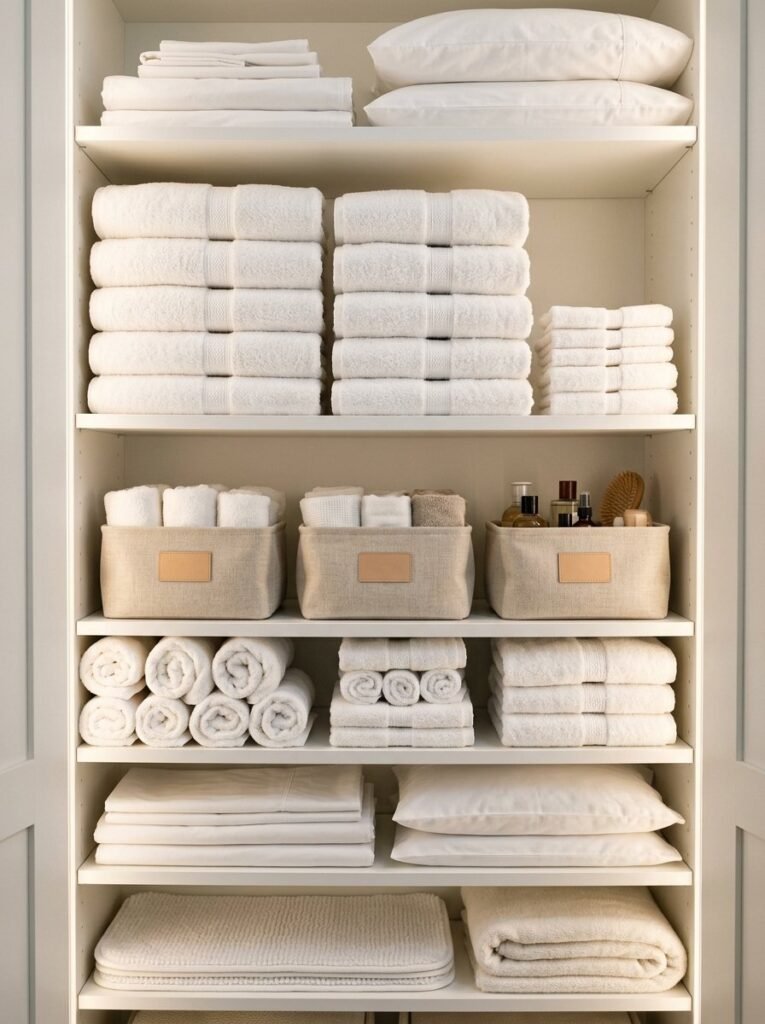
A linen closet often becomes the place where everything gets pushed when there is nowhere else to put it. Give it a clear system. Keep towels together. Stack sheets by bed size. Place pillowcases inside matching sheet sets so you do not have to search for them later. You can also use baskets for smaller items such as washcloths, guest towels, cleaning cloths, or extra toiletries. For a bathroom or hallway linen closet, place the things you use most often at eye level. Less-used seasonal bedding can go higher. If your shelves are deep, avoid making tall stacks. Two smaller stacks are usually easier to manage than one huge pile. These simple linen storage changes can make laundry day much easier because everything has a clear home.
5. Turn a Hallway Closet Into a Useful Drop Zone
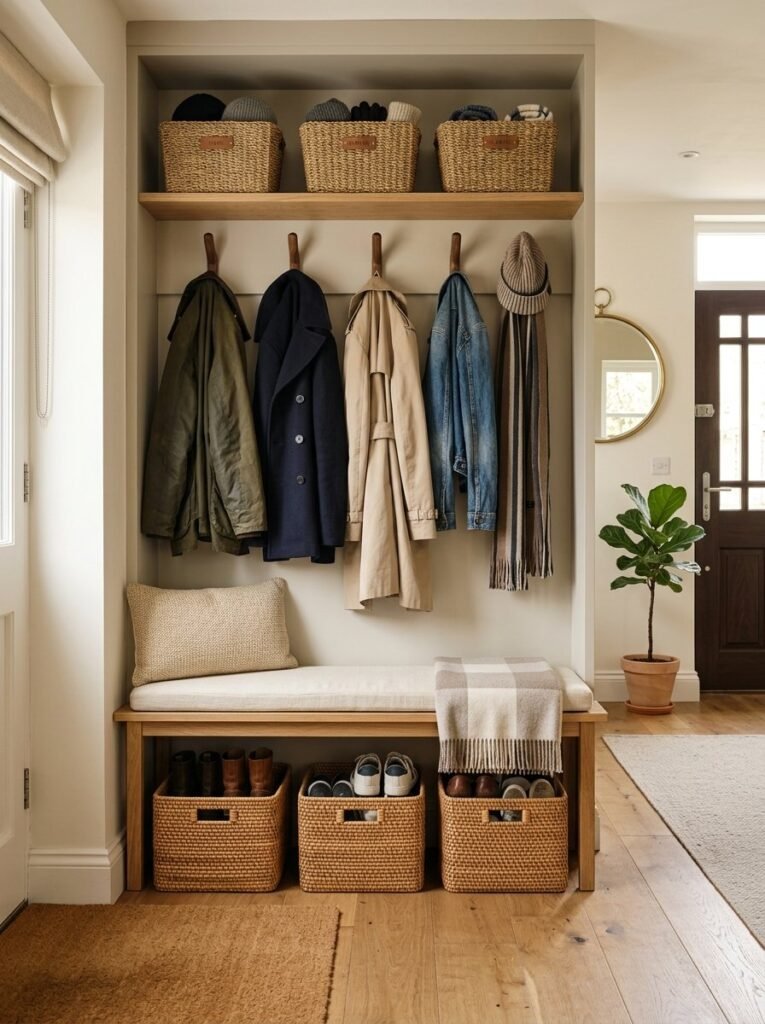
The closet near your entrance has a different job. It needs to handle the things you grab when leaving home and drop when you return. That may include coat storage, shoes, umbrellas, bags, hats, and seasonal accessories. Give each category a specific location. Install hooks for coats and bags. Add a narrow shoe rack underneath. Use one basket for winter accessories and another for items that need to leave the house. If your hall closet is narrow, use the back of the door for lightweight accessories. A few hooks can create useful space without changing the closet structure. The same idea works in a hallway closet. Keep daily items within easy reach and move seasonal items to the upper section. A good entry closet should make leaving the house easier, not create another pile of clutter.
6. Use Sliding Doors to Save Floor Space
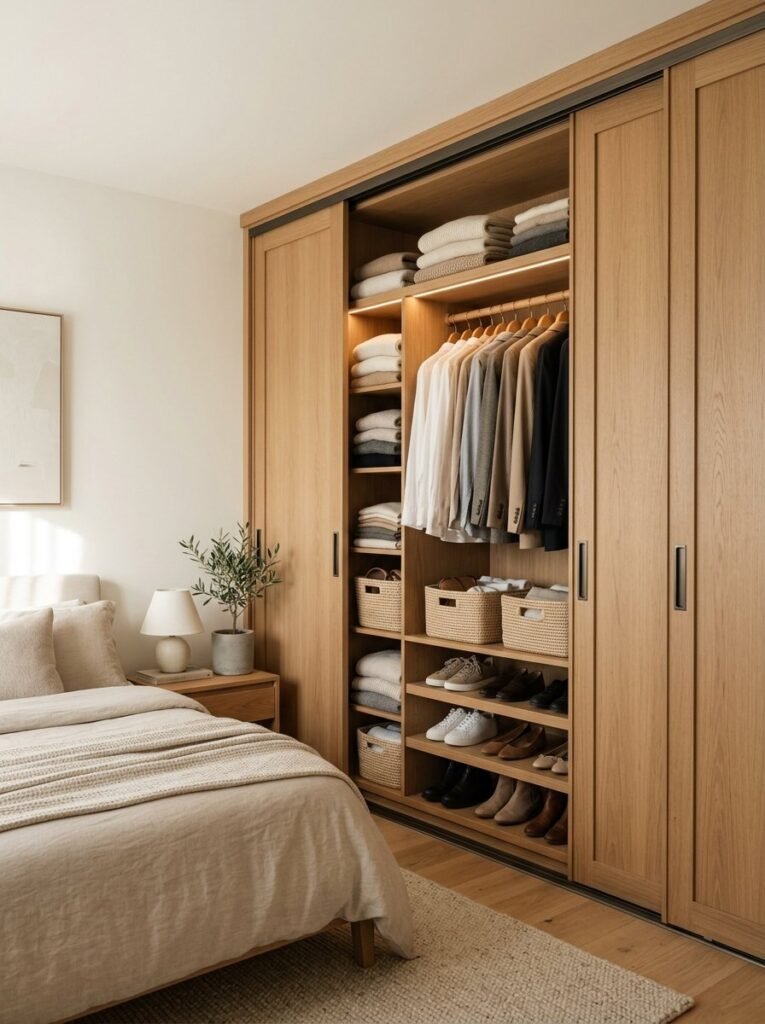
Traditional closet doors need room to swing open. That can become a problem in a narrow bedroom. A sliding door can solve that issue because it moves along the wall instead of opening into the room. This option works especially well for compact bedrooms and apartments where every inch matters. If you cannot replace the doors, focus on the interior instead. Keep the front section easy to access and avoid placing deep baskets where the door may block them. Mirrored sliding doors can also make a room feel more open, although the final choice should match your home’s style. For renters, a simpler solution may be using the existing closet and improving the internal layout with removable organizers. The best organization does not fight against the room. It works with it.
7. Try DIY Storage Before Spending a Lot

You do not need a complete closet renovation to improve storage. Simple DIY projects can solve small problems. Add shelf dividers to stop folded clothes from falling into one pile. Use small boxes for belts and accessories. Install removable hooks for bags or scarves.
If you enjoy a craft project, you can also create simple drawer dividers from sturdy cardboard or repurpose small containers for accessories. Budget stores and Dollar Tree-style finds can provide inexpensive baskets and bins, but measure first. A cheap organizer that does not fit your shelf will not save space. For a budget-friendly makeover, focus on function before appearance. You can always upgrade the baskets later. The important part is creating a system that you can maintain.
8. Organize Cleaning and Utility Items Safely
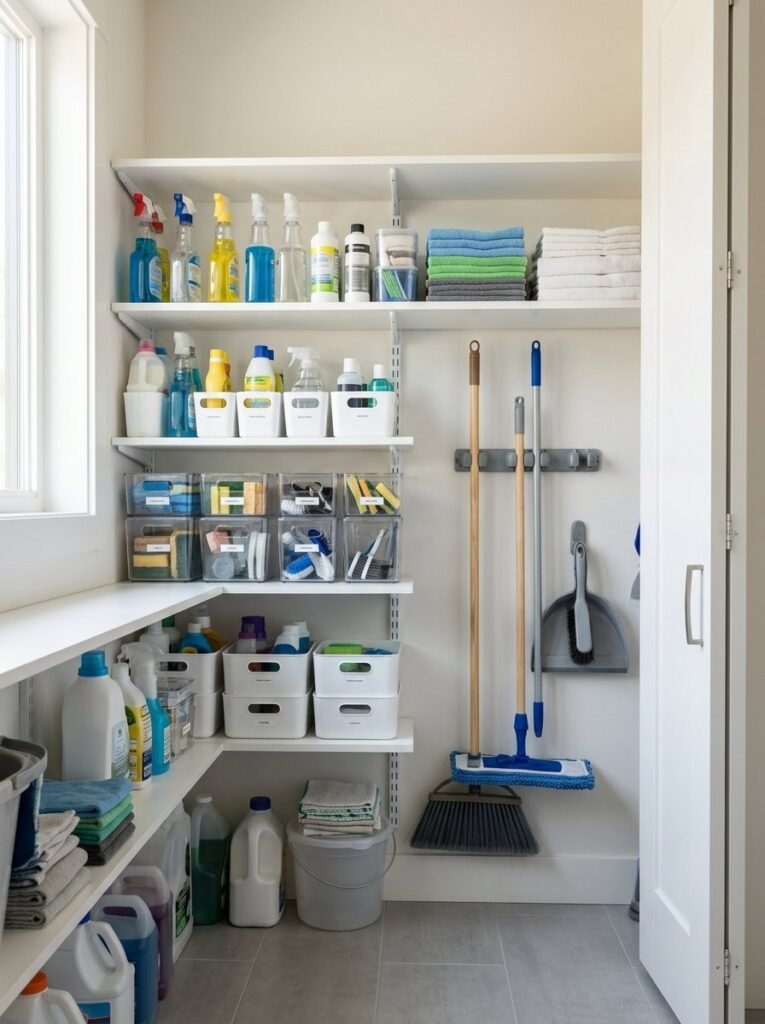
Not every closet holds clothing. A utility closet may contain cleaning products, towels, tools, paper goods, and household supplies. These items need a different system. Keep heavier products on lower shelves. Place frequently used cleaning supplies where you can reach them easily. Use a narrow container for cloths and small tools. Do not overcrowd shelves with bottles. You should be able to see what you have without moving five things first. If you store cleaning products, follow their labels and keep them away from children and pets. Do not combine household cleaning chemicals unless the product instructions specifically allow it. For homes with limited storage, a door organizer can hold lightweight items such as gloves, brushes, and towel supplies. A clean utility closet saves time because you know where every basic household item belongs.
9. Make a Dorm or Tiny Closet More Flexible
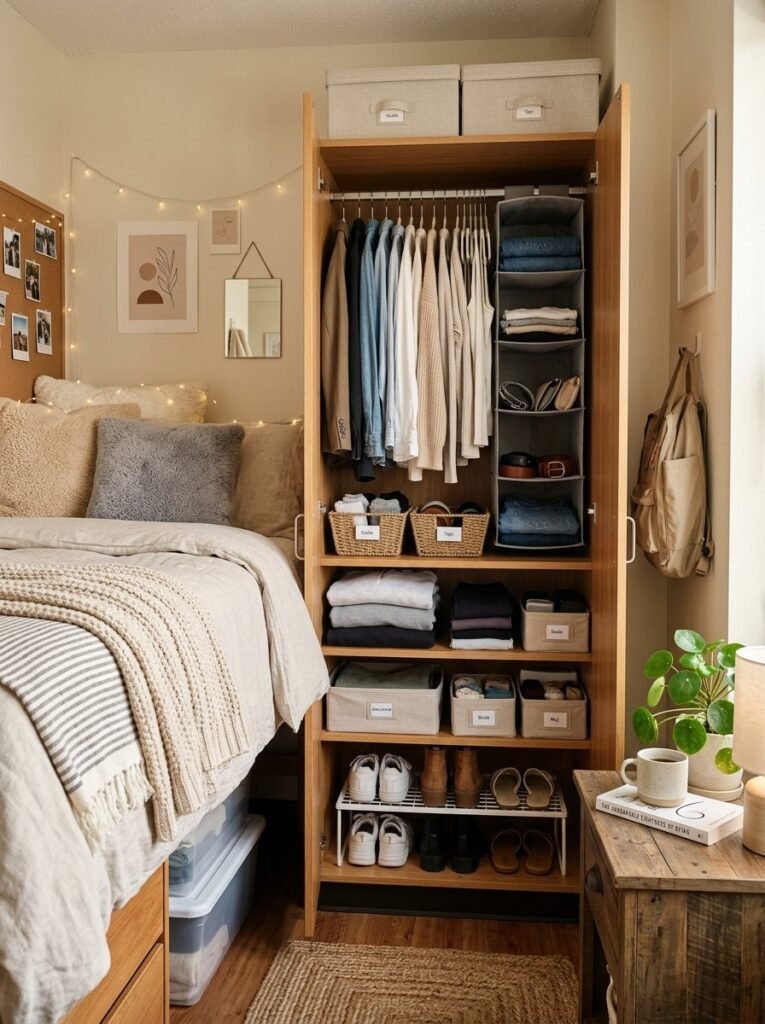
Dorm closets often come with one major problem: there is simply not enough room. Instead of trying to store everything in one section, create layers. Use hanging shelves for folded shirts. Keep shoes underneath the hanging clothes. Store rarely used items under the bed or in another approved storage area. A dorm room also benefits from flexible organizers because your needs may change during the school year. For a tiny closet, choose lightweight products that you can move easily. Avoid filling every shelf with rigid boxes. You can also rotate seasonal clothing. Keep summer pieces accessible during warm months and move heavy winter clothing into another storage area when you do not need it. Small rooms require smart choices. They do not require expensive ones.
10. Build a Simple System You Can Maintain
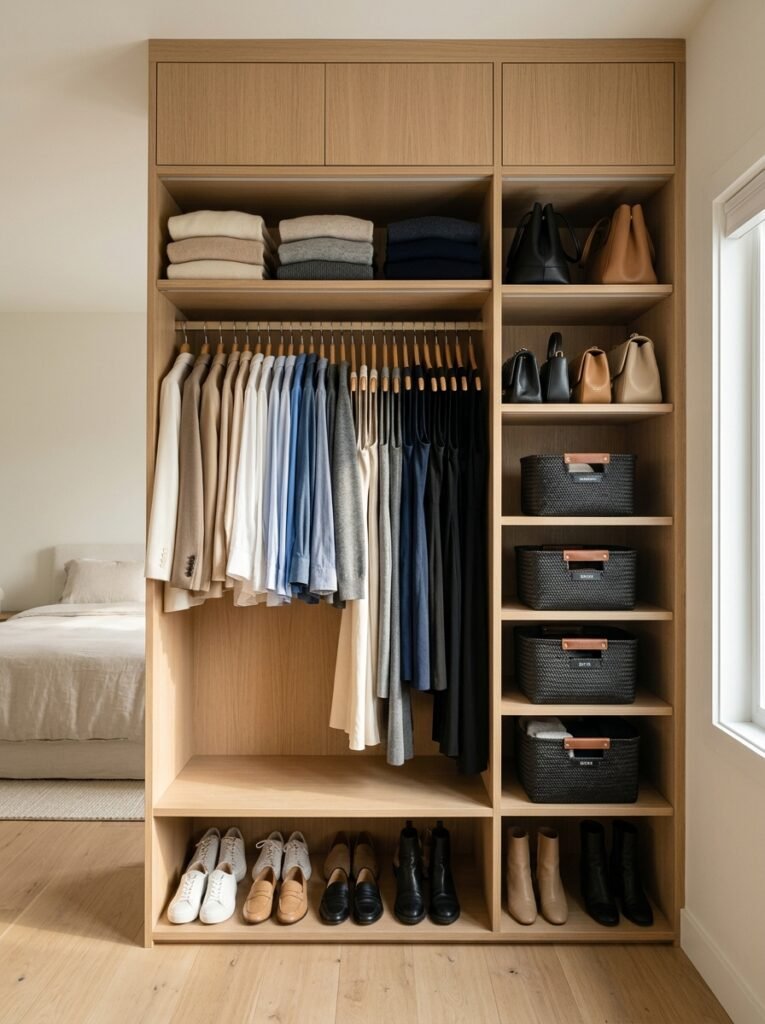
The best closet organization ideas are the ones you can keep using after the makeover is finished. A beautiful closet will not stay organized if the system takes too much effort. Give every category a home. When you take something out, return it to that same location. Keep everyday items at eye level and less-used pieces higher or farther back. Do a quick reset every few weeks. Refold clothes, return shoes to their places, and remove anything that no longer belongs there. Your closet should support your daily routine. If you get dressed quickly in the morning, keep your most-used clothing easy to reach. If you use certain accessories every day, give them a dedicated drawer or hook. Good organization is not about making a closet look perfect for one photograph. It is about making everyday life easier.
11. Add a Few Aesthetic Details
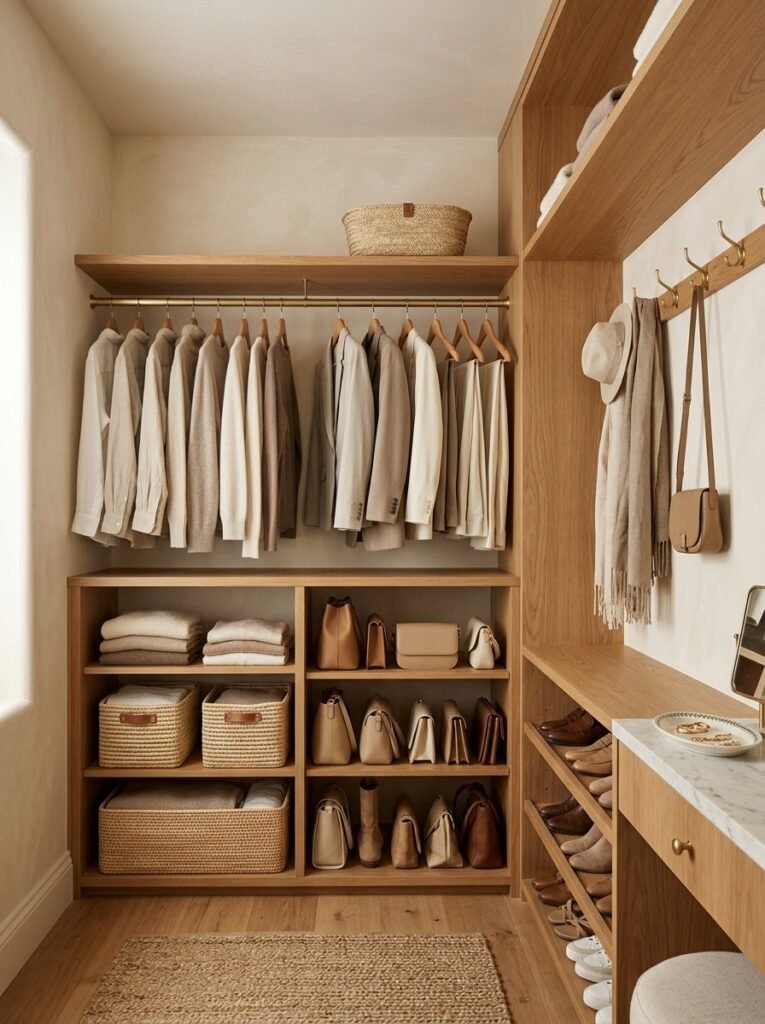
Once the practical work is finished, you can make the closet look beautiful too. An aesthetic closet does not need expensive furniture. Matching hangers, coordinated baskets, and a simple color palette can create a more polished appearance. You might choose natural woven baskets for a warm look. Clear containers work well when you want to see what is inside. Wood accents can create a softer feel.
For a vintage style, consider wooden hangers, classic baskets, and simple brass hardware. For a modern look, choose clean lines and neutral colors. Keep decoration controlled. Your closet is still a working space. The most attractive closet is usually the one where beauty and function support each other.
12. Keep the Closet Dry and Clean
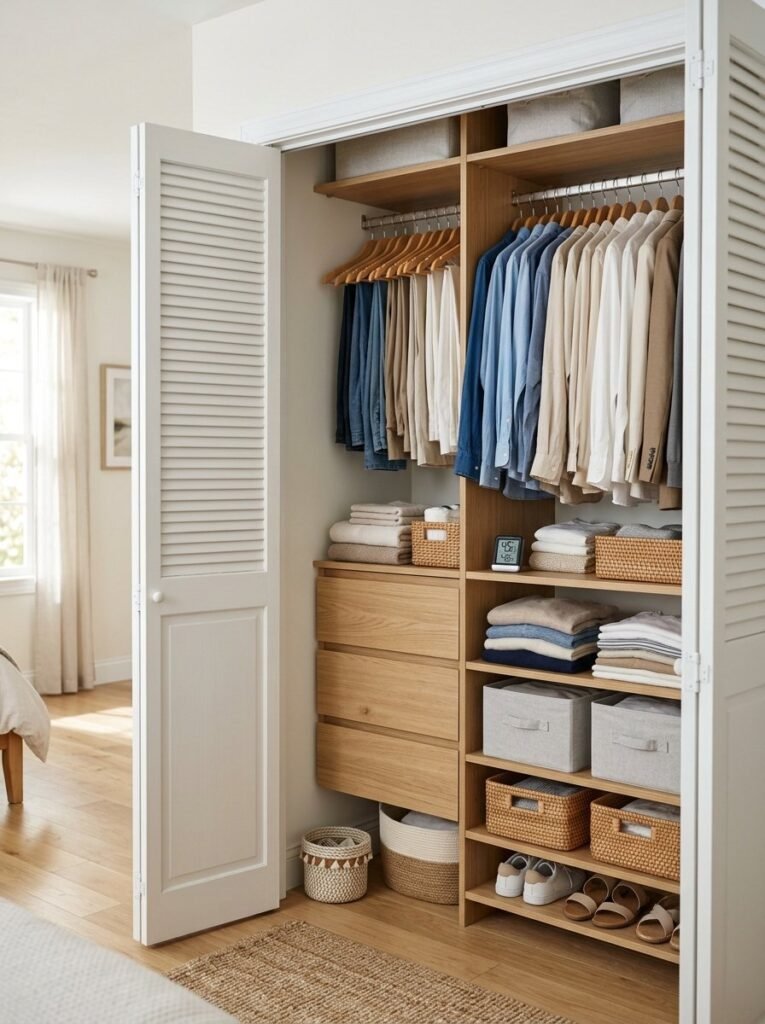
Organization also means taking care of the space itself. Dust shelves regularly. Vacuum the closet floor. Clean storage baskets when needed. Avoid putting damp clothing directly into a closed closet. Moisture deserves special attention. The U.S. Environmental Protection Agency explains that high humidity can encourage mold growth, including in bedroom closets where clothing and furnishings are stored. The EPA recommends keeping indoor relative humidity below 60%, ideally around 30% to 50%. If you notice condensation, damp walls, or a musty smell, investigate the moisture source instead of simply covering the smell with an air freshener. Good ventilation and quick drying can help protect both your home and your clothing. This is one part of closet care that should never be ignored.
13. Final Closet Organization Ideas for Everyday Life
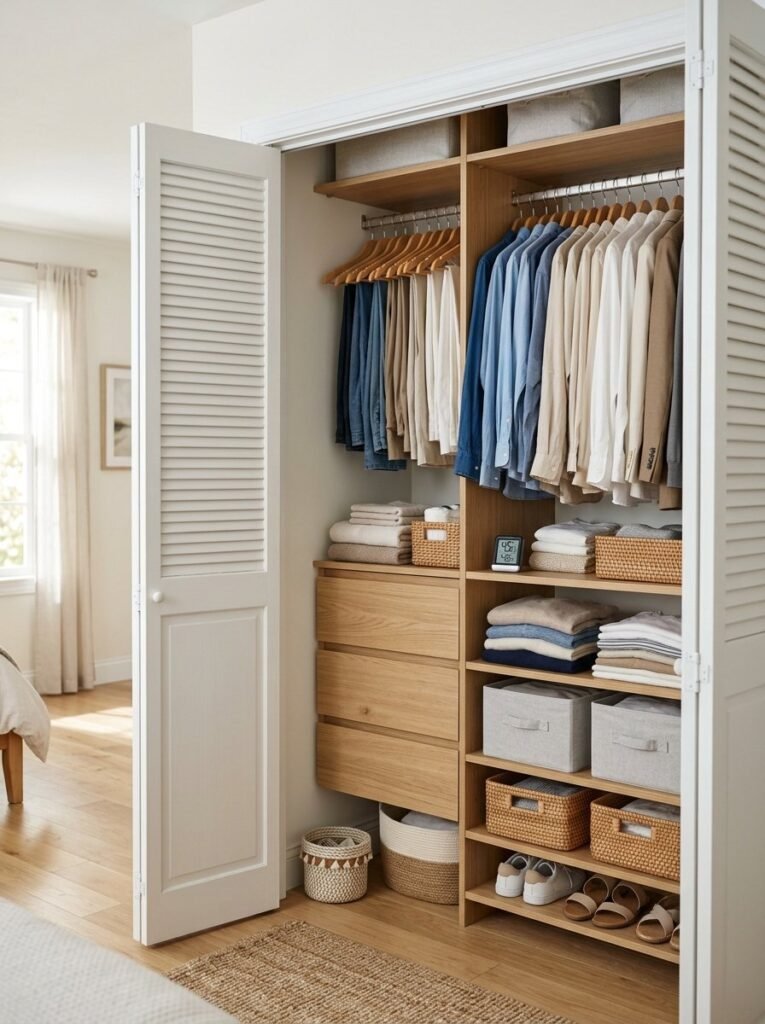
The real test of your closet is what happens on a normal morning. Can you find your favorite shirt without digging through a pile? Can you put laundry away without creating another mess? Can you reach your shoes without moving three storage boxes? If the answer is yes, your system is doing its job. The best closet organization ideas do not depend on having a giant walk-in wardrobe. They work because every item has a logical place.
Start with one section if the entire closet feels overwhelming. Organize your hanging clothes today. Tackle shoes tomorrow. Then move to accessories, shelves, or seasonal storage. Small improvements add up. A well-organized closet can make a bedroom feel calmer and your daily routine feel smoother. You do not need perfection. You need a system that fits your space, your belongings, and the way you actually live. And once that system works, keeping it organized becomes much easier.
Final Takeaway
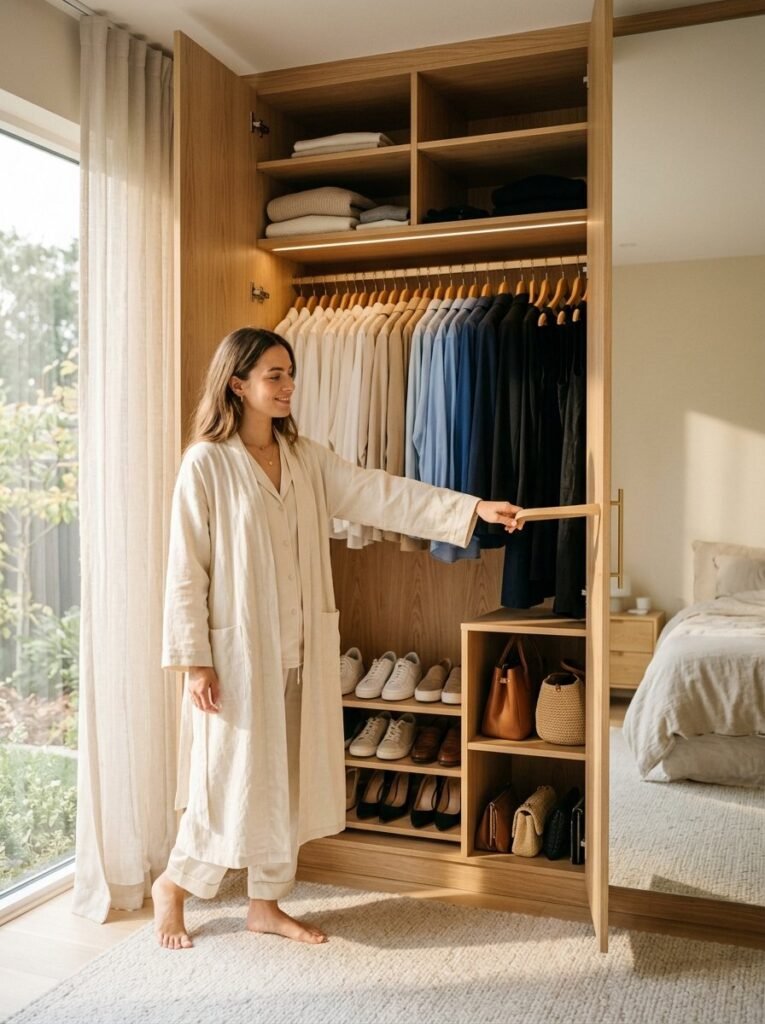
A closet should make life easier, not become another source of stress. Whether you have a walk-in closet, a narrow hallway wardrobe, a dorm closet, a linen cupboard, or a small space, the same principle applies: remove what you do not need, group similar items, use vertical space, and give everything a clear home. Start small. Measure before buying. Choose storage that fits your routine. Keep the space clean and dry. Most importantly, create a system you can realistically maintain. That is what turns a crowded closet into a useful part of your home.

