12 Steal-Worthy Ideas for Your Modern Farmhouse Dining Room

Let’s be honest. Your dining room isn’t just a pretty backdrop for holiday photos. It’s where you gulp your morning coffee, survive homework chaos, and somehow squeeze eight people around a table meant for six. So yeah, it needs to actually work for real life, not just look good on Pinterest.
Getting the modern farmhouse vibe right is a little tricky. Go too rustic and you’re living in a log cabin. Go too modern and you’ve lost all the warmth. But nail that sweet spot? Pure magic. Here are 12 real-world dining room ideas that genuinely pull it off, and yes, I’m sharing exactly what makes each one tick so you can steal the good parts.
1. Black Built-In Bookcase with Mixed Chair Seating
This one hits different. White shiplap walls paired with a dramatic matte black floor-to-ceiling built-in bookcase? That contrast is chef’s kiss.
The room centers around a warm honey-toned farmhouse table with turned baluster legs. The bookcase holds a carefully curated mix of cream ceramic pitchers, brass orbs, woven baskets, glass decanters, and stacked white plates. Nothing feels random. Everything feels collected.
Here’s the smart seating trick: Most chairs are black Windsor-style spindle backs, but crisp white linen slipcover chairs anchor each head of the table. That mix adds visual interest without wrecking the tight three-color palette of black, white, and natural wood. A black ring chandelier ties the upper half of the room together perfectly.
A tall faux olive tree in the corner softens all those sharp angles, and best of all, it never needs watering. Win.
What really makes this work is restraint. The bookcase isn’t crammed full. There’s breathing room between objects. Nothing fights for attention.
How to Get This Look on a Budget
Grab a builder-grade bookcase or a BILLY shelving unit from IKEA, paint it flat black (Benjamin Moore’s Wrought Iron is the one), and style it with a maximum of 8 to 10 objects total. Done and dusted.
2. Distressed Sage Buffet with Sunburst Mirror and Mixed Chairs
If you’ve ever wondered whether one piece of furniture can anchor an entire room, this dining space answers that question with a confident yes.
The star is a distressed sage-green buffet with glass-front doors showing neatly stacked white dinner plates and patterned bowls. Storage that doubles as display? Brilliant. On top sits a simple lamp, a wooden bowl with pine cones, and a fiddle-leaf fig. Above it all, a large round raw wood sunburst mirror catches the light beautifully.
The dining table is a wide-plank reclaimed wood rectangle on a trestle base. Cross-back chairs in natural wood line the sides, while the head chair wears a fitted white slipcover. A blue-gray vintage-style area rug introduces a cooler tone into an otherwise warm palette.
The genius here is layered patina. The chippy paint on the buffet, the weathered wood table, the woven rug, and the raw wood mirror frame all coexist without any single element overpowering the others. White walls and ceiling keep everything feeling fresh rather than heavy.
Budget Hack for This Look
Hit up estate sales and thrift stores for a sideboard you can repaint in muted sage or seafoam. Sunburst mirrors are widely available at major home retailers and cost way less than they look like they should.
3. Navy Sideboard with Cage Pendant and Seasonal Styling
Most farmhouse dining rooms treat seasonal décor like an afterthought. This one builds it into the room’s entire personality, and the result is genuinely impressive.
A deep navy blue sideboard with a white quartz top runs along the back wall. The surface holds tall turned-wood candleholders, a vintage-style lamp, a “Gather & Give Thanks” sign, a mercury glass vase filled with pampas grass, and muted terracotta decorative pumpkins. This could have gone full craft-store chaos, but it doesn’t. Everything feels intentional.
A large arched window-pane mirror in a black frame above the sideboard creates depth and bounces light around the room. The matte black cage pendant hangs over a light-toned farmhouse table flanked by linen upholstered chairs and silver Tolix-style metal chairs.
The small detail that does the most work? A rust-and-cream plaid blanket casually draped over one of the linen chairs. It whispers “real people live here,” which is something overly styled rooms often lose.
IMO, the navy sideboard is the boldest and best choice in this room. Most farmhouse spaces default to white or natural wood storage pieces. Navy gives the room a real anchor point, and the white top keeps it from going too dark.
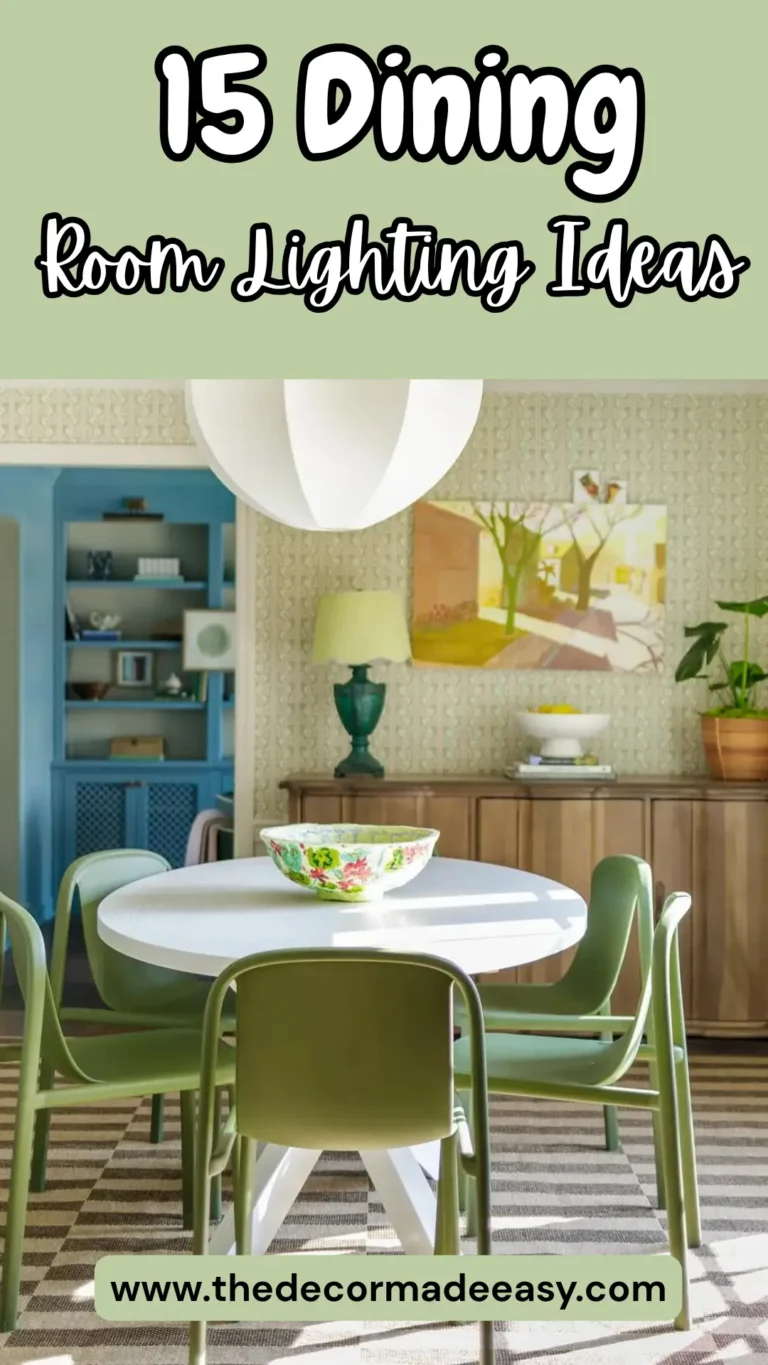
Also Read: 15 Dining Room Lighting Ideas That’ll Make You Never Eat Under Boring Lights Again
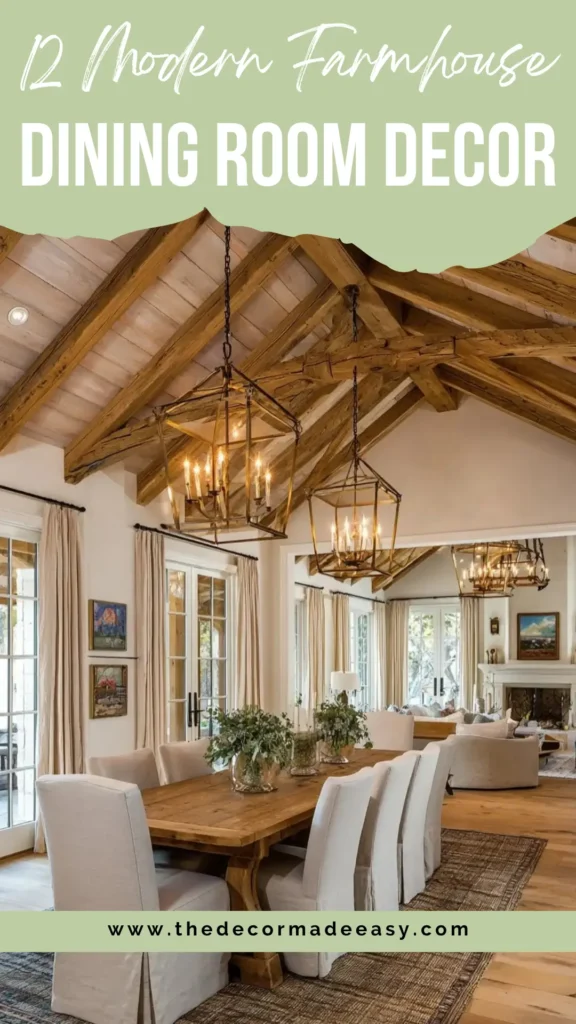
4. Cathedral-Ceiling Dining Room with Exposed Timber Beams and Dual Lantern Pendants
Okay, this one is the dream. Not everyone has the ceiling height to pull this off, but if you do, please don’t waste it.
Raw honey-stained structural timber beams with wood plank decking create the entire foundation of this space. These aren’t decorative add-ons. They’re real beams with real knots and genuine weathering, and no faux beam on the market comes close to replicating that texture.
Two oversized brass-toned cage lantern pendants hang from the peak on black chains, casting warm diffused light over a wide, thick-plank natural oak trestle table that seats eight. The chairs are white slipcovered and intentionally casual against such dramatic architecture. A dark patterned area rug defines the dining zone below.
Small oil paintings in warm tones hang simply on the walls. They feel collected rather than decorated, which is exactly the vibe you want.
A Serious Note for Renovators
Many homeowners panel over original timber framing chasing a “cleaner” look, then spend serious money later trying to restore that character. Before you close up anything overhead, get a structural assessment. If those beams are real, show them off.
5. Floral Wallpaper Accent Wall with Metal Chairs and Orb Pendant
I’ll be honest. When I first saw watercolor floral wallpaper paired with a chunky farmhouse table, I was skeptical. Then I looked longer. It completely works, and here’s why.
The soft pink-and-white watercolor floral wraps just one wall, flanked by large windows that let the outdoors share the visual weight. Rustic wood floating shelves on that wall hold small terracotta pots and a basket, keeping the surface styling simple enough not to fight the pattern behind them.
The table is a solid honey-toned farmhouse piece with thick turned legs. Every single chair around it is a matte black metal cafe-style chair. Eight of them, perfectly uniform. That uniformity is crucial. When your accent wall is this active, the seating needs to be one calm, settled decision. A spherical cage pendant in aged iron finishes the balance between soft floral and something more industrial.
White hydrangeas in a terracotta pitcher on the table keep the centerpiece warm and organic without overdoing it.
The Wallpaper Rule Worth Remembering
One wall is totally manageable. Pick a pattern with a muted, watercolor quality rather than a high-contrast print, and let everything else stay neutral. The wallpaper becomes an accent, not an obligation.
6. Moody Vaulted Space with Steel-Frame Windows and Organic Centerpiece
Most modern farmhouse dining rooms play it safe with light and airy. This one commits hard to depth and atmosphere, and honestly? It’s more compelling for it.
Floor-to-ceiling steel-frame black windows flood the room with natural light while warm wood-paneled ceilings with exposed beams absorb that light into a rich earthy tone overhead. A sculptural wrought iron chandelier with bare candelabra arms hangs from the peak. The whole room goes dark or neutral across every finish: walnut-stained square dining table, slate-gray upholstered chairs with black iron frames along the sides, and cream slipcover host chairs at each end.
The centerpiece is a masterclass in restraint. A large hand-thrown clay vessel holds spare, branchy greenery, flanked by two taper candles in clear glass holders. That’s it. Nothing else on the table. It works because the room itself carries so much visual weight that over-decorating the table would genuinely ruin it.
A natural oak chest on the far wall holds a stone table lamp and a round black-framed mirror positioned slightly off-center above it. A large faux olive tree fills the corner, providing the only real color note in the space.
The Commitment Rule for Moody Rooms
If you go dark, go dark consistently. One light-wood piece or a bright accessory will undercut the whole mood. This aesthetic only works when every surface is on the same page.
Also Read: The “No-Fake-Fruit” Guide to 12 Kitchen & Dining Looks You’ll Actually Love
7. Live-Edge Walnut Table with Herringbone Wood Floor and Paired Wall Mirrors
A live-edge slab table is one of the strongest design statements you can make in a dining room. This space knows that and builds everything else around it confidently.
The centerpiece is a massive live-edge walnut slab, almost ten feet long, with natural uneven edges and grain variation left completely exposed. A simple moss centerpiece sits at the midpoint without hiding the wood’s character. Ten cream upholstered parson chairs with clean-lined silhouettes surround it, letting the table command full attention without competition.
Two large rectangular mirrors with walnut herringbone-patterned frames lean against the wall. Their frames echo the table’s wood tone, and their size makes them function as art rather than just reflective surfaces. The herringbone pattern in the frames subtly previews the herringbone oak floor beneath.
A walnut sideboard with brass hardware on the far wall holds sculptures, woven objects, and a ceramic vase. Two ficus trees flank the dining area, their dark green canopy contrasting beautifully against all that warm wood.
The deliberately understated dark cage pendant above doesn’t compete with the organic slab below. That’s smart.
Worth the Investment?
Live-edge tables typically start around $2,000 to $5,000 for a quality piece. Buy the best slab you can afford, because the wood itself does most of the design work. It’s genuinely worth it if you plan to build the room around it long-term.
8. White Board-and-Batten Wall with Dark Wood Table and Linear Cage Pendant
Sometimes the simplest combinations hit hardest. This room makes a strong case for restraint, and it wins.
A full-height white board-and-batten accent wall sits behind a dark-stained near-black trestle farmhouse table. The contrast is stark and deliberate. The table stands out like a focal point rather than just furniture. Six cream upholstered chairs with curved backs surround it, their warmth softening the bold black-and-white contrast just enough.
A linear matte black cage pendant with six exposed candelabra bulbs hangs precisely centered above. It’s long enough to feel purposeful, clean enough not to overwhelm the simplicity below. Scale-appropriate lighting is everything in a room like this.
On the table, a single white-and-black speckled ceramic vase holds thin green stems beside two black hurricane glass candleholders. The area rug is a cream and charcoal Moroccan-pattern flatweave, the only real pattern in an otherwise texture-driven room.
The room reads as curated rather than sterile, which is the big challenge every minimalist farmhouse design faces and this one solves it cleanly.
Weekend Project Alert
Board-and-batten installation is one of the most achievable DIY projects for this style. Materials for an average dining room wall typically run between $150 and $300, and the transformation is disproportionately dramatic for the cost and effort.
9. Open-Concept Kitchen Dining with Waterfall Island and Repeating Pendants
When your dining space connects directly to your kitchen, you’re not just designing one room. You’re designing a conversation between two spaces that needs to feel like one coherent idea.
This open-concept layout solves that beautifully. A long waterfall-edge island in honed concrete-look quartz with a contrasting walnut wood panel base functions as both prep surface and dining table simultaneously. On the dining side, five black Windsor chairs line one long edge. Four tapering cage pendants in dark iron hang in a perfectly spaced row above, turning lighting into a repeating architectural element rather than decoration.
The kitchen behind features warm walnut cabinetry with Shaker doors, white subway tile backsplash, and black fixtures. The contrast between the kitchen’s warmth and the island’s cooler stone surface creates interesting material tension that keeps the combined space from feeling one-note.
This approach works especially well for entertaining. Island seating lets you host guests casually while you cook without needing a separate dining area, and if you’re designing or renovating from scratch, that practical advantage is absolutely worth considering.
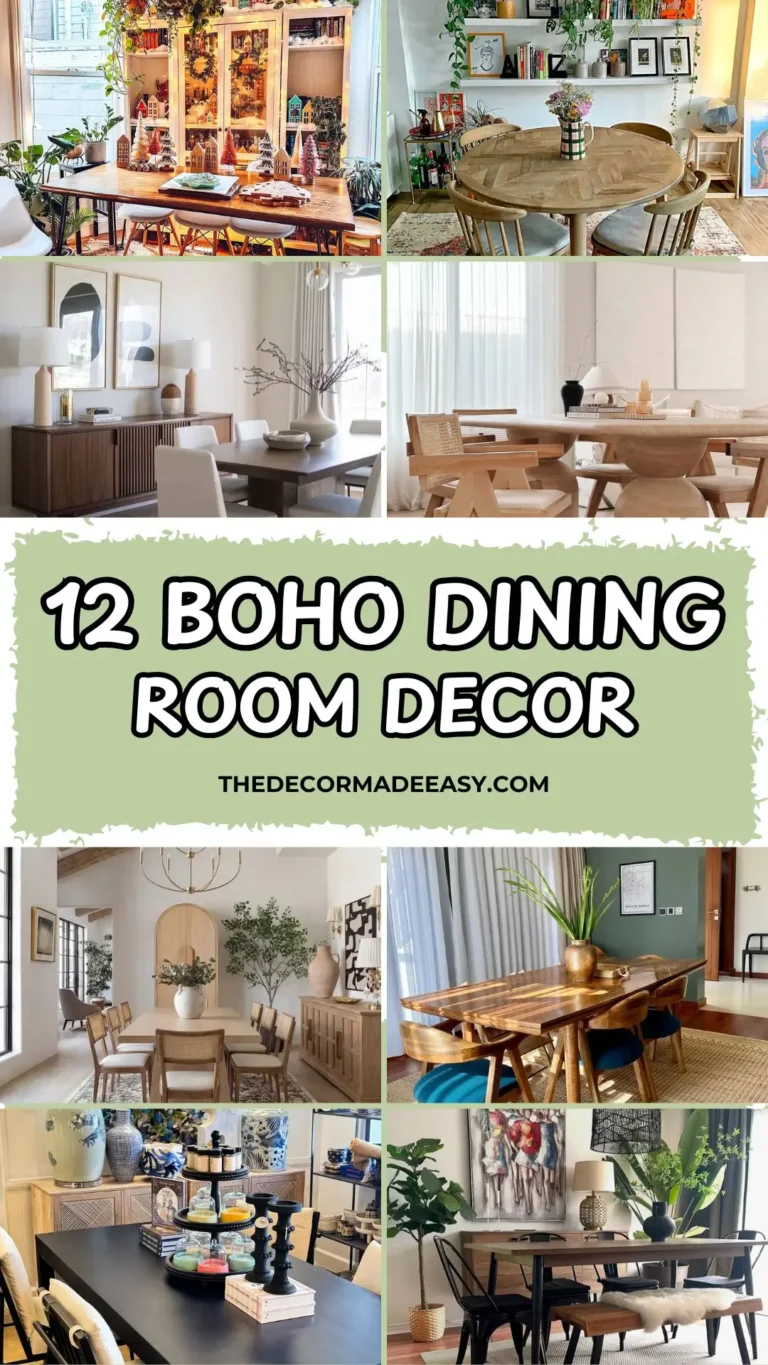
Also Read: Stop Pinning, Start Living: 12 Real-Life Boho Dining Rooms That Actually Work
10. Olive Green Velvet Chairs with Wicker Pendant and Candlestick Centerpiece
This room proves you don’t need expensive finishes or complicated design moves to create a dining space with genuine presence.
A straight-plank farmhouse table in dark walnut stain on clean square legs sits at the center. Simple, honest, exactly right. Four olive green velvet chairs in a low-slung curved silhouette surround it. That deep sage-green against warm wood and gray-toned walls creates an earthy palette that manages to feel both genuinely modern and classically farmhouse at the same time.
The centerpiece is refreshingly low-effort and somehow incredibly effective. A cream macramé table runner runs down the center, topped by seven mismatched black iron candlestick holders of varying heights with white taper candles. No florals, no greenery, no decorative tray. The varying heights do all the compositional work.
A rectangular chandelier frame in black iron with two wicker basket drum shades hangs above. That texture combination bridges coastal and farmhouse in a way that feels natural rather than themed. French doors on either side open to what looks like a deck or yard, adding borrowed scenery to the room.
The Bold Chair Color Rule
The bolder the chair, the more neutral everything else must be. If your walls, floors, rug, and table are already competing across multiple color families, adding a statement chair color creates chaos, not character. Keep the rest calm and let the chairs have their moment.
11. Marble Island with Woven Rush Counter Stools and Globe Pendants
This one sits at the luxury end of modern farmhouse design, but the material choices here are instructive even if your budget is nowhere near “custom marble backsplash” territory.
A white quartz waterfall island dominates the space with four woven rush-back counter stools featuring cream upholstered seats and natural wood frames along one side. The rush weave texture on the chair backs is one of the most effective farmhouse details you can bring into a modern kitchen. It’s tactile, organic, and references craft traditions without tipping into rustic territory. Three large clear globe pendants on black cords hang above, their scale assertive enough to hold their own above the generous counter dimensions.
Behind the island, flat-front walnut cabinetry with brushed brass hardware and under-cabinet lighting illuminates a book-matched marble slab backsplash with gray and white veining in a chevron pattern. That backsplash is the room’s most extravagant detail, and it sets the luxury tone for everything around it.
The Budget Takeaway
Even if marble backsplashes and custom cabinetry are out of reach right now, the core design principle here is completely accessible. Pair natural-textured seating like rush, rattan, or cane chair backs against a clean quartz or marble tabletop. That combination of refined and organic is the modern farmhouse aesthetic in a nutshell, at any price point.
12. Shiplap Fireplace Wall with Vintage Barn Art and Dark Exposed Beams
This is the most classically farmhouse image in the whole collection, and it makes something very clear: authentic materials and genuine patina are impossible to fake convincingly.
Dark espresso-stained exposed ceiling beams run across white shiplap walls and ceiling, creating a visual cross-hatch overhead that gives the room its structural soul. A fireplace with a simple white mantel holds a warm autumn vignette with artificial pears, dried magnolia leaves, small white pumpkins, and a large framed oil painting of a barn in harvest tones. A vintage map scroll hangs above on a wooden mounting bracket, adding layered history.
The farmhouse table is the real deal. Heavily grained, dark-stained planks on straight legs showing genuine wear. All the chairs are black Windsor spindle-backs. Mismatched black iron candlestick holders run down the center. A black five-arm candelabra chandelier in a curving, asymmetric design hangs from a beam. Less formal than a ring chandelier, more theatrical, and perfectly suited to the room’s scale.
What strikes me most is that this room exists in real life, not a showroom. The table has dings. The chairs aren’t matching sets from a furniture retailer. And it’s better for it.
If you have an older farmhouse table with scratches and character, please don’t sand it back to perfection. The patina is doing design work that brand-new furniture simply cannot.
Quick Comparison: Modern Farmhouse Dining Room Elements at a Glance
| Element | Budget Option | Mid-Range Option | Premium Option |
|---|---|---|---|
| Dining Table | Pine farmhouse table, painted | Solid oak with trestle base | Live-edge walnut slab |
| Chairs | Metal Tolix-style, painted | Upholstered linen parson chairs | Mixed slipcover + Windsor set |
| Lighting | Single cage pendant | Ring chandelier, black iron | Pair of brass lantern pendants |
| Storage | Repainted thrift store sideboard | Navy/black console with quartz top | Built-in painted bookcase unit |
| Rug | Jute flatweave | Moroccan-pattern wool blend | Vintage Persian or kilim |
| Wall Treatment | White paint or simple shiplap | Board-and-batten accent wall | Wallpaper accent with custom millwork |
So What Actually Makes a Modern Farmhouse Dining Room Work?
Looking across all twelve spaces, a few things repeat in every successful one. Here’s what actually moves the needle:
Commit to a limited palette. The most effective rooms stick to two or three main tones and use texture to create variety within that constraint. Shiplap, jute rugs, woven shades, aged iron hardware, and reclaimed wood all add visual interest without adding color.
Don’t undersize your lighting. This is the detail that separates a room that photographs well from one that actually feels good to sit in. A solid rule of thumb: your light fixture should be roughly half to two-thirds the width of your dining table. Most people go too small and then wonder why the room feels off.
Go tall with greenery. Nearly every strong room here uses large-scale plants like faux olive trees, fiddle-leaf figs, or dramatic branchy cuttings in ceramic vessels. Small table florals rarely add the vertical presence a dining room actually needs.
Let the room look lived-in. The dining rooms that feel most alive in this collection show some sign of real life. A casually draped blanket, a well-worn table, a seasonal vignette on the sideboard. Getting the furniture right is just the starting point. Designing a space that looks like people genuinely use and enjoy it? That’s the actual goal.
So grab one idea from this list, or grab five. Mix and match. Make it yours. Your dining room deserves to be more than just a pretty room nobody wants to leave. Now go make some magic happen.