The TV Wall Glow-Up: 10 Designer Looks You Can Actually Steal

Let’s be honest. Most TV walls are just… a screen on a wall. Maybe some scuff marks. Possibly a cable hanging out like it gave up on life. Sound familiar?
I’ve rounded up 10 genuinely impressive TV wall setups that range from cozy boho vibes to full-on luxury hotel energy. Whether you’re doing a complete room overhaul or just tired of your wall looking like a sad afterthought, there’s something here for you.
1. Warm Wood Slat Accent Wall with Flanking Sconces
There’s a reason wood slat walls are absolutely everywhere right now. They just work, full stop.
This setup features dark walnut-toned vertical slats running floor to ceiling behind the TV. The slats sit tightly together, creating this rich, textured depth that paint could never compete with. On either side of the screen, two exposed Edison-style brass sconces throw a warm amber glow that plays beautifully off the wood grain.
Below everything, a light-toned floating media cabinet with minimal hardware and a small potted plant keeps things grounded without making the space feel cluttered.
Here’s the magic: the contrast between dark slats and a warm beige room stops the whole thing from feeling too cave-like. Those sconces are doing serious emotional heavy lifting. Take them out and the setup becomes forgettable. Keep them and the wall feels intentional and genuinely inviting.
How to Recreate This Look
- Grab acoustic wood slat panels (pre-finished sheets that mount straight to drywall)
- Go for brass or antique bronze sconces with visible filament bulbs
- Mount sconces roughly 12 to 15 inches from either side of the TV
- Choose a floating cabinet in gray-white or natural oak to balance the dark slats
Pro tip: wire those sconces through the wall if you possibly can. Surface-mounted cords running across beautiful wood slats would completely kill the vibe.
2. Luxury Marble Feature Panel with Multi-Drop Pendant Lighting
This one literally stopped me mid-scroll. It is not subtle. It has absolutely zero interest in being subtle.
The centerpiece is a large slab of dark green-gray marble with dramatic veining in deep charcoal and rust. It genuinely looks like a painting you’d find in a boutique hotel lobby. Flanking the marble are geometrically carved wood panels in a repeating diamond pattern that adds visual texture without competing with the stone.
The TV sits centered on the marble, with a dark walnut live-edge media console below it. Two gold giraffe figurines sit on either side of the console adding a playful, luxurious finishing touch.
Then you look up. A sprawling cluster of clear glass globe pendants cascades down from the ceiling at varying heights, creating this constellation-like effect above the whole seating area. It is genuinely theatrical in the best possible way.
Key Elements Driving This Look
- Dark-veined marble slab as the TV backing
- Carved geometric wood side panels
- Multi-drop globe pendant chandelier
- Dark walnut console with live-edge detailing
- Gold accent decor pieces
Budget reality check: this setup requires serious investment and ideally a double-height ceiling. But you can absolutely borrow the core idea. Large-format porcelain tiles that mimic marble cost a fraction of the real thing. Pair that with a warm pendant cluster above your seating area and you’ve captured the essence without the full renovation price tag.
3. Boho Rustic Shelf with Trailing Vines Above a Wood Console
Not every TV wall decor idea needs to be sleek and architectural. Sometimes the organic, slightly chaotic approach is exactly right.
This setup transforms a plain beige wall into a living focal point by mounting a thick rough-hewn wooden shelf directly above the TV. On the shelf: trailing pothos, small leafy plants, a framed botanical print, stacked vintage books, and a handful of earthy trinkets. The vines cascade down on either side of the screen, softening the hard edges in a way that feels completely unexpected and genuinely cool.
Below, a solid wood media console with rattan basket inserts anchors everything. A fiddle leaf fig stands tall in a woven basket planter on one side, and a spider plant in another basket sits on the other. A jute pendant lamp hangs in the upper corner. Every material in this room is natural, which is the whole point.
What I love most about this: the greenery basically solves the “TV problem.” The screen stops being the only thing your eye lands on. You stop seeing a television and start seeing a curated, living space. That’s a big deal.
Plants That Work Best Here
- Trailing pothos (fast grower, drapes beautifully, basically indestructible)
- Heartleaf philodendron (same deal, thrives in typical indoor light)
Mount your shelf about 12 to 18 inches above the top of your TV, leave room for the vines to hang on either side, and let nature do its thing. Low effort, high reward.
Also Read: A Dining Room Without a Chandelier Is Just a Room with a Table (Let’s Fix That)
4. Monochromatic Greige Bedroom Wall with Integrated Vanity and Globe Lamps
This one is technically a bedroom setup, but the principles work anywhere you want calm and visual coherence.
The designer created an all-in-one wall using a single taupe-greige tone across paneled walls, a wall-mounted TV, and a floating console that extends to one side as a vanity surface. Everything is the same matte warm-neutral finish. No contrast, no color breaks, nothing competing for attention.
On the TV side of the console, two white sculptural globe lamps in a stacked-orb design sit on hardcover books used as risers. On the vanity side, a circular backlit mirror adds practical function without cluttering the space visually.
The restraint here genuinely impresses me. The paneled wall adds texture and depth without introducing any competing color. Everything quietly recedes into the background, which is exactly what you want from a bedroom TV wall.
The Secret to Pulling This Off
Total tonal commitment. Pick one color family (warm whites, taupes, or cool grays) and apply it to the wall treatment, the furniture, and the decor. The second you introduce a contrasting material or accent color, the monochromatic effect breaks completely.
The globe lamps are a smart choice specifically because their rounded sculptural form adds visual interest without bringing a new color into the mix.
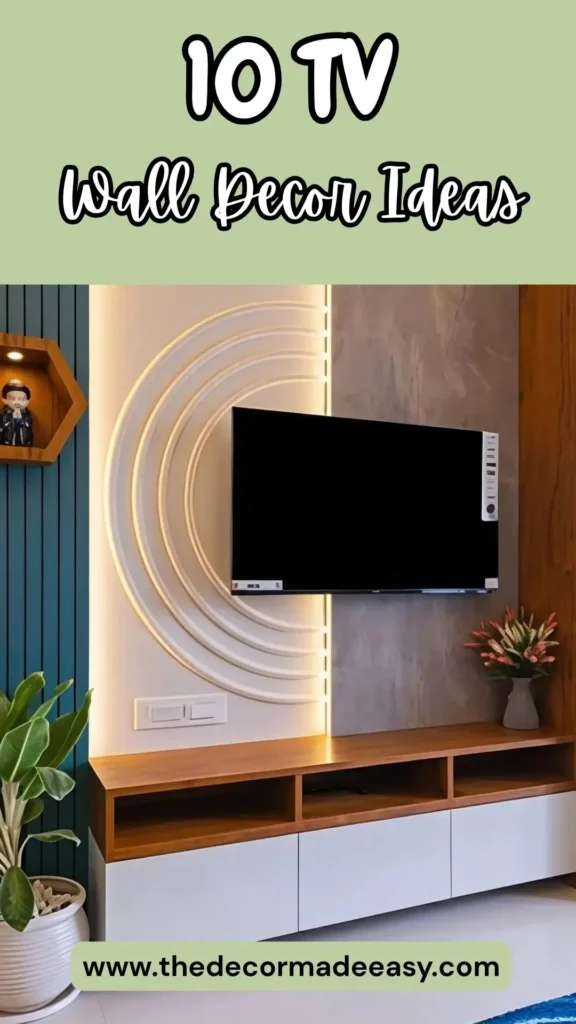
5. Eclectic Teal Slat Wall with Hexagonal Display Niches and Backlit Concentric Rings
If you’ve been playing it safe with neutrals and want a TV wall that actually has a personality, pay attention to this one.
The left panel features vertical teal slats with three warm-toned hexagonal wooden display shelves mounted in a vertical line, each with its own embedded downlight. The shelves hold small decorative figures, including a rooster, a traditional figurine, and a small elephant, making the whole thing feel collected rather than staged.
The center panel shifts to a gray microcement-effect surface with an oversized backlit concentric circle relief mounted behind the TV. The circles radiate outward like ripples, catching warm LED light at their edges. A warm wood lower unit with open shelving and white cabinet doors runs beneath everything.
To the right, an ornate white cabinet with carved lattice doors adds an Indo-modern touch that somehow ties the whole thing together. A large leafy plant at floor level softens the lower corner.
What this setup proves: contrast works when it’s controlled. Teal against warm wood. Geometric slats against organic curves. Modern cement against traditional carved cabinetry. Every contrast here is deliberate. This room didn’t just happen by accident.
DIY-Friendly Elements to Steal
- Hexagonal wall niches require relatively modest carpentry work
- Add embedded puck lights or strip LEDs inside the hex frame for instant display-worthy shelving
- The concentric circle panel is achievable with CNC-cut MDF if you’re working with a carpenter
6. White Marble and Gold Vein Panel on Slatted Background with LED Halo
Some combinations just make immediate sense. White marble with gold veining against natural wood slats is genuinely one of them.
This setup centers on a large rectangular marble-effect panel that frames the TV like a painting. The panel features dramatic gold veining running diagonally across a white background. Behind the panel, a full-width wall of light natural wood slats creates a warm textural backdrop. LED strips run along the perimeter of the marble panel, casting a warm amber halo around the TV and the stone at night.
Below, a long white cabinet with flat panel doors runs nearly the full room width. The cabinet top uses the same marble-finish material, creating a visual connection between the focal panel above and the storage below. A slim black soundbar sits centered on the surface.
The LED halo is doing more work than you’d think. Without it, this is a clean but somewhat flat setup. The backlight creates dimensionality and lifts the marble panel off the slat background, giving the whole wall real depth, especially in the evening.
Marble Material Options at a Glance
| Material Option | Cost Level | Appearance | Best For |
|---|---|---|---|
| Natural marble slab | High | Authentic, unique | Luxury renovations |
| Engineered quartz | Medium-High | Very realistic | Mid-range remodels |
| Large-format porcelain tile | Medium | Realistic, durable | Most budgets |
| Marble-effect vinyl panel | Low | Good from a distance | Rentals, quick installs |
| Marble contact paper | Very Low | Fair | Temporary or DIY |
For the LED halo, use warm white (2700K to 3000K) strips rather than cool white. Cool white reads as clinical and cheap. Warm tones make the gold veining actually glow.
Also Read: The New Standard: 12 Real-World Luxury Dining Rooms That Refuse to Settle
7. Contemporary Gray Unit with Wood Slat Column, Concrete Panel, and Backlit Display Cabinet
This is what a proper built-in TV wall looks like when someone put genuine thought into the design choices rather than just filling space with stuff.
The wall is anchored by a floor-to-ceiling gray cabinet system. On the left, a column of vertical natural wood slats with warm LED uplighting creates a warm textural counterpoint to the cool gray millwork. The TV sits in the center section against a gray microcement-texture panel, with a small sculptural bust and a white globe lamp on the open ledge beside it.
To the right, a tall display cabinet with fluted glass doors and internal warm lighting shows off books and objects behind the glazing without cluttering the visual field. Track lighting at the ceiling adds directional accent light across the whole composition. The base unit features matte gray drawer fronts with hairline handles, elevated slightly off the floor on wood slat feet that echo the column detail on the left.
This is the detail I want you to notice: the wood slats appear twice, as the vertical column and as the base feet. That repetition creates cohesion across a genuinely complex arrangement. When you’re designing a multi-element wall unit, repeating one material in two different places ties everything together without forcing it.
What to Tell Your Carpenter
- Center section in concrete or microcement texture
- Flanking storage in matte finish millwork
- One accent column in vertical wood slats with backlighting
- Glazed display unit on the opposite side
Seriously, screenshot this one and bring it to your joiner. It’ll save a lot of back and forth.
8. Stacked Stone TV Backdrop with Dark Wood Slat Panels and Floating Timber Console
Raw materials. Maximum drama. Zero apologies.
This setup uses dark charcoal stacked stone as the core TV backdrop, and the effect genuinely stops you in your tracks. The stone features irregular horizontal courses of slate-like tiles in deep gray-black tones, creating a rugged texture that contrasts sharply with the smooth surrounding room. Two vertical black wall sconces are mounted on either side, their warm tungsten glow catching the stone face and throwing shadows into the crevices.
Dark walnut vertical slat panels flank the stone section, extending warmth and providing a visual transition between the stone and the rest of the room. Below, a long light oak floating console runs the full width of the stone section, with warm LED strips concealed beneath it creating an amber underglow. Small white ceramic vases and dried floral stems sit at each end.
Here’s what surprised me: this setup feels completely livable despite the dramatic material choice. Stone this dark can easily feel oppressive in a room. The light oak console and warm cove lighting above and below prevent that. They stop the stone from dominating and frame it as a feature instead.
Good News for DIYers
- Stacked stone is widely available as lightweight veneers that mount directly to drywall without structural reinforcement
- Look for ledgestone or stackstone veneers in both natural and manufactured options
- The floating console with LED underglow is worth stealing regardless of what material you choose for the wall above it
9. Full-Width Dark Slat Wall with Vertical LED Channels and Ceramic Vessel Styling
This setup understands something a lot of TV wall ideas completely miss: lighting placement is a design decision, not an afterthought.
The room features a floor-to-ceiling dark brown wood slat wall spanning the entire room width. What makes it genuinely distinctive is the integration of four vertical LED strip channels, evenly spaced across the wall surface. These channels run from floor to ceiling and emit narrow columns of warm upward light, highlighting the texture of the slats and creating dramatic vertical rhythm across the whole wall.
A long matte black floating console sits below the TV, styled with a collection of ceramic vessels in earth tones including sandy beige, warm brown, and cream, grouped loosely in pairs. The glossy floor reflects the LED strips, multiplying their effect and amplifying the warmth in the room.
A quick note on the ceramics: grouped ceramic vessels are an easy, affordable way to add sophistication to a TV console. Choose pieces with a similar tonal range but varying shapes and heights. Three to five pieces grouped with slight spacing between them feels curated. A single row of identical objects at the same height looks like a shop shelf. IMO, the distinction matters more than people realize.
How to Get the LED Channel Effect
- Route grooves into MDF panels
- Inlay aluminum LED profiles before painting or veneering over them
- The result looks architecturally built-in, which is exactly the goal
Also Read: From Pinterest Rabbit Holes to Reality: 13 Round Table Dining Room Ideas for Real Homes
10. TV Wall with Electric Fireplace, LED-Lit Marble Panel, and Flanking Backlit Bookcases
The TV wall that does absolutely everything and somehow doesn’t collapse under the weight of its own ambition.
An electric fireplace insert sits at the base, providing a glowing flame effect beneath the TV. Above it, a white marble-look panel with thin gray veining serves as the TV backdrop, edged with bright white LED strips creating a crisp halo. The wall behind the TV section features vertical wood slats in two tones, lighter ash on one side and slightly darker on the other, creating subtle tonal variation across the panel.
Flanking the entire composition are two tall narrow bookcase units framed in matte black metal, with natural pine shelving and internal LED strip lighting. The warm amber glow from the bookcase interiors layers beautifully across the whole wall. Fireplace at the bottom, cool white TV halo at center, warm amber bookcase light on the sides. The lighting tells a story.
Is this the most restrained setup in this article? Absolutely not. But every single element is pulling its weight. The bookcases provide real storage and display space. The fireplace adds warmth both literally and visually. The marble panel and LED halo give the TV the framing it deserves.
The Rule This Setup Follows (That You Should Steal)
Before adding any element to your TV wall, ask yourself: what is this actually doing?
If the answer is “filling space,” it shouldn’t be there. If it’s providing function, texture, light, or visual balance, it earns its spot.
How to Find the Right TV Wall Idea for Your Space
Looking back across all ten of these setups, a few principles separate the ones that genuinely work from the ones that just look busy.
Material contrast is almost always present. Wood against stone. Marble against slats. Concrete against glass. The contrast is deliberate and controlled, never accidental.
Lighting is never random. Every single example uses at least one intentional lighting choice, whether that’s sconces, LED strips, or backlit panels. Lighting is what makes a TV wall feel alive rather than flat.
Scale matters enormously. The best setups fill the wall without overwhelming the room. A stunning dark stone backdrop that looks magnetic in a large open room can feel suffocating in a smaller space.
The most common mistake people make is falling in love with a style without thinking about proportion. Before committing to any of these directions, tape out the dimensions on your actual wall and live with the footprint for a day. It sounds obvious, but it genuinely prevents a lot of expensive regret.
If I had to give you one starting point from everything here, it’s this: choose your primary material first. Wood slats, stone, marble, concrete. Pick one and build everything else around it. Let the furniture, lighting, and accessories support that choice rather than compete with it.
Your TV wall is genuinely worth the thought and planning. Every example here proves that with the right approach, it stops being a screen on a wall and becomes one of the most characterful features in your entire home. Now go make it happen.