How to Style a White Tile Bathroom: 10 Real-Life Designs to Copy

Look, I get it. White tile bathrooms can feel about as exciting as plain yogurt. Cold, clinical, and kinda boring, right? But here’s the thing: I’ve rounded up ten real bathrooms that prove white tile isn’t the problem. The problem is what people aren’t doing WITH the white tile.
Think of white tile as your blank canvas, not your finished masterpiece. These bathrooms nail it by layering in personality through flooring, hardware, pops of color, and materials that actually make you feel something.
Whether you’re knee-deep in a reno or just daydreaming about bathroom upgrades, these ideas are 100% worth stealing.
Hexagon Mosaic Floor with Brass Hardware: The Modern Boutique Hotel Look
Okay, this one from Tessellated Tile Factory is seriously smart. The floor is doing all the heavy lifting here, and honestly? I’m into it.
White hexagon mosaic tiles cover the entire floor and flow right into the shower. But here’s where it gets good: scattered across the white base are these little black daisy motifs made from rings of dark hexagons. It’s pattern without chaos, you know?
The walls keep it chill with vertical white subway tiles. Nothing fancy, just clean texture. But what really ties this whole vibe together is the brass hardware. The taps, shower fittings, mirror frame, even the floor drain are all that warm, antique-gold tone. Against all that white, the brass doesn’t look trendy. It looks expensive.
The floating vanity has fluted cabinet doors and big circular brass handles, giving off major boutique hotel energy. And yeah, it looks pricey, but the bones of this look are actually pretty doable.
How to recreate it:
- Start with a white hex mosaic floor. You can find mesh-backed sheets that make installation way easier.
- Choose your hardware finish first. Brass warms things up. Chrome keeps it cooler. Matte black adds edge. Each one totally changes the mood.
- Keep your walls simple and let the floor be the star.
Turquoise Stacked Mosaic Walls with White Floor: When Color Does All the Work
I’ll be real, I thought I’d hate this one. But I actually love it?
The walls and shower are covered in turquoise stacked glass mosaic tiles. They’re thin and horizontal, almost like brushstrokes. The color shifts depending on the light, going from seafoam to teal to deeper jade. It’s got this underwater vibe that somehow doesn’t feel overwhelming.
And that’s because of the floor. Large-format glossy white tiles reflect light upward and keep the whole room from feeling like you’re drowning in turquoise. The white floor is absolutely critical here. Without it, this bathroom would feel like the inside of a swimming pool. With it? It breathes.
The freestanding white tub under the window plays off that contrast beautifully. Chrome fixtures keep things simple without adding more color to the mix.
The takeaway: One surface gets the drama. Everything else supports it. You don’t have to tile every wall in a bold color. Even one feature wall in a statement mosaic with white tile everywhere else creates that same intentional contrast.
Classic Heritage Bathroom with Tessellated Mosaic Floor and Green Border Detail
Some bathrooms are just timeless, and this Tessellated Tile Factory space is exactly that.
The floor is white hexagon mosaic with small navy and slate blue flower motifs. But what really sets it apart is the decorative border running along the edge: a band of dark dots forming a frame around the entire floor. That one detail turns a standard hex floor into something genuinely special.
The walls are classic white subway tile with a thin green tile border strip running along the top of the shower. It’s a tiny choice that makes a huge impact. The timber medicine cabinet adds warmth, the hanging fern brings life, and the white freestanding tub anchors everything with the right amount of gravitas.
Here’s the lesson: every element is doing specific work. The white subway tile is the neutral base. The mosaic floor sets the era. The green border adds personality. The timber cabinet brings in warmth. Nothing’s extra.
If you’re renovating an older home and want to keep its character while updating the bathroom, this formula (subway walls, tessellated floor, period hardware) is rock solid. It ages beautifully because it was never chasing a trend.
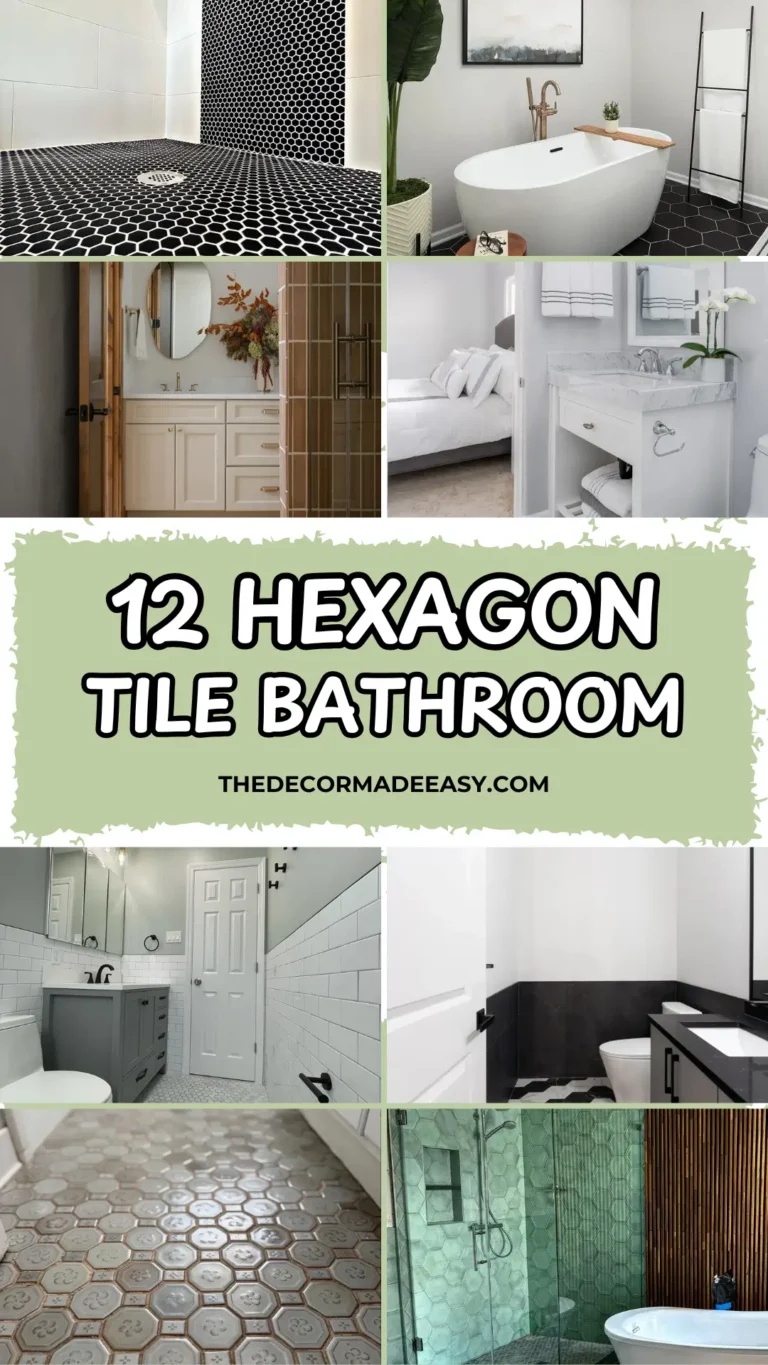
Also Read: Tired of Subway Tile? 12 Stunning Hexagon Tile Bathrooms to Inspire Your Reno
Textured White Subway Tiles with Matte Black Hardware and Penny Mosaic Floor
This bathroom solves a problem tons of people deal with: making a small space feel intentional instead of cramped.
The answer? Textured white subway tile. Each tile has a slight surface relief that catches light differently. It prevents that flat, institutional look that plain subway tile can have. The tiles run floor to ceiling in the shower, which draws your eye up and makes the ceiling feel higher.
The hardware is all matte black: shower bracket, glass panel frame, shower valve, drain. Against the white tile, the black hardware is sharp and graphic. It’s almost like a line drawing over the surface.
The floor is classic white penny hexagon mosaic with black flower motifs. The matte black hardware gives the whole pattern a harder, more contemporary edge.
For narrow bathroom layouts, take notes:
- Frameless glass shower screens keep sightlines open (critical in tight spaces)
- White-on-white tile reflects max light
- Matte black hardware gives your eye somewhere to land
Real talk though: matte black fixtures show water spots and soap residue like crazy. Factor in the cleaning reality before you commit. But visually? Totally worth it IMO.
Bold Geometric Encaustic Floor Tiles with White Large-Format Wall Tiles
Your eye goes straight to the floor here, and that’s the whole point.
The floor has this repeating geometric pattern in charcoal, grey, and white with a starburst or compass-rose motif. It’s bold enough to anchor the entire room. The walls are large-format white rectangular tiles, smooth and plain, stacked horizontally. No fuss. The hierarchy is crystal clear: floor = statement, walls = frame.
The vanity is deep espresso black with a white countertop, black-framed mirror, and matte black faucet. Everything’s cohesive. The grey medicine cabinet handles storage without adding visual noise.
What I really like is how the scale works. Large wall tiles create calm. Medium-scale floor pattern creates energy. Black vanity grounds everything.
Nervous about committing to patterned floors? Use large, plain white tiles on every vertical surface and let all your decorative energy go into the floor. The plain walls don’t compete. They amplify.
FYI, these encaustic-style geometric tiles come in both genuine cement tile and porcelain. Porcelain is way more practical in wet areas because it’s less porous and easier to maintain.
Quick Tile Comparison
Porcelain encaustic-look
Best for wet areas and high-traffic floors. Low maintenance. Mid-range cost.
Cement encaustic
Best for feature floors in dry areas. High maintenance (needs sealing). Higher cost.
White subway ceramic
Perfect for wall cladding and shower surrounds. Low maintenance. Budget-friendly.
White hexagon mosaic
Great for floors and decorative features. Medium maintenance. Mid-range cost.
White marble-look porcelain
Luxury feel for walls and floors. Low to medium maintenance. Higher cost.
White terrazzo-look porcelain
Feature walls and vanity tops. Low maintenance. Mid-range cost.
White Marble-Look Porcelain with a Backlit Mirror and Brushed Hardware
This is the bathroom people pin and then convince themselves they can’t afford. But hold up.
The shower walls and floor are covered in large-format white porcelain with dramatic grey and gold veining. It’s a convincing marble look that runs floor to ceiling without a break. The veining is bold enough to read clearly from across the room, creating movement that plain white tile just can’t touch.
The shower floor uses a warm beige penny mosaic. It’s a deliberate material shift that signals the transition from dry to wet zone while adding texture underfoot. The white vanity has brushed nickel pulls and keeps things traditional but clean. And that backlit LED mirror? That’s the secret sauce for making a bathroom feel actually spa-like instead of just trying to.
Here’s the thing: Porcelain tiles with marble-look printing have gotten crazy convincing. A large format (like 600mm x 1200mm or bigger) reduces visible grout lines and lets the pattern flow naturally.
The hardware is restrained. Brushed nickel throughout, with matte black accents on the shower glass brackets. That consistency matters. Mixing too many hardware finishes is one of the fastest ways to lose coherence in a white tile bathroom.
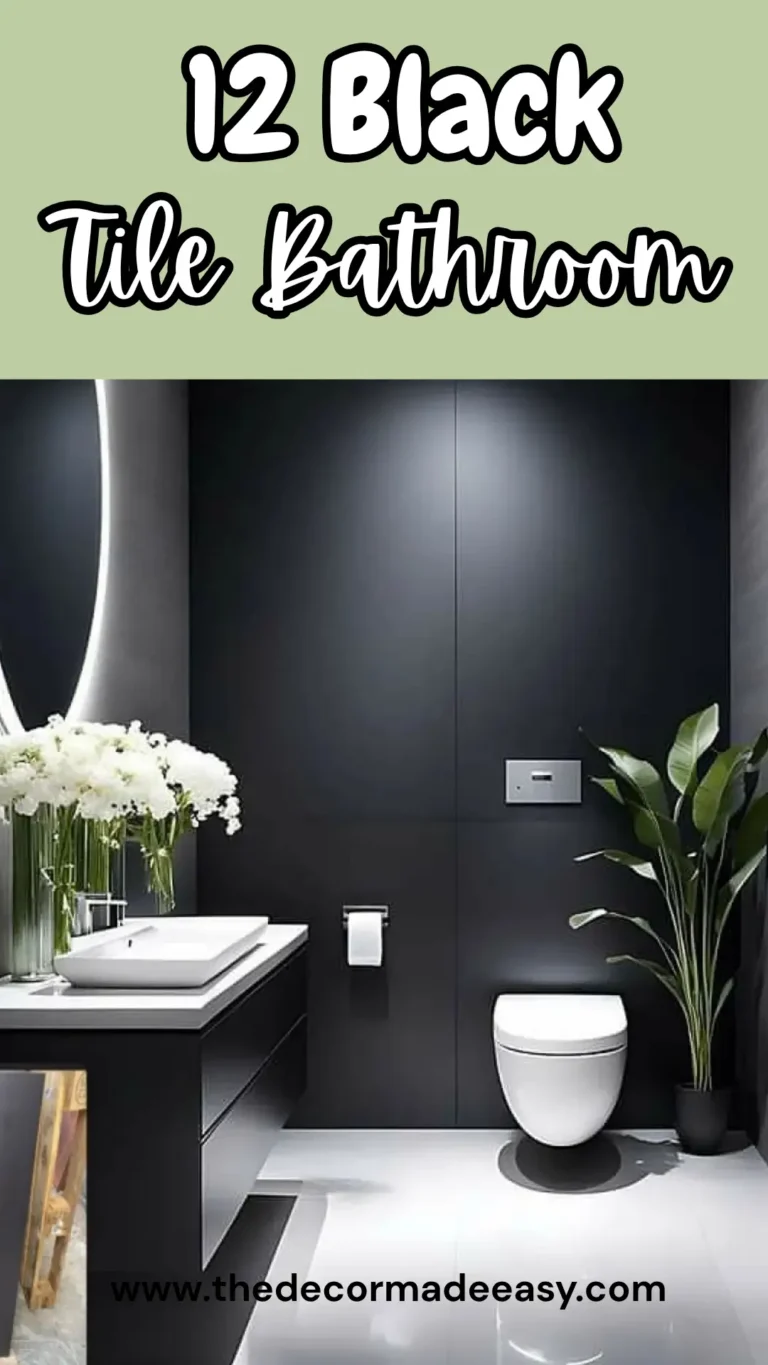
Also Read: 12 Black Tile Bathroom Ideas That Will Change Your Mind
Floor-to-Ceiling White Subway Tile with Dark Grout: The Compact Bathroom Done Right
This compact bathroom proves something important: white tile with dark grout is a completely different vibe from white tile with white grout.
Every wall is covered in large white subway tiles, but the dark charcoal grout lines create a grid that gives the room graphic definition and a modern industrial edge. It’s more structured and deliberate than white-grouted subway tile, and it photographs like a dream.
The floor is an encaustic-style patterned tile in dark green, cream, and black. It’s a small-scale floral geometric that adds warmth and personality at ground level. That contrast between the crisp, gridded white walls and the earthy, patterned floor is the whole design move, and it totally works.
The chrome heated towel rail adds a vertical element that balances the horizontal tile run. The small window is framed by the tile instead of interrupting it, which keeps everything coherent.
For smaller bathrooms, dark grout deserves serious consideration. It gives you all the brightness of white tile while adding the definition a small space needs to feel designed, not default.
Honest warning though: dark grout in a shower surround can eventually show efflorescence (those white mineral deposits) and might need periodic re-sealing. But used on main walls outside the shower? Not a big deal.
Choose your grout color deliberately. Don’t treat it like an afterthought. It’s arguably as important as the tile itself.
Terrazzo Wall Tiles and a Blue Fluted Vanity: White Tile as Part of a Material Story
This bathroom render from Ahmad Elsherif Designs is the most unconventional example here, and I’m including it because it totally reframes what white tile bathrooms can be.
The left wall and shower area have large-format terrazzo-look tiles: a white base scattered with fragments of blue, grey, pink, and black. It’s contemporary and kinda playful while keeping the overall lightness of white tile but adding visual complexity.
The feature wall is a deep slate-blue fluted panel. Bold choice. It anchors the room and provides the color the terrazzo hints at but doesn’t fully deliver. The vanity matches this blue, with a terrazzo-look countertop echoing the shower wall. The right wall shifts to grey marble-look tile, giving the vanity zone a cooler, more refined quality. An illuminated LED mirror with rounded-rectangle framing sits above the white vessel sink.
What this shows: White tile (even terrazzo-look white tile) works beautifully as a connector between bolder materials. The terrazzo wall doesn’t fight with the blue vanity or the grey marble because the white base creates visual continuity.
If you’re considering a more adventurous white tile bathroom and want to introduce color or texture, terrazzo-look tile is super versatile. It reads as white from a distance but rewards closer inspection with its lively, fragmented surface.
Geometric Stone Mosaic Floor with Calacatta Wall Surround: A Floor Worth Photographing
Some flooring decisions are so specific, so clearly intentional, that they become the whole reason a bathroom is memorable. This floor is one of those.
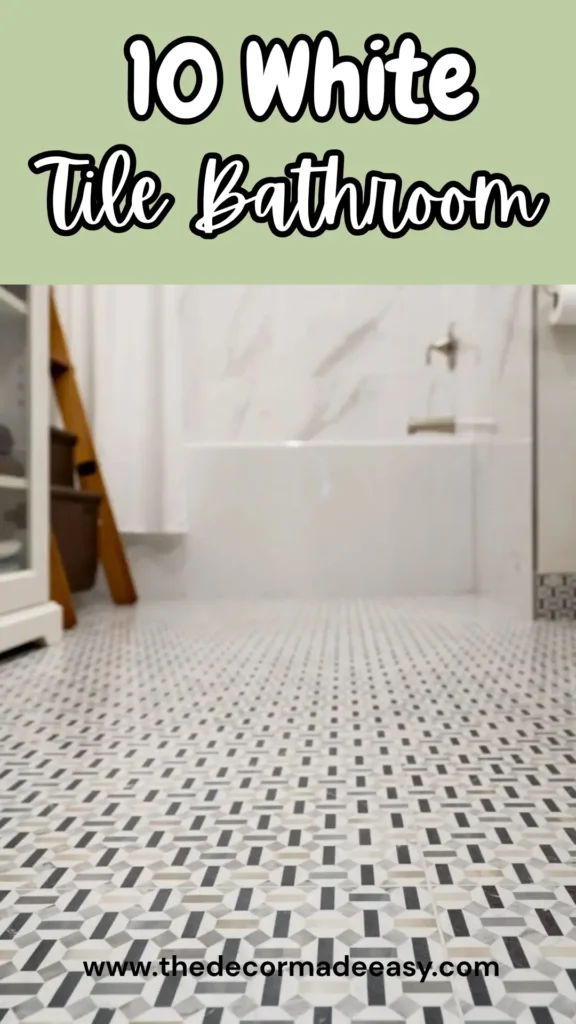
The mosaic is a complex geometric pattern: white oval pieces surrounded by charcoal rectangular cuts, with pale buff accents, all fitted together in a repeating octagon-and-dash format. It reads like a Victorian or Edwardian geometric mosaic but executed in natural stone with subtle, contemporary neutrality.
The walls show a white Calacatta-look tile with soft grey veining. Clean, classic, and deliberately unpatterned so the floor can command full attention. A small mosaic border strip runs as a baseboard detail near the toilet, a quiet nod to the floor’s geometric language without repeating it directly. The white storage unit has glass panels, and a wooden towel ladder leans against it, adding natural warmth to what could otherwise feel overly polished.
What I appreciate is that this floor doesn’t try to be anything other than itself. It’s not chasing a trend or a specific era. It’s a well-crafted geometric stone mosaic in neutral tones, and it’ll look just as good in twenty years.
For anyone planning a white tile bathroom reno: This is the argument for spending money on the floor instead of spreading the budget evenly. A plain wall with an exceptional floor will always outperform an exceptional wall with a plain floor.
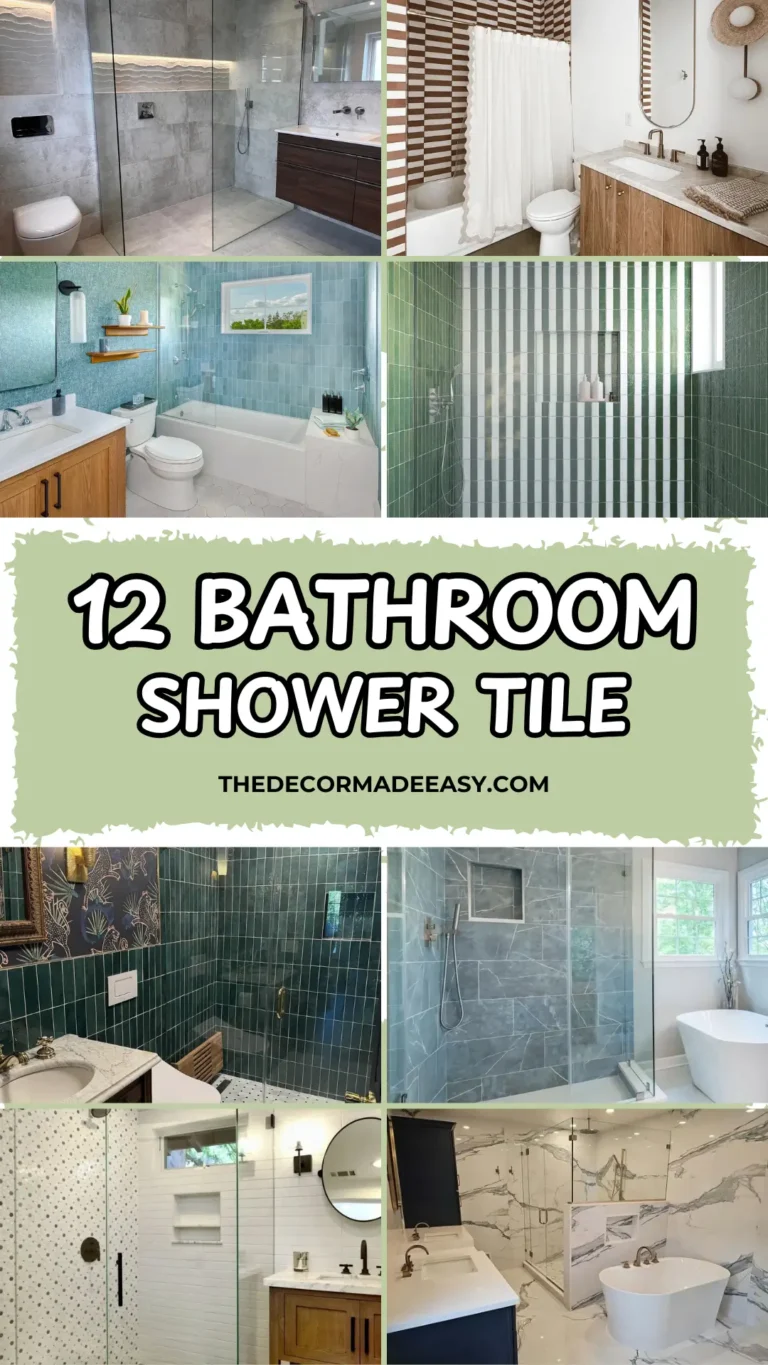
Also Read: Stop Ignoring Your Shower: 12 Real-Life Shower Tile Ideas That Actually Work
Vertical White Stack Bond Tile with Warm Timber Vanity and Brushed Gold: The Serene Approach
This is the one I keep coming back to. There’s a quality of calm here that the others, with all their pattern and personality, don’t quite achieve.
The main wall is covered in vertical slim white tiles, sometimes called “fin tile” or “matchstick tile,” laid in a straight vertical stack bond. The format is thin (roughly 25mm wide), and the vertical orientation draws your eye upward in a way that makes the ceiling feel elevated. The texture is subtle and matte, catching light softly instead of bouncing it.
The timber vanity (a warm mid-tone oak or similar) is the emotional anchor. Against all that white, the wood grain reads as genuinely organic and warm. Brushed brass fixtures throughout: wall-mounted tap, shower fittings, ceiling-mounted rain head on its long curved arm, towel bar. A round arched mirror sits over the round vessel sink, and two spherical white bulb wall lights create lighting that feels residential instead of clinical.
A freestanding white soaking tub sits in a dedicated nook with a skylight above it. Possibly the best possible way to bathe, TBH.
The lesson: The format of white tile matters as much as the white tile itself. Vertical slim tiles read completely differently from horizontal subway tile, which reads differently from large-format square tiles.
If you’ve been shopping white tiles and wondering why they all look the same, look more carefully at format and lay direction. A vertical matchstick tile on a feature wall transforms a white tile bathroom from neutral to architectural. Pair it with warm timber and brushed brass, and you get something genuinely peaceful.
Final Thoughts on Making White Tile Bathrooms Work
What these ten bathrooms prove is that white tile isn’t a default. It’s a decision.
The spaces that succeed aren’t successful because they found the perfect shade of white or the most expensive fixture. They work because each one made clear choices about what role the white tile would play: field, frame, contrast, or connector.
The most useful takeaway? Every strong white tile bathroom has at least one deliberate contrast. Warm hardware against cool white. Dark grout against bright tile. A patterned floor against a plain wall. A material accent (timber, terrazzo, brass) that gives your eye a resting place.
Without that contrast, white tile sits flat. With it, white tile becomes the thing that makes the contrast sing.
Whether you’re working with a tiny powder room or a generous main bathroom, these ideas scale. Start by deciding what your white tile will support, and build outward from there.
What’s your white tile vibe? Are you team patterned floor, or are you ready to go bold with color? Either way, you’ve got options.