

There is something special about watching a child pick up a crayon and turn a blank dinosaur into a bright green, blue, or purple creature. One page can become a small adventure. A dinosaur coloring pages activity can also open the door to questions: What did T. rex eat? How big was a Triceratops? Where did dinosaurs live? The Smithsonian National Museum of Natural History uses dinosaur activities to help children observe dinosaur features, study fossils, and practice scientific thinking. Its educational resources also include drawing activities for dinosaurs such as Triceratops and Carnotaurus. Whether you need a free printable, an easy activity for younger children, or a more detailed page for older kids, these ideas give you plenty of ways to make coloring time more interesting.
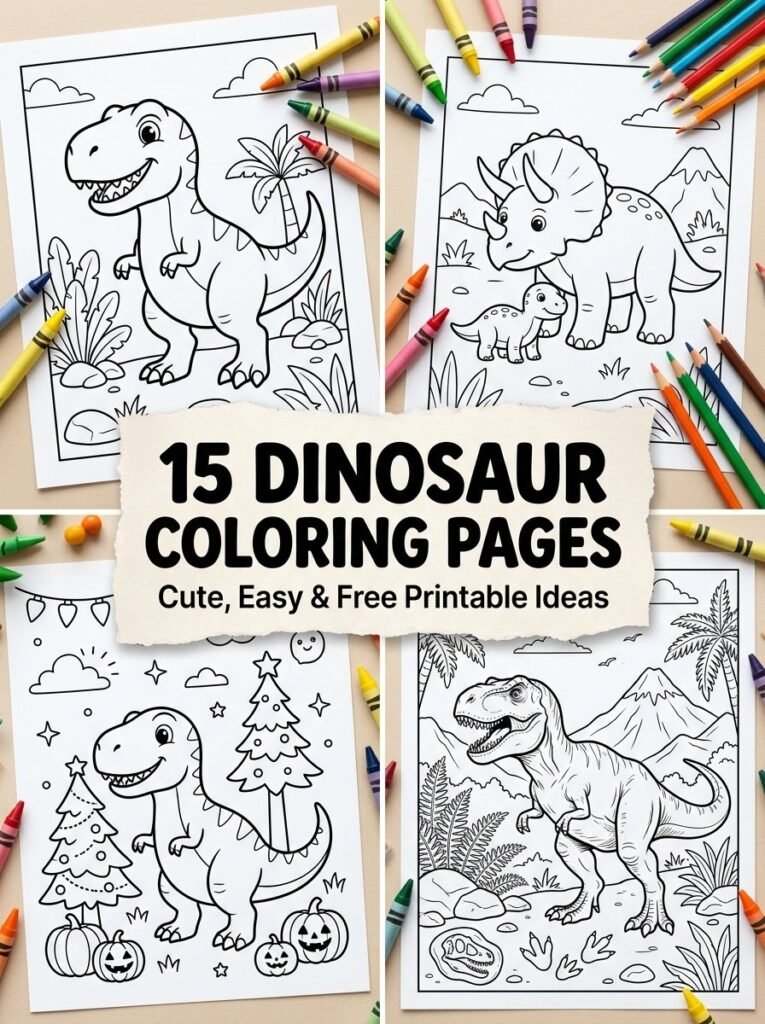
1. Cute T. Rex Coloring Page

Start with the dinosaur most children recognize. Draw a friendly T. rex with large feet, tiny arms, a long tail, and a big smile. Keep the shapes bold and simple so kids can color inside the lines without frustration. Let children choose their own colors. A green T. rex looks familiar, but a purple or orange one can make the page more playful. Add a few rocks, plants, and clouds around the dinosaur to turn a simple worksheet into a small prehistoric scene.
2. Easy Triceratops Page
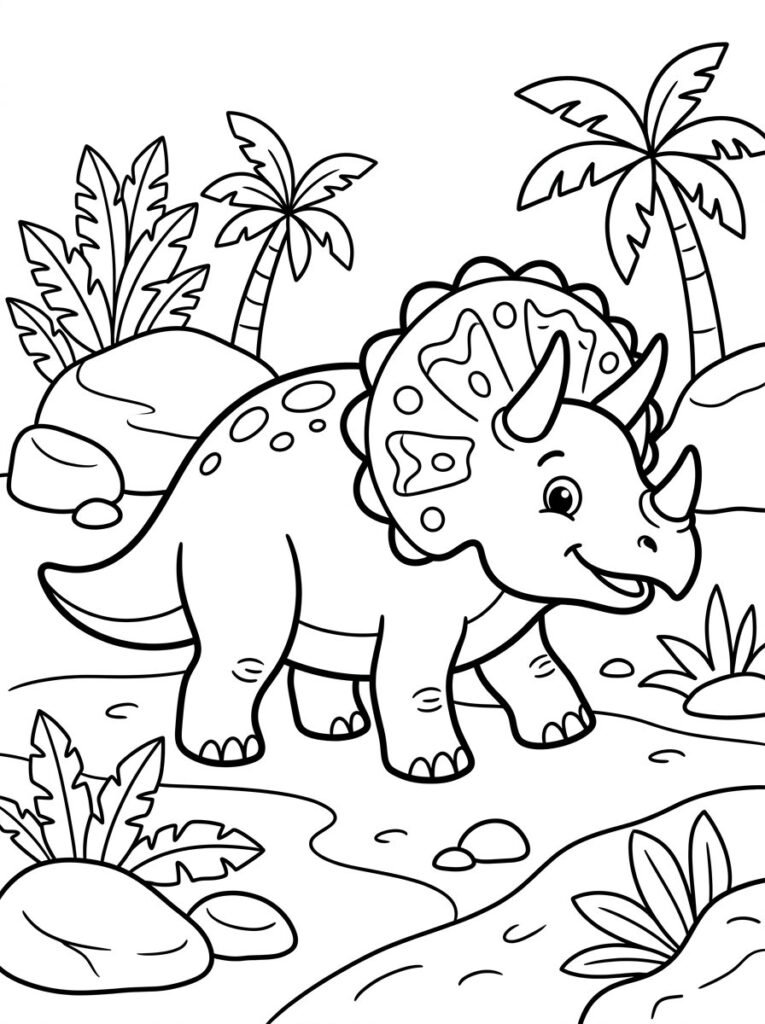
Triceratops works beautifully for younger children because its body has large, easy-to-color shapes. Give it three clear horns, a wide frill, sturdy legs, and a few simple plants around its feet. You can turn the activity into a quick science conversation. Ask your child to point out the horns and frill before coloring. The Smithsonian includes Triceratops among its dinosaur drawing resources, giving families another way to connect art with real fossil evidence.
3. Realistic Dinosaur Coloring Scene
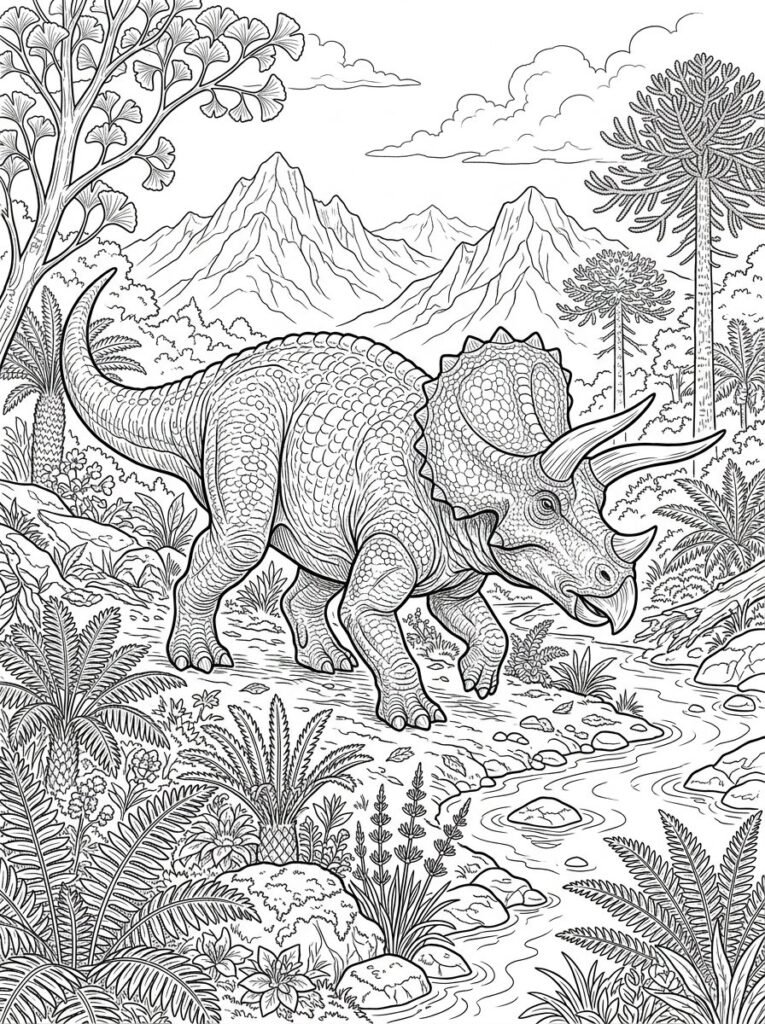
Older children may enjoy something closer to paleo art. Create a more realistic dinosaur with detailed skin texture, strong legs, a long tail, and a natural prehistoric environment. Keep the outline clear enough for coloring even with extra details. Add ferns, rocks, distant mountains, and a shallow stream. This type of page can lead to questions about how scientists reconstruct extinct animals from fossil evidence.
4. Free Printable Dinosaur Family
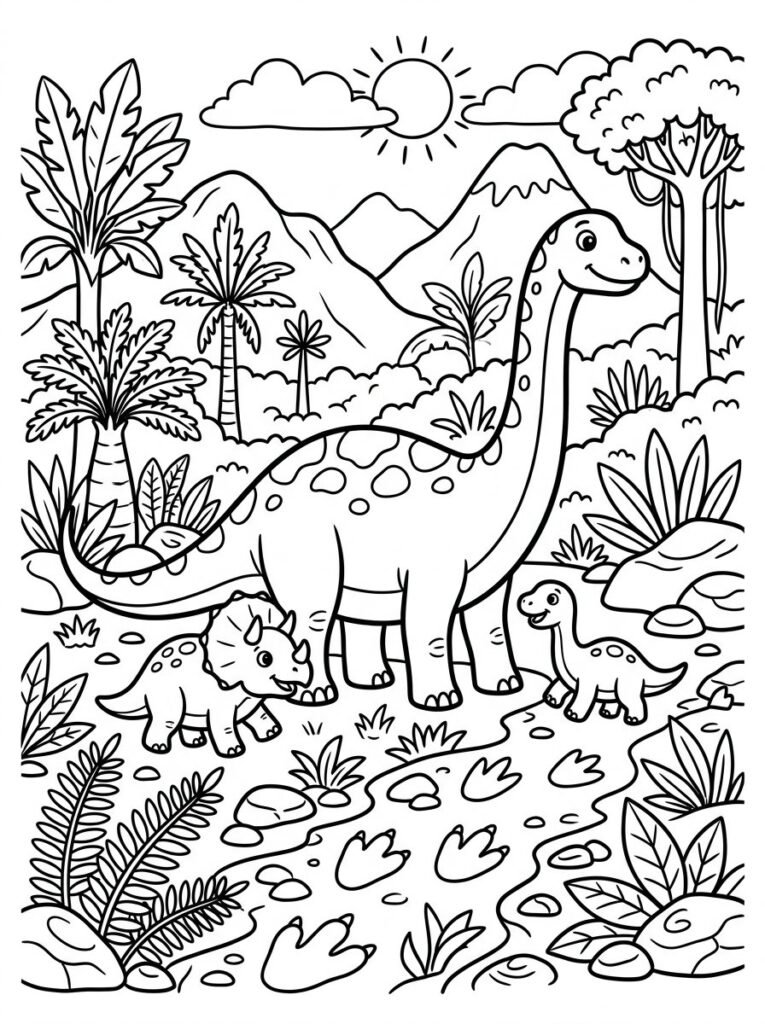
A dinosaur family scene makes a fun free printable for kids. Show a large adult dinosaur with two smaller young dinosaurs nearby. Give each one a slightly different pattern so children can experiment with colors. The scene can include trees, ferns, footprints, and distant hills. Encourage children to create their own family color theme. They might choose matching colors or make every dinosaur completely different.
5. Christmas Dinosaur Coloring Page
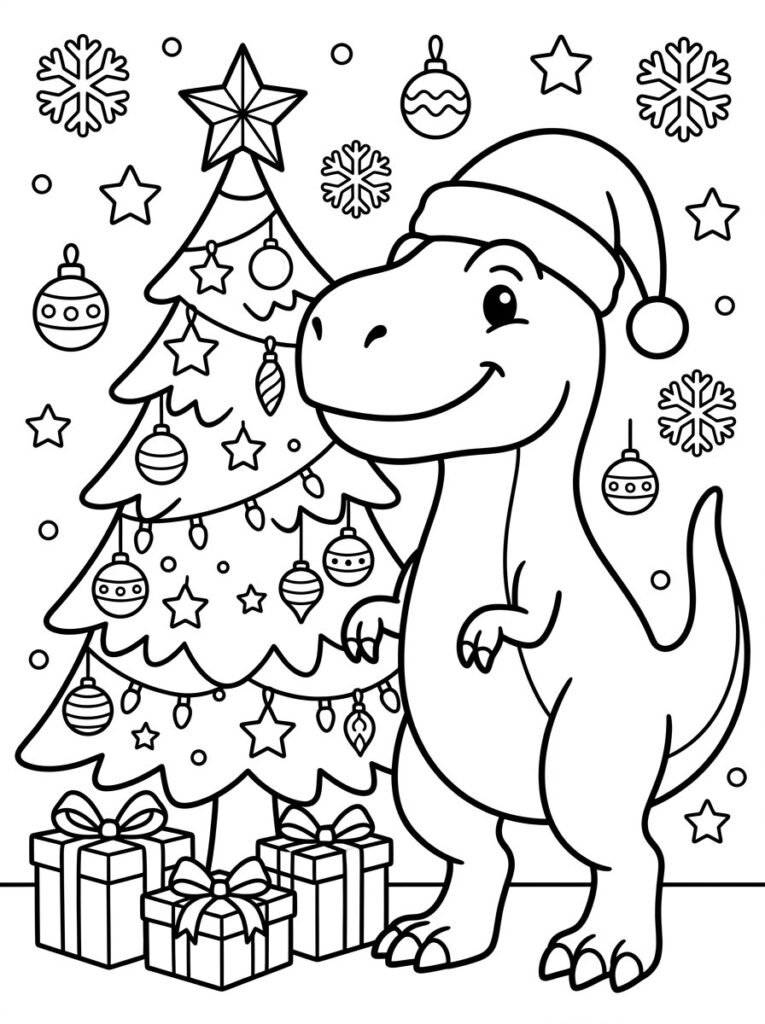
Who says dinosaurs cannot celebrate Christmas? Give a friendly T. rex a Santa hat and place wrapped presents near its feet. Add simple snowflakes, ornaments, stars, and a small decorated Christmas tree. Keep the details large enough for young children to color. Red, green, gold, and blue make an obvious starting palette, but children can create their own holiday dinosaur.
6. Halloween Dinosaur Coloring Page

For Halloween, turn a dinosaur into a playful prehistoric monster. Add pumpkins, bats, a crescent moon, spider webs, and a few simple bones around the scene. Keep the mood fun rather than frightening. A smiling T. rex wearing a tiny witch hat can work especially well for younger children.
7. Easter Dinosaur Coloring Page

An Easter theme gives you plenty of simple shapes to color. Place a baby dinosaur beside decorated eggs, flowers, butterflies, and a small basket. This design works especially well for preschool and early elementary activities. Use large eggs with simple patterns so children can create their own color combinations.
8. Dinosaur With a Name

Personalization makes a worksheet feel like it belongs to the child. Create a large dinosaur with a blank name area underneath so the child can write their own name. You can also make free printable with names versions for classrooms or birthday activities. Let children choose the dinosaur species and then decorate it with their favorite colors.
9. LEGO-Inspired Dinosaur Page

Building blocks and dinosaurs make a natural combination for imaginative play. Instead of copying a specific branded character, create a block-built dinosaur with simple geometric shapes. Children can color each section differently and then imagine they are designing their own dinosaur model. Add block-shaped rocks, trees, and volcanoes in the background.
10. Dinosaur and Robot Adventure

Mix prehistoric life with futuristic imagination. Show a friendly dinosaur standing beside a small robot explorer. Add a volcano, rocks, plants, and a few simple gears. This design lets children move beyond realistic scenes. They can decide whether the robot came from the future or traveled back in time to meet dinosaurs.
11. Dinosaur and Superhero Adventure

Children who love superheroes may enjoy a dinosaur page with an original superhero-style dinosaur. Give the dinosaur a flowing cape and a simple star emblem without copying any existing character. You can add clouds, buildings, mountains, or a prehistoric city in the background. The goal is simple: let the child invent the story while coloring.
12. Summer Dinosaur Coloring Page

A summer scene can turn coloring into a vacation adventure. Place a dinosaur beside a lake with a beach umbrella, flowers, clouds, and a small picnic basket. This summer design works well for travel activity packs because it feels playful without being tied to one holiday. Add large open shapes for younger children and extra background details for older kids.
13. Baby Dinosaur and Rex Friends

Baby dinosaurs make a gentle alternative to giant roaring creatures. Show a small Rex alongside two different young dinosaurs, each with a distinct body shape. Add simple footprints and plants so children can compare the dinosaurs. Which one has the longest tail? Which one has the biggest feet? Small questions like these can make the activity more interactive.
14. Dinosaur Egg Coloring Page
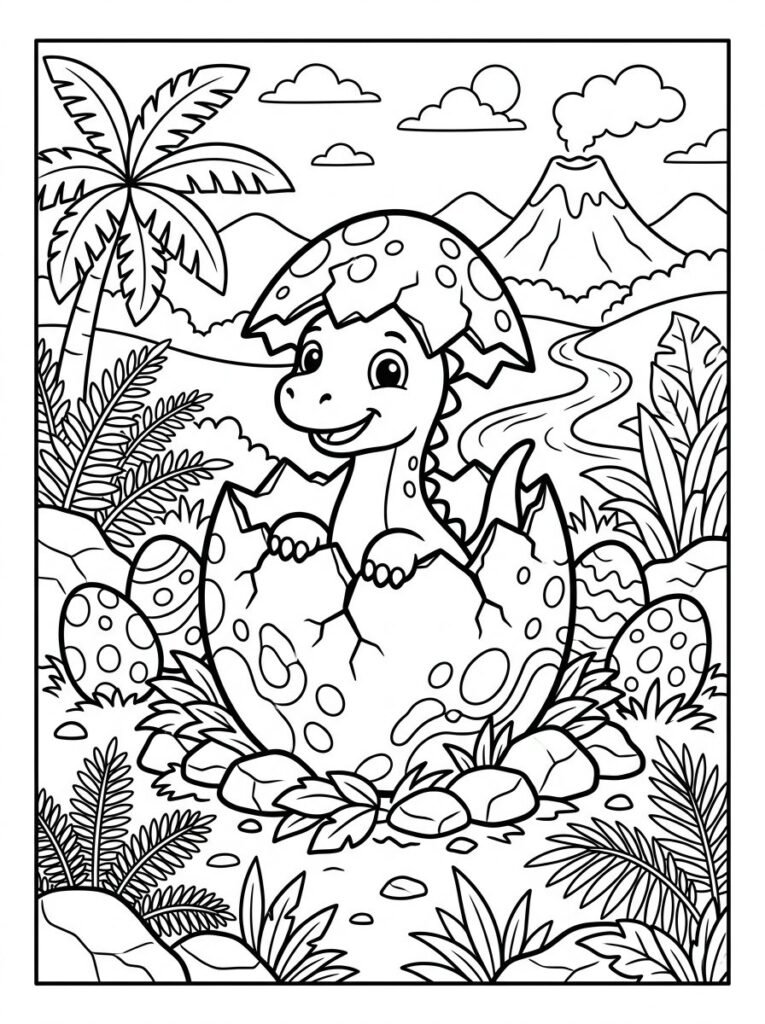
Dinosaur eggs give children a chance to color both the dinosaur and its surroundings. Draw a baby dinosaur emerging from a cracked egg, with several decorated-looking but natural eggs nearby. You can use this page to talk about fossils and how scientists learn about ancient animals. The Smithsonian explains that paleontologists study fossil evidence to understand ancient life, including dinosaur characteristics and environments.
15. Dinosaur Discovery Scene
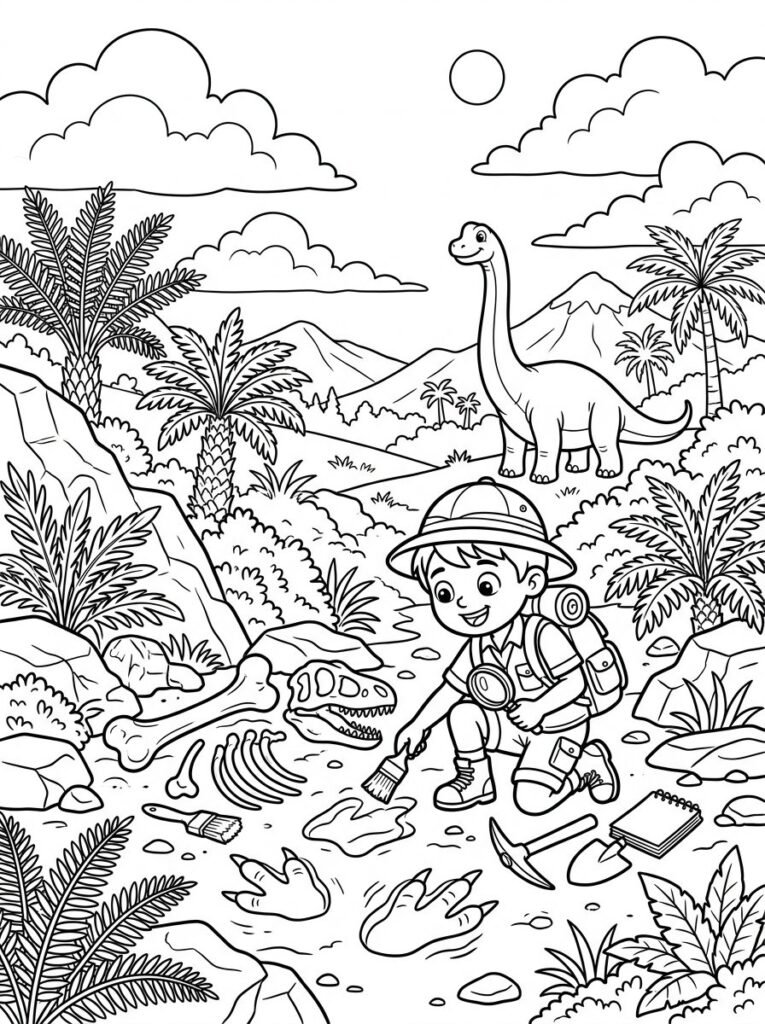
Finish with an adventure page. Show a young explorer discovering dinosaur footprints and fossils while a friendly dinosaur appears in the distant background. This combines coloring with curiosity about paleontology. The Smithsonian describes fossils as important evidence for understanding ancient life, environments, and changes through time. Its educational dinosaur activities also encourage children to make observations and think about evidence like scientists.
How to Make Dinosaur Coloring More Fun

Coloring does not have to end when the page is finished. Ask children to name their dinosaur, create a habitat, or invent a short story about what happened before and after the scene. They can also compare two dinosaurs by looking at their tails, feet, horns, teeth, or body shapes. That approach connects creative work with observation. The Smithsonian’s dinosaur education programs use observation of dinosaur characteristics and fossil evidence as part of science learning, showing how prehistoric themes can support more than simple entertainment.
Final Thoughts

The best dinosaur coloring pages give children more than something to fill with color. They create a starting point for stories, questions, drawing, and science. A T. rex can become a character. A fossil can become a mystery. A dinosaur egg can start an entire adventure. Keep a small stack of free printable dinosaurs ready for rainy afternoons, school breaks, birthday activities, or quiet weekends. Let children choose the page and colors themselves. There is no single correct way to color a dinosaur, and that freedom is part of the fun. For children who want to explore beyond coloring, Smithsonian resources provide dinosaur drawing activities and fossil-based learning materials that can extend the prehistoric adventure into science.

