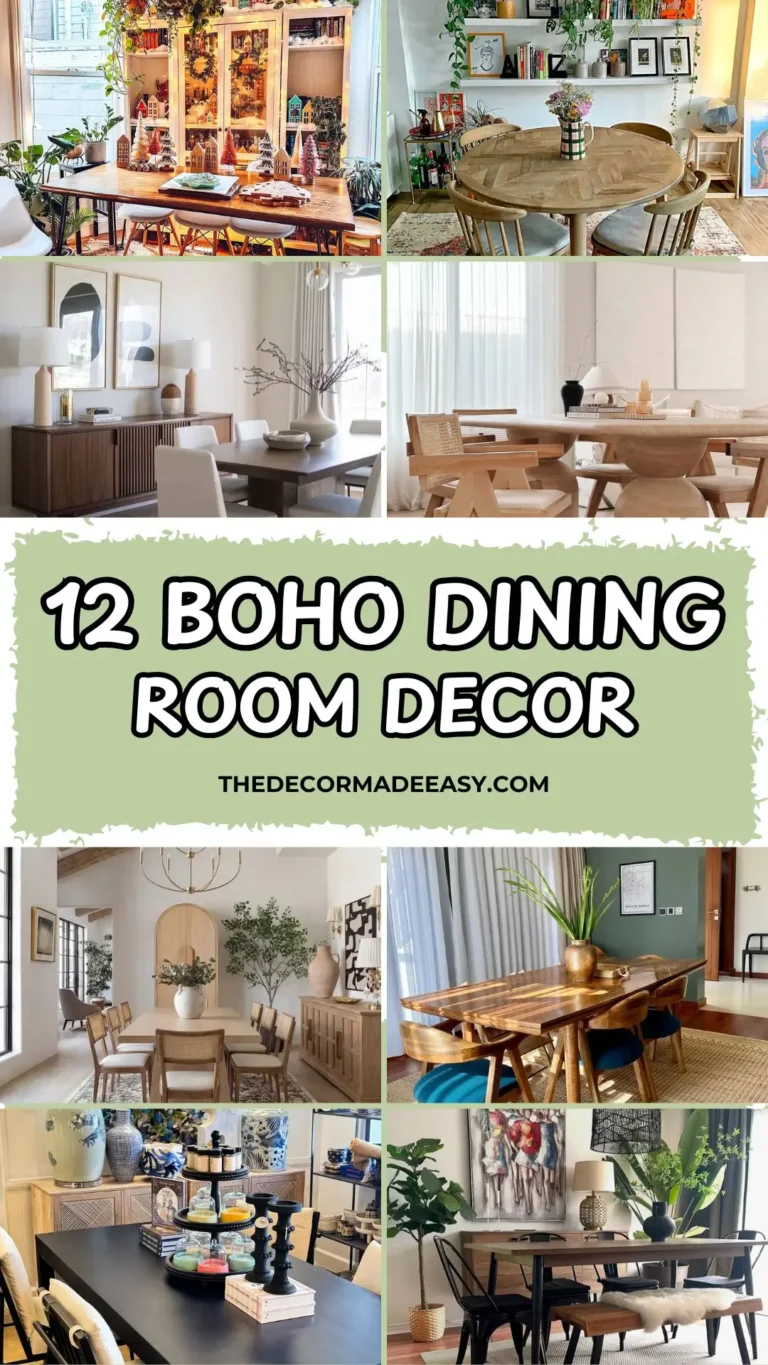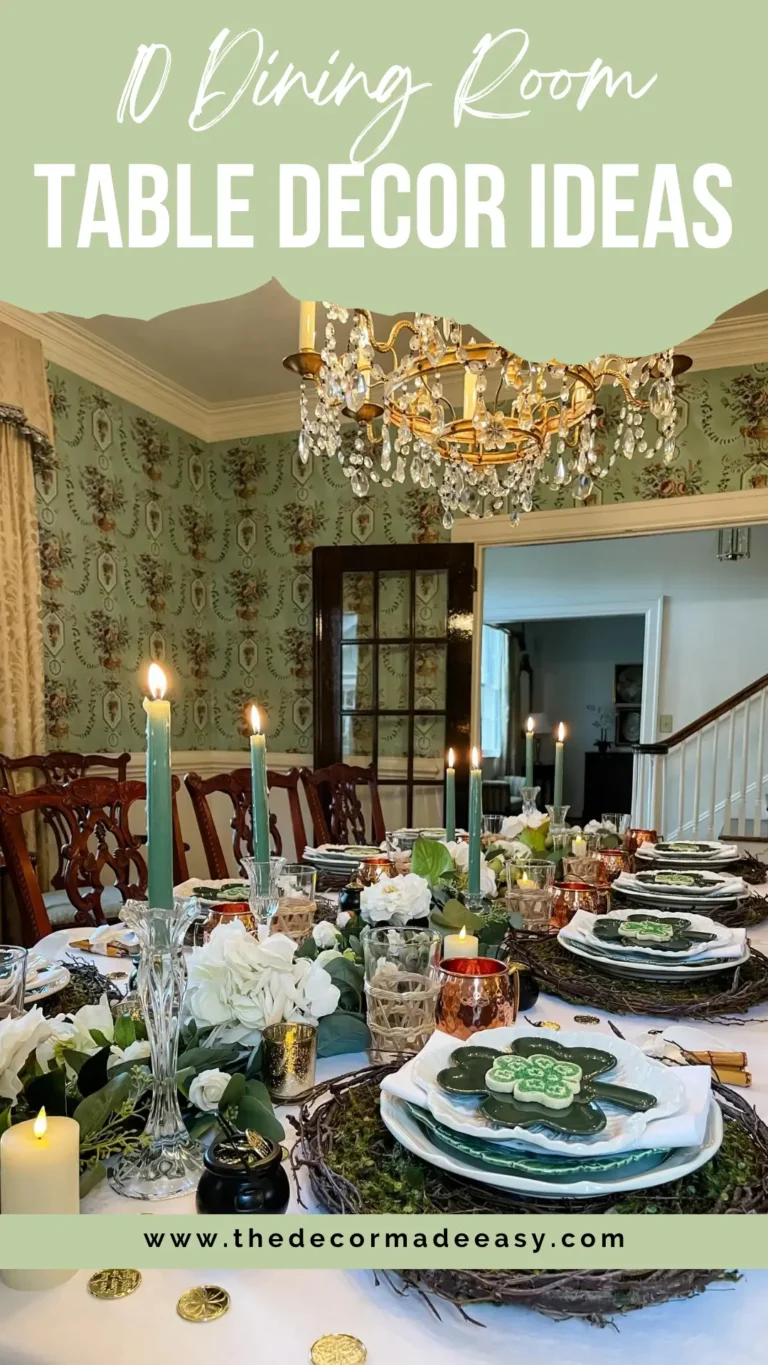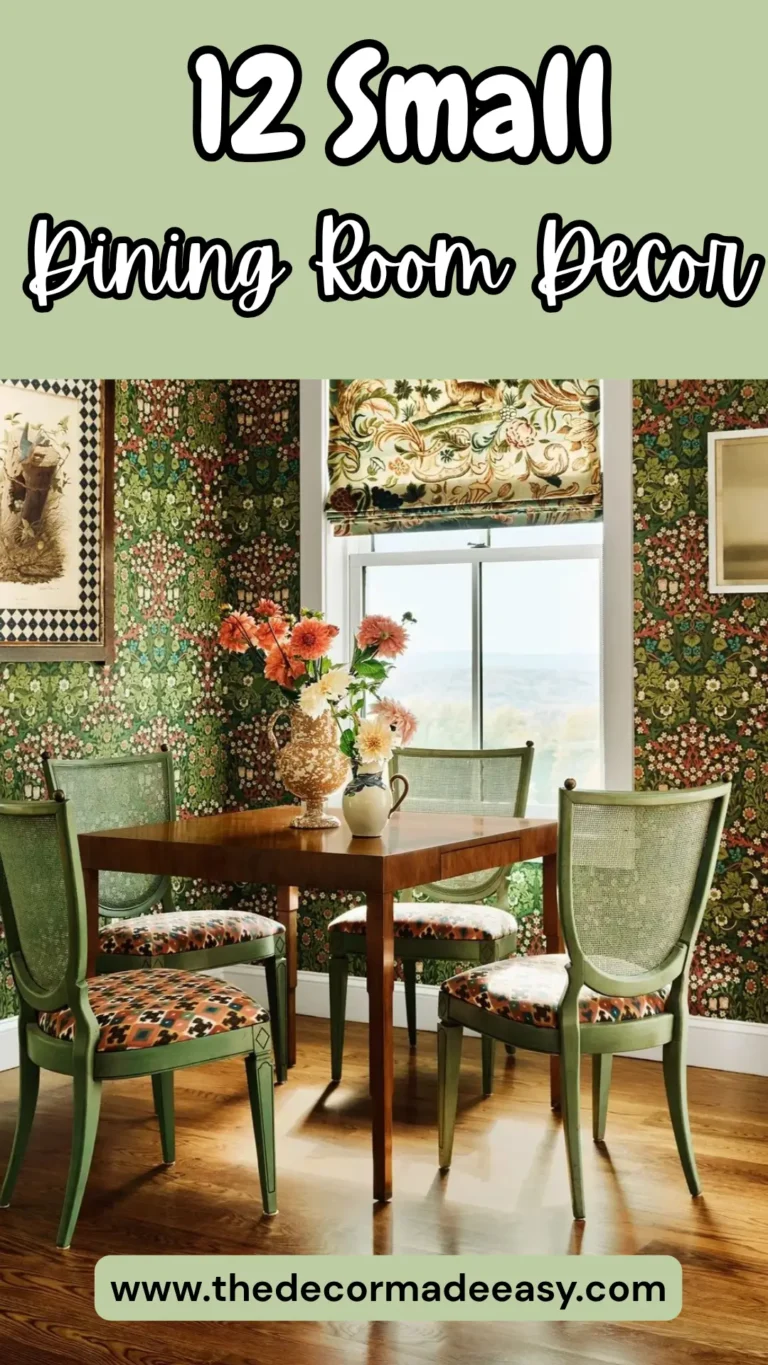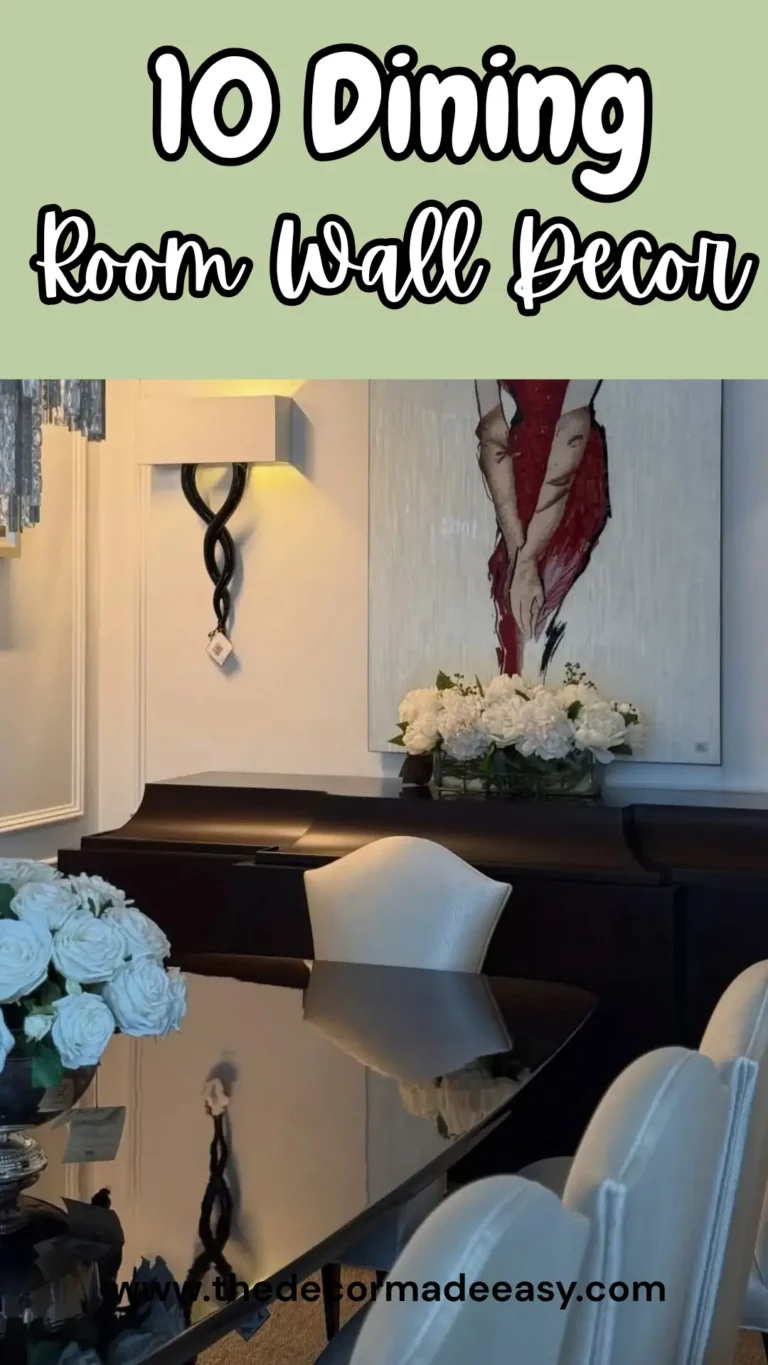
15 Dining Room Lessons to Steal (Even If You Don’t Have a Trust Fund)

Let’s be honest. Your dining room probably gets used twice a day, decorated once a decade, and thought about approximately never. Until someone’s coming over and you suddenly realize the whole space looks like it belongs to a stranger who has questionable taste and zero ambition.
I’ve been there. Staring at a room that’s technically functional but emotionally dead inside.
The good news? Transforming your dining room doesn’t require a trust fund or a degree in interior design. These 15 ideas come from real homes where real people figured out how to make their dining spaces feel intentional, beautiful, and actually worth sitting in.
Some are extravagant. Some are quietly practical. All of them have something worth stealing.
Romantic Vintage Tablescape with Crystal Chandelier and China Cabinet Display
There’s a specific type of dining room that feels like stepping into someone’s cherished past. This one absolutely nails it.
Picture this: a pale pink damask tablecloth layered under a pastel plaid runner. Amethyst-tinted goblets lined up with quiet authority. Slim pink taper candles rising from a garland of feathery green fern. Gold flatware catching light from a white crystal chandelier. Behind it all, a dark walnut china cabinet displaying floral-rimmed plates with the confidence of things that have always been there.
What makes this work is the layering. Each element on its own might feel like too much. Ornate carved chairs mixing white painted frames with darker wood. A floral rug underfoot. A botanical garden visible through the side window. Together, they read as intentional eclecticism rather than grandma’s cluttered attic.
The soft duck-egg blue walls hold everything together by keeping the background quiet while the table commands attention.
Why the China Cabinet Steals the Show
I particularly love how the china cabinet isn’t just storage here. It’s architecture. It anchors the far end of the room the way a fireplace would, giving your eye somewhere to land.
If you’ve inherited or collected fine china, displaying it instead of hiding it converts sentimental pieces into actual decor. Your great-aunt’s wedding china deserves better than a cardboard box in the basement.
How to Recreate This Look
Here’s your action plan:
- Mix white-painted furniture with one or two dark wood anchor pieces for contrast
- Choose a tablecloth in a soft neutral, then layer a runner in a subtle print on top
- Try amethyst glassware (seriously underrated choice that’s feminine without being precious)
- Display meaningful pieces rather than hiding them away
Warm Open-Plan Living-Dining with Indoor Plants and Global Accents
Not everyone has a dedicated dining room. And honestly? This image makes a strong case for embracing that reality rather than fighting it.
The dining table sits at the near end of a combined living and dining space. Warm yellow-ochre walls create continuity across the whole room. Dark teak chairs with high backs frame a rectangular table dressed in a cream-and-stripe runner. At the center, a small round tray holds a brass vessel, ceramic canisters, and a touch of green. Both practical and decorative.
Small brass bells hang from a curtain rail near the window. A tripod-legged lamp stands in the background beside an eclectic collection of artwork, plants, and carved figures.
The Magic of Meaningful Objects
This is a home filled with objects that mean something. The Buddha figurine on a shelf. The framed Indian-style painting near the window. The string of bells. These weren’t purchased as a set from HomeGoods during a weekend shopping spree. They accumulated over time in a home where people travel or hold onto things that hold memories.
The design lesson here is about intentional layering within open-plan spaces. Rather than treating the dining area as a separate room needing its own distinct decor, this space reads as a cohesive whole because the color palette flows uninterrupted. The ochre walls, warm wood tones, and cream textiles connect every zone without walls or barriers.
Tips for Open-Plan Dining Areas
- Use a consistent wall color and let the furniture do the zoning
- A slightly different rug can delineate the dining space from the lounge without partition walls
- Let meaningful objects accumulate on surfaces rather than filling them with matched sets
- The mix is what gives a space its character (and its soul, IMO)
Moody Dark Accent Wall with Industrial Pendant and Earthy Ceramics
This room surprised me the first time I looked at it. My instinct said the dark charcoal accent wall behind the table would feel oppressive in a smaller dining space.
It doesn’t.
The wall is a deep, near-black charcoal. It works because everything else is calibrated to it. The dining table is black. The rectangular industrial pendant light overhead is black and concrete. The ceramics on the table repeat those two tones precisely: a textured dark vessel and a matte white amphora-style jug filled with eucalyptus branches.
The chairs have tan upholstered seats that break the darkness just enough. An arched mirror on the dark wall reflects the room back at itself, which is a smart trick for expanding a space visually.
The Difference Between Moody and Gloomy
What makes this approach work is the commitment to contrast. The walls adjacent to the accent wall are white. The shutters are white. The bowls on the plates are white. The room isn’t dark everywhere. It’s dark in one deliberate place, and everything else responds to it.
That’s the difference between a moody dining room and a gloomy one. Commit to one dark moment, not dark everywhere.
The eucalyptus in the ceramic vase is doing real work here. Greenery against a dark wall reads more vibrantly than it would against white. The contrast amplifies both. I’d recommend this pairing to anyone who wants their dining table centerpiece to feel bold without spending a fortune on florals.
How to Try This Approach
- Paint one wall in a deep tone (charcoal, forest green, or deep navy all work)
- Keep the remaining three walls white or off-white
- Choose a table and pendant in the same dark tone as the wall
- Bring in contrast through upholstered chair seats, ceramic tableware, and greenery
Also Read: 10 Luxury Living Room Ideas That Actually Work in Real Homes
Contemporary White Luxury Dining with Sculptural Ceiling Details and Tambour Wood Table Base
Some dining rooms are designed to impress. This one doesn’t pretend otherwise.
The ceiling is the first thing you notice. A white geometric coffered design with rounded cutouts, like a three-dimensional tile pattern. It’s an architectural detail that functions as decor. It anchors a multi-ring LED chandelier that spirals in gold-centered circles.
Below it, a dining table with a tambour-style fluted wooden base supports what appears to be a stone or glass top. Six chairs upholstered in cream boucle fabric with taupe lower backs surround the table. Wall panels with vertical ribbing flank a dark geometric 3D artwork mounted between two circular brass wall sconces.
Borrowing from High Design
Look, this is a high-design, planned-from-scratch dining room. Not something most people replicate wholesale. But there are individual ideas worth borrowing.
The fluted table base specifically is a detail gaining popularity in contemporary interiors. It adds warmth and texture to an otherwise minimal form. You can find dining tables with similar profiles at various price points.
The other lesson is about wall treatment as artwork replacement. The fluted panel molding on the walls is relatively affordable as a DIY project. It adds architectural interest that makes art almost unnecessary. The single dark sculptural piece centered on the wall reads as a focused choice rather than a gallery afterthought.
Budget-Friendly Application
For dining rooms with standard flat walls, consider adding paneling or wall molding in a simple grid pattern. It costs far less than most people assume and significantly elevates the perceived quality of the space. Seriously, YouTube tutorials exist. You can do this.
Serene Neutral Dining Room with Natural Stone Fireplace and Slipcover Chairs
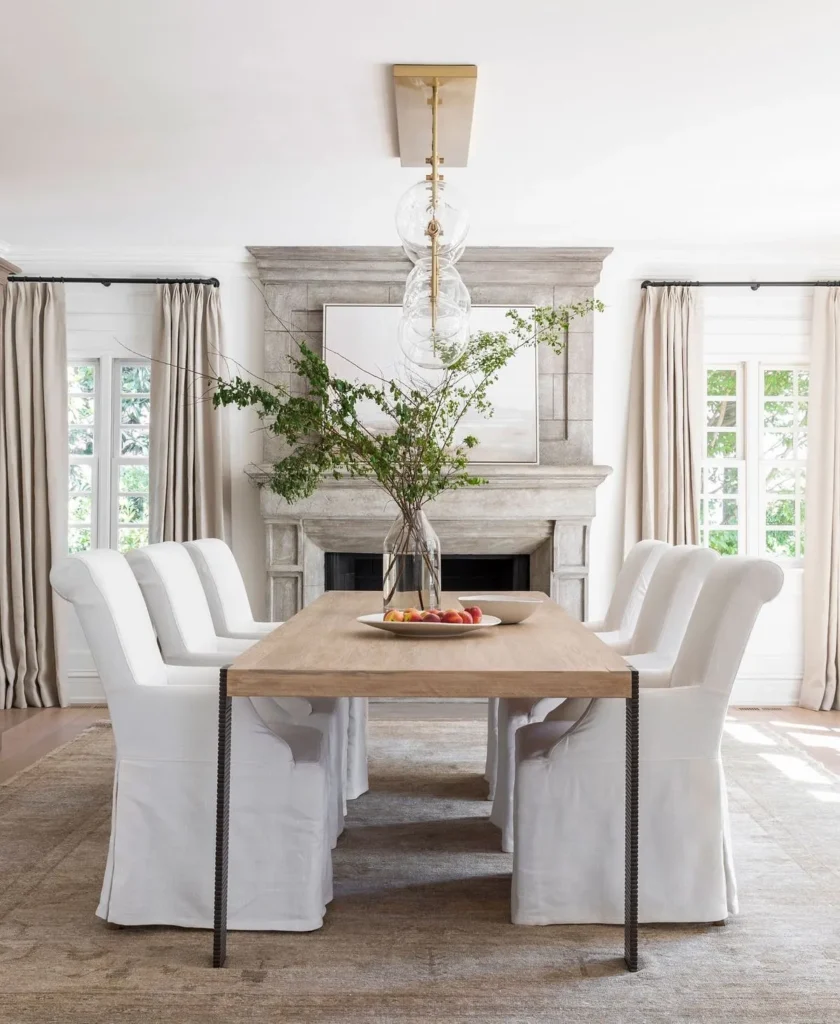
This might be the most refined dining room in this collection. And it achieves that refinement almost entirely through restraint.
The room is built around a natural limestone fireplace surround that takes up most of the back wall. Weathered, textured, and unmistakably old-world. A bleached oak dining table in a simple rectangular form sits in front of it. White slipcovered chairs with full-length covers reach the floor. A glass globe pendant light in brushed brass descends from the center. A clear vase of birch branches with small leaves forms the only centerpiece.
On the table, a ceramic dish holds a handful of peaches. Linen drapery panels in warm cream frame two tall French-style windows on either side of the fireplace.
The Secret Weapon: Slipcovered Chairs
Everything here is earned, not added. The chairs use slipcovers, which are typically a practical solution. Here they elevate into something sculptural. White slipcovers flowing to the floor create a formal silhouette without the cost of bespoke upholstered chairs.
This is a genuinely useful insight for dining rooms that need to look elevated on a budget. Slipcovers aren’t just for hiding ugly furniture. They can be a deliberate design choice.
Lessons in Color Discipline
The fireplace is clearly a fixed architectural feature. But the point about natural stone as a focal point applies elsewhere. A fireplace surround in this room essentially does the work of wall decor, a credenza, and a mirror combined. If you’re fortunate enough to have one, build your dining room around it rather than treating it as a backdrop.
What I find most instructive here is the color discipline:
- Everything is white, cream, bleached oak, or limestone grey
- The peaches on the table are the most saturated color in the room
- They read like an accent
That’s how neutral rooms stay interesting. Through texture and material variation rather than color variety.
Blue-Grey Georgian Dining Room with Oil Paintings and Antique Persian Rug
There’s a particular type of dining room decorating approach I think of as collected rather than designed. This room is its best expression.
The walls are painted in a muted blue-grey that extends to the ceiling. It creates an enveloping, salon-like atmosphere. Crown molding and wainscoting in the same tone keep the room from feeling divided.
An antique walnut round table with a carved pedestal base sits on a large rose-pink Persian rug with intricate medallion patterns. The rug alone has more color and pattern than most rooms would dare. Upholstered side chairs in a small-scale diamond weave fabric surround the table. One carved wood accent chair in coral sits to the side.
Art as Soul
The artwork is the soul of this room. A large oil painting with a gold frame dominates the fireplace wall. Two smaller still-life paintings flank it. A third floral painting in a gold frame anchors the right wall. Silver footed compote vessels on the mantle add ceremonial weight. The brass candlestick chandelier has a patinated, worn quality that reads as authentically old rather than reproduction.
The Single-Color-Everywhere Approach
What works here is the tonal commitment. The walls, ceiling, and molding are all the same color. The room’s color story comes entirely from the rug, artwork, and upholstery rather than paint variation.
This single-color-everywhere approach is common in traditionally decorated English and American dining rooms. It creates a sense of intimacy. You’re inside the color rather than looking at it.
The Persian rug on hardwood floors is doing considerable heavy lifting. If you’re working with a round table, a round rug creates balance. But a rectangular antique rug like this one gives the room a sense of collected history. The slight mismatch between round table and rectangular rug actually helps the room feel less rigid.
Also Read: Most Shelf Styling Advice is Useless: 10 Real-Life Ideas That Actually Work
Ultra-Luxury Modern Dining Room with Mirrored Coffered Ceiling and Grand Crystal Chandelier
This is a dining room from a different category entirely. It exists at a scale where words like “entertaining” and “hosting” take on professional dimensions. We’re talking seated dinner for fourteen, not pizza night with the kids.
A marble-top dining table with a rounded rectangular form and a satin gold sculptural base seats twelve to fourteen people. The chairs are upholstered in dusty rose-taupe velvet with curved barrel backs and dark wood legs. Formal but not stiff.
Above the table, a cascading crystal chandelier with hundreds of individual crystal droplets hangs from a dramatic coffered tray ceiling with a dark mirror inset. The mirror reflects the chandelier into infinity below. Recessed LED cove lighting in warm amber outlines the tray ceiling edge.
A walnut built-in display niche with internal lighting occupies the left wall. Sheer floor-length curtains diffuse natural light from the right.
The Mirrored Ceiling Trick
The mirrored ceiling inset is the architectural move worth studying closely. Rather than a standard reflective surface, it’s a dark smoked mirror. It reflects without brightening, creating depth rather than glare.
The chandelier reflecting downward into the marble table surface and upward into the dark mirror creates a visual axis. It makes the room feel taller and more theatrical than its actual dimensions.
What Regular People Can Learn
For those working with conventional spaces, the lesson is about vertical visual interest:
- A standard ceiling with a statement pendant is good
- A ceiling with an intentional tray detail framing that pendant is better
- Even a painted tray ceiling in a slightly different shade from the walls adds architectural interest without structural work
The marble table deserves its own mention. Stone-top dining tables are increasingly available at accessible price points. The visual weight they bring creates a sense of permanence and material richness that’s difficult to replicate with wood or composite surfaces.
Dark, Dramatic Victorian-Inspired Dining Room with Blue Velvet Chairs and Antique Persian Rug
Dark dining rooms divide people fairly evenly. I’m firmly in the camp that finds them extraordinary. This image makes the best possible argument for anyone sitting on the fence.
Every surface is deep forest green. Walls, ceiling, and moldings painted continuously in the same verdant, near-black tone. Against this, a mahogany oval dining table with carved pedestal bases reflects back a high gloss that catches the crystal chandelier above.
The chairs are upholstered in teal-blue velvet. The color shifts between teal and sapphire depending on the light. Beneath it all, a large antique Persian rug in rose, red, crimson, and navy creates a layer of warm color that keeps the room from feeling cold.
Go Big or Go Home with Centerpieces
The centerpiece arrangement is ambitious. A large dark ceramic ginger jar filled with dramatic, oversized tropical foliage: banana leaves, protea stems, and palm fronds in autumnal amber and green. It’s the arrangement you’d find in a club or an estate. Confident to the point of being theatrical.
I respect the commitment.
Why Dark-on-Dark Works
What makes dark-on-dark rooms succeed is material variation within a limited palette. The dark walls, dark table, dark chandelier, and dark ceramic vase work together because their surfaces differ:
- Matte plaster
- Gloss wood
- Sparkling crystal
- Textured ceramic
Run your hand across each surface and you’d feel something completely different, even if the color values are similar.
The antique chest in the corner, the marble fireplace surround, and the framed landscape paintings all serve as anchors. They give historical weight to the dramatic color choices. Dark rooms work best when they’re furnished with pieces that feel earned rather than assembled from a single shopping trip.
Bold Black-and-Gold Sintered Stone Dining Table with Crushed Velvet Chairs
Sometimes a dining table is simply the point. The furniture equivalent of a statement jacket that makes people ask “where did you get that?”
This table features a sintered stone top in deep charcoal-black with dramatic gold veining running diagonally across the surface. The veins are wide, confident, and thoroughly decorative in a way that natural marble never quite achieves.
Six chairs upholstered in crushed bronze-champagne velvet surround it. Their curved barrel backs echo the table’s contemporary proportions. The table base is a matte black X-frame in heavy steel. A single brass lantern-style ornament sits at the center.
Understanding Sintered Stone
Sintered stone surfaces are worth understanding if you’re shopping for dining tables. Sometimes sold under brand names like Dekton or Lapitec, they’re fired under extreme heat to create a non-porous surface. They resist scratches, heat, and staining at a level real marble never achieves.
The veining can be made more dramatic and consistent than natural stone allows. That’s why this table’s gold lines look so bold. It’s engineered beauty, and honestly? I’m here for it.
The Case for Crushed Velvet
The crushed velvet chair upholstery is a choice I’ve warmed up to slowly. It reads rich and tactile in person in a way photographs don’t quite capture. Against a dark stone table, it adds warmth and texture that leather or woven fabric can’t provide.
Maintenance is a concern. Velvet chairs require more attention than sealed fabric. But for dining rooms used on occasion rather than daily, it’s a worthy trade.
Also Read: How To Fix A Boring Space Using 15 Mid Century Modern Living Room Ideas That Work
Contemporary Open-Plan Dining with Tiered Crystal Chandelier and Curved Barrel Chairs
This room represents the contemporary Malaysian and Southeast Asian interior design approach that has been gaining significant global attention. And for good reason.
The dining table has a grey stone or ceramic top with a dark base. It’s set with white plates, wine glasses, and a beaded black vase filled with eucalyptus. Six curved barrel chairs in warm grey fabric surround it.
Above, a tiered drum chandelier in black metal with crystal fringe serves as the room’s dominant visual statement. Five tiers of descending crystal rods. The ceiling has recessed linear LED strips defining a tray detail around the chandelier.
The background opens into a living space with taupe linen curtains in a dramatic floor-to-ceiling installation. A cream sofa sits beside a built-in TV niche with integrated lighting. Three large-format botanical prints in black frames line the dining room wall alongside a large clock.
Balancing Formal and Relaxed
What stands out is how deliberately this room balances formal and relaxed. The crystal chandelier suggests formality. The barrel chairs in fabric suggest comfort. The botanical artwork and clock suggest a lived-in, personal space rather than a showroom.
That balance is hard to achieve and easy to throw off. Too far one direction and the room becomes either cold or casual.
The Updated Crystal Chandelier
The tiered crystal chandelier specifically is worth noting as a dining room lighting choice. Unlike traditional crystal chandeliers which reference Victorian-era design, the black metal frame here updates the look into contemporary territory. It keeps the drama and light-refracting quality while feeling modern.
It works because the black frame matches the table base and chair legs. The chandelier feels part of a considered palette rather than a retrofitted accessory.
Traditional Dining Room with Chinoiserie Wallpaper, Blue Upholstered Klismos Chairs, and Dual Fireplaces
This is one of the most layered and visually rich dining rooms in this entire collection. And it earns every layer.
Chinoiserie wallpaper covers the walls. The kind with hand-painted birds, flowering branches, and delicate foliage on a cream background. The pattern is traditional de Gournay-style botanical illustration. The kind that made this wallcovering category famous in English country houses.
Against it, a rectangular mahogany dining table with a turned pedestal base is surrounded by Klismos-style chairs. Dark mahogany frames with teal-blue upholstered seats and backs in a small-scale geometric print.
A white marble fireplace stands at the far end with an elaborate gold-framed figurative oil painting above it. Tall white taper candles flank it. A crystal and brass chandelier with candle-style arms hangs above. To the left, a dark wood sideboard carries a lamp, flowers, and decorative objects. An antique Persian rug in rose, blue, and red covers the floor beneath the table.
A Masterclass in Color Bridging
The collision of patterns here should be overwhelming. Chinoiserie wallpaper. Geometric upholstery fabric. Persian rug. Figured oil painting.
It isn’t overwhelming because of a masterclass in color bridging:
- The teal in the chair upholstery pulls from both the chinoiserie wallpaper’s leaf tones and the rug’s blue notes
- The mahogany wood connects table, chairs, and sideboard
- The gold frames connect the chandelier to the picture frames
- Every element shares at least one color or material connection with something else in the room
Using Wallpaper in Dining Rooms
If you want to try wallpaper in a dining room, this approach is worth studying. Chinoiserie patterns work particularly well in dining rooms because their scale and drama reward a space used for special occasions rather than daily traffic.
Your dining room doesn’t need to be subtle. It needs to be memorable.
Cherry Blossom Wallpaper Dining Room with Rectangular Crystal Pendant and Gold Charger Plates
There’s a blue-and-white and gold color combination that appears in traditional dining rooms across cultures. English, Chinese, French, American colonial. This room interprets it with particular freshness.
Cherry blossom wallpaper in white with grey-and-white branches covers every wall. It creates an immersive botanical setting. The lower third of the wall is finished in traditional wainscoting in white, which grounds the pattern.
A rectangular crystal pendant light in brass-framed metal hangs above a charcoal-grey dining table. The table is set with gold charger plates, layered blue-and-white patterned dishes, grey linen napkins, and a brass candelabra centerpiece on a striped runner.
In the corner, a white upright piano carries ceramic ginger jars with bare branches. A small framed portrait sits beside a wrought-iron decorative stand. Cane-back chairs painted white surround the table.
The Full Wallpaper Commitment
The bold decision here is committing to wallpaper over every wall rather than a single accent wall. Most people wallpaper one wall, hedging against commitment. This room goes full immersion.
And it transforms the space into something genuinely special. The cherry blossom pattern at this scale reads as an environment rather than decoration. You’re dining inside the pattern.
Versatile Cane Chairs
The white-painted cane chairs are a particularly versatile choice worth noting. Cane dining chairs with painted frames are available at almost every price point. The weave pattern adds texture without visual weight.
When painted white, they recede behind the wallpaper rather than competing with it. Which is exactly right.
The gold charger plates against the grey table top provide warmth without adding color complexity. If you’re working with a patterned wallpaper, this neutral-but-metallic table setting approach lets the room’s personality come through without the table competing.
Coastal Dining Room with Rattan Chandelier, Watercolor Gallery Wall, and Blue Cabinetry
Coastal design in dining rooms tends toward two failure modes. Too literal: ships wheels, anchor motifs, the word “beach” spelled out in driftwood letters. Or too restrained: everything beige, nothing memorable.
This room threads the needle perfectly.
A bleached oak dining table in a simple, chunky rectangular form is surrounded by white upholstered armless chairs with a tight boucle-like fabric. Above it, a large-scale rattan chandelier woven from natural cane or twisted organic material serves as the room’s centerpiece overhead fixture.
It reads as organic and handcrafted. Like something found at a coastal artisan market rather than specified from a catalog.
The Gallery Wall Done Right
The back wall features a six-panel gallery arrangement of watercolor seascape prints in warm wood frames. Each depicts coastal scenes with sea grasses, shorelines, and calm water. Two brass picture lights illuminate the gallery from above.
To the left, a steel-blue painted built-in cabinet with glass upper panels displays white ceramics and organic accessories. A white ceramic ginger jar filled with white hydrangeas sits on the table beside a stone fruit dish with apples and pears.
Why Rattan Chandeliers Work Everywhere
The rattan chandelier specifically is worth calling out as a dining room lighting strategy. Natural fiber chandeliers have become one of the most versatile options available because they work across coastal, organic modern, and Scandinavian-adjacent styles.
They diffuse light warmly. Their texture provides visual interest without the visual weight of metal or crystal equivalents. Plus, they’re generally more affordable than their metal counterparts.
The gallery wall arrangement here is symmetrical and grid-based. Six prints in two rows of three. It brings order to what could otherwise feel casual. If you’re building a gallery wall for a dining room, stick to a cohesive subject matter and consistent frame finish.
All-White Modern Luxury Dining Room with Sculptural Dark Red Crystal Pendant
This room presents what I’d describe as the most confident design decision in this entire collection.
A white room with a single, extraordinary pendant light that looks like a mid-air explosion of dark garnet crystals.
The space is otherwise almost entirely white and grey. White wall panels with shallow molding. White coffered ceiling with recessed lighting. White marble floors with subtle veining. White upholstered dining chairs surrounding a white-topped table.
A large frameless mirror on the left wall doubles the room. A white sideboard with dark graphic botanical etching in silver-grey stands against the wall beside the mirror.
The Star of the Show
And then there’s the pendant.
Hundreds of deep burgundy-red irregular crystal or resin fragments suspended on fine wire. They cascade downward in an organic cloud formation. Each piece catches light differently, shifting between garnet, ruby, and near-black. The visual weight of the fixture against the white room is arresting.
This is the maximalist-minimalist approach. Create an environment of studied restraint and then allow one singular element to be extraordinary. The everything-white backdrop doesn’t compete with the pendant. It presents it. The room is essentially a gallery for the light fixture.
The Single Accent Chair Trick
One chair breaks the white pattern. A mauve-purple barrel chair at the table’s near end. It picks up the deep wine tones of the pendant and creates a visual connection between ceiling and floor.
This single accent chair trick is worth filing away. It’s a low-cost way to pull a ceiling element’s color down into the room without repainting or reupholstering everything.
The sculptural 3D plaster relief on the back wall adds another layer of white-on-white texture. Proof that a monochromatic room need not be visually flat.
Transitional Dining Room with Brass Candelabra Chandelier, Built-In Bar, and Olive Tree
The last room in this collection might be the most immediately livable of the fifteen. And livability counts for something.
A honey-toned oak dining table with thick legs and a trestle-style base sits at the center on a distressed cream rug. Around it are curved dining chairs in a mix of green-grey boucle fabric and a cream fabric host chair at the near end. Above, a brass candelabra chandelier with eight arms and exposed candle-style bulbs provides warm, flattering light.
To the left, a full built-in bar and shelving unit in warm medium oak provides both storage and display. Open shelves hold plants, ceramics, glassware, and a stained glass decorative panel. Lower cabinet doors in a two-tone combination house a wine refrigerator.
A large picture window behind the table looks out onto a tree-lined exterior. An indoor potted olive tree in a tall white ceramic pot fills the right corner.
The Built-In Bar Advantage
The built-in bar adjacent to a dining table is a functional upgrade that doubles as decor. Rather than treating serving pieces, glassware, and wine storage as items to hide, this approach puts them on display as part of the room’s visual story.
The shelves are styled rather than merely stocked. A distinction that matters a great deal in an open-shelf display.
Why Indoor Olive Trees Are Having a Moment
The olive tree deserves mention specifically. Indoor olive trees have been trending in interior design for several years. They provide the scale of a large plant with a more architectural, sculptural silhouette than traditional indoor trees.
Against the warm brass and oak tones of this room, the silver-green foliage of the olive is particularly well-chosen.
Quick-Reference Guide to Dining Room Decor Styles
| Style | Key Features | Best Suited For | Difficulty |
|---|---|---|---|
| Romantic Vintage | Crystal chandelier, layered tablescapes, china display, mixed antique chairs | Homes with inherited furniture and meaningful collections | Medium |
| Contemporary Dark Accent | Single dark wall, industrial pendant, ceramic vessels, eucalyptus greenery | Modern apartments or newer builds wanting drama without full commitment | Easy |
| All-White Luxury | Sculptural pendant, marble floors, molded wall panels, accent chair | High-design spaces where furniture investment is planned | Advanced |
| Coastal Organic | Rattan chandelier, bleached oak table, watercolor gallery, blue cabinetry | Beach homes or bright rooms with good natural light | Easy |
| Moody Victorian | Dark-painted walls and ceiling, crystal chandelier, velvet chairs, Persian rug | Period homes or rooms with architectural character | Medium |
| Transitional Warm | Brass candelabra, warm oak tones, built-in bar, mixed greenery | Family homes wanting a polished but unprecious daily dining space | Easy |
| Chinoiserie Traditional | Botanical wallpaper, Klismos chairs, marble fireplace, layered patterns | Formal dining rooms used for entertaining | Advanced |
Making These Dining Room Decor Ideas Your Own
Running through fifteen dining rooms back to back reveals patterns worth carrying into your own space.
The rooms that feel most compelling aren’t necessarily the most expensive or the most decorated. They’re the ones where a clear decision has been made and followed through.
That decision might be:
- A commitment to darkness, like the forest-green dining room with velvet chairs
- The restraint of all-white with a single extraordinary light fixture
- The warmth of ochre walls and meaningful objects accumulated over years
The common thread in every successful room here is that someone chose a direction and committed.
The One Practical Takeaway
Pick one significant element and build around it. That might be:
- A rug you already own
- A chandelier you’re willing to invest in
- A wallpaper pattern you’ve been considering
- A table shape that fits your space
Once you have that anchor piece, every other decision gets easier. It either works with the anchor or it doesn’t. No more decision paralysis.
Dining rooms reward attention because they’re used in intimate, intentional moments. Meals, celebrations, conversations. A space that feels considered makes those moments feel more considered too.
That’s worth the effort. Now go look at your dining room with fresh eyes. I bet you’ve already spotted what needs to change.