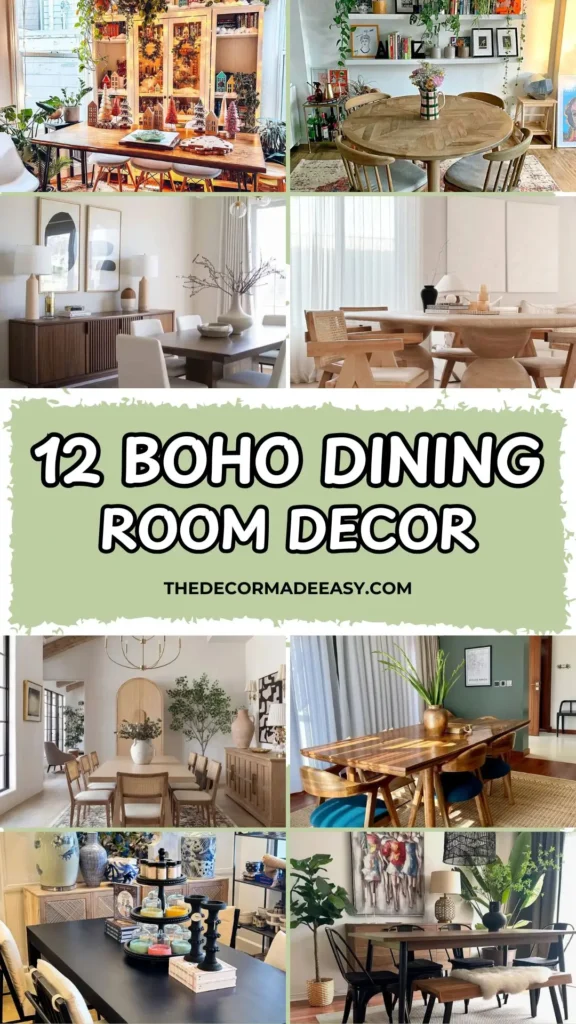
Stop Pinning, Start Living: 12 Real-Life Boho Dining Rooms That Actually Work

Let’s be honest. You’ve spent way too long saving boho dining room decor ideas to your Pinterest board, and somehow your actual dining room still looks like a furniture showroom that gave up halfway through. Sound familiar? Yeah, me too.
The good news? Boho style is one of the most forgiving aesthetics out there. It doesn’t demand perfection. It demands personality. And these 12 real-room examples are proof that it works across all kinds of spaces, from tiny apartments to sprawling farmhouses with ceilings high enough to lose a balloon in.
1. Black Iron Chairs, Wicker Pendant, and the Magic of Contrast
Here’s a hot take: going full beige-on-rattan-on-cream is not the only way to do boho. Sometimes a little darkness is exactly what a room needs.
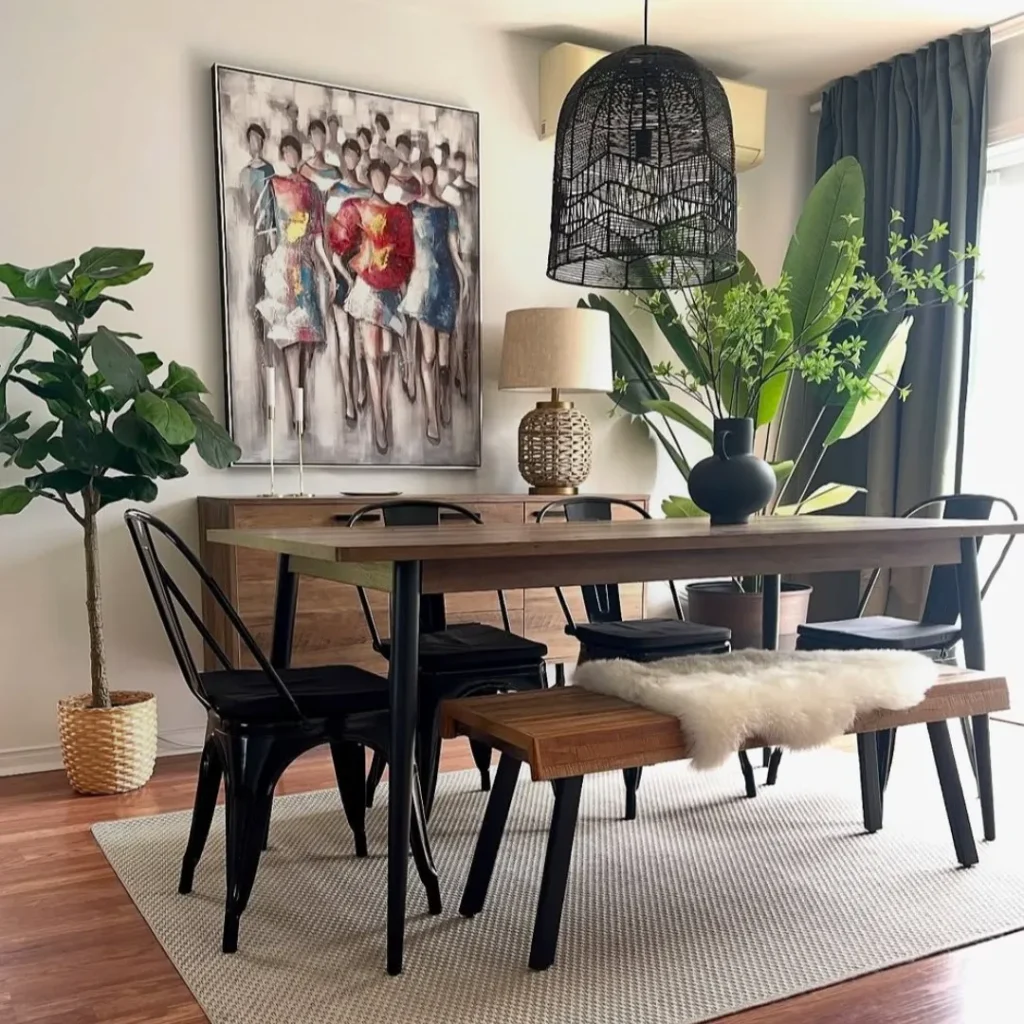
This room pairs a solid walnut dining table with matte black Tolix-style metal chairs, and honestly? It slaps. The warmth of the walnut wood softens the harshness of the black metal just enough to keep things from reading as “abandoned warehouse chic.”
A chunky sheepskin throw on the bench adds softness, and a large black wicker pendant light overhead ties everything together. It’s black like the chairs but organic and textured like a handmade market find.
The move here is contrast balanced with natural materials. A jute-toned area rug keeps the whole thing from tipping into stark territory, while bold figurative artwork and a fiddle leaf fig in a woven planter give the room its boho soul.
A few things to steal from this space:
- Don’t fear black elements in a boho room
- Always ground dark pieces with natural textures like wood grain, wicker, or linen
- Use one dramatic artwork to anchor the wall instantly
2. The Plant Collector’s Cabinet That Makes the Whole Room
Some rooms look decorated. This one looks lived in, and that’s the highest compliment I can give.
The star of this space is a large glass-front cabinet packed with Christmas village figurines, bottle brush trees, trailing plants, and fairy lights wrapped inside and out. It glows like a lantern and radiates warmth across the entire room. The hairpin-leg dining table sitting in front of it doesn’t even try to compete, which is exactly the right call.
The secret to making a busy room feel cohesive is repetition. House-shaped figurines appear at multiple scales. Plants pop up in every corner. Warm amber lighting runs consistently throughout. Repetition of even a simple motif creates visual rhythm, and rhythm is what stops a packed room from looking chaotic.
A rattan leaf-shaped pendant light anchors the boho identity overhead without overcomplicating things.
No holiday theme? No problem. Try swapping the Christmas village for:
- A collection of ceramic vessels in warm tones
- Old books with earthy-colored spines
- Curated travel souvenirs with personal meaning
This is one of the more ambitious boho dining room ideas on the list, but the payoff is huge.
3. Floating Shelves as a Living Gallery Wall
Forget committing to permanent gallery wall art. This room found a smarter solution, and I’m a little obsessed with it.
Three floating white shelves span the wall behind a round herringbone-top dining table. They’re filled with colorful book spines, terracotta and cream ceramics, framed prints, and living plants with trailing vines that spill over the edges like organic green waterfalls. It’s structured and wild at the same time, which is very much the boho vibe.
The dining furniture deliberately stays quiet so the shelves can be the main character. A pale oak parquet table, slim spindle-back chairs with linen cushions, and a dusty rose and blue Oushak-style rug keep the ground level calm.
Floating shelves let you rearrange and evolve your decor without a power drill every time your taste changes. That flexibility is very much in the spirit of bohemian decorating.
To pull this off:
- Start with two or three long shelves at varying heights
- Mix practical items (books) with decorative ones (ceramics, framed art)
- Add at least two trailing plants. They do half the decorating for you, no joke
Also Read: Stop Falling for Pinterest Lies: 10 Farmhouse Dining Rooms You Can Actually Recreate
4. All-Natural Materials and the Golden-Hour Dining Room
This room looks like it was styled by a lifestyle brand with a generous natural light budget. The wild part? Nothing in it feels forced.
A rattan cylindrical pendant hangs above a honey-toned wood table. Matching wooden spindle-back chairs sit around it. A fringed jute rug with tassel edges adds movement underfoot. A macramé table runner in cream and grey runs the length of the table. A round rattan circle shelf on the wall holds small plants and ceramics. Plants crowd every corner, windowsill, and surface edge with tropical confidence.
The genius here is tonal consistency. Every single element lives within a range from pale cream to deep amber, with the plants providing the only color contrast. No rogue tones, no mismatched finishes, no competing visual statements.
Peach and terracotta cushions on the built-in window bench add warmth without breaking the palette. Pampas grass in a white ceramic vase earns its spot by staying within the warm neutral family.
If this tone-on-tone approach speaks to you, the rule is simple: before anything new enters the room, ask if it fits the palette. If it doesn’t, it probably doesn’t belong there, even if you love it individually. Ruthless? A little. Worth it? Absolutely.
5. Modern Boho with a Sculptural Walnut Sideboard
Real talk: not every boho dining room needs macramé hanging from the ceiling. This quieter, more polished version proves the style has serious range.
A deep walnut rectangular table with a heavy pedestal base sits at the center, surrounded by cream upholstered chairs with slim black metal legs. Behind them, a walnut sideboard with fluted vertical-panel doors in a mid-century modern style holds sculptural ceramic lamps in sandy beige and gold, flanked by two large abstract prints in matching gold frames.
The artwork here does serious heavy lifting. Two prints featuring arched abstract shapes in black and white create visual symmetry that feels balanced but never rigid. Overhead, a Sputnik-style chandelier with globe bulbs and brass arms adds just a touch of glamour and a retro edge that keeps the room from feeling too safe.
This approach works especially well in formal dining spaces where you want warmth but also want the room to look like a grown-up made the decisions. The takeaway is clear: boho doesn’t have to mean casual. Quality art and thoughtful material choices can take this aesthetic into genuinely refined territory.
6. When One Material Does Everything: The All-Wood Monochrome
This might be the boldest room in the collection, and it barely raises its voice.
Every element is blonde oak or light natural wood. The oval table sits on a sculptural barrel-shaped pedestal in smooth pale wood. The chairs are Pierre Jeanneret-style X-base designs with cane back panels and cream linen seat pads, all in the same light oak. Overhead, a large globe-shaped rattan pendant fills the space with texture without adding any competing color.
On the table: a small stack of coffee table books, a single black ceramic vase, a few minimal objects in warm amber tones. The restraint on the tabletop is what lets the furniture be the statement.
Material repetition creates luxury, not boredom. The slight tonal variations between the smooth pedestal, the open cane weave, and the turned spindles create enough visual interest that you don’t need any other tricks.
IMO, the rattan pendant is the critical boho element here. Without it, this room reads as Scandinavian minimalism. With it, it reads as relaxed, organic, and intentional.
Also Read: Small Dining Room Decor: 12 Real-Life Ways to Make Your Space Feel Huge
7. Cane Chairs, Oval Mirror, and the Art of Doing Less
Restraint is genuinely underrated in boho decorating, and this room is the evidence.
Against brilliant white walls and glossy cream floor tiles, a warm teak dining table holds four rattan-backed cane chairs in medium walnut stain. A woven striped runner sits on the table. A small ceramic vase holds dried pampas grass stems. On the wall, a single oval mirror with a thick raw wood frame holds court. Two woven basket planters, a small fern, and a variegated dieffenbachia round out the room.
That’s it. And it works perfectly.
The power here is negative space. White walls and pale floors create visual silence, and the warm wood and rattan elements speak into that silence with real clarity. Nothing fights for attention because every piece has room to breathe.
Cane dining chairs are one of the most reliable boho dining room decor moves because they bring texture and artisanal character without visual weight. Pair them with white walls and one strong natural-frame mirror, and you have a complete, coherent room without overreaching. Simple, effective, and honestly kind of genius.
8. Exposed Wood Beams, Cane Chairs, and the Formal Boho Dining Room
What happens when you take traditional farmhouse architecture and furnish it with modern boho sensibility? This room is your answer.
Rough-cut exposed wood ceiling beams run at a slight diagonal and set the tone for everything below. A light oak dining table, cane-back chairs with cream linen seats, a light oak sideboard with paneled doors, and wide-plank pale wood flooring all echo the warmth of those beams. The room is doing what all great rooms do: letting the architecture lead, and building the decor on top of it.
The brass candelabra chandelier overhead is a confident choice. It’s not a rattan pendant or an Edison bulb situation. It’s a proper chandelier, and it works because the room is large enough and the beams are rustic enough that the glamour feels earned.
An olive tree in a terracotta pot, dried eucalyptus in a white urn, and a bold black-and-white abstract artwork complete the picture.
If you have older architecture with exposed beams, brick walls, or original wood floors, this is the most important lesson in this collection: don’t fight the bones of your room. Let them be a feature, then layer boho elements on top. The architecture does most of the work for you.
9. Dark Green Accent Wall and the Case for Putting Color in Your Dining Room
Every other room in this list lives in warm neutral territory. This one goes rogue, and it absolutely pays off.
A deep forest green accent wall, muted not electric, backs a rich walnut-stained dining table with turned legs. Curved wooden chairs sit around it with seats upholstered in teal blue fabric. A hammered brass vase holds a dramatic tropical grass arrangement on the table. Wicker globe pendant lights hang in two sizes overhead, and a botanical floral wallpaper panel in deep navy adds yet another layer above the green wall.
Green and teal are close enough on the color wheel to feel harmonious but different enough to create real depth. The walnut wood anchors both colors and prevents the palette from ever feeling cold.
The layered wall treatment, painted below and wallpaper above, is a practical trick for adding visual height and interest to a standard-ceiling room. More people should try this.
If you’ve been scared to add color to your dining room, here’s your permission slip. Start with one accent wall in a deep earthy green. Forest green, olive, or sage all work. Then introduce a second color through chair upholstery, staying within two or three tones of your wall color. Easy, bold, beautiful.
Also Read: The Art of the Centerpiece: 10 Dining Room Table Decor Ideas You’ll Love
10. Blue and White Chinoiserie Meets Boho Tablescaping
This space is the most eclectic in the collection, and it’s a test of just how far the boho umbrella can stretch. Spoiler: it stretches pretty far.
A matte black dining table anchors the room with unexpected darkness. Black iron-and-linen chairs surround it, cushioned in natural undyed fabric. A tiered black display stand on the table holds glass cloche-covered candles in pastel shades. Black bobbin candlesticks and a stack of French cuisine cookbooks add layers of casual personality.
Behind the table, a rattan-panel sideboard holds an oversized blue-and-white chinoiserie lamp, a large blue-and-white ginger jar, and various collected objects. On the wall, a cloud-like arrangement of blue and white butterfly cutouts creates a stunning installation piece.
The coherence here comes entirely from the blue-and-white palette recurring across multiple surfaces. The lamp, the ginger jar, the butterfly installation, and even the open shelving china all speak the same color language.
The black table is what gives the room authority. Without it, all the patterned ceramics and fluttering butterflies might feel precious. With it, the room has real weight. Collect what you love, find the thread that connects it, and commit to it. That’s the whole boho philosophy right there.
Here’s a quick comparison to help you see where boho parts ways with traditional dining room style:
| Style Element | Boho Version | Traditional Version |
|---|---|---|
| Pendant Light | Wicker, rattan, or rope | Crystal or metal chandelier |
| Dining Chairs | Cane-back, spindle-back, mixed styles | Matching upholstered set |
| Wall Decor | Trailing plants, baskets, macramé | Framed art or mirror |
| Rug | Oushak, jute, or vintage kilim | Solid or geometric pattern |
| Table Centerpiece | Dried botanicals, ceramic vases, woven tray | Floral arrangement or candelabra |
| Color Palette | Earthy neutrals with warm wood tones | Cooler whites with metallic accents |
11. Rustic Boho with Cowhide Upholstery and Dark Wood Trim
Not all boho dining rooms are airy and bright. This one is moody, rustic, and has a cabin-like warmth that I genuinely didn’t expect to find so appealing.
Deep chocolate wood trim frames the doorways, crown moldings, and ceiling beams. White shiplap panels lighten the walls just enough to keep the room from going fully dark. A white-painted farmhouse dining table with turned legs sits at center, surrounded by cross-back chairs in warm walnut stain.
The head chair is upholstered in cowhide, cream with warm brown spots. It’s the kind of choice that could easily tip into kitsch, but the restraint everywhere else holds it in check. Jute placemats, dried eucalyptus in a white ceramic pitcher, and a woven jute rug keep the rest of the room grounded and sensible.
Two wooden floating ledges on the wall hold a gallery of family photos in mismatched frames. A script art print, a black metal lantern pendant with a bare Edison bulb, and a few simple decorative objects complete the picture.
This space proves that boho doesn’t require a single cultural influence. Western, rustic, and farmhouse elements can absolutely share a room with natural fiber textiles and handcrafted details. What matters is a shared commitment to natural materials and personal meaning.
12. Woven Basket Wall and the Open-Plan Boho Dining Room
The final space tackles the most common modern challenge: how do you create a boho dining area that flows into a boho living room without everything bleeding into one giant beige blob?
The answer here is zone definition through consistent material language. The dining area features a warm cherry-wood table, cane-back chairs, jute round placemats, a loose floral centerpiece, and a dramatic funnel-shaped rattan pendant overhead. The living area behind it uses the same warmth through a cream linen sofa, a jute rope pouf, a monstera plant, and a rattan arch bookshelf in the corner.
The detail that ties both zones together most powerfully is the wall art: an overlapping arrangement of woven rattan baskets grouped in a loose organic cluster on the right wall. Basket wall arrangements are one of the most versatile boho moves because they’re easy to build incrementally, inexpensive to expand, and work in practically any room configuration.
Parquet herringbone flooring runs through both zones and acts as a unifying ground plane that makes the open layout feel intentional.
For combined dining and living spaces, introduce the same two or three materials at different scales across both zones. Woven rattan, warm wood, and natural linen in varying forms create harmony without monotony across an open plan.
The Real Takeaway From All 12 Rooms
Looking across all of these spaces, a few principles show up again and again, and they’re worth holding onto as you figure out your own version of boho.
Natural materials are non-negotiable. Whether a room is minimal or maximal, every single space here uses rattan, jute, cane, raw wood, or some combination. These materials do the heavy boho lifting even when everything else is restrained.
Plants are structural, not decorative. They fill corners that would otherwise feel empty, soften hard architectural lines, and bring a quality of life and movement that no inanimate object can replicate. You don’t need a jungle. You need a few well-chosen plants placed with actual intention.
Lighting is probably the most underestimated decision you’ll make. A rattan or wicker pendant transforms a dining room faster than almost any other single purchase. It’s visible from across the room, it shapes the quality of light in the entire space, and it signals the aesthetic direction the moment someone walks in.
And the biggest lesson of all? The boho rooms that feel most genuinely personal are the ones where someone made choices based on what they love, not what they were supposed to buy. The cowhide chair, the butterfly installation, the glowing plant cabinet: none of these follow a formula. They follow a sensibility.
Pick a few ideas from this list, adapt them to what you already have, and your dining room will end up looking less like a mood board and more like a room someone actually lives in. Which is kind of the whole point.
Now go raid a thrift store. Your dining room is waiting.